Buying an infrared sauna comes down to six decisions, not a brand name: size, heater type, wavelength band, build format, where you buy it, and what circuit you can actually wire. Get those right and a $1,800 cabin can out-perform a $6,000 one in the only metrics that matter in daily use — comfort, EMF, and electricity cost.
I run a 2-person low-EMF far-infrared cabin in a Swedish home, wired to its own 16A circuit, and over several winters I have lived with full-spectrum, carbon-panel, and portable units side by side. I have pulled the panels, put a TriField TF2 on every heater type, and metered the real kWh per session with a plug-in energy meter. This is the buying guide I wish someone had handed me before my first purchase, written from the install and engineering side rather than the wellness-marketing side. The health claims you will read elsewhere I treat as studied and reported, never as something the box does for you — the authority here is the gear, the heat, the field readings, and the bill.
Before Anything Else: Where Will It Live and What Can You Wire?
The single most common buying mistake is choosing the cabin before checking the room and the circuit. A 4-person sauna needs roughly 6×6 feet of floor, 7 feet of height, and frequently a dedicated 20A or 240V line — and if your only candidate wall shares a 15A kitchen circuit, the decision is already made for you. Measure the space, find the nearest panel, and count the amps before you compare a single spec sheet.
In my setup the cabin sits against an interior wall with a passive ceiling vent and a smart plug for scheduled preheat, fed by a 16A circuit I ran specifically for it. Most plug-and-play 1- and 2-person far-infrared cabins draw 1,300–1,800 watts and live happily on a standard outlet; full-spectrum and 3–4 person units routinely push past 1,800 watts and want their own line. Our infrared sauna installation guide and the 240V and breaker requirements walkthrough cover the wiring side in full; the ventilation guide handles airflow so the cabin actually dries out between sessions.
The Six Decisions That Actually Determine What You Buy
Every infrared sauna purchase resolves into six choices, and a good buy is simply getting all six to line up with your room, your body, and your power. The brand on the door matters far less than this checklist — I have measured budget cabins that beat premium ones on EMF, and premium cabins that justified the price on panel coverage and warranty.
Here is the map, and each link below goes to the dedicated guide where I break the decision down in detail:
- Size — solo, couple, or family. See 1 vs 2 vs 4 person infrared sauna.
- Budget tier — what each price bracket genuinely buys. See best infrared sauna by budget tier.
- Build format — prefab cabin, portable, or a custom room. See prefab vs custom infrared sauna.
- Where to buy — manufacturer, marketplace, or showroom. See where to buy an infrared sauna.
- What to inspect — the spec sheet lines that matter. See what to look for when buying.
- How not to get burned — the marketing traps. See avoiding infrared sauna scams.
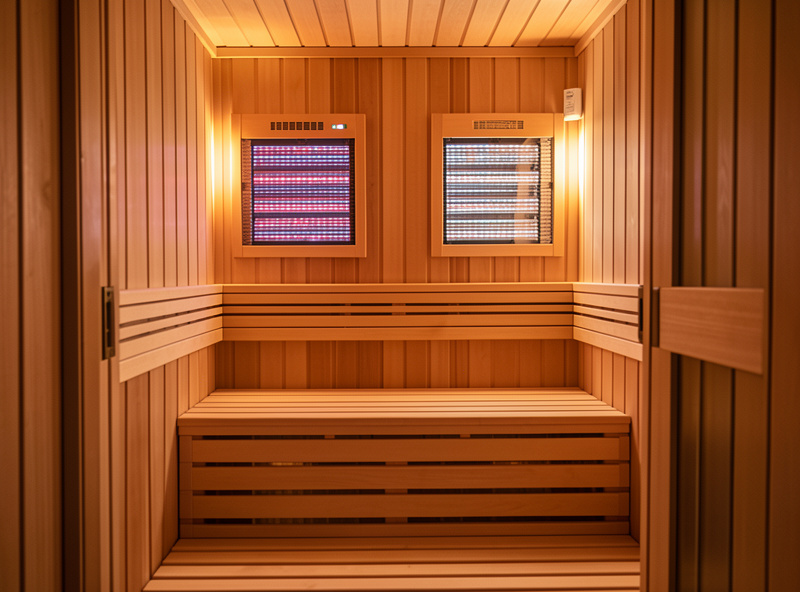
Size: One, Two, or Four People (and Why Most Buy One Too Big)
Pick size by how the cabin will actually be used, not by aspiration. A 1-person cabin heats fast, sips power, and fits an apartment corner; a 2-person is the sweet spot for couples and for anyone who wants to lie down; a 4-person costs more to buy and far more to heat for a session you usually take alone. The honest pattern I see is people buying the 3- or 4-person “for guests” and then running it solo five times a week, paying the bigger electricity bill every single time.
Floor footprint, preheat time, and kWh all scale with size. In my logs the 2-person cabin reaches set temp noticeably faster than the larger full-spectrum unit and costs less per session to run. If you genuinely host, size up; if it is your recovery ritual, the smaller cabin is the smarter buy. Dig into the trade-offs in the size comparison, the broader infrared sauna sizes overview, and the specific picks for 1-person cabins and 2-person cabins.
Heater Type and the EMF Question
Heater type drives comfort, ramp time, and EMF more than any other spec, and it is the area where marketing is loosest. The four families I distinguish by hand are ceramic rod, carbon-fiber panel, carbon/ceramic hybrid, and incoloy or halogen near-infrared emitters — each with a different surface temperature, radiant footprint, and field signature. Carbon panels run cooler and spread heat over a large area; ceramic rods run hotter and more localized; the hybrid I favor tries to get carbon’s even footprint with ceramic’s penetration. Ramp time follows the same split: my carbon-panel cabin reaches a comfortable felt heat in about 10 to 15 minutes of preheat, the ceramic unit warms its surface faster but heats the room less evenly, and the larger full-spectrum cabin is the slowest of the bunch to settle. For a buyer this matters more than peak wattage — what you actually feel is coverage and ramp, not the number on the box.
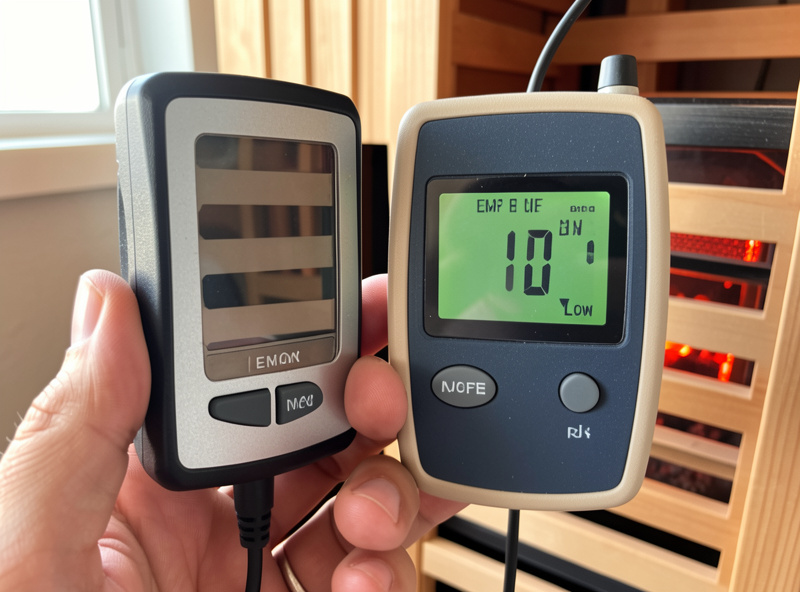
EMF is where I spend most of my meter time, because “low-EMF” is a sticker, not a standard. On my TriField TF2 the magnetic field off a panel can read anywhere from under 1 milligauss at seated distance on a well-routed low-EMF unit to noticeably higher on a cheap heater with its wiring run badly. The field comes from three places — the heating element, the internal wiring, and the controller — and good routing and grounding move the number more than the heater brand does. Across the heaters I have lived with, my carbon-panel cabin and the carbon/ceramic hybrid both sit near 1 mG at the bench, the bare ceramic rods of an older unit ran a touch higher, and the near-infrared halogen emitter spikes most at close range — which is exactly why a full-spectrum unit deserves its own meter pass rather than a blanket “low-EMF” assumption. Learn what the label actually means in low-EMF infrared sauna, how to meter it yourself in measuring EMF with a TriField, and the full hardware story in the heater types and EMF guide and carbon vs ceramic breakdown.
Far, Near, and Full-Spectrum: What the Wavelengths Buy You
Far-infrared (roughly 3–1000 microns) is what the great majority of cabins emit, and for a warm, sweat-inducing session it is all most buyers need. Near-infrared (about 0.7–1.4 microns) comes from a separate halogen or incoloy emitter and is the band a “full-spectrum” unit adds. The trap is that a cheap “full-spectrum” label often means one weak NIR bulb bolted into an otherwise far-infrared cabin — you pay for the word, not the spectrum.
If you only want heat and comfort, a quality far-infrared cabin is the value buy. Full-spectrum earns its premium only when the near-infrared emitter is genuinely powerful and you specifically want that band. I run both, and for my winter recovery routine the far-infrared cabin is the one I reach for daily. The physics of each band, and how to read a heater spec honestly, are in near, mid and far infrared heaters.
Budget Tiers: What Each Price Bracket Actually Gets You
Price brackets in this market map fairly cleanly to format and feature set, and knowing the map keeps you from overpaying for a badge. Roughly: under $600 is portable blankets and tents; $1,200–$2,500 is solid 1–2 person plug-in cabins; $2,500–$4,500 is larger or better-finished far-infrared; and $4,500+ is premium full-spectrum, hardwired, or designer cabins. More money mostly buys size, finish, warranty, and genuine full-spectrum — not necessarily lower EMF or better core heat.
The table below is the quick orientation; the full breakdown with what to expect and what to skip in each tier is in the budget-tier guide, and the true ownership math is in the cost guide and prices by size and type.
| Tier | Typical price | Format | Best for | Watch for |
|---|---|---|---|---|
| Entry / portable | $120–$600 | Blanket or tent | Apartments, travel, testing the habit | EMF off the heating layer; thin warranty |
| Value cabin | $1,200–$2,500 | 1–2 person far-infrared | Most solo and couple buyers | “Full-spectrum” stickers on one NIR bulb |
| Mid / large | $2,500–$4,500 | 2–4 person far-infrared | Families, better finish | Higher kWh per session; circuit needs |
| Premium | $4,500–$9,000+ | Full-spectrum, hardwired | Genuine NIR, designer finish, long warranty | Paying for brand, not lower EMF |
As an Amazon Associate I earn from qualifying purchases. If you want to start at the entry tier to test whether the habit sticks before committing to a cabin, a portable infrared sauna blanket is the low-risk way in — I keep one for travel and small-room comparison.
Prefab Cabin, Portable, or Custom Build
Build format is a real fork, not a detail. A prefab cabin ships flat-packed and assembles in an afternoon with hand tools; a portable blanket or tent stores in a closet and costs the least; a custom room (panels installed into framed walls) gives the best fit and finish but turns the project into a renovation. For most buyers the prefab cabin is the right answer — it is the format I recommend by default.
Custom makes sense when you have an awkward space, want a built-in look, or are already renovating. Portable makes sense for apartments, renters, and anyone testing the routine. I cover the assembly reality of prefab in the assembly walkthrough, the portable options in portable infrared sauna and blanket vs cabin, and the full fork in prefab vs custom. If you want the indoor cabin shortlist, start at best home infrared saunas and the home sauna setup guide; for outdoors, outdoor infrared sauna.
The Running Cost Nobody Runs Before Buying
The line most buyers never calculate is electricity per session, and over a few winters it dwarfs the gap between two cabins at purchase. A 1,500-watt cabin run for a 40-minute session including preheat draws on the order of 1.2–1.5 kWh; at typical European rates that is real money several times a week, and a 3,000-watt full-spectrum unit roughly doubles it. I track mine with a plug-in energy meter, and that number changed how I think about sizing more than any spec did.
Run the math before you buy, not after. A smaller cabin you use daily often costs less to own over five years than a larger one you run occasionally but heat inefficiently. As a rough illustration, a 1,500-watt cabin at three 40-minute sessions a week is on the order of 200 kWh a year; double the wattage for a big full-spectrum unit and you double that line every year you own it. None of this is the health side — that stays studied and reported — but the electricity is concrete, measurable, and entirely yours to plan for before you buy. The full ownership economics are in the cost guide, the per-session draw in electricity cost, and a real-home breakdown in infrared sauna at home cost.
Where to Buy and How Not to Get Scammed
Where you buy changes price, warranty, and recourse more than buyers expect. Buying direct from a manufacturer usually gets the best warranty and support; a marketplace can be cheaper but mixes legitimate brands with white-label clones; a showroom lets you sit in the cabin first, which is genuinely useful for judging bench depth and felt heat. Whichever channel, the warranty terms and the EMF documentation are what separate a real product from a repackaged one.
The classic traps are gamed wattage claims, “full-spectrum” on a single bulb, fake “zero EMF” labels, and reviews that read like ad copy. I walk through the channels in where to buy, the spec-sheet inspection in what to look for, and the specific red flags in avoiding scams. For real brand comparisons rather than marketing, our reviews of Sunlighten vs Clearlight, Health Mate, SaunaSpace, and Dynamic Saunas show what each tier actually delivers.
How I Would Shortlist a Cabin Today
If I were buying again, the order would be: confirm the room and circuit, set the size honestly, decide far-infrared versus full-spectrum, set a budget tier, then — and only then — compare three specific cabins on EMF documentation, panel coverage, warranty length, and kWh draw. Brand comes last, after the engineering fits. That sequence is exactly backwards from how most people shop, which is why so many cabins end up too big, on the wrong circuit, and more expensive to run than expected.
The one piece of measurement gear I would not buy a sauna without is an EMF meter to verify the “low-EMF” claim yourself. As an Amazon Associate I earn from qualifying purchases. A TriField TF2 EMF meter is the same tool I use to check every panel and wiring path, and it turns a marketing claim into a number you can see.
Wood, Glass, and Build Quality: The Body Around the Heaters
The cabin’s materials decide how it ages, off-gasses, and feels, and they are easy to overlook next to heater specs. Most quality far-infrared cabins are Canadian hemlock or basswood — both are low-resin, low-aroma woods that handle repeated heat cycling without weeping sap, which is why they dominate the market. Cheaper cabins sometimes use plywood or composite panels with adhesives that can off-gas a faint smell during the first few high-temperature breaks; the cabin I run is hemlock and was effectively odorless after two preheat cycles with the vent open.
Glass area is the other thing I would look at in person. A full glass front looks great and helps a small room feel less boxy, but more glass means more heat loss and a longer ramp to set temp, which shows up on the energy meter. Tempered, low-iron glass is what you want; thin single-pane doors on the cheapest cabins both leak heat and feel flimsy. Check the door seal, the bench depth (a shallow bench makes a 2-person cabin a tight 1.5-person in practice), and whether the floorboard is removable for cleaning. None of this appears in the headline specs, but all of it is what you live with for years.
Warranty and Support: The Spec That Matters After Year Three
Warranty length and what it actually covers is the buying signal that separates a real manufacturer from a white-label reseller. Premium brands typically back the heaters and cabin for five years or more, sometimes lifetime on the wood; thin operations offer one year on everything or a vague “limited” warranty with no parts pipeline. A heater panel or controller is the part most likely to fail, and a five-year heater warranty from a company that still answers the phone is worth real money the day a panel stops radiating in year four.
Before buying, I read the warranty terms in full and check whether replacement panels and controllers are actually sold separately — if you cannot buy a spare heater, the cabin is disposable rather than repairable. Support responsiveness is hard to test before purchase, but the brand reviews on this site and honest owner forums are the best proxy. A long warranty paired with available spare parts is, to me, a stronger buy signal than any single performance spec on the sheet.
Frequently Asked Questions
What size infrared sauna should I buy?
Buy for actual daily use, not for hypothetical guests. A 1-person cabin suits solo use and small rooms; a 2-person is the most popular size and lets you lie down; a 4-person costs more to buy and far more to heat. Most people who buy a 4-person end up running it alone and paying the larger electricity bill every session.
Is a full-spectrum infrared sauna worth the extra money?
Only when the near-infrared emitter is genuinely powerful. Many cheap full-spectrum units are a far-infrared cabin with one weak NIR bulb added so the label can read full-spectrum. For a warm, sweat-inducing session a quality far-infrared cabin is the value buy; pay the full-spectrum premium only if you specifically want a strong near-infrared band.
What does low-EMF actually mean on an infrared sauna?
Low-EMF is a marketing label, not a regulated standard. The magnetic field comes from the heating element, internal wiring, and controller, and good routing and grounding lower it more than the brand does. The only way to verify a claim is to meter it yourself with an EMF meter such as a TriField TF2 and read the milligauss at seated distance.
How much does it cost to run an infrared sauna?
A 1,500-watt cabin run about 40 minutes including preheat draws roughly 1.2 to 1.5 kWh per session, while a 3,000-watt full-spectrum unit roughly doubles that. Multiply by your electricity rate and weekly sessions. Over five years this running cost often exceeds the price difference between two cabins, so calculate it before you buy.
Do I need a dedicated electrical circuit for an infrared sauna?
Most 1- and 2-person far-infrared cabins draw 1,300 to 1,800 watts and run on a standard outlet, though a dedicated circuit is cleaner. Full-spectrum and 3- to 4-person units often exceed 1,800 watts and need their own 20A or 240V line. Check the cabin wattage against your circuit before buying.
Is it better to buy an infrared sauna directly or from a marketplace?
Buying direct from the manufacturer usually gets the best warranty and support, while marketplaces can be cheaper but mix legitimate brands with white-label clones. A showroom lets you sit in the cabin to judge bench depth and felt heat. Whichever channel you choose, the warranty terms and EMF documentation are what separate a real product from a repackaged one.