“Low-EMF” is the most repeated phrase in infrared-sauna marketing and one of the least defined. It’s not a regulated term, there’s no certification body behind it, and two cabins both labelled “low-EMF” can read wildly differently when you actually put a meter on them. After years of metering my own cabins and every unit I could get my hands on, here’s what a genuine low-EMF design actually does, what the label leaves out, and how to tell engineering from a sticker before you spend the money.
What “low-EMF” is supposed to mean
Strip it back to physics. EMF inside a cabin is three separate things: the magnetic field from current through the heater wiring, the electric field around energised conductors, and RF from the controller and any wireless module. A genuine low-EMF cabin is engineered to keep all three down where your body sits. A sticker version just prints the words.
The key insight that the label hides: most of the field comes from the wiring and the controller, not the infrared emission. So “low-EMF” is really a claim about how well the electrical system is designed and routed — not about the heaters being some special low-radiation type. Once you understand that, you know exactly what to interrogate.
The three things a real low-EMF design does
A cabin that has genuinely earned the label does three concrete engineering things, and you can ask about every one of them:
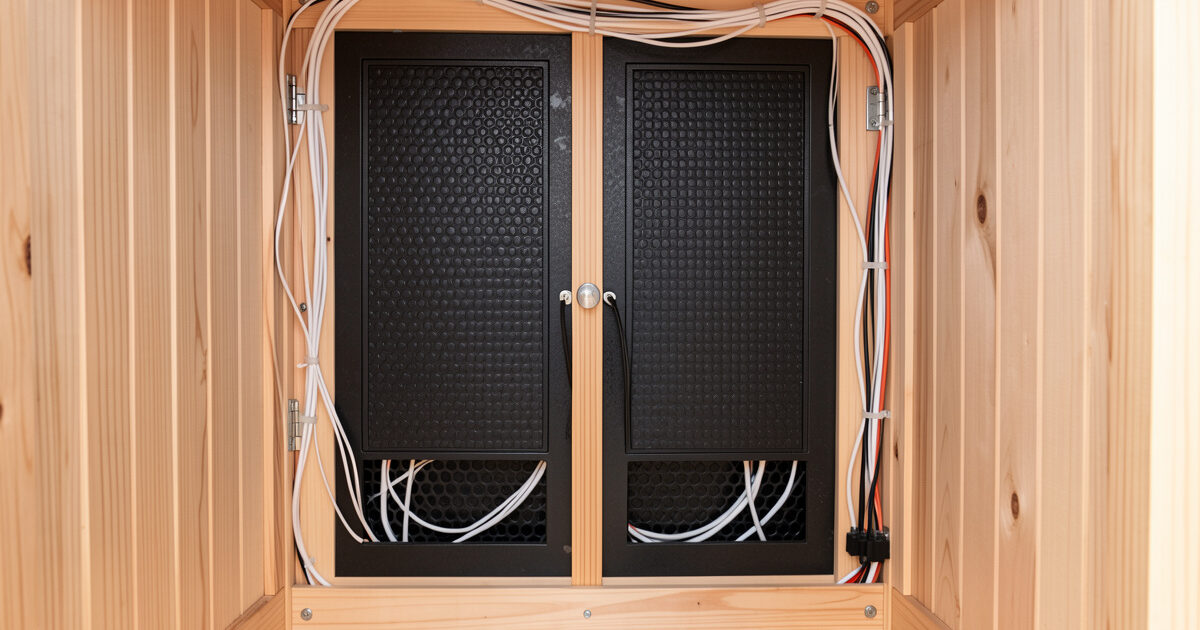
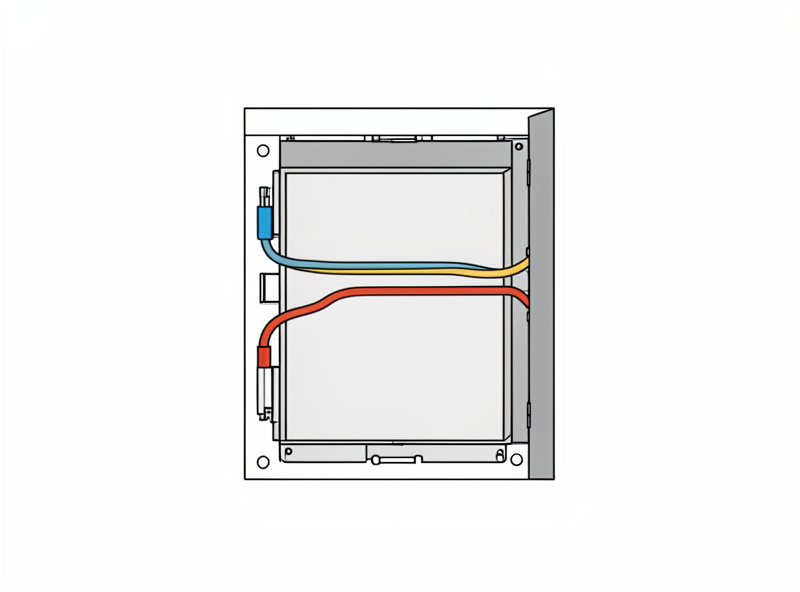
1. Paired-conductor routing to cancel magnetic field. When the two conductors carrying current to a heater run together, their magnetic fields largely cancel because the currents flow in opposite directions. Good low-EMF panels are wired this way deliberately. Lazy wiring leaves the conductors separated, and the field doesn’t cancel. This single design choice is the biggest lever on the magnetic reading at the seat.
2. Proper grounding to manage electric field. The electric field responds strongly to grounding. A solidly grounded cabin chassis and panels on a properly grounded dedicated circuit reads far lower on electric field than an ungrounded or poorly grounded one. This is as much an install issue as a manufacturing one — covered in the installation requirements guide — which is why even a well-built cabin can read high if it’s badly installed.
3. Keeping the controller and wireless modules away from the seat. The RF source in most cabins is the controller and any Bluetooth audio, not the heaters. A thoughtful design positions these away from where your head sits, or at least makes the wireless switchable. A cabin with a Bluetooth board right behind your head is undermining its own low-EMF claim.
What the label leaves out
Here’s what “low-EMF” almost never tells you, and what you should demand before trusting it:
- At what distance? A field reading is meaningless without the distance it was taken at. “Low-EMF” with no stated measurement distance is marketing. The honest brands publish their numbers at the seat distance, not the panel face.
- Which field? A cabin can be low on magnetic field and high on electric field, or vice versa. A single “low-EMF” claim that doesn’t say which quantity it refers to is hiding something.
- Measured by whom? A self-asserted claim with no published readings is weaker than a brand that shows actual meter data you could replicate.
- Does it cover RF? Many “low-EMF” claims are about the heaters only and quietly ignore the Bluetooth and controller RF — which is often the loudest source.
The pattern is consistent: brands doing the engineering properly tend to publish actual numbers at a stated distance, and brands selling a sticker say “low-EMF” and stop. That single tell — published readings versus a bare claim — sorts the field faster than anything else.
One more thing the label hides: whether the reading was taken on a properly installed unit or on a showroom demo with no real ground. A cabin’s electric-field number depends heavily on how it’s wired into the building, so a manufacturer’s “low-EMF” figure measured under ideal conditions can drift once the cabin lands on your circuit. This isn’t dishonesty so much as a limit of what a factory number can promise — it’s also why metering your own installed cabin beats trusting any printed figure. If the brand states the conditions of their measurement (grounded, on a dedicated circuit, at the seat), that’s a brand being straight with you; if the number floats free of any conditions, treat it as indicative at best.
Carbon, ceramic, and the low-EMF myth
A common belief is that carbon panels are inherently low-EMF and ceramic isn’t. That’s not quite right. The emitter type doesn’t determine the field — the wiring does. What’s true is that carbon panels are the technology of choice for brands that market on low-EMF, so carbon cabins are more often built with the careful routing and grounding that actually reduces the field. It’s correlation, not causation. A badly wired carbon cabin can read worse than a well-wired ceramic one. The carbon vs ceramic breakdown goes deeper, but the takeaway here is: don’t treat “carbon” as a guarantee of low-EMF — treat published readings as the guarantee.
Where the field actually comes from inside the cabin
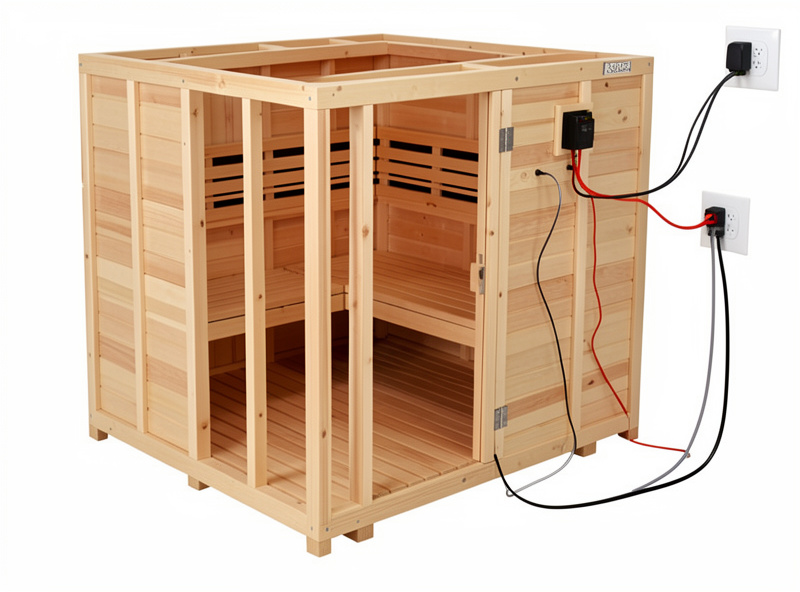
If you’ve only ever read the marketing, you’d assume the heaters are the EMF source and “low-EMF heaters” are the fix. Metering tells a more useful story. When I map a cabin, the magnetic field tracks the wiring runs — it peaks along the conductor paths and at junction points, not uniformly across the panel face — and it falls off fast as you move toward the seat. The electric field behaves differently again: it’s broadly present around every energised surface and barely cares about distance the way the magnetic field does, which is why grounding matters so much for it.
Then there’s the part the label never mentions: the controller and any Bluetooth audio board are usually the loudest RF source in the whole cabin, and they sit in a fixed spot regardless of how “low-EMF” the heaters are. In my own logging, switching the heaters on barely moves the RF reading, but turning on the wireless audio and bringing a phone in spikes it immediately. That tells you the “is this sauna low-EMF” question is partly about the heaters and wiring the manufacturer chose, and partly about the controller placement and the devices you bring in yourself — the second half being entirely under your control.
This is why a single “low-EMF” badge is such a blunt instrument. It collapses three different physical quantities, three different sources, and two different responsibilities (the manufacturer’s and yours) into one marketing word. The moment you separate them, you know what to ask the brand about and what you can fix at the install.
Does low-EMF cost more, and is it worth it?
Genuine low-EMF engineering does tend to cost more, because paired-conductor routing, proper grounding provisions, and thoughtful controller placement are work the manufacturer has to actually do. That’s part of why low-EMF cabins cluster in the mid-to-premium tiers and bargain cabins rarely make a credible claim. But “more expensive” and “genuinely low-EMF” aren’t the same thing — a premium price tag with no published readings is just a premium price tag.
Whether it’s worth paying for is a judgement call I’ll leave with you, because it depends on how much weight you put on the field readings, which is itself a contested topic. What I’ll say from the engineering side is this: a well-engineered low-EMF cabin is usually also a better-built cabin in general — the same care that routes the conductors properly tends to show up in the panel coverage, the grounding, and the controller. So even setting the field question aside, the brands that publish real readings are often the ones worth buying for the rest of the build quality. You’re frequently paying for overall engineering discipline, with the low-EMF numbers as the visible proof of it.
How to verify a low-EMF claim yourself
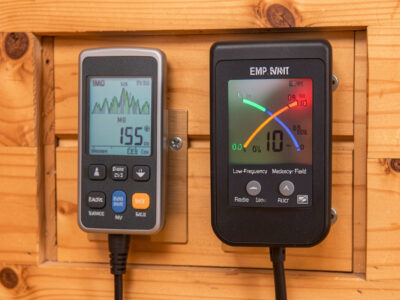
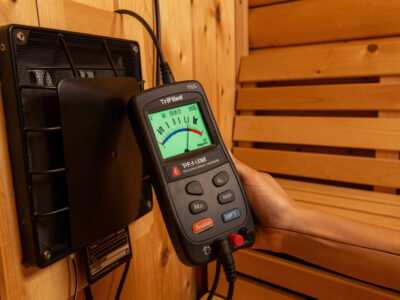
You don’t have to take the label on faith. If you own the cabin, a switchable meter (a TriField TF2 reads magnetic, electric, and RF) lets you check at the seat in twenty minutes — the full method is in the how-to-meter guide. If you’re still shopping, the next best thing is to buy from a brand that publishes its readings, and to read the claim critically: distance stated, field type named, RF included.
| Claim feature | Genuine low-EMF design | Sticker-only “low-EMF” |
|---|---|---|
| Published readings | Yes, with stated distance | None, or “low-EMF” alone |
| Magnetic field | Paired-conductor routing | Unspecified wiring |
| Electric field | Grounded chassis and circuit | Not addressed |
| RF | Controller/Bluetooth sited away or switchable | Ignored |
| Verifiable | Replicable at the seat | Take it on faith |
The honest bottom line
“Low-EMF” is worth caring about as an engineering quality signal, not as a health verdict — I’m describing how well a cabin is built, not making a claim about exposure limits, which are a contested and jurisdiction-specific topic outside what a sauna owner should assert. Treat the label as a starting point you verify, never an endpoint you trust. A genuine low-EMF cabin routes its conductors to cancel magnetic field, grounds properly, sites its RF sources away from your head, and publishes real readings at a stated distance. A sticker cabin prints the words. Bring a meter or buy from a brand that brought theirs — and for the wider purchase context, the brand comparison notes who actually publishes their numbers and who just prints the phrase.