Carbon versus ceramic is the first real engineering fork you hit when buying an infrared sauna, and almost every listing muddies it on purpose. Both produce far-infrared heat, both will warm you, and both have loud fans online — which is exactly why the marketing leans on vibes instead of the physics. After living with both a single-person carbon-panel cabin and a carbon/ceramic hybrid as my daily driver, metering them and chasing cold spots with a thermal camera across full Swedish winters, I can tell you the difference is real, predictable, and has almost nothing to do with which one is “better.” It’s about how each emitter distributes heat — and which trade-off you’d rather live with.
What each heater actually is
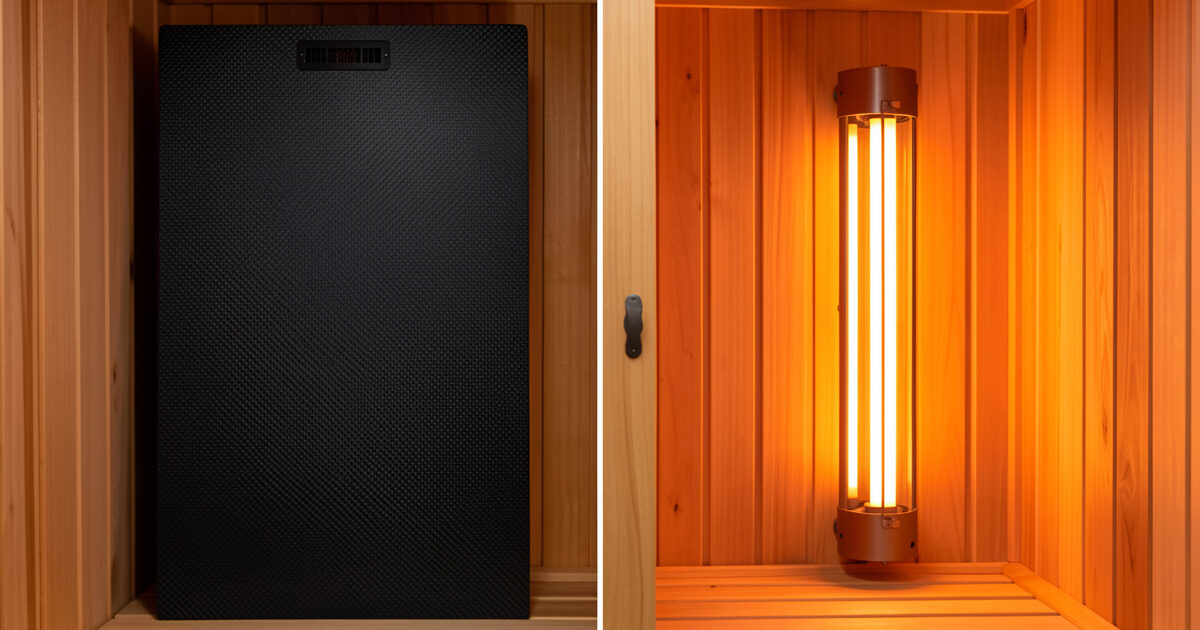
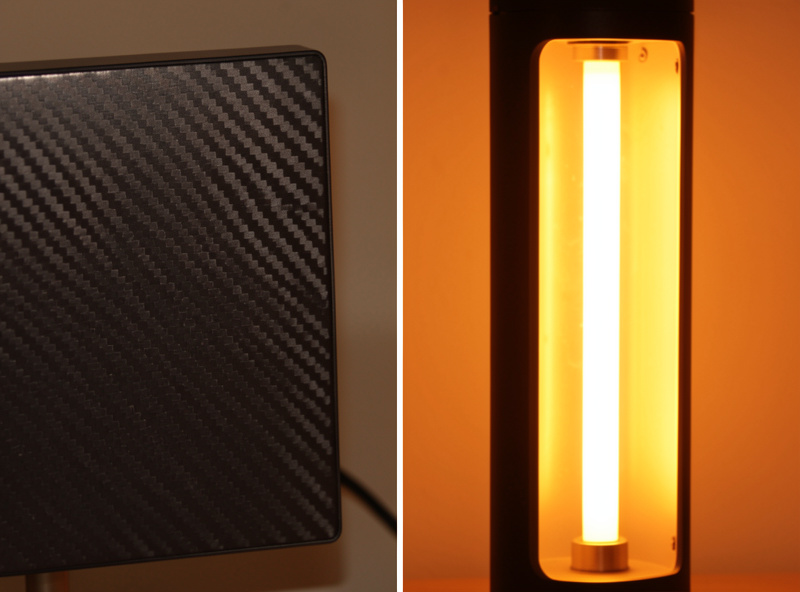
A ceramic heater is a coiled resistive element sheathed in a ceramic sleeve or rod, mounted behind a grille. It runs hot at the surface — noticeably hot if you put a hand near it — and throws a concentrated cone of radiant heat. Think of it as a spotlight: intense, directional, fast to come up to temperature.
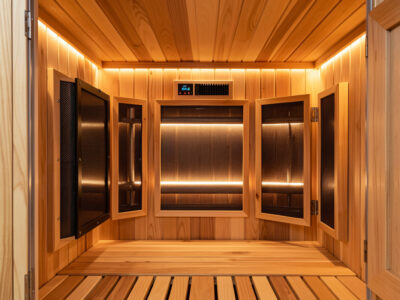
Carbon-fiber panels work differently. A large flat sheet of carbon-fiber composite warms gently across its entire surface, at a much lower surface temperature than a ceramic rod. Think floodlight: broad, even, lower intensity at any one point but covering far more of you. The big flat black panels you see when you open a modern cabin door are almost always carbon.
The crucial physical fact that explains everything downstream: ceramic concentrates the same energy into a small hot area; carbon spreads it over a large warm area. Both can deliver the same total heat into the cabin. They just deliver it with completely different geometry, and that geometry is what you feel.
Ramp time: ceramic wins the start, carbon wins the soak
Ceramic heaters come up to working temperature faster. Because the element runs hot and concentrated, you feel radiant heat off a ceramic rod within a few minutes of switching on. That’s genuinely useful if you want to step in quickly without a long preheat.
Carbon panels take longer to ramp. A big low-temperature surface has more thermal mass to bring up, so a carbon cabin rewards a proper preheat — in my setup I run the carbon cabin on a smart-plug timer so it’s at working heat before I open the door, which sidesteps the slow start entirely. Once warm, though, the carbon panel delivers a steadier, more even soak that I find far more comfortable for a long session. The ceramic cabin is quicker to feel hot; the carbon cabin is nicer to sit in for forty minutes.
The cold-spot problem
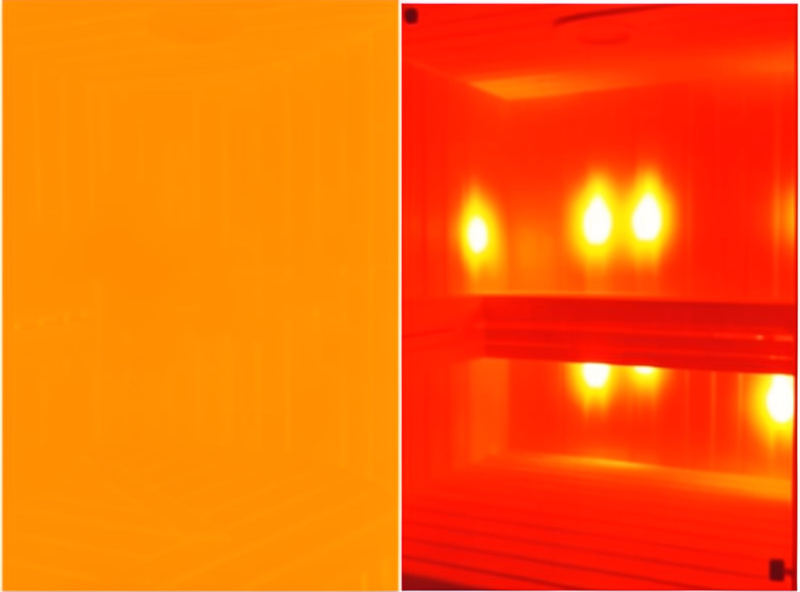
This is where the difference stops being academic. Because a ceramic rod throws a concentrated cone, a cabin built around a few ceramic rods has gaps between them — and your body finds those gaps. In the ceramic-heavy units I’ve sat in, the heat arrives in stripes: hot where a rod points at you, cooler in between. You end up shifting position to even it out.
Carbon panels, being broad and flat, cover far more area, so a carbon cabin gives a more uniform field with fewer cold spots. When I mapped both cabins with a thermal camera, the carbon panels produced a smooth warm wall; the ceramic rods produced bright hot points with cooler valleys between. Neither is wrong, but if even, full-body warmth is what you’re after, carbon’s geometry does it more naturally. This is also why panel placement matters so much regardless of type — a point covered in the heater and EMF engineering guide, which maps where the cold spots reliably land.
Felt heat: the trap of “ceramic feels hotter”
Ceramic fans will tell you ceramic “feels hotter,” and they’re not wrong — but it’s worth understanding why before you treat it as a verdict. A hot ceramic rod radiating directly at your skin produces a sharper, more immediate sensation than a gentle carbon panel at the same air temperature. That intensity reads as “more powerful.” But it’s concentrated, not greater in total — and the sharpness can tip into uncomfortable on bare skin if a rod is close and pointed right at you.
Carbon’s gentler, broader heat feels milder per square inch but wraps around more of you. In my experience the carbon soak is more sustainable for a long session, while ceramic’s intensity is something you notice and sometimes flinch from. “Feels hotter” is a real perception; it just isn’t the same as “heats you better.” This is the same reason wattage on the spec sheet is so misleading — felt heat is about geometry and surface temperature, not the number on the label.
EMF: it’s about wiring, not the chemistry
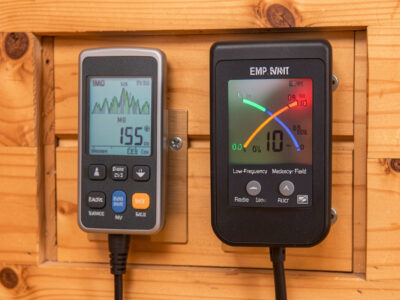
People assume one heater type is inherently “low-EMF” and the other isn’t. That’s not how it works. The magnetic field inside a cabin comes from current flowing through the heater wiring and how that wiring is routed — not from whether the element is carbon or ceramic. A well-engineered carbon cabin and a well-engineered ceramic cabin can both read low at the seat; a badly wired example of either reads higher.
That said, there’s a practical pattern. Carbon panels tend to be the technology of choice for brands that market on low-EMF, so carbon cabins are more often built with the careful paired-conductor routing and grounding that actually reduces the field. It’s correlation, not causation — the carbon panel isn’t magic, the brand using it just tends to have done the wiring homework. I metered both my cabins at the seat position, and the difference tracked the wiring quality, not the emitter type. If EMF matters to you, ignore the carbon-versus-ceramic framing and look at whether the brand publishes real measured readings at a stated distance.
Cost and longevity
Ceramic elements are an older, cheaper technology, so ceramic-only cabins often sit at the budget end. Carbon panels generally cost more and are common in mid-range and premium units. On lifespan, both are durable when run sensibly; a ceramic rod running hot is arguably more stressed than a carbon panel running cool, but in practice failures in either are uncommon over normal home use. The bigger long-run cost is electricity per session, which tracks total wattage and how long you run it — not which emitter you chose.
| Factor | Ceramic rod | Carbon-fiber panel |
|---|---|---|
| Heat geometry | Concentrated cone (spotlight) | Broad even field (floodlight) |
| Ramp time | Fast | Slow — rewards preheat |
| Surface temperature | Hot | Warm |
| Cold spots | More — heat arrives in stripes | Fewer — uniform wall of heat |
| Felt sensation | Sharp, immediate | Gentle, wrapping soak |
| Typical price tier | Budget | Mid to premium |
| EMF | Wiring-dependent | Wiring-dependent (often better-engineered) |
The honest answer: hybrid, then carbon, then ceramic
If I’m spending someone else’s money on a home cabin, the order is clear. A carbon/ceramic hybrid is the best of both — carbon panels for the broad even field, a few ceramic elements to push felt intensity up where you want it. It’s what my daily-driver 2-person cabin uses, and it’s why the heat feels both even and properly warm rather than a flat glow. If a hybrid is out of budget, a good carbon-panel cabin with full coverage is my next pick: even, comfortable, and usually the better-engineered low-EMF option. A ceramic-only cabin can absolutely work — and the fast ramp is a genuine plus — but you’re more likely to chase cold spots and shift around to even out the heat.
Whichever way you lean, the heater type matters less than panel coverage and wiring quality. Count the panels, note where they sit relative to where you’ll actually sit, and if EMF is on your list, buy from a brand that publishes real numbers. Get those two things right and both technologies deliver a good sauna; get them wrong and neither does.
Is carbon or ceramic better for an infrared sauna?
Neither is universally better — they distribute heat differently. Ceramic gives a fast, concentrated, intense heat that can leave cold spots between rods. Carbon gives a slower, broader, more even soak with fewer cold spots. A carbon/ceramic hybrid combines both and is the most comfortable for most home users. Choose based on whether you value fast ramp (ceramic) or even full-body warmth (carbon).
Does ceramic feel hotter than carbon?
Yes, ceramic often feels hotter because a hot rod radiates a sharp, concentrated heat directly at your skin. But that intensity is concentrated, not greater in total — carbon spreads the same energy over a larger area so it feels milder per square inch while warming more of you. Feeling hotter is not the same as heating you better.
Is carbon lower EMF than ceramic?
Not inherently. EMF inside a cabin comes from how the heater wiring is routed and grounded, not from whether the element is carbon or ceramic. Carbon cabins are often built by brands that market on low-EMF and have done the wiring properly, so they tend to read lower — but that is the wiring, not the emitter. Look for a brand that publishes measured readings at a stated distance.
Why does my ceramic sauna have cold spots?
Ceramic rods throw a concentrated cone of heat, so a cabin built around a few rods has gaps between them where less radiant heat reaches you. Your body finds those gaps as cooler stripes. Carbon panels cover a broader area and produce a more uniform field, which is why carbon cabins have fewer cold spots.
Do carbon panels take longer to heat up?
Yes. A large low-temperature carbon panel has more surface to bring up to working heat, so it ramps slower than a hot, concentrated ceramic rod. The fix is a proper preheat — many owners run the cabin on a timer or smart plug so it is at temperature before they step in, which removes the slow-start downside entirely.