The heater is the only part of an infrared sauna that actually does anything — everything else is a box to keep the radiant heat pointed at you. Yet it’s the part most buyers never look at closely. They read the wattage on the spec sheet, see “low-EMF” on a sticker, and assume the engineering is sorted. After years of running far-, near-, and full-spectrum cabins side by side in my own Swedish home setup — and putting a meter on every panel — I can tell you the spec sheet hides more than it reveals.
This guide is the engineering map I wish I’d had before my first purchase: what each heater type physically is, how the wavelength bands actually differ, why “more watts” is mostly a marketing game, and — the part no affiliate-review site ever measures — what the EMF off these panels really reads on a TriField meter and where that field comes from. No detox promises, no benefit claims. Just the hardware, the physics, and the numbers you can verify yourself.
The four heater types you’ll actually meet
Strip away the brand names and there are really only a handful of emitter technologies inside every infrared cabin on the market. The cabinetry and the marketing change; the heater is one of four things.
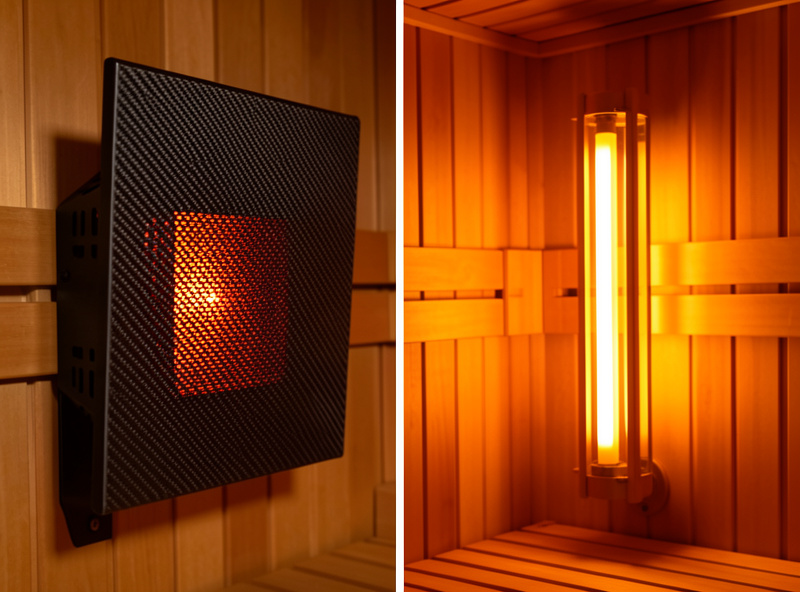
Ceramic rod heaters are the old guard. A coiled element wrapped in a ceramic sleeve, glowing warm rather than visibly red, mounted behind a grille. They run hot at the surface — you can feel the radiant point clearly — and they ramp up reasonably fast. The trade-off is a small radiant footprint: a ceramic rod throws a concentrated cone of heat, so cabins built around them need several rods to cover your back, and you’ll notice the spots between them as cooler. They emit deep into the far-infrared band.
Carbon-fiber panels are the modern default. Instead of a hot rod, a large flat panel of carbon-fiber composite warms gently across its whole surface — lower surface temperature, much larger radiant footprint. The cabin I run as my daily benchmark is a carbon/ceramic hybrid, and the carbon panels are why the heat feels even across my back instead of arriving in stripes. The downside is ramp time: a big low-temperature panel takes longer to come up to working heat than a ceramic rod, which is why preheat timing matters more in a carbon cabin. For a head-to-head comparison on heat evenness, surface temperature, and durability, the carbon vs ceramic infrared sauna guide covers which heater type suits solo users versus families and long versus short sessions.
Carbon/ceramic hybrids try to get both: carbon panels for the broad even field, a few ceramic elements (or ceramic-doped carbon) to push surface temperature and felt intensity up where you want it. This is the sweet spot for most far-infrared cabins and it’s what my own 2-person hemlock unit uses. Done well, you get the carbon panel’s wide footprint with enough surface temperature that the heat actually feels like heat and not a warm glow.
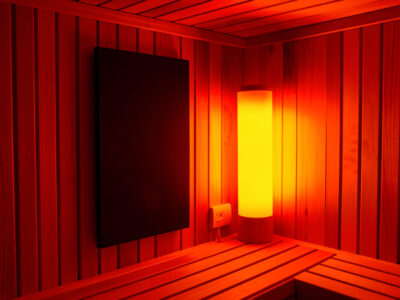
Incoloy / halogen NIR emitters are a different animal entirely. These are the near-infrared sources — bright, fast, glowing visibly, run by a halogen-style tube or an Incoloy metal-sheathed element. They ramp almost instantly and produce a very different felt sensation: a sharp surface warmth rather than the deep, slow soak of far-infrared. Almost every “full-spectrum” cabin is really a far-infrared carbon cabin with one or two of these NIR emitters bolted in to cover the near band. Whether that’s worth the premium depends entirely on the quality of the emitter, which is exactly where the cheap “full-spectrum” sticker falls apart.
Near, mid, and far infrared — what the bands actually mean
Infrared is just the slice of the spectrum below visible red light, and it’s split into bands by wavelength. Getting these right matters because a backwards near/far claim is the single fastest way to spot someone who’s never actually metered a panel. For a deeper breakdown of how each wavelength band penetrates tissue differently and which heater type produces which band, the near, mid, and far infrared heaters guide covers the physics and buying implications of each.
- Near-infrared (NIR), roughly 0.7–1.4 µm: the shortest wavelength, highest energy, produced by glowing halogen/Incoloy emitters. It penetrates surface tissue and feels like a sharp, immediate warmth. This is the band added by “full-spectrum” units.
- Mid-infrared, roughly 1.4–3 µm: the in-between band, often claimed but rarely the dominant output of any single emitter. Most “mid” output is really the tail of a far-infrared panel or the cooler end of an NIR source.
- Far-infrared (FIR), roughly 3–1000 µm: the long-wavelength band that carbon and ceramic panels produce. This is the slow, deep, soaking heat that defines the classic infrared-cabin feel. The overwhelming majority of home cabins are far-infrared first.
The practical takeaway: a far-infrared carbon cabin and a near-infrared lamp are doing genuinely different things to your skin, and a “full-spectrum” cabin is the attempt to cover both in one box. If you want the deep dive on which band suits which use, the near vs far vs full-spectrum breakdown covers the buying decision in detail — this guide stays on the heater hardware that produces each band.
Why wattage is the most gamed number on the spec sheet
Here’s the line most buyers never get told: wattage tells you how much electricity the heaters draw, not how much radiant heat reaches your body. Two cabins rated at the same total watts can feel completely different depending on emitter type, panel placement, surface temperature, and how much of that energy is radiating toward you versus warming the cabin walls.
I’ve measured this with a plug-in energy meter across the units I run. A carbon-panel cabin drawing a given wattage spreads that energy over a large low-temperature surface; a ceramic-heavy cabin at the same draw concentrates it into hotter, smaller points. Neither is “more powerful” — they distribute the same energy differently. When a listing leads with a big wattage number and says nothing about panel area, emitter type, or surface temperature, that number is doing marketing work, not engineering work.
What actually predicts felt heat is the combination of panel surface temperature, total radiant area, and how close and how well-placed the panels are to your body. A 1,500-watt cabin with well-placed full-coverage panels will out-soak a 1,800-watt cabin that leaves your shins in a cold spot every time. This is also why electricity cost per session — covered in the real home running-cost breakdown — tracks wattage and session length far more honestly than felt heat does.
| Heater type | IR band | Ramp time | Radiant footprint | Felt heat | Typical EMF behaviour |
|---|---|---|---|---|---|
| Ceramic rod | Far | Fast | Narrow / concentrated | Sharp, point-source | Field tight to the rod; falls off fast with distance |
| Carbon-fiber panel | Far | Slow | Wide / even | Gentle, broad | Lower field across surface; routing-dependent |
| Carbon/ceramic hybrid | Far | Medium | Wide with hot zones | Even with felt intensity | Mix of the two; design-dependent |
| Incoloy / halogen NIR | Near | Very fast | Narrow / bright | Immediate surface warmth | Emitter and its wiring often the field hotspot |
EMF: the measurement no review site bothers to make
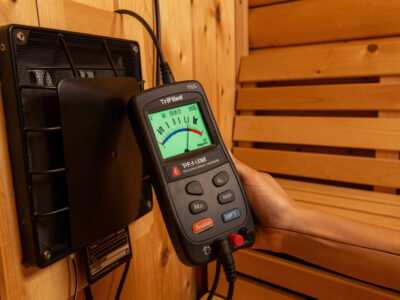
This is the part of infrared-sauna engineering that gets either ignored or turned into fear-marketing, and almost nobody does the boring middle thing: actually metering it. EMF — electromagnetic field — is a real, measurable engineering quantity, not a mystery. I treat it the way I’d treat any other emission off a piece of mains-powered equipment: measure it, understand where it comes from, and reduce it where it’s cheap to. For a step-by-step measurement walkthrough with actual TriField TF2 readings, the measure infrared sauna EMF with a TriField meter guide covers AC magnetic, AC electric, and RF modes and how to interpret each number.
There are three separate things people lump under “EMF,” and a TriField TF2 (the meter I use, with a cheaper acoustimeter as a cross-check) reads them on different settings:
- Magnetic field (measured in milligauss): generated by current flowing through the heater elements and wiring. This is the one “low-EMF” heater design is mostly about.
- Electric field (measured in volts per metre): present around any energised conductor whether or not much current flows; heavily affected by grounding and shielding.
- Radio frequency (RF): mostly from the controller, any wireless module, Bluetooth audio, or a phone you brought in — not usually the heater itself.
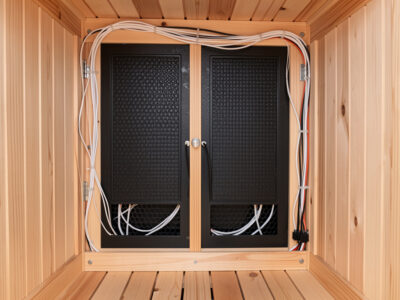
The crucial point: most of the field inside a cabin doesn’t come from the infrared emission at all. It comes from current flowing through the heater wiring and how that wiring is routed. A “low-EMF” panel is one engineered so the conductors run in a way that cancels much of the magnetic field — paired conductors carrying current in opposite directions largely cancel each other’s field. Get the routing right and the milligauss reading at the bench where you sit drops substantially; get it wrong and even a “low-EMF” panel reads higher than it should. That’s why I take the meter to the actual seat position, not the panel face — the number that matters is the field where your body is, at the distance you actually sit.
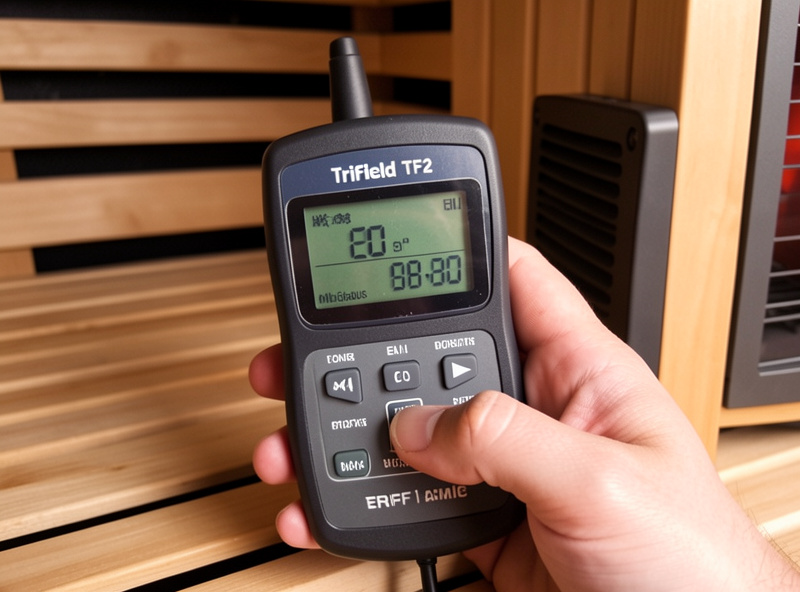
What’s a reasonable reading? I won’t hand you a single magic number, because it depends entirely on the distance you measure at and which field you’re reading. What I will say from living with the meter: a well-designed low-EMF carbon cabin reads dramatically lower at the seat than a bargain ceramic unit with lazy wiring, the field falls off fast as you move even a hand’s width away from a panel, and the biggest single reduction usually comes from the wiring path and grounding, not the emitter chemistry. This is engineering you can verify yourself for the price of a meter — and it’s exactly the kind of measurable claim that no spec sheet will make for you.
One habit worth adopting from the start: meter the cabin empty and powered, then meter it again with the controller running, any Bluetooth audio module switched on, and your phone where you’d normally set it. In my own logging the heater field barely moves between those states, but the RF reading jumps the moment the wireless audio and the phone come into play — which tells you the controller and your devices, not the emitters, are often the loudest source in the cabin. The full breakdown of how ELF and RF behave differently in a sauna is in the ELF vs RF sauna EMF guide. That’s a five-minute test, and it reframes the whole “is this sauna low-EMF” question around things you actually control rather than the heater chemistry you’re stuck with once you’ve bought.
“Low-EMF” labelling — what it changes and what it doesn’t
“Low-EMF” is not a regulated term, so it means whatever the manufacturer wants it to mean. For a buyer’s guide to what genuine low-EMF certification looks like and which brands deliver it, see the low-EMF infrared sauna guide. In practice, a genuine low-EMF design does three things: it routes paired conductors to cancel magnetic field, it grounds the panels and chassis properly to manage electric field, and it keeps the controller and any wireless modules away from the seat. A sticker that says “low-EMF” while doing none of that is just a sticker.
The honest way to read the label is as a starting point you then verify. If a brand publishes actual measured readings — at a stated distance, for magnetic and electric field separately — that’s a brand taking the engineering seriously. If “low-EMF” appears with no numbers and no measurement distance, treat it as marketing and bring your own meter. The brands worth your money on this are usually the same ones doing the rest of the engineering properly; the brand-review rundown and the SaunaSpace and Clearlight deep-dives get into who actually publishes their field numbers.
Heater placement: where the panels sit decides everything
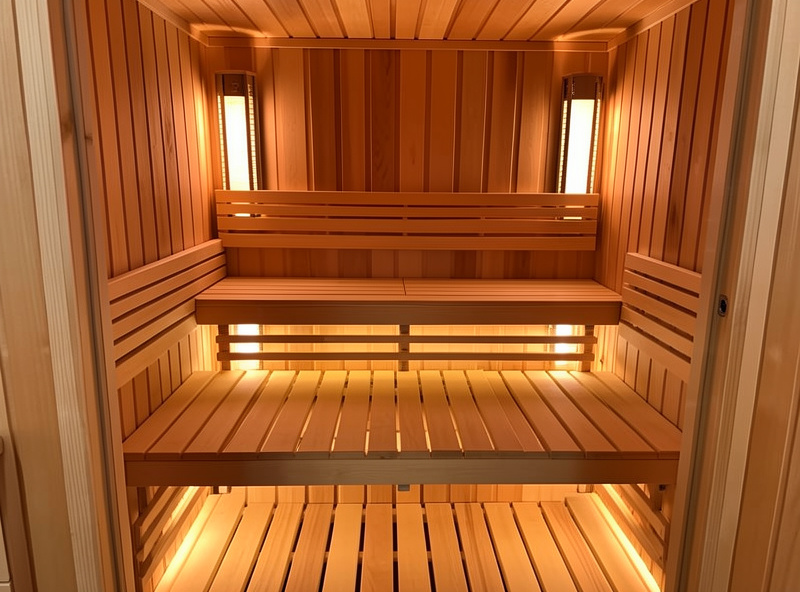
You can have excellent emitters and still end up with a mediocre sauna if the panels are badly placed. Radiant heat travels in straight lines and falls off with distance, so the layout of the heaters inside the cabin determines whether the heat reaches all of you or leaves cold zones. In every cabin I’ve lived with, the cold spots land in the same predictable places: the shins, the lower back if there’s no behind-the-bench panel, and the feet if there’s no floor heater.
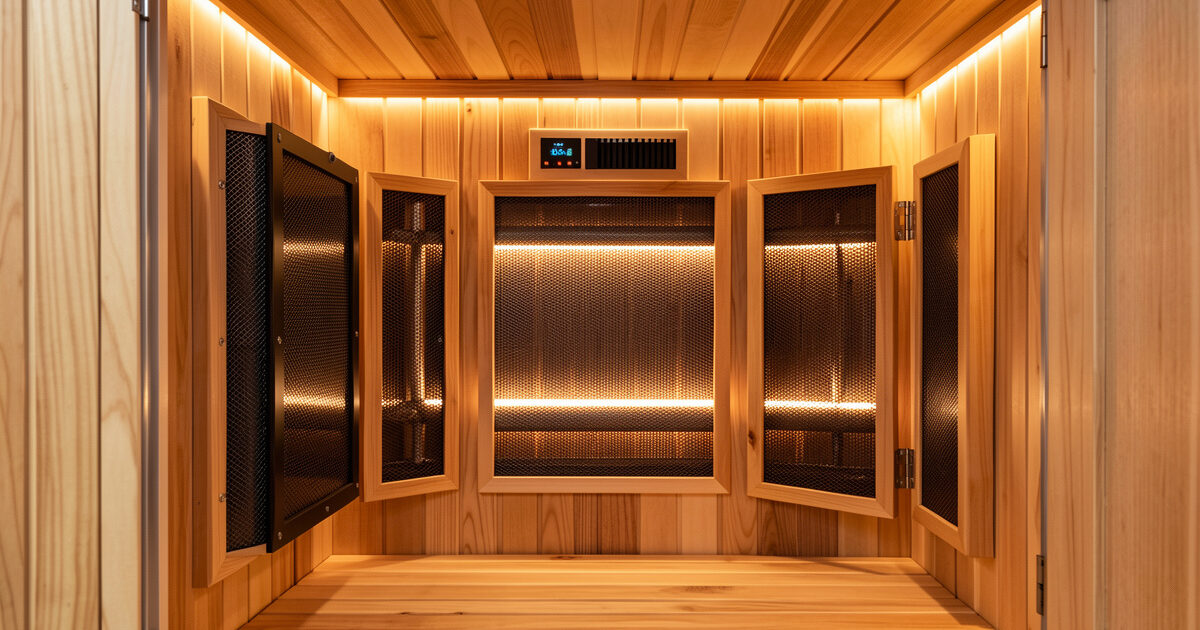
Good placement means panels behind your back, beside you, in front of your shins, and under or near your feet — full coverage at the distances you actually sit. This is also why a bigger cabin isn’t automatically better: a 4-person cabin with the same number of panels as a 2-person one spreads the same heat over more empty air, and you feel it. When you’re comparing units, count the panels and note where they sit relative to the bench, not just the total wattage. For the full engineering on wattage sizing and optimal panel placement in a home cabin, see infrared sauna heater wattage and placement. The way panels relate to bench height and seating is its own piece of the install puzzle, and it overlaps with where you physically site the cabin — covered in the where-to-install guide and the indoor placement walkthrough.
The install side: circuits, grounding, and EMF together
Here’s where two threads of this guide tie together: the same wiring that powers the heaters is also a major source of the electric field inside the cabin, so the electrical install and the EMF picture are the same problem. A properly grounded dedicated circuit isn’t just an electrical-safety requirement — good grounding is one of the biggest levers on the electric-field reading at the seat.
Most home cabins run on a dedicated circuit sized to the heater load; larger and full-spectrum units can need more. The installation requirements guide covers the full electrical picture, the breaker and circuit-sizing breakdown gets into the amp math, and flooring and clearance rounds out the physical install. The one thing I’d add from the EMF side: when you (or your electrician) route the supply, keeping the feed away from the seat and ensuring a solid ground does more for your in-cabin field readings than any heater sticker. Jurisdiction-specific code is region-dependent — confirm circuit and grounding requirements with a local electrician; I’m describing the engineering, not signing off your wiring.
Full-spectrum reality check: one weak NIR bulb is not full-spectrum
The “full-spectrum” premium is where the most money gets spent on the least verified hardware. A true full-spectrum cabin adds genuine near-infrared output via a proper Incoloy or halogen emitter with real power behind it. A cheap “full-spectrum” cabin adds one underpowered NIR bulb so the listing can use the word, and the near-infrared contribution is negligible. From the outside the spec sheet looks the same; the felt difference is enormous.
The tells: a real NIR emitter glows brightly and ramps almost instantly, draws meaningful additional wattage, and is usually called out by emitter type and power. A token one is mentioned only as “full-spectrum technology” with no emitter detail. If you’re paying the full-spectrum premium, you’re paying for the near-infrared band — make the listing prove the emitter is real before you do. The full-spectrum overview and the near-infrared lamp setup show what genuine NIR hardware looks like next to the token version.
How I’d choose a heater today
If you want one honest decision framework, here’s how I think about it after years of living with all four types. For most people wanting the classic deep, even soak in a home cabin, a carbon/ceramic hybrid far-infrared unit with good panel coverage and verifiable low-EMF wiring is the sweet spot — it’s what I run, and it’s the easiest to live with day to day. If you specifically want near-infrared and you’ll actually use it, pay for a genuine full-spectrum unit with a real NIR emitter, not a token one. If budget is tight, a well-placed carbon-panel cabin beats a higher-wattage ceramic cabin with cold spots every time.
Whatever you choose, the two numbers worth verifying yourself are panel coverage (count them, note where they sit) and EMF at the seat (bring a meter, or buy from a brand that publishes real readings at a stated distance). Those two checks separate genuinely good engineering from a good-looking spec sheet — and neither one shows up in the wattage number everyone fixates on. For broader buying context, the home cabin roundup, the sizing guide, and the 2-person picks put the heater decision into the wider purchase.
One last engineering note that ties the whole site’s lens together: the same smart-plug hub that schedules my other household loads pre-heats the sauna on a timer, so the carbon panels are at working temperature before I open the door — which neatly sidesteps the slow-ramp downside of a big low-temperature panel. The heater is the machine; everything else, including the EMF, is about how you wire it, place it, and run it.
Which infrared sauna heater type is best?
For most home users wanting the classic deep, even soak, a carbon/ceramic hybrid far-infrared unit with full panel coverage and verifiable low-EMF wiring is the sweet spot. Carbon panels give a wide even radiant field; the ceramic element adds felt intensity. Near-infrared via a genuine full-spectrum emitter is worth it only if you specifically want that band and the emitter is real, not a token bulb.
Does higher wattage mean a better infrared sauna?
No. Wattage measures electricity drawn, not radiant heat reaching your body. Two cabins at the same wattage can feel completely different depending on emitter type, panel surface temperature, radiant area, and placement. A lower-wattage cabin with full-coverage well-placed panels often feels warmer than a higher-wattage one that leaves cold spots.
What does low-EMF actually mean on an infrared sauna?
Low-EMF is not a regulated term. A genuine low-EMF design routes paired conductors to cancel magnetic field, grounds the panels and chassis to manage electric field, and keeps the controller and wireless modules away from the seat. A sticker with no measured readings at a stated distance is marketing; verify it with a meter or buy from a brand that publishes real numbers.
Where does the EMF in an infrared sauna come from?
Mostly from current flowing through the heater wiring and how that wiring is routed, not from the infrared emission itself. Magnetic field comes from heater current, electric field from energised conductors and grounding, and RF from the controller, any wireless module, or a phone you bring in. Good wiring routing and solid grounding reduce the field at the seat more than the emitter chemistry does.
How do you measure infrared sauna EMF?
With a meter such as a TriField TF2 that reads magnetic field in milligauss, electric field in volts per metre, and RF separately. Measure at the seat position at the distance you actually sit, not at the panel face, because the field falls off rapidly with distance. The reading where your body is, is the only one that matters.
What is the difference between near, mid and far infrared heaters?
Near-infrared (about 0.7 to 1.4 micrometres) comes from bright glowing halogen or Incoloy emitters and feels like sharp surface warmth. Far-infrared (about 3 to 1000 micrometres) comes from carbon and ceramic panels and gives the deep, slow, even soak most home cabins are built around. Mid-infrared sits between and is rarely a single emitter’s main output. Full-spectrum units add a near-infrared emitter to a far-infrared cabin.