Clearlight is the only major infrared sauna brand offering a lifetime residential warranty on cabin structure, heating elements, and electronics. The Sanctuary line — manufactured under Jacuzzi Group Worldwide — is independently certified for both low-EMF and low-ELF emissions, a dual certification no other premium brand publishes. Sanctuary 2 (2-person flagship) lists at $7,299 in basswood or $7,699 in mahogany, with the brand running frequent $500–$700 promotional discounts.
Clearlight’s positioning rests on three pillars: warranty terms that make 12+ year ownership economically rational, electromagnetic certification that addresses both EMF and ELF radiation concerns, and basswood cabin construction selected over the cedar most competitors use. This review breaks down the Sanctuary lineup, the True Wave heater architecture, and where Clearlight makes sense versus Sunlighten and other premium alternatives.
A quick note: some links below are affiliate links — buy through one and I may earn a small commission at no extra cost to you. Clearlight sells direct, so where I link it is to the meter I use and the cheaper way to test the habit first. Details on my disclaimer page.
Methodology: How I built this one: I have not unboxed a Sanctuary. I have spent years living with the heater types Clearlight and its competitors build with — carbon, ceramic, and the hybrids — metering every one of them with a TriField TF2 and mapping cold spots with a thermal camera on my own gear. That is the lens this review runs Clearlight’s published specs, wiring, and EMF numbers through: verdicts built on heater type, wattage, wood, warranty, EMF class, and price-per-person, not a sponsored walk-through of their showroom.
As an Amazon Associate I earn from qualifying purchases.
At-a-Glance: Clearlight Sanctuary Specs
The Sanctuary line is Clearlight’s residential cabin range — six indoor configurations sharing the same True Wave heater architecture and lifetime-warranty terms, differentiated by capacity, electrical draw, and cabin footprint. Pricing below is 2026 direct-from-brand MSRP (basswood / mahogany), pulled from Clearlight’s own price list before recurring promotional discounts.
| Spec | Sanctuary 1 | Sanctuary 2 | Sanctuary 3 | Sanctuary 5 | Sanctuary C |
|---|---|---|---|---|---|
| Capacity | 1 adult | 2 adults | up to 3 | up to 4 | up to 4 (corner) |
| Heater | True Wave full-spectrum (2×500W front) + far-IR panels | True Wave full-spectrum (2×500W front) + far-IR panels | True Wave full-spectrum (2×500W front) + far-IR panels | True Wave full-spectrum (4×500W front) + far-IR panels | True Wave full-spectrum + far-IR panels |
| Electrical | 120V / 15A (standard outlet) | 120V / 20A (dedicated outlet) | 240V / 12A (dedicated circuit) | 240V / 16.5A (dedicated circuit) | 240V (dedicated circuit) |
| Wood | Basswood or mahogany | Basswood or mahogany | Basswood or mahogany | Basswood or mahogany | Basswood or mahogany |
| Warranty | Lifetime residential | Lifetime residential | Lifetime residential | Lifetime residential | Lifetime residential |
| 2026 MSRP | $6,899 / $7,299 | $7,299 / $7,699 | $7,699 / $8,099 | $8,499 / $8,899 | $9,099 / $9,499 |
Two corrections to how I originally had this table framed: the Sanctuary line is full-spectrum across the board, not far-infrared-only — every model puts two (or four, on the 5) 500-watt True Wave panels on the front wall that blend carbon, ceramic, and a near-infrared halogen element, then backs them with far-infrared-only panels on the rear wall, side walls, calf area, and floor. And the electrical story is not one-size-fits-all: Sanctuary 1 is the only model that runs off a standard 120V/15A wall outlet. Step up to the Sanctuary 2 and you need a dedicated 120V/20A circuit; Sanctuary 3 and larger need a real 240V circuit, same as a dryer or oven. That is the line item first-time buyers miss when they budget for “just plugging it in” — verify your panel capacity before you order anything past a Sanctuary 1. For more on home setup electrical requirements, see our infrared sauna setup guide.
True Wave Heater Technology Explained
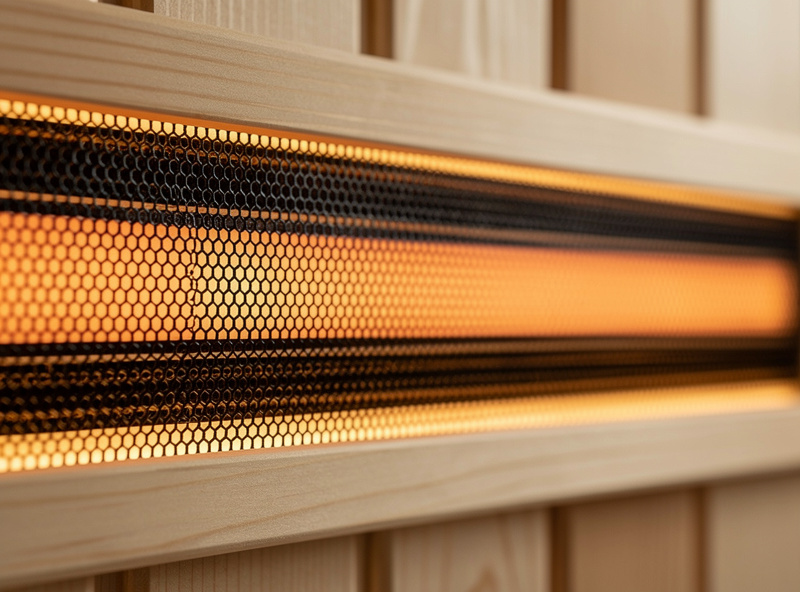
True Wave is Clearlight’s hybrid heating system combining carbon fiber panels with ceramic accents on the calf and back zones. The architecture differs from competitors in a specific way: most brands choose either pure carbon (Sunlighten SoloCarbon) or pure ceramic (some legacy brands), trading speed for comfort or vice versa. True Wave layers both — ceramic for the deep-penetration zones where heat density matters, carbon for the surrounding panels where comfort and even distribution matter. The carbon-ceramic hybrid in the cabin I run every winter works on exactly this principle, and the difference is something you feel in the first five minutes — the ceramic zones hit your back and calves with a denser, faster heat while the carbon panels keep the rest of the cabin from cooking your shoulders. It is the layout I would pick again, and it is why “carbon vs ceramic” is the wrong question: the good cabins use both.
The practical result is a sauna that reaches comfortable working temperature faster than carbon-only far-infrared systems, while keeping panel surface temperatures in a range comparable to Sunlighten’s SoloCarbon. The front-wall True Wave panels are optimized around a 9.4-micron absorption point, tuned specifically for the far-infrared band the body’s water content absorbs most efficiently — the rear/side/calf/floor panels are far-infrared-only and exist to close the temperature gradient so you are not sitting in a cold pocket while the front wall does the work. The differentiation from a pure-carbon cabin is not wavelength specificity but heat-up speed, zone control, and the fact that the front panels run near, mid, and far infrared simultaneously rather than one band.
One correction on the electrical side worth being blunt about: True Wave does not run at a uniform voltage across the lineup, and I want to flag that clearly because getting this wrong is exactly the kind of installation surprise that turns a delivery day into a week of waiting on an electrician. The Sanctuary 1 alone plugs into a standard 120V/15A household outlet — genuinely no rewiring needed. Everything above it draws more: the Sanctuary 2 needs its own dedicated 120V/20A circuit (a 20-amp breaker most houses don’t already have sitting unused near the install spot), and the Sanctuary 3, 5, and C all step up to a real 240V circuit — the same class of run as an electric dryer or oven, not a lamp. I wired a dedicated circuit for my own cabin specifically because I did not want to trust a shared household circuit with a heater load, and I would make that call again regardless of what the spec sheet allows. Budget the electrician into the purchase price for anything past a Sanctuary 1. For more on home setup electrical requirements, see our infrared sauna setup guide.
Sanctuary Lineup, Pricing Tiers, and Who Each Model Actually Fits
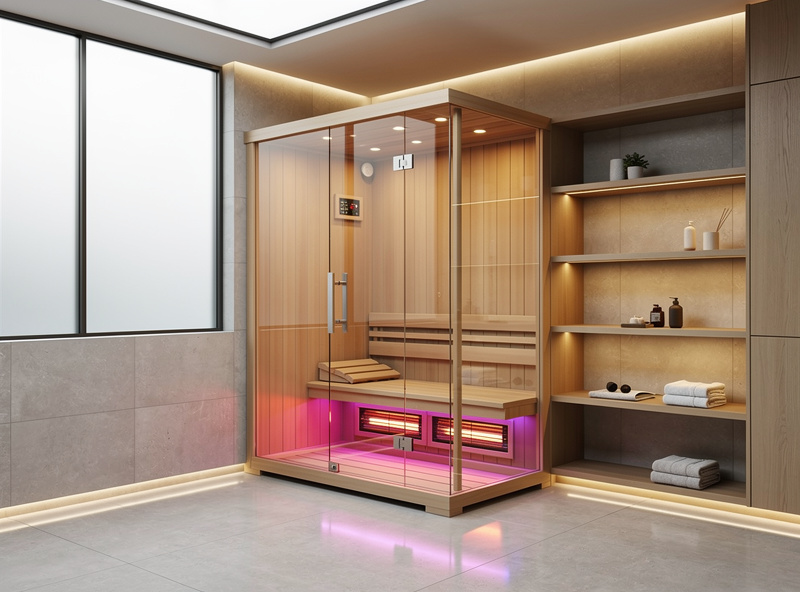
The Sanctuary line covers six indoor configurations. Clearlight also produces the Premier IS series — an entry-level lineup using the same True Wave heater family but priced below the Sanctuary tier, giving Clearlight a price-step most premium brands skip straight over. Below the Sanctuary numbers, here is how I would actually match a household to a model, not just a size label.
The Sanctuary 1 ($6,899 basswood / $7,299 mahogany) is a 1-person cabin that plugs into a standard outlet — the pick for an apartment, a condo without spare electrical capacity, or a solo user who wants zero electrician involved in the purchase. The Sanctuary 2 ($7,299 / $7,699) is the brand’s volume seller and needs its own 20A circuit — comparable in footprint to Sunlighten’s Signature 2, see our head-to-head Sunlighten vs Clearlight comparison for the warranty, EMF, and price math at the 2-person tier. The Sanctuary 3 ($7,699 / $8,099) fits couples who actually want to stretch out rather than sit knee-to-knee, or a parent-and-teen pair — but it crosses into 240V territory, so it is the first model in the range where I would call an electrician before I called Clearlight.
The Sanctuary 5 ($8,499 / $8,899) and corner-configuration Sanctuary C ($9,099 / $9,499) both accommodate up to four adults and are the right call for a household that actually saunas as a family activity rather than a solo ritual — the corner layout on the C claws back floor space in a smaller room, which matters more than people expect once you are shopping a 4-person footprint against a real basement or garage corner. The Sanctuary Retreat ($9,499 / $9,799) is Clearlight’s only wheelchair-accessible model — low-entry threshold, wider interior, 85.5 inches of headroom — and it is the one I would point a buyer with mobility needs to before any other brand’s lineup, because most competitors do not build this configuration at all. The Sanctuary Y is a genuinely different product: a 4-person cabin with removable benches that converts to a private hot-yoga room, priced at the top of the indoor range — worth it only if the yoga half of that equation is a real use case, not a novelty. Above the indoor line sit the Sanctuary Outdoor 2 (from $8,599 mahogany) and Outdoor 5 (from $9,699 mahogany), weatherproofed for exterior placement — see our top 10 infrared sauna brands for how these stack against Sun Home’s outdoor-first lineup.
EMF and ELF: The Dual Certification Edge
Clearlight is the only major infrared sauna brand publishing third-party certification for both EMF (electromagnetic field) and ELF (extremely low frequency) radiation. EMF testing measures alternating current fields and is the standard sauna-industry benchmark; ELF testing measures the lower-frequency wave forms that some health researchers cite as separately concerning for long-duration exposure environments like sauna sessions.
The Sanctuary line documents EMF readings under 0.5 milligauss and ELF readings under 0.3 V/m at session positions, both verified by the same Vitatech Engineering lab Sunlighten uses. Clearlight has chosen to publish ELF data where Sunlighten has not — this is a defensible technical edge, not a marketing equivalence. For EMF-sensitive buyers running multiple weekly sessions over years, the ELF certification represents documented data Sunlighten has not made public. This is the one place I will give Clearlight unqualified credit: EMF almost anyone can meter, but ELF is the field nobody checks because it needs the right instrument and the patience to read it. When I sweep my own cabin with a TriField TF2 — it reads magnetic, electric, and RF on one dial — the electric-field number is the one that climbs near cheap controllers, and a brand certifying it has done the hard part for you.
The Sanctuary’s wiring routing also differs: heating element power leads run through grounded shielded conduit rather than the conventional ribbon-wire approach common in mid-tier cabins. This wiring architecture is the engineering reason Clearlight can certify both EMF and ELF — most competitors cannot meet the ELF threshold without it. For deeper context on what these measurements mean for actual use, see our infrared sauna safety and EMF guide.
Build Quality: Basswood vs Cedar
Clearlight uses Eco-Certified Grade-A North American basswood for all Sanctuary cabin builds — a material choice that distinguishes the brand from cedar-dominated competitors like Sunlighten and Sun Home Saunas. Basswood is hypoallergenic, holds dimensional stability in humid climates, and emits no aromatic volatile compounds when heated. Cedar’s natural aromatic oils smell pleasant but trigger respiratory sensitivity in 5–8% of users, a percentage Clearlight cites in justifying the basswood selection. I happen to like the cedar smell, but I have also sat a session next to someone it set off coughing inside ten minutes — if anyone in your house reacts to cedar, the basswood call is not marketing, it is the difference between a cabin that gets used and one that sits cold.
The cabin construction uses 1.25-inch-thick wall panels (matching Sunlighten’s panel thickness) with magnetic door closures and tempered glass front. Assembly is modular and includes the brand’s “easy-locking” panel system — most owners report 60–90 minute assembly with two people, no tools beyond a screwdriver. Color options include light, medium, and dark stains across all Sanctuary models at no upcharge.
Clearlight Pros and Cons
The honest case for Clearlight rests on warranty length and dual certification; the case against rests on heater technology that, while excellent, is not as clinically researched as Sunlighten’s SoloCarbon platform.
Pros
- Lifetime residential warranty on cabin, heating elements, and electronics — only major brand offering this
- Dual EMF and ELF third-party certification through Vitatech Engineering
- True Wave full-spectrum front panels reach comfortable working heat faster than carbon-only competitors
- Sanctuary 1 is the only premium full-spectrum cabin in its class that runs off a standard 120V/15A household outlet — no electrician required at the entry tier
- Basswood or mahogany wood options avoid cedar aromatic-oil sensitivity
- Premier IS entry tier fills the price gap below the Sanctuary line for buyers not ready for a $6,900+ cabin
- Backed by Jacuzzi Group Worldwide manufacturing and customer service infrastructure
Cons
- True Wave’s front panels run all wavelength bands simultaneously and are not user-selectable — Sunlighten’s mPulse line lets you dial in near, mid, or far infrared independently, which matters if you want that control rather than an always-on full-spectrum panel
- True Wave heater not backed by the same volume of peer-reviewed clinical research as Sunlighten’s SoloCarbon platform
- Everything past the Sanctuary 1 needs a dedicated circuit — 20A for the Sanctuary 2, a full 240V run for the Sanctuary 3 and up — which adds an electrician’s bill most buyers don’t budget for upfront
- 2026 pricing runs materially higher than the entry-level and mid-tier competitors in this category — the Sanctuary 1 alone starts near $6,900 before any options
- Sanctuary Y and the Retreat and corner-configuration models sit at the top of the indoor range, north of $9,000
Who Should Buy Clearlight (and Who Shouldn’t)
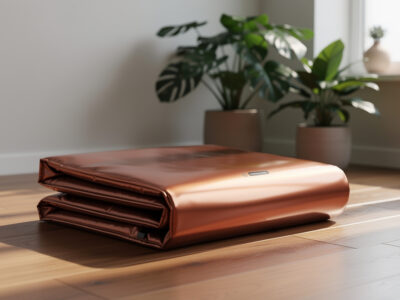
Clearlight is the right choice for buyers planning long-term ownership, those weighting warranty terms heavily in their decision, EMF-sensitive users wanting documented ELF certification, and anyone with cedar sensitivity wanting a hypoallergenic cabin. The lifetime residential warranty alone justifies premium pricing for households expecting 10+ years of regular use — most competitors warranty heating elements for 5–7 years, which means a Sunlighten or Sun Home cabin may need heater replacement before a Sanctuary needs any service. One honest caveat before anyone spends $7,000+ on a lifetime-warranty cabin: make sure the daily habit is real first. The cheapest way to find out whether you will actually use infrared four nights a week is a sauna blanket for a month — if the blanket gathers dust, a lifetime-warranty cabin will too.
Clearlight is not the right choice for buyers who specifically want user-selectable wavelength control rather than an always-on full-spectrum panel (Sunlighten’s mPulse is built for that), buyers wanting the most clinically researched heater platform specifically (Sunlighten’s SoloCarbon has the deeper published-study base), or buyers whose install spot is genuinely outdoors and want a purpose-built outdoor cabin rather than Clearlight’s weatherproofed Outdoor line (Sun Home’s Luminar is engineered specifically for exterior placement, year-round, in an aluminum shell — Sun Home’s own Equinox, for comparison, is an indoor-only model despite the similar branding). For the full alternatives matrix, see our infrared sauna brand comparison.
Clearlight vs Sunlighten and Other Premium Brands: Price-Per-Person
Sunlighten does not publish pricing publicly in the US — buyers have to request a quote — so a direct dollar-for-dollar match against the Sanctuary line isn’t something I can verify and print here honestly; industry pricing trackers put comparable Signature-tier cabins in a similar $7,000–$12,000 band depending on size, which puts the two brands in the same fight even without an exact match. What I can compute cleanly is price-per-person on Clearlight’s own published numbers, which is the number that actually tells you whether a bigger cabin is a better deal or just a bigger bill:
| Model | Capacity | 2026 MSRP (basswood) | Price per person |
|---|---|---|---|
| Sanctuary 1 | 1 adult | $6,899 | $6,899 |
| Sanctuary 2 | 2 adults | $7,299 | $3,650 |
| Sanctuary 3 | up to 3 | $7,699 | $2,566 |
| Sanctuary 5 | up to 4 | $8,499 | $2,125 |
| Sanctuary C | up to 4 (corner) | $9,099 | $2,275 |
The curve is steep and then flattens: going from a Sanctuary 1 to a Sanctuary 2 roughly halves the per-person cost, but every step past the Sanctuary 2 buys diminishing returns per seat. If you are a solo user or a couple who will never host a third person in the cabin, the Sanctuary 1 or 2 is the financially rational stop — paying for a Sanctuary 5’s extra capacity you use twice a year is exactly the kind of spec-sheet flex that doesn’t pay off in a real session log.
Against the wider field: Sun Home’s outdoor-rated Luminar 2 runs roughly $10,600–$11,100 as a 2-person cabin — meaningfully above the Sanctuary 2 per-person, but it is solving a different problem (aluminum-shell, weatherproofed, Canadian-red-cedar-lined outdoor placement) rather than competing head-to-head indoors. Both Sun Home and Clearlight publish independent Vitatech-tested EMF figures around 0.5 milligauss at seated position, so on the metering side they are in the same class. The honest verdict: Clearlight wins on warranty depth (true lifetime vs Sun Home’s limited-lifetime) and on offering a standard-outlet entry point (Sanctuary 1) that nothing else in this price tier matches; Sunlighten’s mPulse line wins if you specifically want user-selectable wavelength control instead of an always-on full-spectrum panel.
Compare current pricing and availability: Clearlight saunas on Amazon.
Manufacturer specs and warranty details: Clearlight official site.
True Wave Heater Construction, Panel by Panel
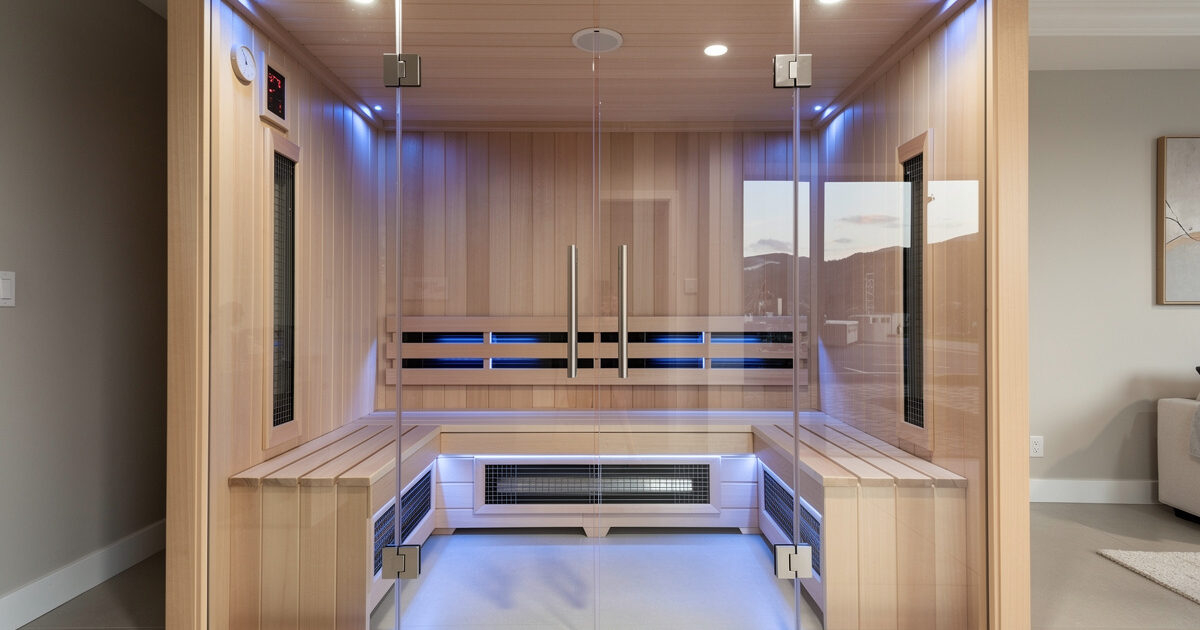
Popping the hood on where the panels actually sit matters more than the marketing name. Every Sanctuary model puts its 500-watt True Wave panels on the front wall only — two of them on Sanctuary 1 through 3, four on the Sanctuary 5. Those front panels are the full-spectrum ones: a carbon-and-ceramic base layer for the far-infrared band, with a halogen near-infrared element layered in for the fast surface warmth that carbon alone can’t deliver quickly. Everything else in the cabin — the back wall, side walls, the panel behind your calves, and the under-floor heater — is far-infrared-only. That’s a deliberate, correct design choice, not a cost-cutting shortcut: it puts the full-spectrum hardware where you face it and uses cheaper, simpler far-infrared panels to close the temperature gradient around the rest of the body so you’re not radiantly “cooked” from four directions at once. It is the same zone-control logic I run on my own hybrid cabin, just executed with Clearlight’s specific hardware split.
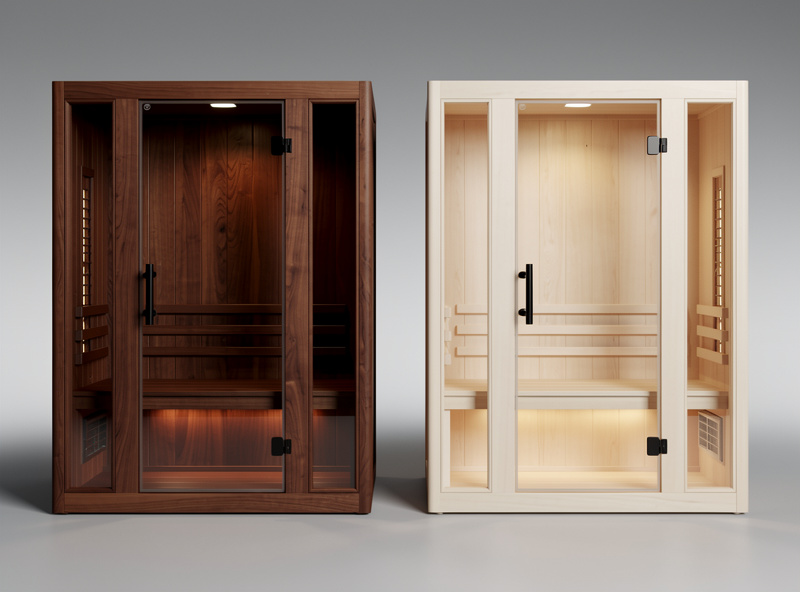
Wood choice on the Sanctuary line is basswood or mahogany — both furniture-grade, both correct choices for a cabin interior, and neither one changes the heater physics. Basswood is the lighter, more dimensionally stable, lower-VOC option and the one I’d point cedar-sensitive buyers toward; mahogany runs a modest premium across every model and reads darker/more furniture-grade in a finished room. Neither wood choice touches the EMF number — that’s entirely a function of heater design and wiring routing, which is covered in the certification section above.
Frequently Asked Questions
How much does the Clearlight Sanctuary 2 cost?
Clearlight Sanctuary 2 lists at $7,299 MSRP in basswood ($7,699 mahogany) for 2026. The brand runs frequent $500-700 promotional discounts on Sanctuary models, particularly during seasonal sales. The Premier IS entry tier is priced below the Sanctuary line for buyers not ready for a $6,900+ cabin.
Is Clearlight better than Sunlighten?
Clearlight wins on warranty terms (true lifetime residential vs Sunlighten’s shorter heater terms) and dual EMF+ELF certification. Sunlighten wins on heater clinical research and on offering user-selectable wavelength control through its mPulse line. Sunlighten does not publish pricing publicly, so a direct dollar match isn’t verifiable.
What is the True Wave heater in Clearlight saunas?
True Wave is Clearlight’s heating system. Front-wall panels (two on Sanctuary 1-3, four on the Sanctuary 5) run full-spectrum, combining carbon, ceramic, and a near-infrared halogen element. Back wall, side walls, calf area, and floor panels are far-infrared-only, closing the temperature gradient around the rest of the cabin.
Does Clearlight have a lifetime warranty?
Yes. Clearlight Sanctuary models carry a lifetime residential warranty covering cabin structure, heating elements, and electronics. Lifetime warranty applies to the original residential purchaser; confirm current registration requirements directly with Clearlight at purchase.
What wood does Clearlight use for their saunas?
Clearlight Sanctuary cabins are available in basswood or mahogany, both furniture-grade. Basswood is the lighter, lower-VOC, more hypoallergenic option; mahogany runs a modest premium and reads darker in a finished room. Neither wood choice changes the True Wave heater’s EMF profile.
Can Clearlight saunas be installed outdoors?
Standard Sanctuary models are indoor-rated only. Clearlight’s Sanctuary Outdoor 2 and Outdoor 5 are the brand’s weatherproofed outdoor-rated models. For a purpose-built outdoor cabin in an aluminum shell rated for year-round exterior use, Sun Home’s Luminar is engineered specifically for that placement.
Is Clearlight low EMF?
Clearlight positions the Sanctuary line as independently EMF- and ELF-tested and markets it as industry-leading low-EMF/ELF. Comparable Vitatech-tested competitor cabins report figures around 0.5 milligauss at seated position — verify current published test figures directly with Clearlight before treating any specific number as final, since manufacturers update spec sheets between production runs.