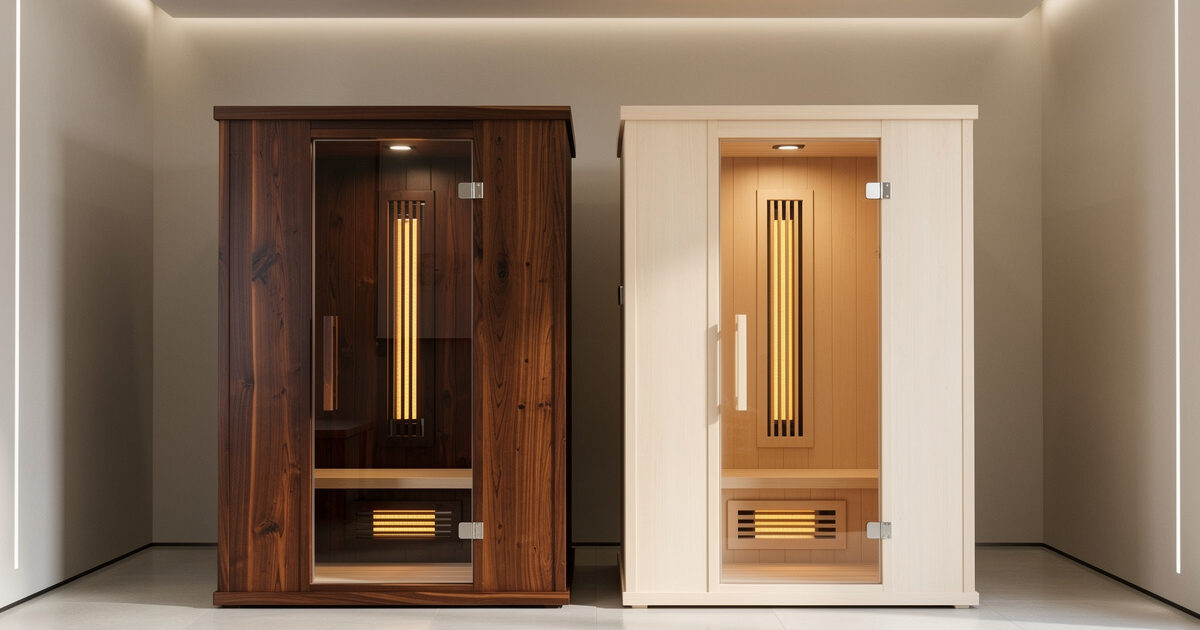
Sunlighten Signature 2 and Clearlight Sanctuary 2 are the two flagship 2-person cabins buyers cross-shop most in the premium infrared sauna tier — and the pricing model itself turns out to be one of the real differentiators. Clearlight’s own product page routes you through a quote request, but authorized dealers list the Sanctuary 2 at $7,399 (basswood) to $7,799 (mahogany) in 2026; Sunlighten’s marketing pages push the same “request pricing” funnel, but its own direct online store currently lists the Signature II at $5,599 (eucalyptus, on sale from a $6,199 site price). Sunlighten wins on heater clinical research and lower EMF readings (under 0.3 mG vs 0.5 mG); Clearlight wins on warranty length (lifetime residential vs 7-year heater) and dual EMF+ELF certification. Choosing between them depends on which signal — and how much you want to pay upfront — you weight most heavily, and we will break down exactly how to decide.
This direct comparison is for buyers already shopping the flagship 2-person premium cabin tier — realistically $5,600 to $7,800 depending on brand, wood, and which pricing channel you land on — and trying to decide which brand earns the purchase. Buyers earlier in the decision process should start with our top 10 infrared sauna brands guide for broader context. Buyers wanting individual deep-dives can read our Sunlighten review and Clearlight Sanctuary 2 review separately. This article assumes you’ve narrowed to these two and need the final decision framework.
Head-to-Head Spec Comparison
The table below summarizes the key specifications across both 2-person flagship cabins. Sunlighten Signature 2 and Clearlight Sanctuary 2 represent each brand’s volume seller in the premium 2-person tier — directly cross-shopped by most buyers in this category, even though the two brands price and publish that pricing very differently. Clearlight’s own site is quote-based, but authorized dealer listings such as Evergreen Softub’s Sanctuary 2 listing show the real 2026 figures.
| Spec | Sunlighten Signature 2 | Clearlight Sanctuary 2 |
|---|---|---|
| 2026 pricing | Quote-based on Sunlighten’s marketing site; direct online store lists Signature II at $5,599 sale (eucalyptus; $6,199 regular) | Quote-based on Clearlight’s own site; authorized dealers list Sanctuary 2 at $7,399 (basswood) to $7,799 (mahogany) |
| Heater type | SoloCarbon (pure carbon) | True Wave (carbon + ceramic hybrid) |
| EMF (third-party) | Under 0.3 mG | Under 0.5 mG + ELF certified |
| Warranty | 7-yr heater, lifetime structural | Lifetime residential (cabin + heater + electronics) |
| Wood | Eco-Certified Pacific Cedar | Eco-Certified Grade-A basswood |
| Operating temp | 155°F max | 140°F max |
| Heat-up time | 13–15 minutes | 8–10 minutes |
| Electrical | 120V/15A standard outlet | 120V/15A standard outlet |
| Clinical research | Peer-reviewed studies on SoloCarbon | Industry-standard, no peer-reviewed brand studies |
| Outdoor capability | None | Outdoor 5 model only ($8,995) |
| Full-spectrum option | mPulse line ($7,499+) | None in Sanctuary line |
The matrix shows real differentiation in three areas: EMF readings (Sunlighten lower, Clearlight broader certification), warranty (Clearlight clearly stronger), and heat-up time (Clearlight 4–5 minutes faster). Other factors (wood, electrical, operating temp) are functionally similar with minor preference differences. The one Sunlighten holds that Clearlight’s Sanctuary line doesn’t touch at all is full-spectrum — but that’s a real upgrade in wavelength coverage and a real jump in price to the mPulse line, so is full-spectrum actually worth it? is worth reading before that upsell conversation.
Heater Technology: SoloCarbon vs True Wave
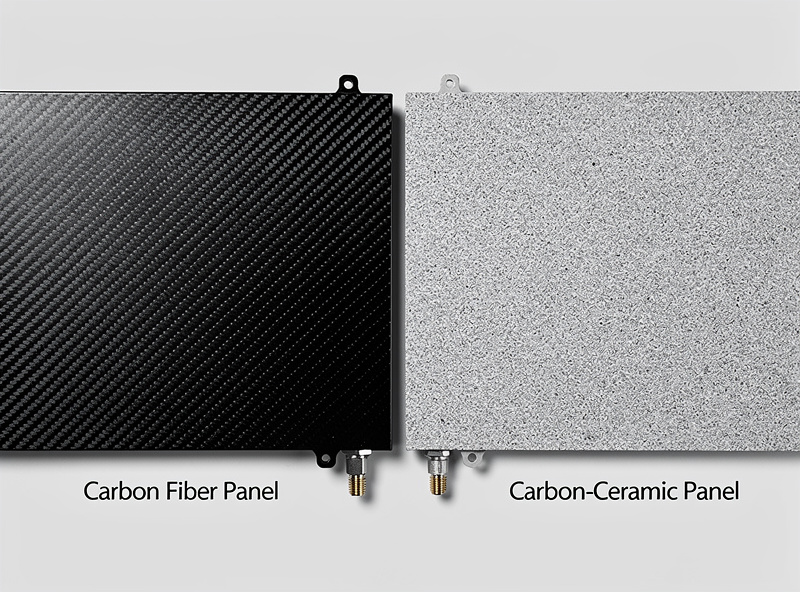
Sunlighten’s SoloCarbon and Clearlight’s True Wave represent two distinct engineering philosophies for delivering far-infrared heat. SoloCarbon is pure carbon fiber — a single-material panel design where the carbon substrate handles both energy emission and heat distribution. True Wave is a hybrid approach combining carbon fiber main panels with ceramic-coated accents in the calf and back zones where Clearlight’s engineers wanted higher heat density.
The pure-carbon SoloCarbon approach is what Sunlighten cites its published research around — the company points to studies run with University of Missouri-Kansas City researchers and partner medical centers that measured the heater’s emission spectrum, with any health-related findings attributed to those specific studies rather than presented as a guarantee of individual results. The hybrid True Wave has solid engineering but doesn’t carry the same volume of published research behind it. This is not a quality difference — both heaters deliver far-infrared in the 5–14 micron range that manufacturers and researchers have studied — but it’s a meaningful difference in the documentation supporting each architecture.
The True Wave hybrid does deliver one measurable advantage: faster heat-up time. The ceramic accents reach target session temperature 4–5 minutes faster than pure carbon panels can, which matters for users with limited time between work and family commitments. Clearlight Sanctuary 2 reaches 130°F in 8–10 minutes; Sunlighten Signature 2 takes 13–15 minutes for the same target. For more on what heater technology actually matters in purchase decisions, see our how to choose an infrared sauna guide.
EMF and ELF: Where the Certifications Actually Differ
Both brands publish third-party EMF testing through Vitatech Engineering, an independent EMF lab also used by Apple and major appliance manufacturers. Sunlighten’s published readings come in under 0.3 milligauss at session positions — among the lowest documented in cabin saunas. Clearlight’s Sanctuary 2 reads under 0.5 mG, slightly higher but still well below the 3 mG threshold most low-EMF advocates cite.
The ELF (extremely low frequency) story is where Clearlight has a real edge. ELF measures the lower-frequency electromagnetic waves separate from EMF — a measurement most sauna brands do not test for at all. Clearlight publishes ELF readings under 0.3 V/m at session positions, certified by the same Vitatech lab. Sunlighten does not publish ELF data, period. For EMF-sensitive buyers running multiple weekly sessions over years, the ELF certification represents documented data Sunlighten has chosen not to make public.
The honest framing: if EMF is the dominant decision factor, Sunlighten wins on the standard measurement (lower mG reading). If electromagnetic exposure broadly is the concern — which is the more conservative position for sensitive users — Clearlight wins on the dual certification covering both EMF and ELF. The choice depends on whether you weight depth of EMF measurement (Sunlighten) or breadth of certification (Clearlight). For more context, see our infrared sauna safety guide, and the broader low-EMF infrared sauna guide explains what the “low-EMF” label actually means across brands and how to verify it yourself.
Warranty: Lifetime Residential vs 7-Year Heater
This is the area where Clearlight has the most decisive advantage. Clearlight’s lifetime residential warranty covers the cabin structure, heating elements, AND electronics for as long as the original purchaser owns the sauna in residential use. Sunlighten’s 7-year heater warranty plus lifetime structural warranty leaves heater coverage substantially shorter.
The practical math matters for long-term ownership. Premium carbon heaters typically last 10–15 years with normal use — meaning under Sunlighten’s coverage, buyers who use the sauna heavily may need out-of-pocket heater replacement at year 8–10 (roughly $800–$1,200 for replacement panels and labor). Clearlight covers the same scenario at no cost as long as the original purchaser is the one filing the claim.
For buyers planning 12+ year ownership, this is a $1,000+ economic difference favoring Clearlight that should be weighted in the decision. For buyers planning 7-year ownership or expecting to relocate during that window, the warranty difference matters less because Sunlighten’s 7-year heater coverage matches the planning horizon.
Build Quality: Cedar vs Basswood
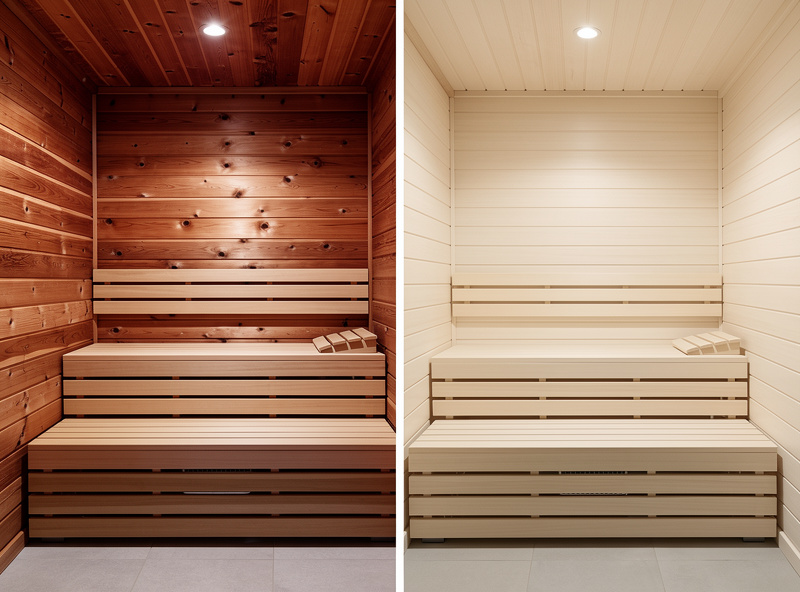
Sunlighten Signature 2 uses Eco-Certified Pacific Cedar; Clearlight Sanctuary 2 uses Eco-Certified Grade-A basswood. Both are quality woods with low VOC emissions when heated and good dimensional stability over years of heat-cycling. The difference is not quality — it’s character.
Cedar has natural aromatic oils that release a pleasant scent when the cabin heats up. For most users, this is positive — the cedar scent adds to the sauna experience. For approximately 5–8% of users, cedar’s aromatic compounds trigger respiratory sensitivity ranging from mild irritation to outright avoidance. Cedar smell also persists in the cabin environment over years; basswood is essentially scent-neutral.
Basswood is hypoallergenic, holds dimensional stability slightly better in humid climates, and emits no aromatic compounds. The look is lighter and the feel is similar in hand. Cabin construction tolerances are equivalent between the two — both at 1.25-inch panel thickness, both with quality joinery and door hardware. The choice between cedar and basswood is preference and sensitivity, not quality differential.
Decision Framework: Choose Sunlighten If…
Sunlighten Signature 2 is the right choice when these factors weight heaviest in your decision:
- EMF readings as a primary metric. Sunlighten’s under 0.3 mG is lower than Clearlight’s 0.5 mG. If you want the lowest published EMF in the cabin sauna market, Sunlighten wins.
- Peer-reviewed clinical research backing. Sunlighten has multiple peer-reviewed studies validating SoloCarbon technology. Clearlight has industry-standard engineering but no published clinical validation under its brand.
- Cedar preference. If you specifically want the aromatic experience of cedar, Sunlighten delivers that natively. Clearlight’s basswood lacks scent.
- Future upgrade path to full-spectrum. Sunlighten’s mPulse line offers full-spectrum NIR/MIR/FIR at $7,499+. If you want the option to step up to full-spectrum within the same brand later, Sunlighten provides the path.
- Higher operating temperature. Sunlighten Signature 2 reaches 155°F max vs Clearlight Sanctuary 2 at 140°F. Users wanting more aggressive heat sessions will prefer Sunlighten.
Decision Framework: Choose Clearlight If…
Clearlight Sanctuary 2 is the right choice when these factors weight heaviest:
- Long-term ownership horizon (10+ years). Clearlight’s lifetime residential warranty covers heater replacement that Sunlighten owners pay $800–$1,200 out of pocket for around year 8–10.
- Dual EMF + ELF certification. Clearlight is the only brand publishing ELF data alongside EMF. For EMF-sensitive buyers wanting broadest documented certification, Clearlight wins.
- Faster heat-up time. True Wave hybrid reaches target session temperature 4–5 minutes faster than pure SoloCarbon. Users with limited time per session will appreciate this.
- Cedar sensitivity or basswood preference. If you have any cedar respiratory sensitivity or simply prefer the look of basswood, Clearlight is the right choice.
- You value warranty certainty over upfront price. Clearlight costs more than Sunlighten either way you buy it, but its lifetime residential warranty removes the year 8–10 heater-replacement risk that Sunlighten owners carry. If that certainty matters more to you than the lower entry price, Clearlight is the pick.
Total Cost of Ownership: 10-Year Math
For users running 3 sessions weekly over 10 years (roughly 1,560 sessions), the total cost analysis matters — and it starts from very different purchase prices. At $5,599, Sunlighten’s direct-store price works out to $3.59 per session before any maintenance costs; Clearlight’s dealer pricing of $7,399–$7,799 works out to $4.74–$5.00 per session. The 10-year math shifts further based on warranty coverage:
| Cost component | Sunlighten Signature 2 | Clearlight Sanctuary 2 |
|---|---|---|
| Purchase price | $5,599 (direct-store sale; $6,199 site regular price) | $7,399 basswood / $7,799 mahogany (authorized dealer pricing) |
| Heater replacement (year 8-10) | ~$1,000 out-of-pocket | $0 (warranty) |
| Estimated 10-year total | ~$6,599 | $7,399–$7,799 |
| Cost per session over 10 years | $4.23 | $4.74–$5.00 |
That reverses the old identical-price assumption entirely: Sunlighten’s $5,599 direct-store price runs $1,800–$2,200 cheaper upfront than Clearlight’s dealer pricing. Even after factoring in the roughly $1,000 out-of-pocket heater replacement that Clearlight’s lifetime warranty avoids, Sunlighten still comes out $800–$1,200 cheaper over a 10-year hold. For 5–7 year ownership horizons (relocations, lifestyle changes), the gap matters even more, since the heater-replacement question never comes into play and the upfront price difference is the whole story. The decision still depends on planning horizon and how much warranty certainty is worth to you: heavy users staying 10+ years get a real cost edge from Sunlighten even after replacement, while buyers who want zero out-of-pocket risk on the heater may still choose Clearlight and pay for that certainty.
Frequently Asked Questions
Is Sunlighten or Clearlight better?
Neither is universally better — they win on different signals. Sunlighten leads on EMF readings (under 0.3 mG), peer-reviewed clinical research, and cedar aesthetic. Clearlight leads on warranty (lifetime residential vs 7-year heater), dual EMF+ELF certification, and faster heat-up time. Choose based on which signal matters most.
How much do the Sunlighten Signature 2 and Clearlight Sanctuary 2 actually cost in 2026?
They don’t list at the same price, despite some marketing pages suggesting otherwise. Clearlight’s own product page is quote-based, but authorized dealers price the Sanctuary 2 at $7,399 (basswood) to $7,799 (mahogany). Sunlighten’s marketing pages also route you through a pricing-request form, but its direct online store currently lists the Signature II at $5,599 (eucalyptus, on sale from a $6,199 site price) — meaningfully cheaper than Clearlight before any warranty math is factored in.
Does Clearlight have lower EMF than Sunlighten?
No, Sunlighten’s published EMF readings are lower at under 0.3 milligauss versus Clearlight at under 0.5 mG. However, Clearlight is the only brand also publishing ELF (extremely low frequency) certification at under 0.3 V/m. Different measurements with different significance for EMF-sensitive buyers.
Which has a better warranty, Sunlighten or Clearlight?
Clearlight has the better warranty by a clear margin. Clearlight Sanctuary covers cabin structure, heating elements, and electronics with lifetime residential coverage. Sunlighten Signature covers heaters for 7 years and structure for life — meaning heaters not covered after year 7.
Which heats up faster, Sunlighten or Clearlight?
Clearlight Sanctuary 2 heats up faster at 8-10 minutes to target session temperature versus Sunlighten Signature 2 at 13-15 minutes. The difference reflects True Wave’s hybrid carbon-ceramic architecture versus SoloCarbon’s pure carbon panels. Matters for users with limited time per session.
What is the difference between SoloCarbon and True Wave heaters?
SoloCarbon is pure carbon fiber with peer-reviewed clinical research backing. True Wave combines carbon fiber main panels with ceramic-coated accents in calf and back zones for faster heat-up. Both deliver far-infrared in the 5-14 micron range; the difference is documentation depth and heat-up speed.
Should I get Sunlighten or Clearlight for cedar versus basswood?
Sunlighten Signature 2 uses Eco-Certified Pacific Cedar; Clearlight Sanctuary 2 uses Eco-Certified Grade-A basswood. Cedar has aromatic oils some users love and others find irritating (5-8% sensitivity). Basswood is hypoallergenic and scent-neutral. Choose based on preference and respiratory sensitivity.