“Near,” “mid,” and “far” infrared aren’t marketing tiers — they’re wavelength bands, and each one is produced by physically different hardware. Once you understand which emitter makes which band, the whole “full-spectrum” pitch stops being mysterious and starts being something you can verify by looking at the heaters. This guide is about the hardware: what emitter sits behind each band, what it costs to produce, and how to tell a real multi-band cabin from one wearing a sticker. If you want help deciding which band suits your use, the near vs far vs full-spectrum buying breakdown handles that decision — here I’m staying on the emitters.
The three bands, by wavelength
Infrared is the part of the spectrum just below visible red light, and it’s divided by wavelength. Getting the numbers and the direction right matters — a backwards near/far claim is the fastest way to spot content written by someone who’s never actually looked at the emitters.
- Near-infrared (NIR): roughly 0.7–1.4 µm. Shortest wavelength, highest energy. Produced by bright, glowing emitters. Feels like a sharp, immediate surface warmth.
- Mid-infrared: roughly 1.4–3 µm. The middle band. Rarely the dominant output of any single emitter — usually the overlap zone between a hot NIR source cooling off and a far-infrared panel’s shorter tail.
- Far-infrared (FIR): roughly 3–1000 µm. Longest wavelength, lowest energy per photon. Produced by warm (not glowing) panels. This is the deep, slow, even soak that defines the classic home infrared cabin.
Here’s the part that ties wavelength to hardware: the hotter an emitter’s surface runs, the shorter the wavelength it produces. A panel running warm radiates far-infrared; an element running hot enough to glow radiates near-infrared. That single physics fact tells you, just by looking, roughly which band a heater is in — and it’s why you can’t fake near-infrared with a panel that never glows.
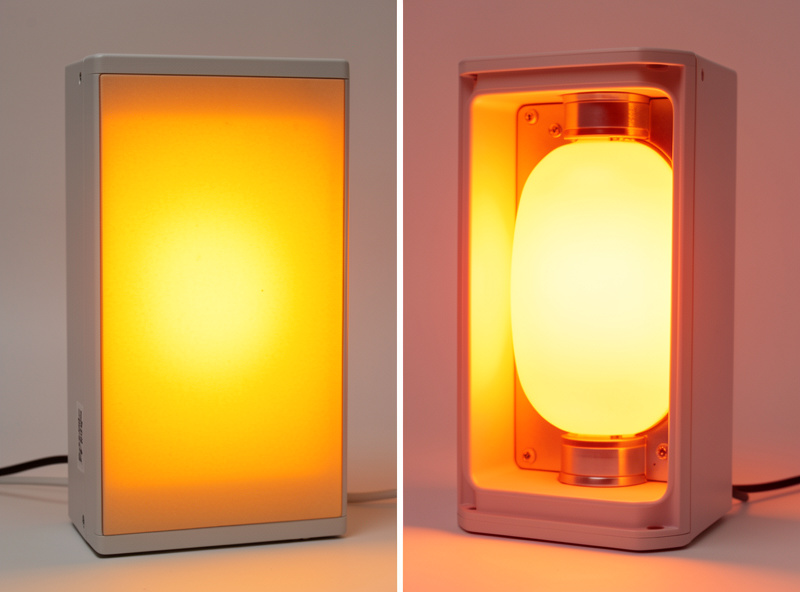
Far-infrared hardware: carbon and ceramic panels
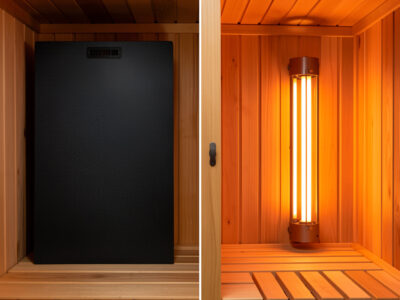
The overwhelming majority of home cabins are far-infrared, and they get there with carbon-fiber panels, ceramic rods, or a hybrid of both. These run at a warm surface temperature — hot to the touch but not glowing — and produce the long-wavelength radiant heat that soaks in slowly and evenly. This is mature, cheap, reliable technology, which is why far-infrared cabins dominate the market and the price ladder.
Carbon panels give a broad, even field; ceramic rods give a concentrated, intense one. The full carbon-versus-ceramic trade-off is its own subject, but for wavelength purposes the takeaway is simple: both are far-infrared, both run warm rather than glowing, and the difference between them is geometry and felt intensity, not band. If your interest is the classic deep sauna soak, you’re shopping for far-infrared hardware, and the emitter chemistry is a comfort choice within that band.
Near-infrared hardware: the glowing emitter
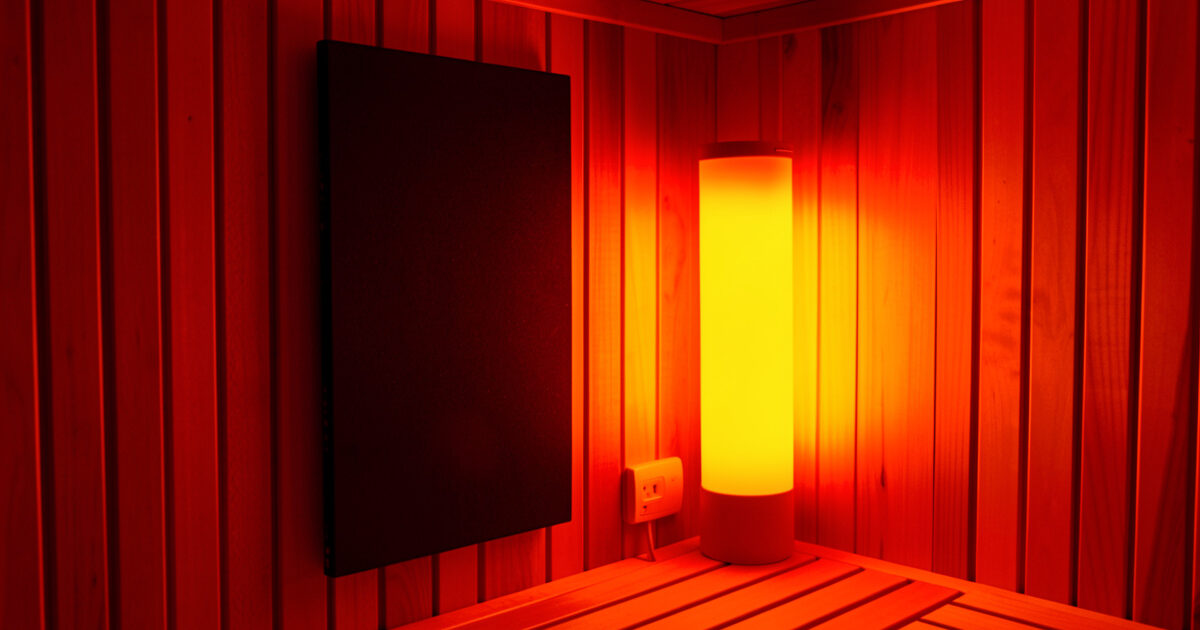
Near-infrared is a genuinely different piece of hardware. To produce NIR you need an emitter running hot enough to glow — typically a halogen-style tube or an Incoloy (metal-sheathed) element. These ramp almost instantly, glow visibly bright, and produce that sharp, immediate surface warmth rather than a deep soak. They also draw meaningful additional power and need their own placement and wiring.
This is why near-infrared can’t be quietly added to a far-infrared cabin without you noticing — a real NIR emitter is a bright, hot, distinct component. The same hardware sits behind a standalone near-infrared lamp, which is the cheapest way to experience the band; the near-infrared lamp setup shows what a genuine NIR source looks like outside a cabin. When a cabin claims near-infrared, the test is whether there’s an actual glowing emitter in there — not a label.
Mid-infrared: the band that’s mostly marketing
Mid-infrared is where listings get creative. There’s no common, dedicated “mid-infrared emitter” in home saunas the way there is for near and far. Most “mid” output is the overlap region — the cooler tail of a near-infrared emitter, or the shorter-wavelength edge of a hot far-infrared panel. So when a cabin advertises “near, mid and far infrared,” it usually has a far-infrared panel array plus a near-infrared emitter, and the “mid” is the natural blend between them, not a third dedicated heater.
That’s not dishonest in itself — the mid band does exist in the output. But it does mean “three-band” marketing can describe a two-emitter cabin. Don’t pay a premium expecting a separate mid-infrared system; there almost never is one. What you’re really buying in any multi-band cabin is far-infrared panels plus a genuine near-infrared emitter, with mid filling the gap between.
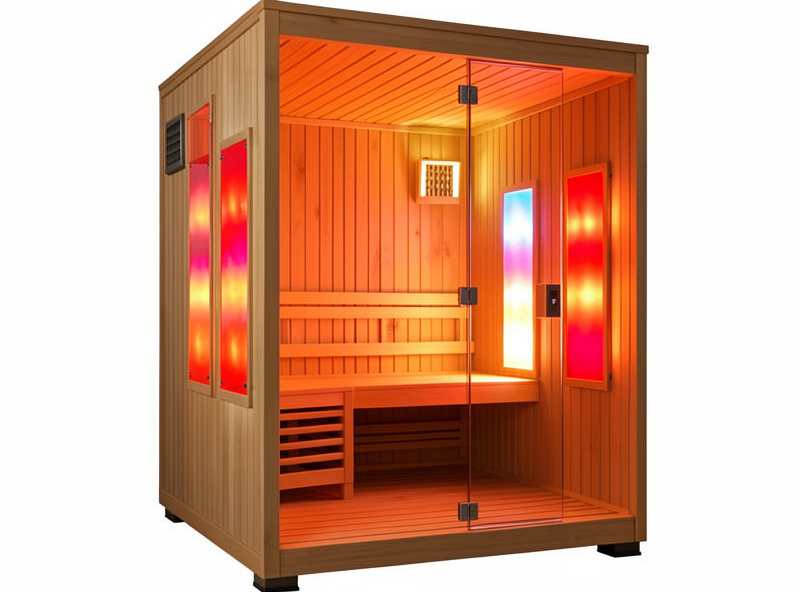
How to read a “full-spectrum” claim by the hardware
“Full-spectrum” should mean genuine output across all three bands, which in practice means a far-infrared panel array plus a real, powerful near-infrared emitter. The premium you pay is for that NIR hardware. The scam version adds one underpowered NIR bulb so the listing can use the word, contributing almost nothing in the near band.
The tells are visible if you know what to look for. A genuine NIR emitter glows brightly, ramps almost instantly, draws meaningful additional wattage, and is usually named by emitter type (halogen or Incoloy) with a power figure. A token one is described only as “full-spectrum technology” with no emitter detail and no separate power spec. If you’re paying the full-spectrum premium, make the listing prove the near-infrared emitter is real and powered — that’s the entire value of the upgrade.
| Band | Wavelength | Emitter hardware | Surface behaviour | Felt heat |
|---|---|---|---|---|
| Near-infrared | ~0.7–1.4 µm | Halogen / Incoloy emitter | Glows brightly, fast ramp | Sharp surface warmth |
| Mid-infrared | ~1.4–3 µm | No dedicated emitter — blend zone | Output overlap, not a part | Transitional |
| Far-infrared | ~3–1000 µm | Carbon / ceramic panels | Warm, never glows | Deep, slow, even soak |
What the bands mean for EMF and placement
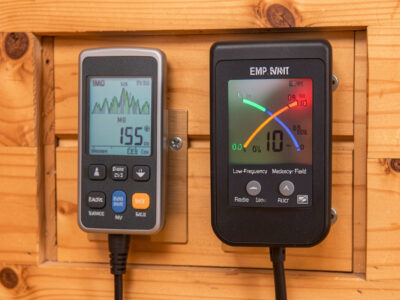
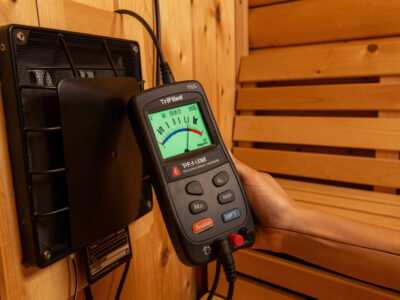
The band a heater produces also shapes its EMF and placement story. The glowing near-infrared emitter and its dedicated wiring are often the loudest field source in a full-spectrum cabin, simply because they’re a hot, high-draw component — so if you meter a multi-band cabin, that’s where to look first. Far-infrared panels, run cooler and wired across a broad area, are usually the quieter part. The full engineering picture — what reads where, and why wiring routing matters more than band — is in the heater and EMF guide.
Placement follows the same logic: far-infrared panels want full coverage around your body, while a near-infrared emitter is a directional source you aim at the part you want it on. Mixing the two well is what separates a thoughtfully built full-spectrum cabin from one that just bolted an emitter onto a far-infrared box. When you compare units, look at how the NIR emitter is positioned relative to the bench, not just whether one is present.
The practical summary
Strip away the marketing and there are two pieces of real hardware: warm far-infrared panels (carbon, ceramic, or hybrid) and a glowing near-infrared emitter (halogen or Incoloy). “Mid-infrared” is the blend between them, not a third system. A far-infrared cabin gives you the classic deep soak cheaply and reliably; a true full-spectrum cabin adds genuine near-infrared for a premium that’s only worth paying if the emitter is real. Judge any wavelength claim by the hardware you can see, not the bands on the label — and for the band-by-use buying decision, the brand comparison shows who builds genuine multi-band cabins versus who’s selling a sticker.
What are the near, mid and far infrared wavelengths?
Near-infrared is roughly 0.7 to 1.4 micrometres, mid-infrared roughly 1.4 to 3 micrometres, and far-infrared roughly 3 to 1000 micrometres. Near is the shortest wavelength and highest energy, far is the longest. The hotter an emitter runs, the shorter the wavelength it produces, which is why glowing emitters make near-infrared and warm panels make far-infrared.
Is there a dedicated mid-infrared heater?
Not usually in home saunas. There is no common standalone mid-infrared emitter the way there is for near and far. Most mid-infrared output is the overlap zone — the cooler tail of a near-infrared emitter or the shorter edge of a hot far-infrared panel. So a three-band cabin typically has far-infrared panels plus a near-infrared emitter, with mid being the natural blend.
What hardware makes near-infrared heat?
Near-infrared comes from an emitter running hot enough to glow — typically a halogen-style tube or an Incoloy metal-sheathed element. These ramp almost instantly, glow visibly bright, draw meaningful extra power, and produce a sharp surface warmth. A panel that never glows cannot produce genuine near-infrared.
How do I know if a full-spectrum sauna is real?
Check for a genuine near-infrared emitter. A real one glows brightly, ramps instantly, draws meaningful additional wattage, and is usually named by emitter type with a power figure. A token full-spectrum cabin adds one underpowered bulb and describes it only as full-spectrum technology with no emitter detail or separate power spec. Make the listing prove the NIR emitter is real before paying the premium.
Which infrared band do most home saunas use?
Far-infrared. The overwhelming majority of home cabins are far-infrared first, produced by carbon-fiber panels, ceramic rods, or a hybrid. It is mature, affordable, reliable technology that delivers the classic deep, slow, even soak. Near-infrared is added on top in full-spectrum units via a separate glowing emitter.