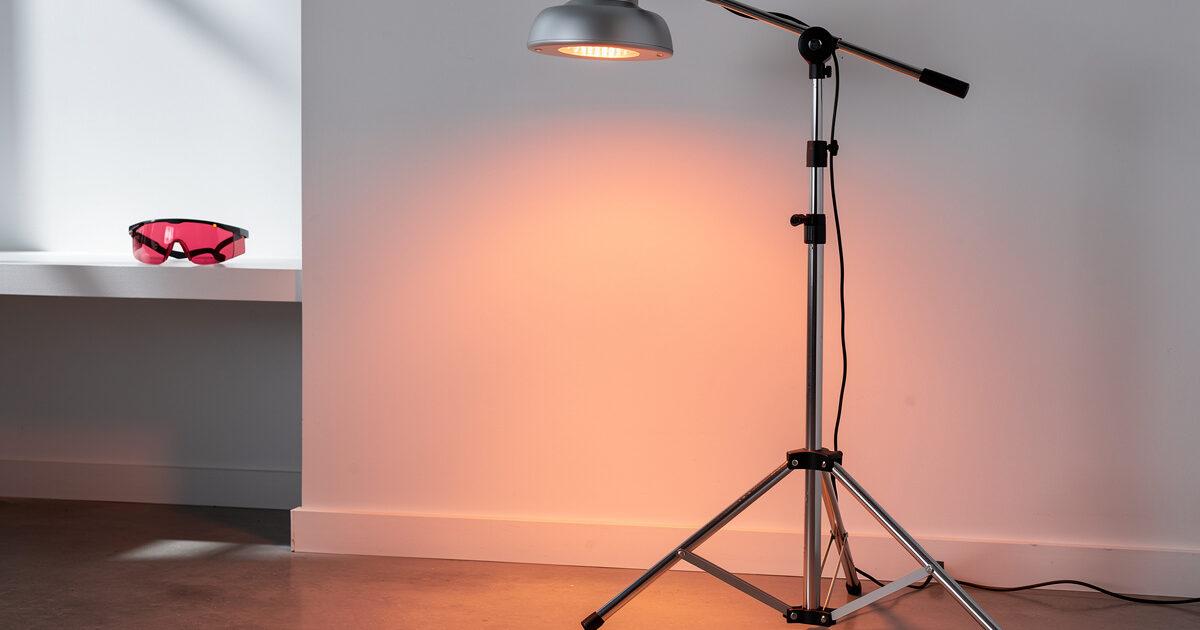
A near-infrared (NIR) lamp setup is the cheapest entry into infrared therapy at $130-$650 for a complete DIY rig. The format uses a single 250W or 500W incandescent NIR bulb in an adjustable lamp fixture, positioned 12-24 inches from the body for targeted exposure. Sessions run 15-20 minutes per body region rather than full-body 30-45 minute sauna sessions.
This guide walks through the parts list, build steps, session protocols, and safety considerations for a DIY near-infrared setup. For broader portable format context, see the portable infrared sauna hub; for the wavelength science behind NIR specifically, see near vs far vs full spectrum.
What a Near-Infrared Lamp Setup Actually Is
A near-infrared lamp setup isn’t a sauna in the traditional sense — there’s no enclosure, no full-body sweat response, and no ambient heat. What it does deliver is targeted near-infrared exposure (700-1400nm wavelength range) for specific protocols: skin and collagen work, joint pain protocols, post-workout recovery on specific muscle groups, and the kind of localized therapy covered in clinical red-light research.
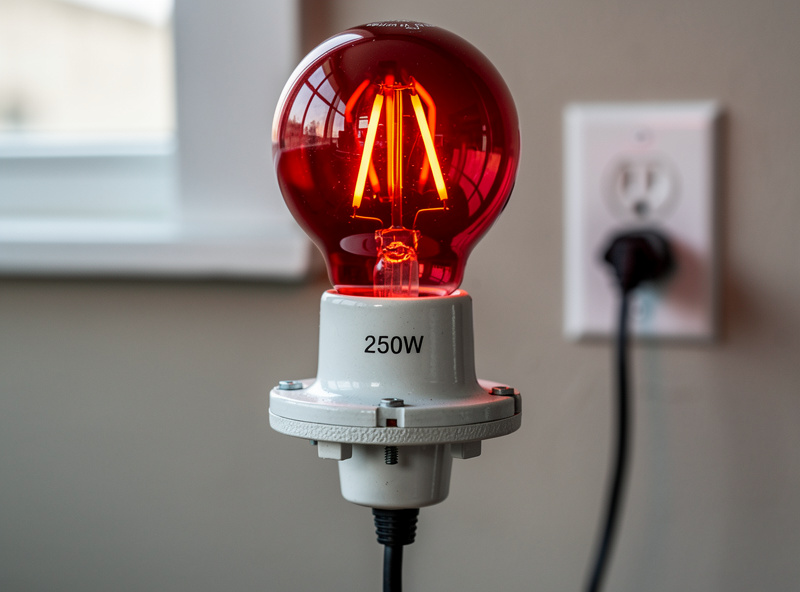
The defining feature is the wavelength. Carbon panel sauna heaters output in the 4-14 micron far-infrared range — they drive deep core heat and full-body sweat. NIR incandescent bulbs output 700-1400nm — they penetrate skin and superficial tissue without much core temperature effect. These are functionally different therapies and shouldn’t be confused with each other.
If you primarily want sweat sessions and relaxation, skip this format and pick a sauna blanket from our 2026 best blankets ranking. If you want targeted skin or joint protocols, an NIR lamp setup is the right choice — and dramatically cheaper than near-IR sauna boxes from SaunaSpace.
DIY Parts List and Cost
The four-component minimum DIY rig:
| Component | Specification | Cost | Source |
|---|---|---|---|
| Near-infrared bulb | 250W Philips IR or GE Heat Lamp | $15–$25 each | Hardware store, Amazon |
| Ceramic socket fixture | Rated for 300W, with reflector hood | $25–$45 | Hardware store |
| Adjustable stand | Light stand with 5-7 ft height range | $60–$120 | Photography supply |
| Heavy-gauge extension cord | 14-gauge minimum, 6-10 ft | $20–$35 | Hardware store |
| Safety goggles | IR-rated welder’s goggles or commercial NIR glasses | $15–$30 | Welding supply, Amazon |
| Total DIY rig cost | $135–$255 |
A premium pre-built option: SaunaSpace Photon at $1,200, which uses their custom ThermaLight bulb with full EMF shielding. The premium option delivers better bulb spec and warranty but the same therapeutic principle. For most DIY users, the $135-$255 rig provides 80% of the SaunaSpace experience at 15-20% of the cost.
DIY Build Steps
The 5-step DIY assembly takes about 30 minutes:
- Inspect the ceramic socket fixture. Verify the rated wattage on the socket label is 250W or higher. Standard plastic sockets melt under 250W incandescent bulbs — you must use a ceramic socket fixture.
- Mount the socket on the adjustable stand. Most photography light stands include a 5/8-inch spigot mount that accepts a standard E26 socket adapter. The reflector hood typically comes pre-attached to the socket fixture.
- Install the NIR bulb. Hand-tighten only — over-tightening can crack the bulb base. Verify the bulb sits flush in the socket. Common bulbs include the Philips IR 250R/40 ($18) and GE Heat Lamp 250W ($22).
- Position 12-24 inches from the target body region. Closer than 12 inches risks skin burns; farther than 24 inches dilutes the therapy substantially. Adjust the stand height for the target zone (knee, shoulder, lower back).
- Run a 1-minute test before first use. Verify no flickering, no smell of burning insulation, and the bulb reaches full brightness within 30 seconds. If the bulb hums or flickers, the wiring is undersized — upgrade to 14-gauge extension cord.
Session Protocols by Use Case
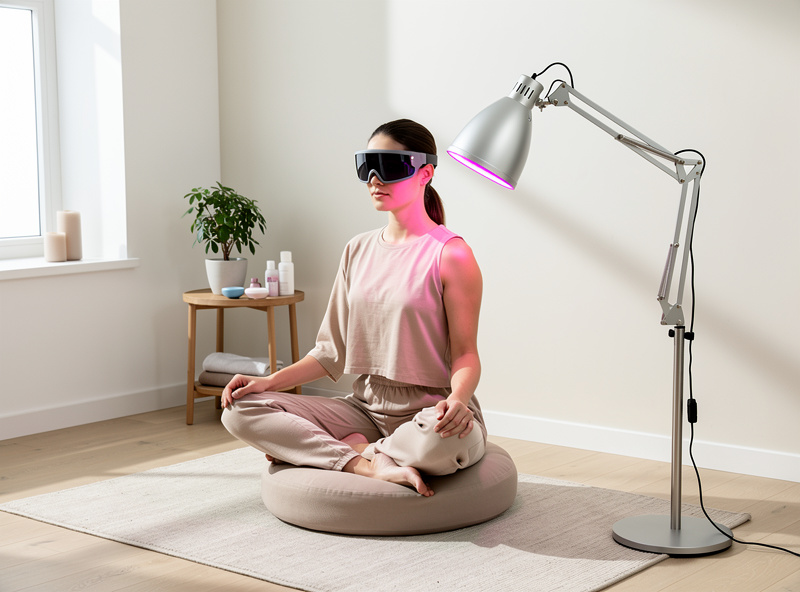
NIR lamp sessions are targeted by body region and goal. Three protocols cover most DIY users:
Skin and collagen protocol (15 minutes per region)
- Position lamp 18 inches from face (avoid direct eye exposure).
- 15 minutes per session, 3-5 sessions per week.
- Wear NIR-rated safety goggles for any face-region session.
- Expect visible skin warming during session, no significant sweat.
Joint pain protocol (20 minutes per region)
- Position lamp 12-15 inches from target joint (knee, shoulder, hip).
- 20 minutes per session per joint, daily during acute episodes.
- Combine with cold compress between sessions for inflammation.
- Effective for chronic joint pain protocols documented in clinical research; consult physician for acute injury.
Post-workout recovery (10-15 minutes per muscle group)
- Position lamp 15 inches from major muscle group worked (quads, hamstrings, calves, lats).
- 10-15 minutes per muscle group within 60 minutes of training.
- 3-5 muscle groups per session, total session 45-75 minutes.
- Best paired with adequate hydration and standard recovery routines.
For session safety considerations including hydration and contraindications, see our infrared sauna safety guide. The hydration rule is less strict for targeted NIR sessions than full-body sauna sessions because core temperature rise is minimal, but eye protection is much more important due to the focused intense light.
Safety Considerations
NIR lamps at 250-500W are intense enough to cause burns and retinal damage if used incorrectly. Follow these five safety rules:
- Never look directly at the bulb during sessions. Wear NIR-rated safety goggles (welder’s goggles shade 5+ work; commercial NIR glasses are better) for any session within 4 feet of the lamp.
- Maintain minimum 12-inch distance from skin. Closer than 12 inches risks first-degree burns within 5-10 minutes. Always start at 18 inches and move closer only if needed.
- Don’t fall asleep during sessions. Use a kitchen timer or phone alarm. Continuous exposure beyond 30 minutes per region risks skin burns.
- Keep the lamp 36 inches from any flammable material. Curtains, papers, towels — anything that could ignite from radiant heat. Never drape clothing or bedding over the lamp.
- Use a dedicated outlet and surge protector. 250-500W incandescent bulbs draw consistent current and benefit from a surge-protected outlet. Don’t share the circuit with high-draw appliances during sessions.
Lamp vs LED Red Light Panel
Two formats are commonly confused: incandescent NIR lamps (this guide) and LED red light panels (separate category). Both deliver red and near-infrared light but at different wavelengths and intensities. For the integrated format that combines sauna heat with LED red light therapy in a single cabin, see our red light sauna hub; for the LED protocol specifics that apply to standalone panels, see our red light therapy protocol guide.
| Factor | Incandescent NIR Lamp | LED Red Light Panel |
|---|---|---|
| Wavelength range | 700–1400nm broad spectrum | Specific peaks (660nm, 850nm typical) |
| Heat output | High — bulb gets very hot | Minimal — LED stays cool |
| Cost | $135–$650 DIY | $200–$2,500 commercial panels |
| Target use | Joint pain, skin warming | Specific clinical wavelength protocols |
| Eye safety | Goggles required for any session | Goggles required for sessions over 5 minutes |
| Coverage area | 1 sq ft per lamp | 4-16 sq ft per panel |
The choice depends on your goal. For broad heat-and-NIR therapy that mimics sun exposure, incandescent NIR lamps are the right pick. For specific clinical protocols at known wavelengths (660nm + 850nm research-backed combinations), LED panels are better engineered. Brands like Joovv, PlatinumLED, and Mito Red occupy the LED panel category.
Multi-Bulb Setups for Larger Coverage
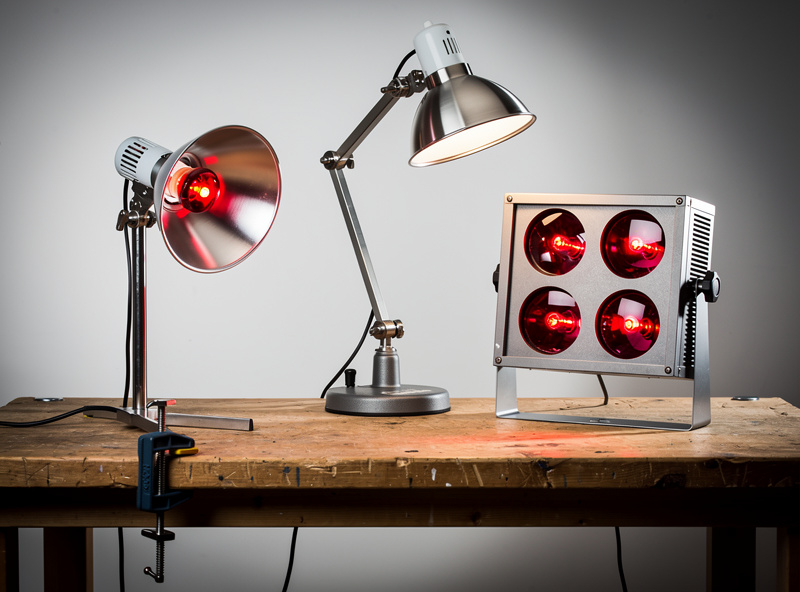
Single-bulb setups cover roughly 1 square foot of skin at a time. For users wanting larger coverage area without buying a sauna box, a 4-bulb DIY array delivers near-cabin coverage at half the price of a SaunaSpace Pocket. The 4-bulb rig parts list adds a 4-socket commercial light bar ($85), four bulbs at $80 total, and a 12-gauge extension cord ($35) — total cost $200 added to the single-bulb base, so $335-$455 for the full multi-bulb rig.
The 4-bulb rig draws 1,000W continuous on a 110V 15-amp circuit — within rated capacity but use a dedicated outlet to avoid breaker trips. Coverage area expands to roughly 4-6 sq ft, comparable to a single-person sauna box at 35-40% of the SaunaSpace Pocket price.
Who Should Build a DIY NIR Setup
The NIR lamp DIY route is right for three buyer profiles:
- Skin and collagen protocol focused users. Carbon panel saunas are inferior for skin work because the wavelength is wrong; NIR lamps target the specific 700-1400nm range these protocols need.
- Budget-constrained buyers under $500. Premium NIR sauna boxes start at $1,200; DIY rigs deliver 80% of the therapeutic value at 15-20% of the cost.
- Targeted joint and recovery users. Athletes and chronic-pain users wanting localized therapy on specific joints or muscle groups don’t need the full-body coverage of a sauna; targeted NIR is more effective for the specific use case.
If you want both NIR therapy and sweat sessions, the right answer is owning both an NIR lamp setup and a sauna blanket — total cost $400-$900 for both. For broader format guidance, see our how to choose framework.
Frequently Asked Questions
What does a near-infrared lamp do?
Near-infrared lamps deliver targeted 700-1400nm wavelength exposure for specific protocols: skin and collagen work, joint pain therapy, post-workout muscle recovery, and chronic pain protocols. They don’t trigger full-body sweat like sauna cabins or blankets — they’re targeted therapy, not sauna sessions.
How much does a DIY near-infrared lamp setup cost?
A complete single-bulb DIY rig costs $135-$255: a 250W Philips or GE NIR bulb ($15-$25), ceramic socket fixture with reflector hood ($25-$45), adjustable photography stand ($60-$120), heavy-gauge extension cord ($20-$35), and NIR-rated safety goggles ($15-$30). Multi-bulb arrays add $200 for $335-$455 total.
Are near-infrared lamps safe for daily use?
Yes when used correctly. Keep minimum 12 inches between bulb and skin, wear NIR-rated safety goggles for any session within 4 feet, never look directly at the bulb, set a timer to prevent falling asleep, and maintain 36 inches from flammable materials. Daily 15-20 minute sessions per region are within published safety guidelines.
Can I use any heat lamp as a near-infrared sauna?
No. Use only incandescent NIR bulbs from established brands (Philips IR, GE Heat Lamp, SaunaSpace ThermaLight). Cheap chicken-coop heat lamps emit broader spectrum including UV, which is harmful with prolonged exposure. Always verify the bulb is rated for therapy use and produces light primarily in the 700-1400nm range.
NIR lamp vs LED red light panel — what is the difference?
NIR lamps use incandescent bulbs producing broad-spectrum 700-1400nm with significant heat output. LED red light panels produce specific wavelength peaks (typically 660nm + 850nm) with minimal heat. NIR lamps are better for joint pain and skin warming; LED panels are better for specific clinical wavelength protocols. Different therapies despite similar appearance.
Do near-infrared lamps cause sweating?
Minimal sweating compared to a full sauna or blanket. NIR lamps produce localized skin warming without elevating core body temperature meaningfully. If you primarily want sweat sessions, skip this format and pick a sauna blanket. If you want targeted therapy on specific body regions, NIR lamps are the right format.
How long should a near-infrared lamp session be?
15 minutes for skin and collagen protocols, 20 minutes for joint pain protocols, 10-15 minutes per muscle group for post-workout recovery. Total session time depends on the number of body regions targeted. Never exceed 30 minutes per region — extended exposure risks skin burns even at 18-inch distance.
Related Articles
- Portable Infrared Sauna Hub — full portable format coverage
- SaunaSpace Review — premium pre-built near-IR alternative
- Near vs Far vs Full Spectrum — wavelength science behind NIR therapy
- Best Infrared Sauna Blankets 2026 — sweat-focused alternative format
- Infrared Sauna Safety Guide — session safety and contraindications