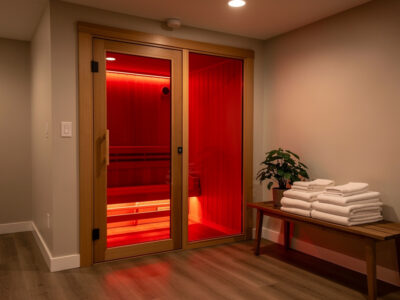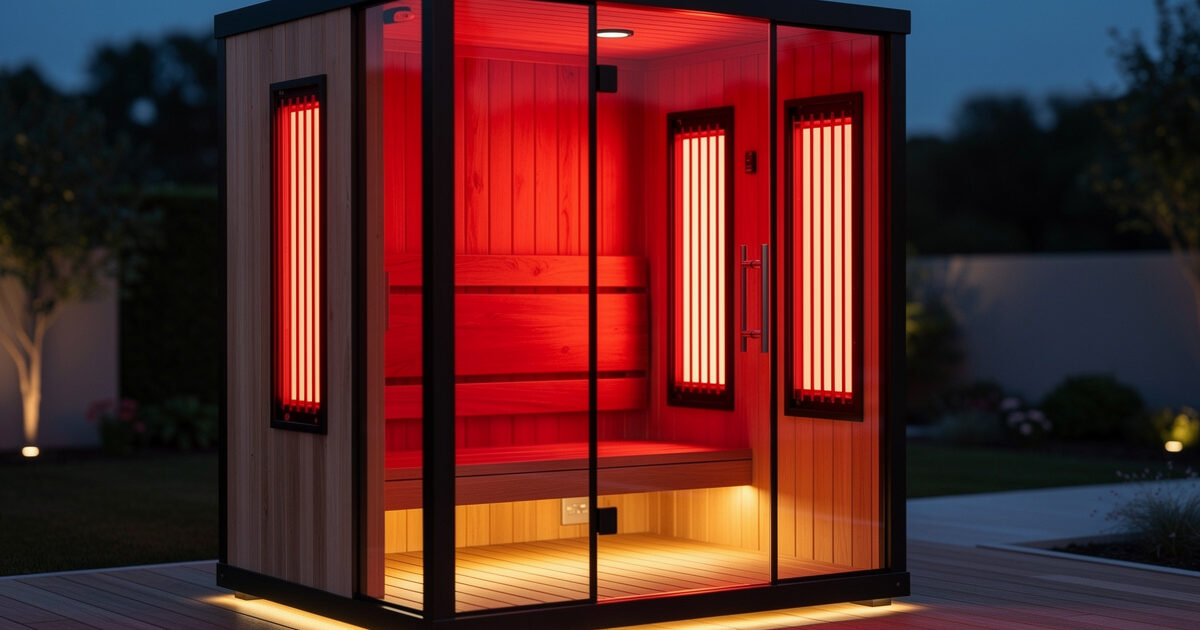
A red light sauna combines two distinct therapies in one cabin: traditional infrared sauna heat (typically far-infrared at 4-14 microns) plus added red and near-infrared LED panels at specific wavelengths (typically 660nm red and 850nm near-IR). The combination delivers full-body sweat sessions and targeted photobiomodulation in a single 30-45 minute session, at $1,800-$8,500 for home cabins.
This guide covers what red light saunas actually are, how they differ from regular infrared saunas and standalone red light panels, the wavelength science behind photobiomodulation, top home models, and who should buy one. For broader infrared format context, see the home infrared sauna setup guide and near vs far vs full spectrum coverage of the wavelength science.
What a Red Light Sauna Actually Is
The term “red light sauna” describes any infrared sauna cabin that adds dedicated LED red light therapy panels to the cabin interior — typically the wall opposite the bench. The carbon panel or ceramic heaters provide the traditional sauna experience (heat, sweat, core temperature rise), while the LED panels add red (620-700nm) and near-infrared (700-1000nm) wavelengths for photobiomodulation effects on skin, mitochondria, and superficial tissue.
This is genuinely different from a standalone red light panel (no heat, no sauna experience) and different from a regular infrared sauna (no specific 660nm or 850nm wavelength targeting). The combination format emerged around 2020 and gained traction in 2023-2026 as wellness-focused buyers wanted both therapies without owning two separate products.
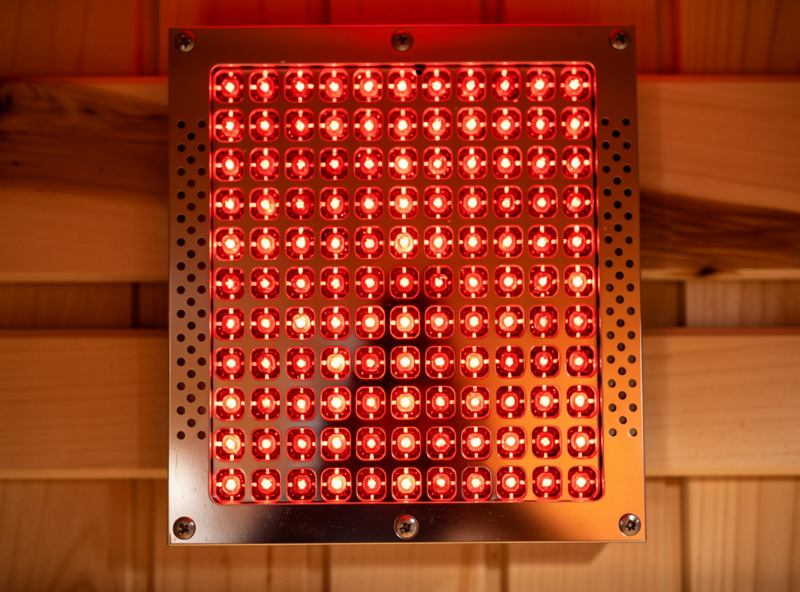
Key distinctions from adjacent product categories:
- Vs regular infrared sauna: Adds dedicated LED panels at 660nm/850nm peaks. Regular infrared saunas use carbon or ceramic heaters in the 4-14 micron far-IR range without the targeted shorter wavelengths.
- Vs standalone red light panel: Includes traditional sauna heat, sweat response, and the cabin enclosure experience. Standalone panels (Joovv, PlatinumLED) only deliver light therapy, no heat.
- Vs near-infrared lamp setup: Uses LED arrays at specific wavelength peaks rather than incandescent broad-spectrum bulbs. The DIY NIR lamp setup covered in our NIR lamp DIY guide uses different technology.
The Wavelengths That Matter
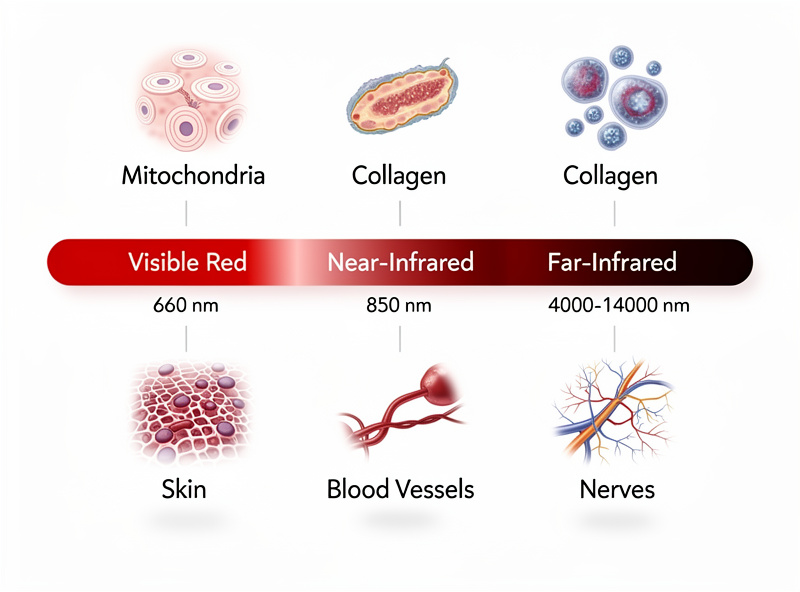
Red light saunas typically operate at three wavelength ranges simultaneously, each targeting different biological effects:
| Wavelength | Color/Type | Penetration depth | Primary effects | Source in cabin |
|---|---|---|---|---|
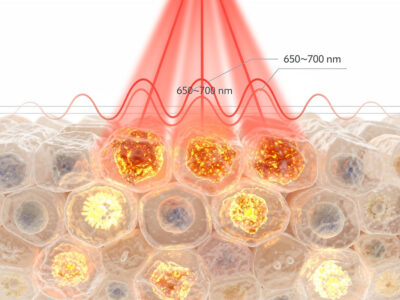
| 660nm | Red | 1–6mm (skin layers) | Skin, collagen, surface circulation | LED red panels |
| 850nm | Near-infrared | 30–50mm (subcutaneous) | Mitochondria, joint inflammation | LED NIR panels |
| 4–14μm (far-IR) | Far-infrared heat | Surface heating effect | Sweat, core temp, cardiovascular | Carbon panel heaters |
The 660nm and 850nm peaks are the same wavelengths used in clinical photobiomodulation research — the underlying scientific evidence is the strongest at these specific peaks. Premium red light saunas use medical-grade LEDs that hit these wavelengths within ±5nm; budget cabins use cheaper LEDs that peak at 630nm or 880nm with broader spectrum spread.
The full wavelength science including penetration depths and tissue targets sits in our dedicated near vs far vs full spectrum guide. For red light sauna specifically, the takeaway is that quality matters dramatically — verify the LED peak wavelengths in any cabin spec sheet before buying.
Documented Benefits of Red Light Sauna Combination
Red light sauna combines benefits from both therapies. The far-infrared heat side delivers documented cardiovascular, recovery, and detox effects covered in our infrared sauna benefits research. The red light therapy side adds wavelength-specific photobiomodulation effects from clinical studies.
Documented effects from peer-reviewed research on the combination:
- Skin and collagen: Increased collagen synthesis at 660nm exposure, reduced fine lines and improved skin elasticity over 12-week protocols.
- Cellular energy: 850nm targets mitochondria specifically, increasing ATP production via cytochrome c oxidase activation in clinical studies.
- Joint inflammation: Combined heat + 850nm reduces inflammatory markers more than heat alone in athletic recovery research.
- Sleep quality: Red light exposure in evening sessions correlates with improved sleep onset and REM sleep duration in chronotherapy studies.
- Cardiovascular adaptation: Same heat-shock protein response as regular infrared saunas, plus the LED light contribution to circulation.
The combination effect is greater than either therapy alone for users specifically seeking skin, joint, or recovery outcomes. For pure sweat and relaxation, regular infrared cabins deliver the same experience at lower cost.
Who Should Buy a Red Light Sauna
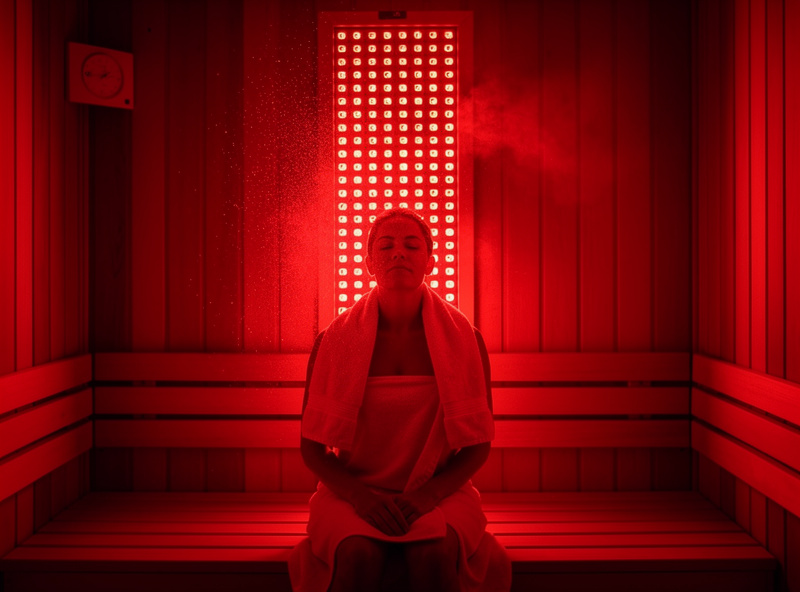
The right red light sauna buyer profile combines specific therapy goals with the budget for the format premium. Three buyer types get strong value:
- Skin and anti-aging focused users: The 660nm wavelength specifically targets dermal collagen synthesis. Combined with sauna sweat response, the format delivers what users typically pursue with separate facial treatments.
- Recovery athletes with chronic joint issues: The 850nm wavelength reduces joint inflammation more effectively than heat alone. Athletes running 5+ sessions per week benefit from the targeted near-IR exposure on specific joints.
- Premium-budget wellness buyers ($5,000+): Buyers wanting both therapies in one product instead of buying a $4,000 cabin plus a $1,500 standalone red light panel separately. The integrated cabin saves space and matches aesthetics.
Three buyer profiles should NOT buy red light saunas:
- Buyers under $3,500 budget: Cheaper red light saunas under $3,500 typically use sub-optimal LED wavelengths and reduce the value over a regular infrared cabin. Better to buy a quality infrared cabin in the budget tier (see 2026 best home cabins) and add a standalone red light panel later.
- Sweat-focused users without specific therapy goals: If you primarily want sauna sessions for relaxation and cardiovascular benefits, regular infrared cabins deliver the same experience at lower cost.
- Apartment dwellers: Red light saunas only come in full cabin format, not blanket or pop-up. Apartment buyers should look at the portable infrared sauna formats instead.
Top Red Light Sauna Brands in 2026
Six brands dominate the red light sauna market in 2026: Sun Home, Clearlight, Sunlighten, HigherDose, Therasage, and Plunge Cold (their PMx integrated red light cabin). Brands differ on LED wavelength accuracy, LED panel coverage area, and how well integrated the LED tech is with the cabin design.
| Brand | Model | Price | LED wavelengths | LED coverage | Best for |
|---|---|---|---|---|---|
| Sun Home | Luminar Red Light 2 | $5,995 | 660nm + 850nm | Full back wall | Best overall integration |
| Clearlight | Sanctuary 2 + Red Light Add-On | $6,990 | 660nm + 850nm | Modular wall panel | Best modular upgrade |
| Sunlighten | mPulse Aspire | $8,495 | 630nm + 850nm | Front and side panels | Best premium full-spectrum |
| HigherDose | Infrared Sauna with Red Light | $5,499 | 660nm + 850nm | Single back panel | Best wellness aesthetic |
| Therasage | TheraSauna Pro Red | $4,799 | 660nm + 850nm | Single panel | Best low-EMF integration |
| Plunge Cold | PMx Red Light | $7,995 | 660nm + 850nm | Wraparound coverage | Best premium wraparound |
For deeper coverage of these manufacturers across both their regular infrared cabins and red light variants, see our best infrared sauna brands roundup. Specific brand reviews: Sun Home, Clearlight, Sunlighten, HigherDose, and Therasage.
LED Quality: What Actually Matters
LED quality is the dominant variable that separates good red light saunas from cheap ones at similar price points. Three spec lines determine LED quality:
- Peak wavelength accuracy: Premium LEDs hit 660nm ± 5nm and 850nm ± 5nm. Cheaper LEDs peak at 630nm (red side) or 880nm (NIR side) with ±15nm spread, missing the most-researched clinical wavelengths.
- Irradiance at panel surface: Quality red light saunas deliver 30-100 mW/cm² at panel surface. Cheap LED panels deliver 10-20 mW/cm², requiring 3-5x longer sessions for equivalent biological effect.
- LED coverage area and density: Premium cabins use 2-3 panel surfaces totaling 6-12 sq ft of LED coverage at 100+ LEDs per panel. Cheaper cabins use a single small panel (1-2 sq ft) with fewer LEDs, dramatically reducing exposure area.
Verify these specs in any red light sauna cabin you’re considering. Manufacturers that don’t publish these numbers typically underperform on at least one — the lack of disclosure is itself a quality signal.
LED Types: Diodes, Panels, and Quality Tiers
Red light saunas use one of three LED technology approaches, with meaningful quality differences across tiers. Premium cabins use medical-grade LEDs sourced from established suppliers (Bridgelux, Cree, Osram); budget cabins use generic Asian LEDs with looser binning tolerances and shorter operational lifespan.
- Single-die LEDs: Standard small-package LEDs at 1-3W per diode. Most premium cabins use 200-400 of these in panel arrays for accurate wavelength targeting and even coverage.
- High-power chip-on-board (COB) LEDs: Larger LED packages combining many die in a single unit. Higher irradiance per square inch but harder to control wavelength precision. Some mid-range cabins use these for cost savings.
- Mixed-spectrum LED panels: Premium panels include both 660nm red and 850nm NIR LEDs in alternating patterns, giving full dual-wavelength exposure. Budget panels use only 660nm red, missing the deeper-penetrating 850nm benefit.
The quality difference shows up over 18-24 months of use. Premium LED panels maintain 95%+ of original irradiance after 10,000 hours. Budget panels drop to 70-80% irradiance in the same period, requiring longer sessions to achieve the same exposure dose. Always check LED rated lifespan in the spec sheet — quality panels publish 50,000+ hour ratings.
Cabin Integration vs Standalone Panel Add-On
For owners of existing infrared saunas, adding a standalone red light panel is dramatically cheaper than buying a new integrated red light sauna. A $300-$1,500 panel from Joovv, PlatinumLED, or Mito Red mounts inside or beside the existing cabin, delivering equivalent photobiomodulation effect at 15-30% of the integrated cabin cost.
Three add-on integration approaches:
- Wall-mount inside cabin: Highest-quality integration. Mount the panel on the wall opposite the bench using included brackets. Run the power cord through the existing cabin grommet. Cost adds $40-$80 in mounting hardware to the panel cost.
- Freestanding stand outside cabin door: Position the panel on an adjustable stand 24 inches outside the cabin door. Use the panel during the cabin’s natural cooldown phase, sitting in the cabin doorway with the panel facing in. Easier install, slightly less integrated experience.
- Sequential separate sessions: Use the cabin for 30 minutes of heat, then transfer to a separate room or bench for 15 minutes of standalone red light therapy. Most flexible but loses the unified-session experience.
For buyers without an existing cabin, the integrated red light sauna typically delivers better long-term value than the cabin-plus-panel combination — but for cabin owners adding red light therapy, the standalone panel route is the right choice 80% of the time.
Electrical and Power Requirements
Red light saunas draw more power than regular infrared cabins because the LED panels add 200-600W on top of the heater wattage. Most red light cabins draw 1,800-2,400W for 1-2 person models or 4,200-5,400W for 3-4 person models. The 1-2 person cabins still run on a dedicated 110V 20-amp circuit; the 3-4 person cabins require 240V 30-amp circuits.
Verify dedicated circuit availability before ordering — the breaker test from our home infrared sauna hub applies to red light saunas. The added LED draw means red light cabins need slightly more careful circuit planning than regular infrared cabins.
Session Protocols for Combination Therapy
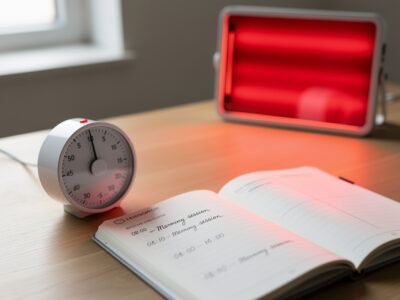
Red light sauna sessions follow modified protocols compared to regular infrared sessions because the LED light therapy benefits from different exposure times than the heat therapy. The standard combined session structure:
- Minutes 0-15: Heat-only warmup. LEDs off, cabin heats to 130-140°F. Body adapts to heat, sweat begins.
- Minutes 15-30: Combined heat + LED exposure. Activate LED panels at full intensity, position body to face panels for direct exposure. This 15-minute LED window delivers the photobiomodulation effect.
- Minutes 30-45: Heat-only finish. LEDs off, continue heat exposure for the deep-sweat phase. This is also where most users do their meditation or relaxation work.
For deeper protocol guidance including beginner ramp-up timing, body-region specifics, and dosing math, see our red light therapy protocol guide. The full evidence base behind each benefit category lives in our red light sauna benefits research, and the home install workflow is in red light sauna at home. Always pair sessions with the safety guidance in our infrared sauna safety guide — red light specifically requires eye protection (closed eyes or sleep mask) during direct LED exposure.
EMF Considerations for Red Light Saunas
Red light sauna EMF performance depends on both the cabin heater technology and the LED driver electronics. The carbon panel heaters contribute the same 0.3-3 milligauss range as regular infrared cabins (premium brands hit under 0.5 mG). The LED driver adds 0.5-2 mG depending on driver quality and shielding — typically a smaller contribution than the heaters.
Premium red light saunas (Therasage TheraSauna Pro Red, Sun Home Luminar Red) use shielded LED drivers and carbon panels in the same low-EMF construction as their non-LED siblings. Total EMF at session position remains under 1 mG. Budget cabins with non-shielded LED drivers can spike to 4-6 mG at the panel surface during operation.
For EMF-sensitive buyers, the format ranking is: Therasage TheraSauna Pro Red (under 0.5 mG total), Sun Home Luminar Red Light 2 (under 1 mG), Clearlight Sanctuary 2 with Red Light Add-On (under 1 mG), then everything else at 1-3 mG. Verify the manufacturer publishes EMF data with LEDs activated, not just heat-only readings.
Red Light Sauna Cost vs Separate Products
The cost question for premium-budget buyers: integrated red light sauna ($5,000-$8,500) vs separate cabin + standalone red light panel ($4,000 cabin + $1,500 panel = $5,500). The integrated cabin is roughly the same total cost but delivers a unified session experience and saves the floor space of a separate panel.
| Approach | Total cost | Floor space | Session experience | Best for |
|---|---|---|---|---|
| Integrated red light sauna | $5,000–$8,500 | 30 sq ft cabin only | Unified single session | Wellness-focused buyers wanting both therapies |
| Cabin + standalone panel | $5,500–$7,000 | 30 sq ft cabin + 4 sq ft panel | Two separate sessions | Buyers who use therapies separately |
| Cabin + sauna blanket + lamp | $4,500–$6,500 | 30 sq ft cabin only | Three different formats | Buyers who travel and want flexibility |
The cost-per-session math depends on use frequency. For users running 5+ sessions per week with both therapies, the integrated red light sauna delivers the best value. For users running occasional combined sessions plus daily heat-only, separate products offer more flexibility.
Maintenance and LED Lifespan
Red light saunas require slightly more maintenance than regular infrared cabins because of the LED panels. Total annual maintenance time runs 90-120 minutes per year and $30-$60 in supplies — modestly more than a regular cabin but well below outdoor saunas.
The LED-specific maintenance items beyond standard cabin care:
- Wipe LED panel surface monthly with dry microfiber cloth. Sweat residue clouds the LED diffuser and reduces irradiance by 8-15% over 6 months if not cleaned.
- Verify LED panel function annually. Visually inspect that all LEDs in the panel array are illuminated during sessions. Failed individual LEDs (dark spots in the array) indicate driver wear and warrant warranty contact.
- Replace LED panels at year 7-10. Quality LEDs maintain 95%+ of original irradiance through 10,000 hours of use. At 30 minutes per session, 4 sessions per week, that’s about 8 years of typical use before output drops below therapeutic effective levels.
- Update controller firmware if available. Some premium cabins (Sun Home, Clearlight) ship with controller firmware updates that improve LED scheduling and protocol presets. Check the manufacturer support portal annually.
Replacement LED panels from premium manufacturers run $400-$1,200 — a meaningful but predictable end-of-life cost. Plan for this in the long-term ownership math, particularly for heavy daily users where the LED replacement cycle hits at year 6-8 instead of 10+. A premium 15-year ownership window typically includes one LED replacement at year 8 plus an optional second replacement at year 14, totaling $800-$2,400 in long-term LED costs across the cabin’s lifespan.
Common Mistakes Red Light Sauna Buyers Make
Three errors show up in nearly every disappointed-buyer review:
- Buying based on “red light therapy” marketing without checking LED specs. Many cabins under $4,000 use cheap LEDs at incorrect wavelengths (630nm or 880nm peaks) with low irradiance. The “red light therapy” label is meaningless without published 660nm/850nm peak wavelength specs and 30+ mW/cm² irradiance.
- Skipping eye protection during LED sessions. Direct exposure to LED panels at full intensity for 15+ minutes can cause retinal photodamage. Always close eyes, wear a sleep mask, or use the manufacturer-supplied goggles during LED-active phases.
- Expecting visible results within 2 weeks. Photobiomodulation benefits accumulate over 8-12 week protocols. Skin elasticity and joint inflammation improvements typically become measurable at week 4-6 with daily sessions, not week 1.
Frequently Asked Questions
What is a red light sauna?
A red light sauna is an infrared sauna cabin with added LED red light therapy panels at specific wavelengths (typically 660nm red and 850nm near-infrared). The combination delivers full-body sweat sessions and targeted photobiomodulation in a single 30-45 minute session. Home cabins run $1,800-$8,500.
Are red light saunas better than regular infrared saunas?
Better for buyers with specific therapy goals (skin and collagen, joint inflammation, mitochondrial health) where the 660nm and 850nm wavelengths matter. For general sweat and relaxation, regular infrared cabins deliver the same experience at lower cost. The integrated format is most valuable when you actually use both therapies regularly.
How much does a red light sauna cost?
Quality home red light saunas run $4,799 to $8,495 depending on brand, cabin size, and LED panel coverage. Therasage TheraSauna Pro Red ($4,799) is the cheapest acceptable price; Sunlighten mPulse Aspire ($8,495) leads the premium tier. Buyers under $3,500 should buy a regular infrared cabin instead and add a standalone red light panel later.
Can I add red light therapy to my existing infrared sauna?
Yes. Standalone red light panels from Joovv ($800-$2,500), PlatinumLED ($300-$1,000), or Mito Red ($600-$2,000) mount inside or beside an existing sauna cabin. This is more cost-effective than buying a new integrated red light sauna for owners of existing cabins.
What wavelengths should a red light sauna use?
Premium red light saunas use 660nm red LEDs and 850nm near-infrared LEDs — the wavelengths with the strongest published clinical research. Cheaper cabins use 630nm or 880nm LEDs with broader wavelength spread, missing the most-researched peaks. Always verify LED peak wavelength specs before buying.
Do I need eye protection in a red light sauna?
Yes. Direct exposure to LED panels at full intensity for 15+ minutes can cause retinal photodamage. Always close eyes during LED-active phases, wear a sleep mask, or use manufacturer-supplied goggles. Heat-only phases of the session don’t require eye protection — only when LEDs are at full output.
How long should a red light sauna session be?
The standard combined session runs 30-45 minutes total: 15 minutes heat-only warmup, 15 minutes combined heat + LED exposure (the photobiomodulation window), and 15 minutes heat-only finish. The dedicated LED window doesn’t need to be longer than 15 minutes — additional LED exposure offers diminishing returns.
Related Guides
The full Red Light Therapy cluster:
- Red Light Sauna at Home Setup — install workflow and best home cabins
- Red Light Sauna Benefits Science — what the evidence supports
- Red Light vs Infrared Sauna — wavelength and mechanism comparison
- Red Light Therapy Protocol Guide — session timing, dosing math, body-region specifics
Broader infrared sauna context:
- The Ultimate Guide to Infrared Saunas — master pillar covering all formats and benefits
- Home Infrared Sauna Setup Guide — full home cabin install framework
- Near vs Far vs Full Spectrum — wavelength science deep dive
- Full Spectrum Infrared Sauna Benefits — full-spectrum cabin coverage
- Near-Infrared Lamp DIY Setup — standalone NIR alternative
- Best Infrared Sauna Brands 2026 — top 10 manufacturers
- Infrared Sauna Benefits Research — documented heat-therapy benefits