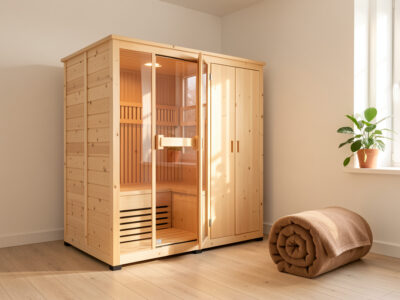
A portable infrared sauna is any non-cabin format that delivers infrared heat and folds, rolls, or breaks down for storage and travel. The four mainstream formats — sauna blankets, pop-up tent saunas, sauna boxes, and DIY near-infrared lamps — cost $129 to $1,800, plug into a standard outlet, and store in under 4 cubic feet when not in use.
This guide covers each portable format, the session quality tradeoffs versus full cabins, who each format is right for, and which products lead the 2026 portable market. For full-cabin alternatives, see the home infrared sauna setup guide; for the broader buying decision, see how to choose the best infrared sauna.
The Four Portable Sauna Formats
Portable infrared saunas split into four distinct formats with very different session experiences. Picking the right one means understanding what you actually want from a session — relaxation, sweat, recovery, targeted skin sessions, or a combination — because format choice constrains experience.
| Format | Price range | Footprint in use | Storage size | Setup time | Posture | Best for |
|---|---|---|---|---|---|---|
| Sauna blanket | $199–$899 | Bed-sized (~30 sq ft) | 1 sq ft rolled | 2 minutes | Lying down | Recovery, sleep prep, travel |
| Pop-up tent sauna | $129–$599 | 3′ × 3′ (9 sq ft) | 1.5 sq ft folded | 5–10 minutes | Seated, head out | Studios, dorms, frequent movers |
| Sauna box | $899–$1,800 | 4′ × 4′ (16 sq ft) | 4 sq ft collapsed | 15 minutes | Seated, fully enclosed | Premium portable, semi-permanent |
| Near-IR lamp setup | $199–$650 | 1 sq ft (lamp footprint) | 0.5 sq ft | 1 minute | Standing or seated | Targeted skin and joint sessions |
The biggest format-choice mistake is buying a blanket when you wanted a sauna. The blanket triggers the same sweat response and reaches similar core temperatures as a cabin, but the lying-down posture and zero ambient heat around the head create a different psychological experience. Anyone expecting “sauna-like relaxation” from a blanket without trying it first ends up disappointed.
Sauna Blanket: The Apartment Workhorse
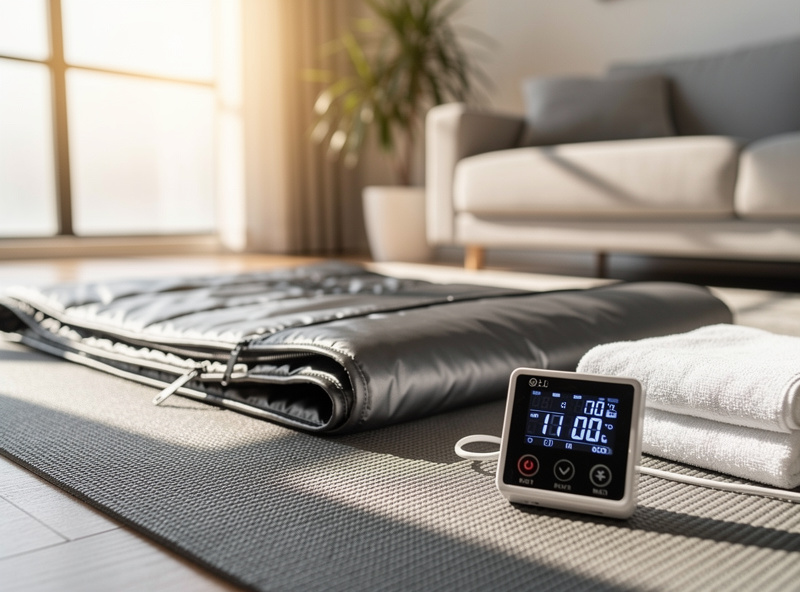
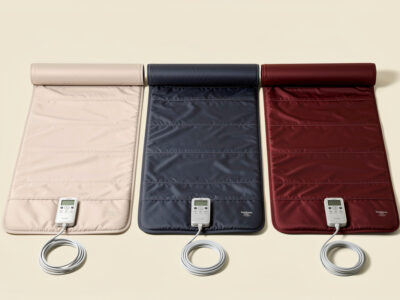
The infrared sauna blanket is the dominant portable format in 2026, with HigherDose’s V4 ($599) leading the segment. The blanket is a sleeping-bag-shaped heated wrap that uses carbon panels in the inner layer to reach 158°F internal temperature in 10 minutes. Sessions run 30-45 minutes, the same session length as cabin use.
The blanket triggers the same sweat response and skin-temperature elevation as a 2-person cabin session. What’s different is posture (lying down on a bed or yoga mat) and ambient experience (your head experiences room temperature while the body experiences sauna heat). About 40% of buyers prefer the lying-down format for recovery and pre-sleep routines; 60% prefer the upright cabin format for relaxation and traditional sauna experience.
Quality varies dramatically by brand. The HigherDose V4 uses dual heating zones (lower body and torso) with separate temperature control, multi-layer construction with crystal layers, and a removable absorbent insert sheet for sweat. Cheaper alternatives ($199-$399 from MiHIGH, LifePro, Sauna Box) skip the dual zones and use single-piece construction. Our HigherDose review covers the V4 spec and EMF testing in detail. The full blanket comparison and top 7 ranking sits in our 2026 best sauna blankets roundup; for the broader cabin-vs-blanket decision, see the sauna blanket vs cabin guide.
Pop-Up Tent Sauna: Best for Studios
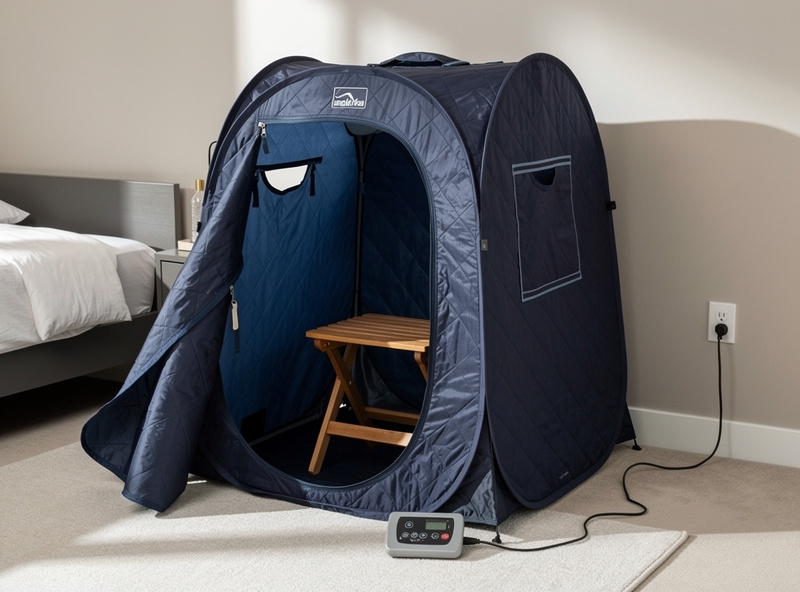
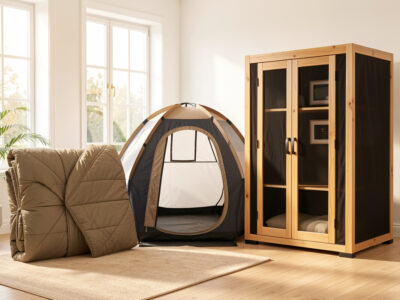
Pop-up tent saunas are fabric-wrapped enclosures with carbon panel heaters built into the lining, an included folding stool, and a fabric collar that closes around the user’s neck for a head-out session. The tent assembles in 5-10 minutes and folds to 1.5 sq ft for storage. Brands include SereneLife, Durherm, Radiant Saunas, and several Amazon-only labels.
Session quality is genuinely good. The tent enclosure traps heat efficiently and reaches 130°F core temperature in 12-15 minutes. The head-out posture is the main compromise — fine for sweat sessions and recovery, less ideal for relaxation since your head experiences room temperature throughout. Some users specifically prefer head-out for breathing comfort during longer sessions.
The compromises beyond posture: tent fabric has a 2-3 year lifespan with daily use, EMF runs higher in budget pop-ups (3-5 mG vs under 1 mG in premium cabins), and the bench is a cheap folding stool rather than the cedar bench of a cabin format. For apartment dwellers planning to move within 2-3 years, this is the right format. For long-term apartment residents, the 1-person hardwood cabins covered in our apartment sauna guide are a better long-term value. The portable compact sauna guide covers tent-style units for small apartments specifically, including which studio layouts actually have room for one.
Sauna Box: The Semi-Permanent Premium Portable
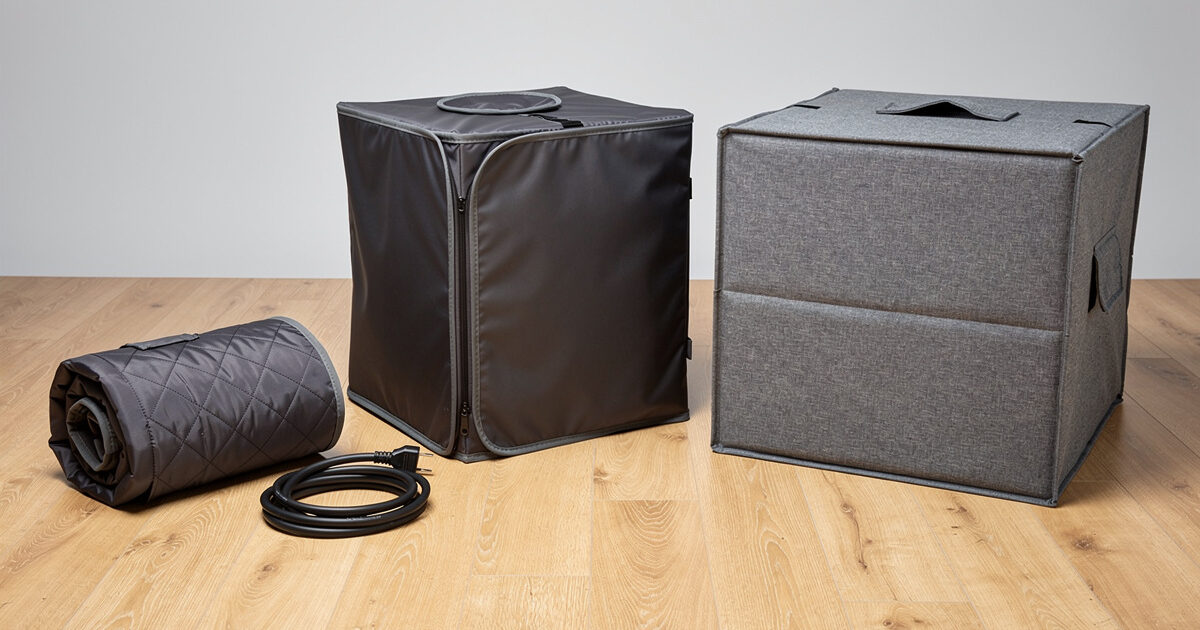
The sauna box is the largest portable format — a hardwood-frame fabric-wrapped enclosure that’s bigger than a tent but smaller than a cabin. Brands like SaunaSpace, Therasage, and Radiant Health Saunas dominate this segment with prices from $899 to $1,800. Setup is more involved (15 minutes for first assembly, 5 minutes for subsequent moves) but session quality approaches cabin level.
The defining feature of sauna boxes is they typically use near-infrared incandescent bulb arrays rather than carbon panel heaters. This is the wavelength range covered in our near vs far vs full spectrum guide — near-IR (700-1400nm) penetrates skin and superficial tissue rather than driving deep core heat the way far-IR does. The session experience feels different: less intense sweat, more skin warmth, more reported “energizing” feel post-session.
SaunaSpace is the brand that built this category and remains the lineage leader. Their cabins use the proprietary “ThermaLight” near-IR bulb array in a four-bulb tower configuration. Build quality is genuinely premium — solid maple frame, custom-woven organic cotton fabric, and electromagnetic shielding for low-EMF performance. Detailed walkthrough in our SaunaSpace review, which covers their Faraday cage construction and bulb-spectrum data. For the full sauna box and pop-up tent ranking across six top models, see our 2026 sauna box and tent reviews.
Near-Infrared Lamp DIY Setup
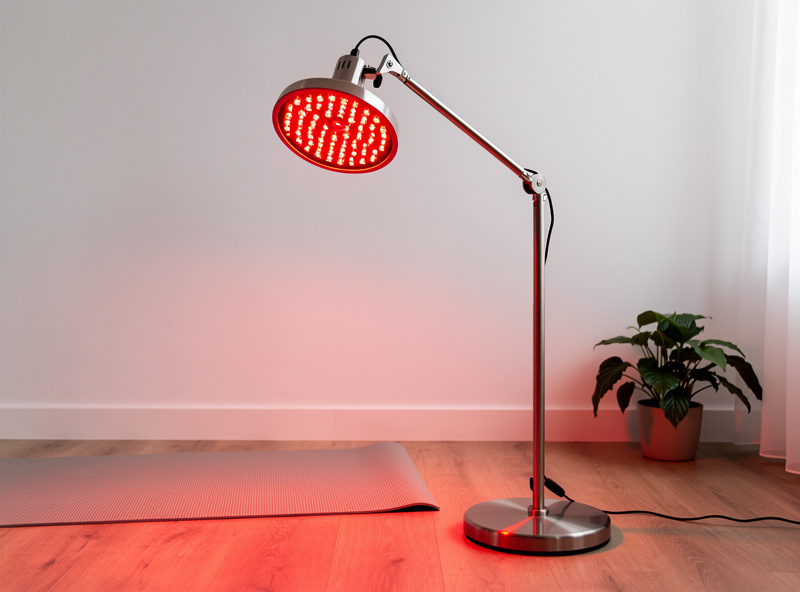
The DIY near-infrared lamp setup is the cheapest entry point into portable infrared at $199-$650 for a complete kit. The format uses a single 250W or 500W incandescent NIR bulb in an adjustable lamp fixture, positioned 12-24 inches from the body for targeted exposure. Sessions typically run 15-20 minutes per body region rather than full-body 30-45 minute sessions.
The format isn’t really a “sauna” by traditional definition — there’s no enclosure, no full-body sweat response, and no ambient heat. What it does deliver is targeted near-infrared exposure aimed at a specific body area: skin and collagen-focused sessions, localized joint-area exposure, and the kind of targeted red-light usage studied in the near-infrared research literature. This is genuinely different from cabin and blanket formats.
The DIY appeal is the price, the simplicity (one bulb, one fixture, one outlet), and the targeted control. Brand SaunaSpace also makes a single-bulb consumer version called the Photon for $299. Cheaper alternatives from Joovv and PlatinumLED run $199-$650 for similar single-bulb setups. The session format differs from full sauna sessions — more a “10-minute targeted exposure” than a “30-minute relaxation” session. If you primarily want sweat and relaxation, skip this format and pick a blanket or pop-up. The full DIY parts list, build steps, and session guidance by use case live in our near-infrared lamp DIY setup guide.
Session Quality: Portable vs Cabin
The honest assessment of how portable formats compare to cabins on five session quality dimensions:
| Quality dimension | Cabin (baseline) | Sauna blanket | Pop-up tent | Sauna box | NIR lamp |
|---|---|---|---|---|---|
| Sweat response | Strong | Strong | Strong | Moderate | Minimal |
| Core temperature rise | 2-3°F | 2-3°F | 2°F | 1.5-2°F | Minimal |
| Heat-up time | 10-15 min | 10 min | 12-15 min | 15-20 min | n/a (instant) |
| EMF (mid-range) | 0.5-1 mG | 1-3 mG | 3-5 mG | 0.3-1 mG | Variable by bulb |
| Relaxation feel | Strongest | Different (lying) | Good (head out) | Strong | Targeted only |
Key takeaway: blankets and pop-ups deliver 80-90% of cabin sweat-and-temperature performance at 20-40% of the price, with format tradeoffs (posture, EMF, fabric durability). Sauna boxes deliver near-cabin quality at 30-50% of cabin price. NIR lamps occupy a different category entirely — targeted local sessions rather than full-body sessions.
Who Should Buy Which Format
Use this profile-based guidance to pick your portable format:
- Frequent traveler or work-from-home digital nomad: Sauna blanket. Rolls into a suitcase, works in any hotel, and triggers the same recovery response as a cabin session.
- Studio or one-bedroom apartment dweller: Sauna blanket if you want zero permanent footprint, pop-up tent if you have 9 sq ft of clear floor space. Skip cabins entirely until you have larger space.
- Recovery-focused athlete: Blanket for daily use, pop-up tent for occasional longer sessions. The lying-down blanket integrates better with post-workout recovery routines than upright cabin sessions.
- Interested in near-infrared skin research: Near-infrared lamp setup. Near-IR is the wavelength band most of that research looks at, and full-body cabins run far-IR primarily — so a lamp setup targets the band more directly if that’s your focus.
- Premium wellness without a permanent install: Sauna box. Approaches cabin quality, semi-permanent rather than truly portable, but breaks down for moves.
- Budget under $300: Pop-up tent sauna. Better than no sauna; below $200 quality drops sharply.
If you’re choosing between a portable format and a full home cabin, see our broader how to choose framework. The key distinction: cabins favor relaxation and traditional sauna experience; portables favor flexibility and lower upfront cost. Once you’ve landed on “portable,” the best portable infrared sauna guide ranks the specific blanket, tent, and box models worth buying in each price tier.
When to Skip Portable Entirely
Three buyer profiles get poor value from portable formats and should jump straight to a full home cabin:
- Multi-person households planning daily use: A 2-person home cabin amortizes across two adults, while blankets and pop-ups are single-user formats. Two blankets cost $1,000+ and you’ve still got two single sessions instead of a shared cabin session.
- Buyers with an existing dedicated wellness space: If you already have a finished basement or spare bedroom set up for wellness, the cabin install is straightforward and delivers materially better session quality. Spending $599 on a blanket when you have the space for a $3,500 cabin is an easy decision against the blanket.
- Long-term residents (10+ year horizon): Portable formats have 3-7 year lifespans depending on use frequency. A premium home cabin lasts 18-25 years. The lifetime cost-per-session math heavily favors cabins for buyers staying in the same home long-term.
For these buyers, see the 2026 best home cabins ranking instead. The at-home cost breakdown covers the cabin ROI math against portable alternatives.
Running Cost and Per-Session Math
Portable saunas are dramatically cheaper to run than cabins because total wattage is lower. At US average rates of $0.16/kWh, a 30-minute blanket session costs $0.06, a 30-minute pop-up tent session costs $0.09, and a 30-minute sauna box session costs $0.12. NIR lamp sessions at 15 minutes cost $0.02-$0.04 depending on bulb wattage.
For perspective, a typical home cabin 30-minute session at 1,500W costs $0.12 — twice the blanket and roughly the same as a sauna box. Annual costs for daily use: blanket ~$22/year, pop-up ~$33/year, sauna box ~$44/year. Negligible compared to commercial sauna access.
The bigger cost question is total cost of ownership over 5 years. A $599 HigherDose blanket used daily for 5 years costs roughly $0.33 per session including replacement. A $4,400 home cabin used the same way costs $2.41 per session over 5 years. Portable formats genuinely cost less per session — the tradeoff is the format experience itself.
EMF Considerations for Portable Formats
EMF performance varies widely across portable formats and brands. Sauna blankets typically run 1-3 milligauss at the body’s surface, which is higher than premium cabin readings (0.3-0.5 mG) but well below the 3 mG threshold most low-EMF guidelines cite. Pop-up tents run 3-5 mG in budget models, sometimes higher near the heater panels. Sauna boxes from SaunaSpace publish 0.3-1 mG via their Faraday cage construction. NIR lamps don’t produce meaningful EMF — incandescent bulbs are different from carbon panel heaters.
For EMF-sensitive buyers, the format ranking is: NIR lamps (negligible), SaunaSpace sauna box (0.3-1 mG), HigherDose blanket V4 (1-2 mG with shielded carbon panels), generic blankets (2-3 mG), pop-up tents (3-5 mG), and budget pop-ups (sometimes higher). The HigherDose V4 specifically uses copper-shielded carbon panels to reduce EMF below most blanket competitors — a meaningful upgrade for daily-use buyers.
If EMF is a primary concern and budget allows, a SaunaSpace sauna box or an NIR lamp setup outperforms most portable options. The middle-ground choice is the HigherDose V4 blanket. The bottom-tier choice is any unverified Amazon-only pop-up tent without published EMF data.
Electrical and Setup Considerations
All portable formats run on a standard 110V 15-amp outlet. None require dedicated circuits or electrician install. Wattage by format: blankets draw 600-800W, pop-ups draw 1,000-1,200W, sauna boxes draw 1,500-1,800W, and NIR lamps draw 250-500W per bulb. All four are well below the 1,800W typical kitchen-circuit limit.
The one electrical caveat applies to sauna boxes specifically: if you’re running a four-bulb SaunaSpace or similar setup, the combined wattage approaches 1,800W and benefits from a dedicated outlet (no other appliances on the same breaker). For blankets, pop-ups, and single-bulb NIR, any standard outlet works.
Travel and Storage
The genuine portability of each format varies. Sauna blankets win at travel — they roll to suitcase size and weigh 12-18 lbs. Pop-up tents fit in a 24-inch nylon bag and weigh 25-35 lbs but the assembly takes 5-10 minutes per setup. Sauna boxes are technically portable but require 30+ minutes of disassembly and a dedicated transport vehicle. NIR lamps are lightweight but the bulbs are fragile during transport.
For long-term storage between uses (seasonal, between moves, etc.), all four formats need a dry environment under 80°F. Heated attics in summer can damage controller electronics on blankets and pop-ups. Avoid garage storage in humid climates — extended humidity above 70% causes mildew on tent fabric and corrosion on NIR lamp connectors.
Maintenance and Lifespan
Portable saunas are lower-maintenance than cabins because there’s less surface area, no wood to seal, and no door gasket. Total annual maintenance time runs 30-60 minutes per year per format.
- Sauna blankets: Wash the absorbent insert sheet weekly with mild detergent. Wipe the inner blanket surface with a damp microfiber cloth after every 5 sessions. Lifespan 3-5 years with daily use, 7-10 years with weekly use.
- Pop-up tents: Vacuum the interior fabric monthly. Wipe down the heater panels with a dry microfiber cloth. Replace the included stool seat cushion at year 2-3. Lifespan 2-3 years with daily use, 4-6 years with weekly use.
- Sauna boxes: Wipe wood frame with damp cloth quarterly, vacuum fabric exterior monthly, replace incandescent NIR bulbs at year 1-2 (typical bulb life 4,000 hours). Lifespan 8-12 years with proper bulb replacement.
- NIR lamps: Wipe bulb housing weekly, replace bulbs at year 1-2. Lamp fixture itself lasts 10+ years.
Always pair portable sauna sessions with the safety guidance in our infrared sauna safety guide. Hydration matters even more in portable formats because the room ambient air is cooler than cabin sessions, masking dehydration signals — drink 16-24 oz of water before any 30+ minute session.
Five Common Mistakes Portable Sauna Buyers Make
The same five errors show up in nearly every disappointed-buyer review across portable formats. Knowing them in advance saves $100-$400 in returned products and a weekend of frustration.
- Buying a blanket expecting a cabin experience. The blanket triggers the same sweat response and core temperature rise, but the lying-down posture and ambient room temperature around the head create a different experience. Try a friend’s blanket or a wellness-spa blanket session before buying if you’ve never used one.
- Skipping EMF research on budget pop-ups. Sub-$300 pop-up tents from unverified Amazon brands often run 5-10 mG at the heater panels — well above the 3 mG threshold most low-EMF guidelines cite. The verified brands (SereneLife, Durherm, Radiant Saunas) publish EMF data; brands that don’t almost always run higher.
- Storing a sauna blanket folded for months. The carbon heater panels develop creases at the fold lines and can fail electrically within 2-3 years of repeated folding/unfolding storage. Always roll (don’t fold) the blanket for storage.
- Using NIR lamps without eye protection. Near-infrared at 250-500W per bulb is intense enough to cause retinal damage with prolonged direct viewing. Always use the included goggles or safety glasses, position the lamp above eye line, and never look directly at the bulb during sessions.
- Running portables on a shared kitchen circuit. While portables don’t require dedicated circuits, running a 1,200W pop-up tent on the same circuit as a microwave or refrigerator triggers continuous-load tripping. Test by running a hair dryer for 5 minutes on the target outlet — if it holds, the sauna will too.
Frequently Asked Questions
What is the best portable infrared sauna in 2026?
For most buyers, the HigherDose Sauna Blanket V4 at $599 is the best portable infrared sauna. It triggers the same sweat response as a 2-person cabin, rolls to 1 sq ft for storage, and uses dual heating zones with separate controls. For premium semi-permanent use, the SaunaSpace single-person box at $1,800 leads on build quality.
Are portable infrared saunas as effective as full cabins?
For sweat and core temperature, yes — quality blankets and pop-up tents reach the same 2-3°F core temperature rise as cabin sessions. The differences are posture (lying down for blankets, head-out for pop-ups), EMF (slightly higher in budget portables), and the relaxation feel of a fully enclosed cabin space.
How much does a portable infrared sauna cost?
Sauna blankets run $199-$899 (HigherDose V4 at $599 is the segment leader). Pop-up tent saunas run $129-$599. Sauna boxes run $899-$1,800. Near-infrared lamp setups run $199-$650. All four formats plug into a standard 110V outlet without needing electrician install.
Sauna blanket or pop-up tent — which is better?
Choose the blanket if you want a lying-down recovery experience, store in a closet, or travel frequently. Choose the pop-up tent if you want an upright seated session with head out for breathing comfort, have 9 sq ft of clear floor space, and prefer the traditional sauna posture. Both deliver similar sweat performance.
Do portable saunas need a dedicated electrical circuit?
No. Sauna blankets (600-800W), pop-up tents (1,000-1,200W), and NIR lamps (250-500W) all run on a standard 110V 15-amp outlet without a dedicated circuit. Sauna boxes drawing close to 1,800W benefit from a dedicated outlet but don’t require one. None require electrician install.
Can portable infrared saunas trigger the same health benefits as cabins?
For sweat-driven and core-temperature response, research suggests they’re comparable — similar circulation and heat-shock-protein response have been reported for both formats. The lying-down blanket format may integrate more easily into a sleep-prep or recovery routine than upright sessions. If near-infrared skin research interests you, a near-infrared lamp setup targets that wavelength band more directly than carbon-panel formats.
How long does a portable infrared sauna last?
Sauna blankets last 3-5 years with daily use or 7-10 years with weekly use. Pop-up tents last 2-3 years daily or 4-6 years weekly. Sauna boxes last 8-12 years with proper bulb replacement at year 1-2. NIR lamp fixtures last 10+ years; bulbs need replacement every 4,000 hours of use.
Related Guides
The full Portable Saunas cluster:
- Best Infrared Sauna Blankets 2026 — top 7 sauna bags ranked
- Sauna Box and Tent Reviews — top 6 boxes and pop-up tents compared
- Sauna Blanket vs Cabin Decision Guide — head-to-head with 5-year cost math
- Near-Infrared Lamp DIY Setup — parts list, build steps, session guidance
Broader infrared sauna context:
- The Ultimate Guide to Infrared Saunas — master pillar covering all formats and benefits
- Home Infrared Sauna Setup Guide — full-cabin alternatives for permanent installs
- Indoor Sauna for Apartments and Small Homes — closely related apartment-format coverage
- HigherDose Review — V4 sauna blanket and Solo cabin detail
- SaunaSpace Review — premium near-IR sauna box brand
- Best Infrared Saunas Under $1,000 — budget format comparisons
- How to Choose the Best Infrared Sauna — broader buying framework
- Near vs Far vs Full Spectrum — wavelength science behind format choice