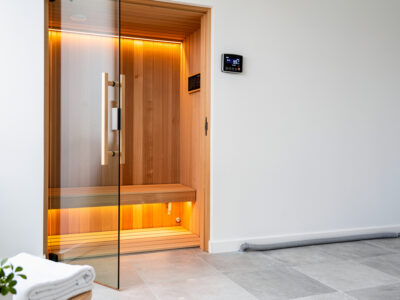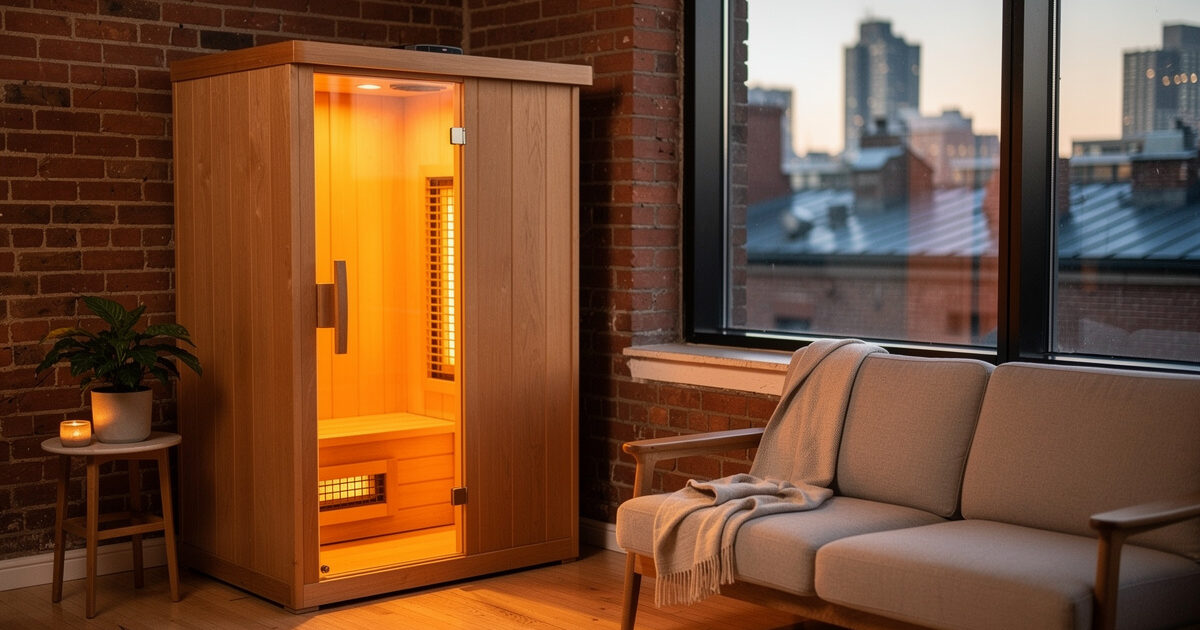
An indoor sauna for a small apartment or compact home is a 1-person cabin (3×3 ft footprint), a portable pop-up sauna, or an infrared blanket — all of which fit through a 32-inch door, plug into a standard outlet, and store in under 4 square feet when not in use. Apartment-friendly options run $499 to $3,500 and skip the floor-loading and electrical concerns that limit larger cabins.
This guide covers the three formats that work in apartments and tiny homes, the building-management approval process for renters, electrical and floor considerations specific to multi-unit buildings, and the realistic session quality you can expect at each format. For full-size home cabin options, see the home infrared sauna setup guide; for the broader buying framework, see how to choose the best infrared sauna.
As an Amazon Associate I earn from qualifying purchases.
Three Formats That Fit Apartments
The three apartment-compatible infrared sauna formats are: 1-person hardwood cabin (smallest cabin format), portable pop-up sauna (collapsible tent style), and infrared sauna blanket (zero permanent footprint). They differ on session quality, footprint, price, and whether your landlord will care.
| Format | Price range | Footprint when in use | Footprint when stored | Power draw | Session quality | Best for |
|---|---|---|---|---|---|---|
| 1-person hardwood cabin | $1,800–$3,500 | 3′ × 3′ (9 sq ft) | Same — permanent | 1,200W on 110V 15A | Full sauna experience | Apartments with 25+ sq ft to spare |
| Portable pop-up sauna | $199–$599 | 3′ × 3′ (9 sq ft) | 1.5 sq ft folded | 1,000W on 110V 15A | Head-out experience | Studios, dorms, frequent movers |
| Infrared sauna blanket | $499–$899 | Bed-sized (~30 sq ft) | 1 sq ft rolled | 800W on 110V 15A | Lying-down experience | Studios, travel, recovery use |
The session quality differences are real but smaller than the price differences suggest. A 1-person hardwood cabin gives the closest-to-commercial experience, but a quality blanket reaches the same skin temperature and triggers the same sweat response — just in a different posture.
1-Person Hardwood Cabin: The Closest-to-Full Experience
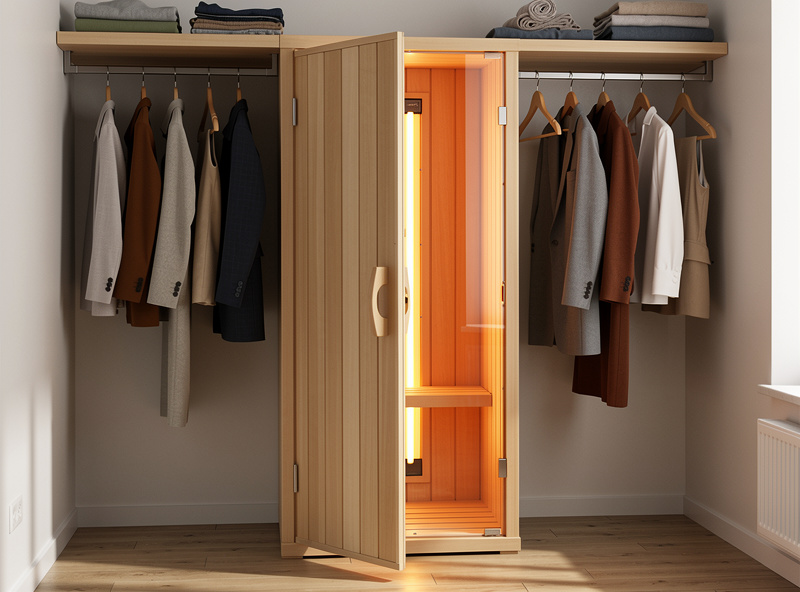
If you have 25+ sq ft of dedicated space, the 1-person hardwood cabin is the apartment format that most closely matches a regular home sauna experience. Cabins like the Dynamic Barcelona, Maxxus Carbon, and HigherDose Solo run $1,800-$3,500 and slot into a corner, walk-in closet, or unused dining nook. Check current price on Amazon →
The footprint is roughly the same as a small refrigerator: 3 feet wide, 3 feet deep, 6 feet tall. Floor loading is around 30 lbs/sq ft, well under the 40-50 lbs/sq ft that residential floors handle. Power draw is 1,200W on a standard 110V 15-amp outlet — meaningful but compatible with apartment electrical.
The downsides specific to apartments: the cabin is permanent (no easy disassembly), it is visible and somewhat conspicuous in a small space, and many apartment buildings require landlord notification for any 200+ lb appliance. Building approval is straightforward (saunas are treated like washer/dryer units), but it does add a 1-2 week delay before delivery.
Portable Pop-Up Sauna: Best for Studios
Portable pop-up saunas are tent-style enclosures that fold flat for storage and assemble in 5-10 minutes for use. The user sits on a small included stool inside the tent with head poking out through a fabric collar, which means the head experiences room temperature while the body experiences sauna heat — a “head-out” experience that some users actually prefer for breathing comfort.
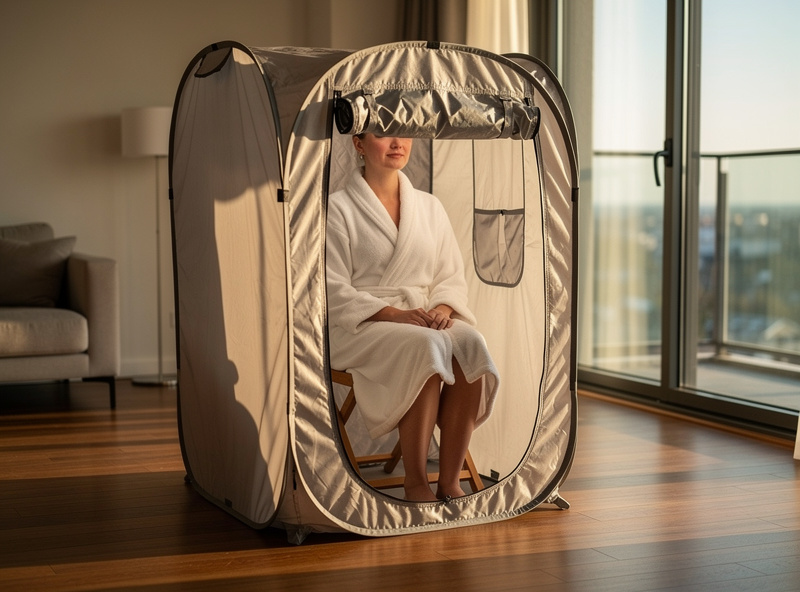
Pop-up models run $199-$599 from brands like SereneLife, Durherm, and Radiant Saunas. Power draw is 800-1,000W on a standard outlet. Session quality is genuinely good — the tent enclosure traps heat efficiently and reaches 130°F core temperature in 12-15 minutes. The stored footprint of 1.5 sq ft means you can tuck the folded tent under a bed or in a coat closet.
The compromises are real: head-out posture is fine for sweat sessions but inferior for relaxation, the carbon panels in budget pop-ups run higher EMF than premium cabins, and the fabric tents have a 2-3 year lifespan with daily use. For apartment dwellers planning to move within 2-3 years anyway, this is the right format. For long-term apartment residents, save up for the 1-person hardwood cabin instead. One honest add from my own bench: budget pop-up panels do read higher on a TriField TF2 than a premium cabin, exactly as the EMF note above says, so if the tent is going right next to where you sleep, it is worth a thirty-second check with a TriField TF2 meter. A solid pop-up sauna is still the right call for studios and frequent movers.
Infrared Sauna Blanket: Zero Permanent Footprint
The infrared sauna blanket is a sleeping-bag-shaped heated blanket that wraps around your body while you lie on a bed or yoga mat. The HigherDose Sauna Blanket V4, the format leader, runs $599 retail. Cheaper alternatives from MiHIGH, LifePro, and Sauna Box run $299-$549.
The blanket reaches 158°F internal temperature in 10 minutes and triggers the same sweat response as a cabin session. Sessions run 30-45 minutes, the same protocol as cabin use. Power draw is 800W on a standard outlet, and the blanket rolls up to a 1 sq ft cylinder when stored — fits in a closet shelf or under a bed.
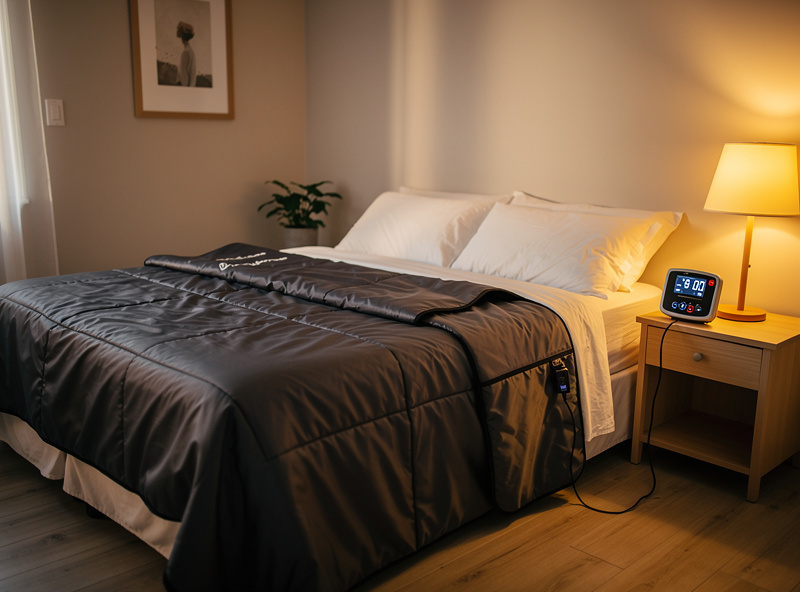
The downsides: the lying-down posture isn’t the traditional sauna experience, the blanket gets wet from sweat and needs cleaning between sessions (HigherDose includes a removable insert sheet), and the heating coverage is uniform rather than panel-targeted. For apartment dwellers, frequent travelers, and anyone using infrared primarily for recovery and sleep prep rather than relaxation, the blanket is the most practical format. I keep one in my own travel kit, and for a studio it is honestly the format I would pick first — zero permanent footprint, no landlord conversation, and it rolls into a closet between sessions. A quality infrared sauna blanket is the apartment default for a reason. Our HigherDose review covers the V4 blanket spec and EMF testing in detail.
Renter and Building Approval Process
About 70% of apartment dwellers in the US are renters, and most leases require landlord notification for major appliances or any modification to electrical use patterns. Sauna blankets and pop-ups don’t trigger approval requirements anywhere — they’re treated like portable heaters or yoga equipment. 1-person cabins do trigger approval in most leases.
The approval conversation with a landlord is straightforward when you frame it correctly. Three points to cover:
- “This is a freestanding 200-pound appliance, similar to a washer/dryer. It plugs into the wall outlet and doesn’t modify the building.” Landlords approve far heavier appliances (500+ lb refrigerators) without question.
- “It draws 1,200 watts on a standard outlet — same as a microwave or hair dryer.” Most concerns about apartment electrical are unfounded with infrared cabins.
- “I will provide a manufacturer’s installation manual and certificate of insurance for the unit.” Showing professionalism removes the “what could go wrong” objection.
Building management may add specific requirements: a slip-resistant mat under the cabin, a moisture barrier on cabin-facing walls, or a quarterly visual inspection clause. None of these are deal-breakers; they’re standard “we’re being careful” requirements that apply to many apartment installations.
Apartment Electrical Considerations
Most US apartments built after 1985 have 15-amp branch circuits in living areas, which handle a 1,200W cabin or 800W blanket without issue. Older buildings (pre-1985) sometimes have 10-amp circuits in older bedrooms — these will trip continuously under sauna load and require finding a different outlet. Test by running a hair dryer for 5 minutes on the target outlet before ordering; if the breaker holds, the sauna will too.
The dedicated circuit rule from the home sauna setup guide applies in apartments too: ideally, the sauna outlet has nothing else on the same breaker. For renters who can’t easily verify circuit sharing, the simpler workaround is using the sauna only when high-draw appliances (microwave, dishwasher) are off. The continuous load is the issue, not the wattage itself.
Floor Loading in Multi-Unit Buildings
Multi-unit residential buildings are designed for 40-50 lbs/sq ft live load in living areas, with concrete subfloors in most post-1990 construction handling 100+ lbs/sq ft. A 1-person cabin (180 lbs over 9 sq ft = 20 lbs/sq ft) plus the user (200 lbs over the user’s standing area) is well within rated capacity. Sauna blankets and pop-ups create no floor-loading concern at all.
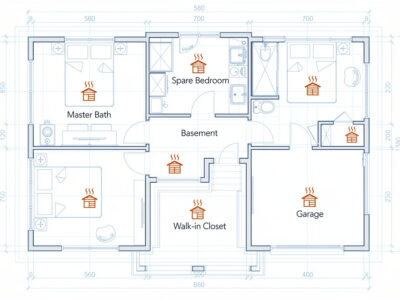
If your building is a wood-frame walkup built before 1980, ask the building manager about live load rating before ordering a 2-person cabin (which approaches 50 lbs/sq ft with two users). For 1-person cabins, blankets, and pop-ups, this is never a concern. The same setup guidance from our home sauna installation guide applies — just in a smaller footprint. For full room selection across a house — basement, spare bedroom, garage, master bathroom — see the where to install an infrared sauna guide.
Frequently Asked Questions
Can I put an infrared sauna in my apartment?
Yes. The three apartment-compatible formats are: 1-person hardwood cabin (3×3 ft, 180 lbs), portable pop-up sauna (folds to 1.5 sq ft for storage), and infrared sauna blanket (rolls to 1 sq ft). All three plug into a standard 110V outlet and stay within multi-unit floor-loading limits.
What is the smallest infrared sauna for a small space?
The infrared sauna blanket has zero permanent footprint — it rolls to 1 sq ft when stored. For a cabin format, the 1-person hardwood cabin (3×3 ft) is the smallest permanent option. The portable pop-up sauna sits between the two, taking 9 sq ft when in use but folding to 1.5 sq ft for storage.
Do I need landlord approval to install a home sauna?
For sauna blankets and pop-up tents, no — they are treated like portable appliances. For 1-person hardwood cabins (200+ lbs, 1,200W draw), most leases require landlord notification. The approval conversation is usually straightforward: frame it as a freestanding appliance similar to a washer/dryer.
Will an infrared sauna trip my apartment’s circuit breaker?
Most apartments built after 1985 have 15-amp branch circuits that handle a 1,200W cabin or 800W blanket without issue. Test the target outlet by running a hair dryer for 5 minutes — if the breaker holds, the sauna will too. Older buildings with 10-amp circuits may need a different outlet location.
Sauna blanket or 1-person cabin — which is better for apartments?
Choose the cabin if you have 25+ sq ft of dedicated space, plan to stay in the apartment 3+ years, and want the traditional upright sauna experience. Choose the blanket if you have a studio, move frequently, or use infrared primarily for recovery and sleep prep rather than relaxation.
Are pop-up portable saunas any good?
Quality pop-ups (SereneLife, Durherm, Radiant) reach 130°F core temperature in 12-15 minutes and trigger the same sweat response as a cabin. The head-out posture is the main compromise — fine for sweat sessions, less ideal for relaxation. Budget pop-ups have higher EMF than premium cabins; verify before buying.
Can I use an infrared sauna in a studio apartment?
Yes — the infrared sauna blanket is the right format for studios. It rolls to 1 sq ft for storage, runs on a standard outlet, and uses your existing bed or yoga mat as the session surface. Pop-up tents work too if you have 9 sq ft of clear floor space during sessions; cabins typically don’t fit studio layouts.
Related Articles
- Home Infrared Sauna Setup and Buying Guide — the parent hub
- Best Home Infrared Saunas 2026 — full-size cabin options ranked
- How to Set Up an Infrared Sauna at Home — installation walkthrough
- HigherDose Review — V4 sauna blanket and Solo cabin detail
- Best Infrared Saunas Under $1,000 — budget format comparisons