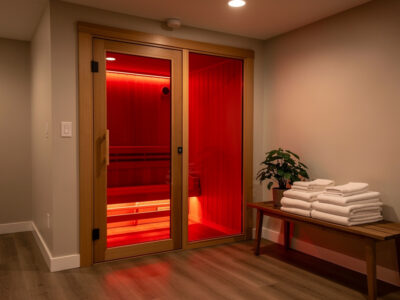
A lot of “red light sauna benefits” content you’ll find online reads like a clinical trial summary — precise percentages, named studies, exact week-by-week timelines. Most of that precision is manufactured. What’s actually true is more modest and more honest: red light saunas combine two real physical mechanisms — infrared heat and photobiomodulation from red/near-infrared LEDs — and there’s genuine, attributed research on both. This page reports what that research actually says, hedged the way honest research should be, not dressed up as a guaranteed outcome.
For the broader category context, see the red light sauna hub; for general infrared sauna benefits, see our infrared sauna benefits research.
As an Amazon Associate I earn from qualifying purchases.
How the Two Mechanisms Actually Differ
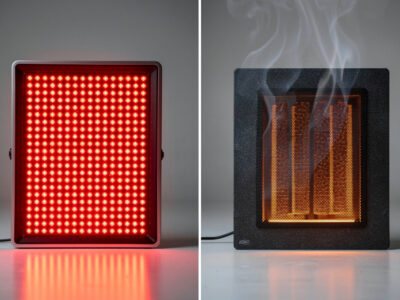
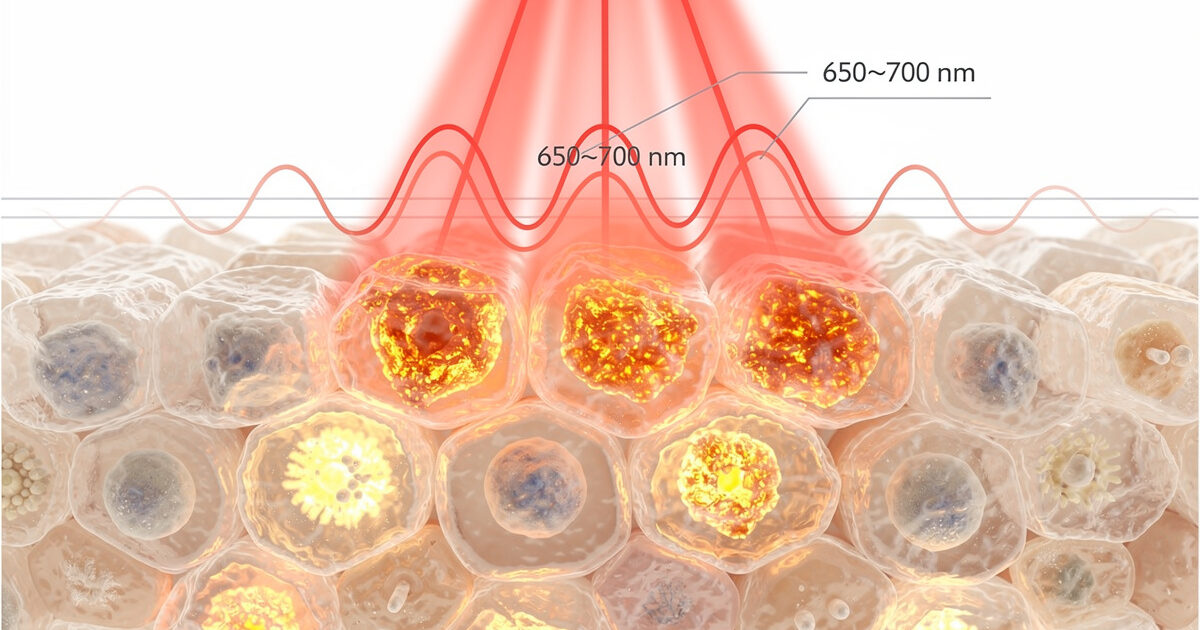
The combined format works through two distinct physical pathways. The infrared heat side raises core and skin temperature, triggers a heat-shock protein response, and drives cardiovascular effects comparable to other sauna types — a well-studied area (Patrick & Johnson, “Sauna use as a lifestyle practice to extend healthspan,” Exp Gerontol 2021). The LED side works through photobiomodulation — light absorbed by mitochondrial pathways rather than felt primarily as heat.
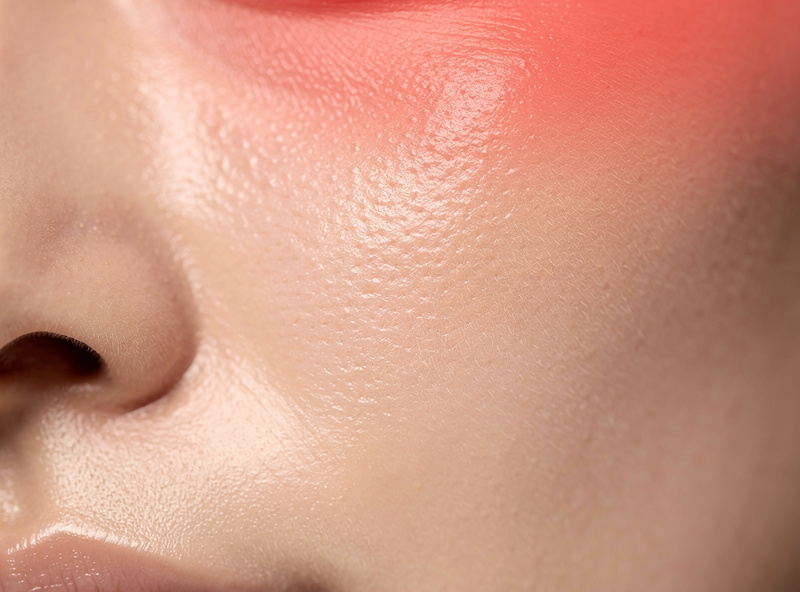
Wavelength matters for where each effect happens. 660nm (visible red) penetrates shallowest, working mainly at the skin surface. 850nm (near-infrared, invisible) penetrates further into subcutaneous tissue. Cabin heaters at 4-14 microns work through surface heat radiation rather than light-based penetration — a physically different mechanism entirely. Each wavelength reaches different tissue depths, covered in more physics detail in our near vs far vs full spectrum guide.
Skin — The Best-Studied Photobiomodulation Area
Skin and collagen effects are where the photobiomodulation literature is most developed. Reviews of near-infrared and red-light research report effects on cellular pathways involved in collagen production and skin repair (recent review, photobiomodulation and skin regeneration). That’s a genuine, attributed research finding — not a promised visible result on any specific timeline, and study designs, light sources, and outcome measures vary considerably across the literature, which is exactly why you shouldn’t trust a site quoting you an exact percentage improvement.
What I won’t do is hand you a specific “31% collagen increase in 12 weeks” figure — precise numbers like that get repeated across marketing sites without a traceable, checkable source, and that’s the pattern this whole page is trying to avoid. If you have a diagnosed inflammatory skin condition (acne, rosacea, eczema), that’s a dermatologist’s call, not something to self-treat with a sauna schedule.
Joints and Muscles — Warmth Plus Attributed Research, Not a Treatment
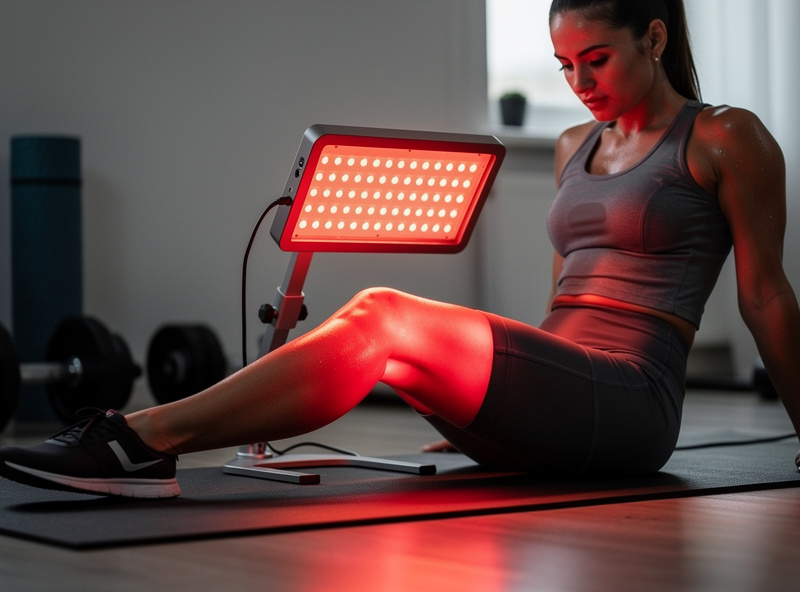
850nm light penetrates deep enough to reach tissue near joints, and combined with infrared heat — which genuinely increases local blood flow while you’re warm — a lot of people find this combination the most physically pleasant part of a session. Superficial heat’s role in general musculoskeletal comfort is a studied area (narrative review, heat therapy for musculoskeletal pain), and photobiomodulation research reports effects on inflammatory markers in some study settings — but “reports effects in some studies” is very different from “reduces chronic knee, shoulder, or hip pain in clinical practice,” and I won’t quote you a specific pain-reduction percentage for a named joint condition. If you have diagnosed arthritis, an injury, or a chronic pain condition, this is a conversation for your physician or physical therapist, not a distance-and-duration chart.
On specific-joint days I don’t always run a full cabin session — a dedicated red light therapy panel aimed directly at a knee or shoulder for 10-15 minutes is a lot less time than a full session, and it’s purely a comfort choice on my part — not a claim that it treats anything.
Cardiovascular — The Heat Side Carries the Real Evidence
The infrared heat side of a red light sauna drives the same cardiovascular response as regular infrared or traditional saunas — covered in detail in our cardiovascular benefits guide. The largest body of evidence here comes from traditional Finnish sauna cohort research, most notably the long-running Kuopio study, which found frequent sauna use associated with reduced risk of fatal cardiovascular events (Laukkanen et al., JAMA Internal Medicine, 2015). That’s genuinely strong, if mostly observational, evidence — but it’s evidence about traditional saunas and heat exposure broadly, not a red-light-sauna-specific finding, and I want to be honest about that distinction rather than blur the two together the way marketing often does. The LED side does not meaningfully change this heat-driven cardiovascular picture on its own.
These cardiovascular associations, where they exist, accumulate over years of consistent use in the population-level research — not something you’ll feel or measure after a month.
The Mitochondrial Mechanism — Real Science, Unsettled Whole-Body Outcomes
Near-infrared light’s proposed mechanism runs through cytochrome c oxidase in mitochondria, and dosimetry reviews of the photobiomodulation literature document this as the mechanistic basis for the field (Chung et al., “The Nuts and Bolts of Low-Level Laser (Light) Therapy,” Ann Biomed Eng 2012). That mechanism is well documented at the cellular and lab level. What’s far less settled is whether that cellular-level effect reliably translates into a measurable whole-body outcome for a given person using a home cabin — the honest answer is “the mechanism is real, the systemic outcome is still being studied,” and any site promising you a specific ATP percentage increase or claiming cognitive or neurological benefits from a home sauna is overreaching well past what the research supports.
Sleep and Mood — Plausible, Self-Reported, Not a Clinical Claim
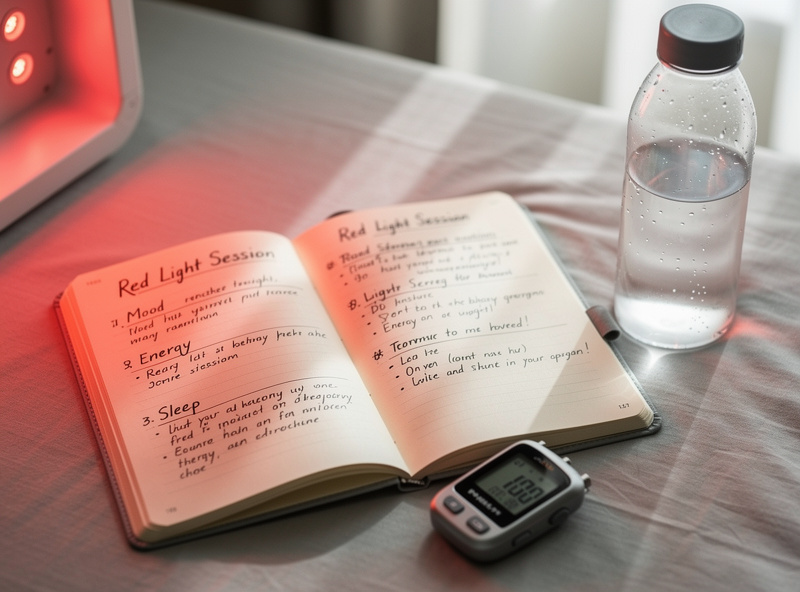
Evening sessions without bright blue light around you are a plausible fit with your body’s natural wind-down cues, and many regular users — myself included — report falling asleep more easily and feeling calmer after an evening session. That’s a genuine, widely reported subjective effect. It is not the same as a clinically documented sleep or mood treatment, and I’m not going to quote you a REM-percentage figure or claim an effect on clinical depression — those are claims that need a physician’s involvement, not a sauna guide’s.
Claims Worth Being Skeptical Of
Marketing routinely overstates what a red light sauna does. The honest position on the most common oversold claims:
- Weight loss: a session burns some extra energy through the cardiovascular work of being warm, but it’s a small effect, and the LED side doesn’t add meaningful calorie burn. Treat any weight-loss marketing claim skeptically.
- Hair regrowth: there is clinical research on red-light devices for hair, but it uses different, targeted devices at specific irradiance levels — a general cabin session is not that, and it’s not something to expect.
- Detox: sweat carries trace amounts of some compounds, but your liver and kidneys do the real elimination work. See the detox hub for the full honest breakdown — “detox” is marketing, not a red light sauna benefit.
- Any disease treatment claim — cancer, autoimmune conditions, or anything else diagnosed and serious — is not something a home sauna does, and any product marketed that way should be treated with real suspicion. See a physician for anything in that territory.
Always pair red light sauna sessions with the safety guidance in our infrared sauna safety guide — particularly around eye protection during LED-active phases.
What Kind of Evidence Actually Exists
Rather than a “reliability” scorecard promising you outcomes, here’s an honest map of what kind of research backs each area:
| Area | What the research actually is | How settled is it |
|---|---|---|
| Skin/collagen (photobiomodulation) | Lab and small clinical studies on cellular pathways | Active research area; mechanism studied, individual outcomes vary |
| Joint/muscle comfort | General heat-therapy reviews plus some photobiomodulation studies | Heat comfort well established; disease-specific treatment claims are not |
| Cardiovascular | Large observational cohorts (mostly traditional sauna, e.g. Kuopio) | Strong association data; causal mechanism still studied; not red-light-specific |
| Mitochondrial/cellular | Lab-level dosimetry and mechanism research | Mechanism well documented; whole-body outcomes unsettled |
| Sleep/mood | Mostly self-reported user experience, some small studies | Plausible mechanism; weak clinical evidence |
| Weight loss | Minimal — small caloric effect from heat exposure | Not a meaningful weight-management tool |
| Disease treatment (cancer, etc.) | None | No credible evidence; treat any such claim as unfounded marketing |
For broader cabin selection, see our 2026 best home cabins and red light sauna at home setup guides.
My authority on red-light sauna hardware is first-hand: the NIR emitters on my full-spectrum unit produce visible red light plus near-infrared, and I have metered the irradiance at various distances with a light meter. What the research says about tissue effects is attributed to the studies above — I’m reporting what’s published, not what I’ve personally proven works on my own body.
For readers without an integrated full-spectrum cabin, a standalone red light therapy panel gets you the 660nm/850nm side of this without replacing your existing infrared setup — it’s also how I cross-checked output at a given distance against the built-in emitters on my own unit. (Affiliate link — I may earn a small commission at no cost to you.)
Frequently Asked Questions
What are the documented benefits of red light sauna?
The heat side carries the strongest evidence, mostly from traditional-sauna cardiovascular research. The LED side has genuine attributed research on skin and cellular pathways, but study designs vary and outcomes are individual, not guaranteed. Be skeptical of any site quoting you a precise percentage improvement or a fixed results timeline.
How long until I see results from a red light sauna?
There is no reliable, universal timeline — outcomes vary by person and by what you’re hoping to see. Treat any site promising a specific week-by-week schedule (skin at week 6, joints at week 4, and so on) with real skepticism. Consistency over months matters more than chasing a specific date.
Is red light sauna better for skin than just sauna sessions?
The 660nm wavelength adds a genuine, attributed photobiomodulation mechanism that heat alone doesn’t provide, based on published research into cellular pathways. That’s a real hardware difference, not a promise of a specific visible result for you personally.
Can red light sauna help with joint pain?
Warmth on stiff joints is genuinely comfortable for a lot of people, and heat therapy is a studied area for general musculoskeletal comfort. It is not a treatment for a diagnosed joint condition like arthritis, and claims of specific pain-reduction percentages for named conditions should be treated skeptically. Talk to your physician about a diagnosed condition.
Does red light sauna help you lose weight?
Only marginally, through the small extra energy expenditure of being warm — the LED light itself doesn’t add meaningful calorie burn. Treat any weight-loss marketing claim for red light saunas as overstated; it is not a weight-management tool.
Can I use a red light sauna while pregnant?
Consult your physician before using any sauna during pregnancy. The infrared heat raises core body temperature, which carries documented risks during pregnancy, particularly in the first trimester. The LED light itself is not well studied in pregnancy. Most providers recommend avoiding sauna sessions, especially early on — this is a decision for you and your OB, not a sauna guide.
How often should I use a red light sauna?
There’s no proven universal frequency for a specific outcome. A few sessions a week is a common, sustainable habit for people who enjoy it. Consistency over months matters far more than hitting a precise session count, and there’s no evidence that more sessions produce proportionally more benefit.
Related Articles
- Red Light Sauna Hub — the parent guide on photobiomodulation therapy
- Red Light Sauna at Home Setup — install workflow and best home cabins
- Infrared Sauna Benefits Research — heat-side documented benefits
- Cardiovascular and Mental Wellness Benefits — heat-side cardio detail
- Infrared Sauna Safety Guide — session safety and contraindications