Does an infrared sauna “detox” your body? Honestly — a little, in a narrow and badly oversold way. Your liver and kidneys do the overwhelming majority of the work; sweat is a minor side channel — a peer-reviewed blood/urine/sweat monitoring study (Genuis et al., Arch Environ Contam Toxicol 2011) found sweat carries only trace amounts of bioaccumulated metals. That trace effect is real and measurable, but it is nothing like the full-body “cleanse” the wellness industry sells. This is the honest version, written by someone who loves saunas and is genuinely allergic to detox hype — what the research actually supports, what it doesn’t, and how to spot the marketing.
I’ll be straight about my angle. I run a cabin through long Swedish winters and I’ve metered, weighed, and logged my own sessions for years — and “detox” is the one corner of sauna culture that consistently makes me wince, because it’s where good hardware gets wrapped in bad science to move supplements. So I’m not here to sell you a protocol. I’m here to draw the honest line. For the documented, legitimate benefits, see the benefits research and the cardiovascular and mental wellness guide.
As an Amazon Associate I earn from qualifying purchases.
What “Detox” Actually Means
The word carries a lot of marketing baggage, so here’s the unglamorous truth: your liver and kidneys handle the vast majority of toxin processing — well over 90% of it. Sweat is a minor secondary route that handles a small percentage of certain fat-soluble compounds. A small percentage of certain compounds is still real and measurable, and for someone with genuine chronic exposure it might be modestly meaningful — but “minor secondary route” is the accurate description, not “your body’s detox button.”
What a sauna honestly does: it gives some fat-soluble compounds (a few heavy metals, BPA, phthalates) a small extra exit through sweat, drives a big increase in skin blood flow that mobilizes a little of what’s stored superficially, and triggers the heat-shock and circulatory responses that are genuinely good for you in other ways. What it does not do is just as important:
- It does not replace medical chelation for actual heavy-metal poisoning — that’s a hospital problem with prescription drugs, not a sweat problem.
- It does not “detox your liver or kidneys.” Those organs do their own job; a sauna doesn’t enhance their function.
- It does not “cleanse” you on a 1-day or 7-day schedule. Any trace effect accumulates slowly over weeks of regular sessions, not in a weekend reset.
- It does not touch water-soluble toxins, which your kidneys clear and which barely appear in sweat.
What’s Actually in the Sweat
Credit where due: peer-reviewed work by Genuis and colleagues did analyze sauna sweat and found genuinely detectable traces of various compounds — a 2011 heavy-metals study and a 2012 bisphenol-A study, both blood/urine/sweat comparisons. That research is real, and it’s the honest basis for any “detox” claim — but read the right-hand column, because it’s where the marketing falls apart:
| Compound class | Detected in sweat | Roughly what share of daily excretion |
|---|---|---|
| Heavy metals | Lead, cadmium, arsenic, mercury, aluminum | Around 0.5–5% (varies by metal) — a minor route |
| BPA & phthalates | Bisphenol-A, common plasticizers | A few percent; BPA the high outlier, up to ~30% |
| Pharmaceutical traces | Varies by what you take | Low single digits |
| Persistent pollutants | PCBs, some pesticides | Under ~2% |
The number the whole detox industry leans on is that ~30% figure for BPA — the single highest published percentage, for a single compound that the body already clears quickly anyway (its half-life is only hours). Quietly generalizing that one outlier to “30% of toxins leave through sweat” is the central sleight-of-hand of detox marketing. For nearly everything else, sweat is a 0.5–5% side door. The honest summary: yes, measurable; no, not a meaningful dent in your total body burden for most people.
It’s also worth being honest about the studies themselves, because they get cited as if they settled the question. The sweat-analysis work that underpins all of this involved small numbers of participants and measured what was in the sweat — it did not track whether people’s total body burden meaningfully dropped, or whether anyone got healthier as a result. “We detected lead in sweat” and “sweating it out lowered this person’s lead levels in a way that mattered” are two very different claims, and the research mostly supports the first. That gap — between a compound being detectable and the effect being clinically meaningful — is the single most important thing to hold onto, and it’s exactly the gap detox marketing is built to make you forget. None of this means the research is junk; it means it’s narrow, and narrow findings get stretched into broad promises the moment there’s a product attached.
Hydration — The Genuinely Useful Part
Here’s the practical, non-mythical side of long sauna sessions, and it’s where most so-called “detox reactions” actually come from. Sweat takes water plus sodium, potassium, and magnesium with it — a pound or two of fluid in a session is normal. Skip the replacement and you’ll feel rough, then blame “toxins.” Don’t.

Keep it simple: a glass or two of water with a pinch of salt and some electrolytes before a session, sip room-temperature water during (skip ice water, which is jarring), and rehydrate with electrolytes plus a normal salty snack afterward. That’s the entire “detox hydration protocol” — no powders-with-a-affiliate-code required. Pair any longer session with the basics in the safety guide. Nine times out of ten, a post-session headache is dehydration, full stop.
Lymphatic Drainage — Real Mechanism, Oversold Story
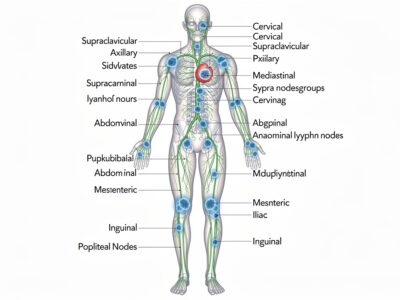
The other claim you’ll see everywhere is that a sauna “drains your lymph.” Here’s the honest version. Your lymphatic system is a slow secondary circulation that moves immune cells and fluid, and unlike your blood it has no pump — it relies on muscle movement, breathing, and circulation to keep flowing. Heat does genuinely increase circulation and can support that flow a little, which is real and not nothing. What it isn’t is a “lymphatic detox” that flushes waste out of you on command. If you have a genuine lymphatic issue — post-surgical lymphedema, for instance — the things that actually matter are physician-directed: manual lymphatic drainage from a trained therapist, compression where indicated, and movement. A warm sauna might feel good alongside those, but it doesn’t replace them, and the dedicated lymphatic guide walks through exactly where the line sits. The pattern by now should be familiar: a real, modest circulatory effect, inflated into a cleanse claim by people selling something.
The Testing Trap
If you go down the detox rabbit hole, someone will eventually push a “before and after” test on you — most often a hair tissue mineral analysis (HTMA), sometimes a provoked urine challenge. It’s worth knowing what these are before you spend on them. HTMA is cheap and popular, but mainstream toxicologists treat it with real skepticism precisely because it’s easy to generate a dramatic-looking “result” from, and it isn’t a diagnostic tool. A provoked urine challenge — dosing a chelator and then measuring what comes out — is controversial and physician-only, because the provocation itself skews the number upward and can be sold as proof you “needed” a detox you didn’t. The honest guidance: if a heavy-metal level genuinely worries you, that’s a reason to see a physician and get a standard blood panel, not a reason to buy a home test kit and a 12-week protocol from the same site that sold you the cabin. Don’t let a scary-looking chart talk you into a problem you don’t have.
Who This Is Actually For — and Who Should Skip It
Being honest cuts both ways, so here’s who gets genuine value from the idea, narrowly defined:
- People with real, chronic low-level exposure — certain trades, older housing — who already eat and live well and want one more small supportive habit. Even here, the effect is “supportive,” not “treatment.”
- People who simply feel better with a regular warm, sweaty ritual — which is a perfectly good reason on its own, no detox story required.
And who should set expectations or skip the detox angle entirely:
- Anyone with actual heavy-metal poisoning — that’s medical chelation under a doctor, not a cabin.
- Anyone with liver or kidney disease — your primary detox organs are compromised, so talk to your physician before loading a secondary route.
- Anyone chasing “detox” weight loss — the scale drop after a session is water you’ll drink straight back. It is not fat, and it is not detox.
A Sensible Routine (Not a “Detox Protocol”)
You don’t need a 50-session medical-sounding regimen. If you want a regular sweat habit, build it the way you’d build any heat tolerance — gently. A couple of short, moderate sessions a week to start (around 15–20 minutes at 120–130°F), easing up to 25–30 minutes three or four times a week if it keeps feeling good. That’s it. There’s no “peak detox phase” where cranking to 150°F unlocks special cleansing; hotter just means more dehydration risk for no extra benefit. If you’d like a structured day-by-day version to build the habit, the 30-day schedule lays one out — read it as a habit-builder, not a medical course.

EMF and Gear — Where I Can Genuinely Help
If you’re going to run a cabin frequently, the variable I’d actually obsess over isn’t toxin output — it’s EMF off the heaters, because daily, repeated exposure is exactly when a noisy panel matters. This is pure hardware, my real lane. I keep a TriField TF2 meter on a hook by my cabin and check new panels myself rather than trusting a “low-EMF” sticker. (That’s an affiliate link — buy through it and I may earn a small commission at no extra cost to you. I only point to gear I actually run and meter myself; details on my disclaimer page.)
On my meter, the premium low-EMF cabins — Sunlighten, Clearlight, Health Mate, Therasage — genuinely measure where they claim, while plenty of budget units run noticeably higher in the body zone. If you plan frequent long sessions, that measured-EMF difference matters far more than any detox spec on the box. For the full brand landscape, see the 2026 best brands roundup.
Why Short and Frequent Beats Long and Rare
One genuinely useful, non-mythical pattern: if you care about consistency of any benefit, frequency beats duration. Two relaxed 30-minute sessions do more for you than one grim 60-minute marathon, because the value is in the regular, repeated mild heat stress, not in white-knuckling a single long bake. Past about 45 minutes, dehydration risk climbs faster than any upside.
This is also why a sauna blanket can quietly outperform a fancy cabin for a lot of people: a blanket you’ll actually unroll five evenings a week beats a beautiful cabin you dread heating twice a month. Format matters far less than whether you’ll keep doing it — a cheap blanket used consistently genuinely beats an expensive cabin gathering dust. A log helps too: jot session length, hydration, and how you felt, and patterns show up after a few weeks that you’d miss day to day.
“Detox Reactions” Are Usually Just Dehydration
You’ll hear about “detox reactions” or “Herxheimer reactions” — headache, fatigue, fog, irritability after a session — framed as proof the toxins are pouring out. Here’s the honest diagnostic: the large majority of those reports in casual users are simply dehydration, lost electrolytes, or overheating from a too-long session. The test is simple — if rehydrating with water and electrolytes clears it within an hour or so, it was never a “detox reaction.” If something genuinely lingers for a day or two, you’ve just been overdoing it; ease back to shorter, cooler sessions. Anything severe — vomiting, a pounding headache, fever — is a reason to stop and see a doctor, not a badge of detox progress.
Detox Myths Worth Killing
This is the part the supplement sellers won’t put on their landing page. Five claims to disregard outright:
- “30% of toxins leave through sweat.” That figure is specific to BPA in some studies. Most heavy metals leave at 0.5–5% via sweat. Don’t let one outlier get generalized into a slogan.
- “Sauna detoxifies your liver and kidneys.” No. It offers a small secondary exit; it does nothing to improve those organs’ function.
- “Sweat color or smell proves toxins are leaving.” Brown or colored sweat is melted makeup, skincare, deodorant, or last night’s garlic — not toxins.
- “Drinking the sweat off the cabin floor proves it works.” This genuinely circulates in some corners of the wellness world. Please don’t — sweat is a bacterial medium and a real infection risk between users.
- “Detox sessions kill candida, parasites, or mold.” No published evidence supports a sauna treating any of these. People sometimes feel better during a sauna habit, but that’s stress relief and better sleep, not an anti-pathogen effect.
The throughline: check detox claims against the actual research, not the marketing copy. The genuine effect is real but small and bounded. It is not a magic cleanse, and anyone telling you otherwise is usually a click away from a checkout page.
“Detox Stacks” — What’s Reasonable and What’s Theater
The detox world loves to stack a sauna with other modalities, and it’s worth sorting the harmless from the silly. A contrast routine — a warm session followed by a brief cool shower — is genuinely pleasant and helps a lot of people feel settled and recovered; there’s no detox magic in it, but there’s no harm either, and I do it myself in winter. Pairing a sauna with a red-light setup is fine if you enjoy both, though the “cellular detox” framing around it is marketing rather than established science — treat any benefit as comfort and skin-feel, not cleansing. Where I’d draw a firm line is the stuff that sneaks medical risk in under a wellness label: coffee enemas, prescription chelators repurposed as “add-ons,” aggressive supplement protocols. Those aren’t sauna accessories — they’re medical interventions with real downsides, and they belong with a doctor or nowhere. My rule of thumb: if a “detox combo” is pleasant and low-risk, enjoy it and expect nothing; if it involves putting something into your body to “enhance” the cleanse, be deeply skeptical of whoever’s recommending it.
My Honest Bottom Line on Sauna “Detox”
Strip away the cleanse theater and there’s still plenty to like — a sauna is a wonderful warm ritual, genuinely good for relaxation, circulation, and getting through a dark winter, with the heavily-evidenced cardiovascular upside on top. Those are honest reasons to own one. “It flushes the toxins out of you” is not. If a little extra BPA or lead leaves in your sweat along the way, fine — treat it as a rounding-error bonus, not the reason you’re sitting there. Buy the sauna for the sauna. Leave the binder stack, the coffee enemas, and the seven-day cleanse kits on the shelf where they belong. The irony is that the honest pitch is the stronger one: you don’t need a sauna to be a magic detox machine for it to be one of the best wellness purchases you can make — the genuine, well-evidenced benefits stand on their own without a single exaggerated toxin claim propping them up. Trust the gear, distrust the cleanse story, and you’ll get everything a sauna actually has to give.
My authority on this page is the equipment and the measurement: I know exactly what temperature my cabin produces, how much I sweat in a 30-minute session, and what the kill-a-watt meter reads. The detoxification physiology I summarize from published research — the liver and kidneys do the work, and that is well-established (NIDDK).
Frequently Asked Questions
Does an infrared sauna actually detox the body?
Only in a narrow, oversold way. Sweat carries trace amounts of some heavy metals, BPA, and other compounds — typically a small single-digit percentage of what leaves your body daily, since your liver and kidneys do almost all the work. It is a minor secondary route, real but modest, and never a replacement for medical treatment of actual poisoning.
How often should I use a sauna if I want the supposed detox benefit?
There is no proven detox frequency, so use it for comfort instead: a few moderate sessions a week, built up gently. Short and frequent beats long and rare. Going hotter or longer does not unlock extra cleansing — it mostly adds dehydration risk.
What does infrared sauna sweat actually contain?
Research has detected trace heavy metals, BPA and phthalates, and small amounts of other compounds in sweat. The headline 30% figure applies only to BPA, a compound the body already clears quickly. For most heavy metals, sweat carries only about 0.5 to 5 percent of daily excretion — your kidneys handle the rest.
How much should I drink around a sauna session?
Plenty — water with electrolytes before, sips during, and a proper rehydrate with some salt and a snack afterward. You do not need branded detox powders. Most post-session headaches and fatigue are simple dehydration, not toxins, and rehydrating fixes them.
Can a sauna detox heavy metals on its own?
No, not in any meaningful way for a real problem. Sweat carries only a small fraction of heavy metals, and genuine heavy-metal poisoning requires medical chelation under a doctor. At most a sauna is a minor supportive habit for someone with low-level exposure who is otherwise healthy.
Are detox reactions from the sauna real?
Most are not what they seem. The large majority of headaches, fatigue, and fog after a session are dehydration or lost electrolytes — if rehydrating clears it within an hour or so, it was never a detox reaction. Anything severe or lasting is a reason to ease off and, if needed, see a doctor.
Do I need binders, charcoal, or supplements with sauna detox?
I do not recommend chasing a supplement stack for this. Binders and chelators are medical territory with real downsides, and the evidence that they meaningfully change your body burden alongside a home sauna is weak. Use the sauna for its genuine comfort and cardiovascular benefits, and leave the cleanse kits alone.
Related Guides
The full detox cluster:
- Infrared Sauna and Heavy Metals — the honest read on what sweat does and doesn’t do
- Lymphatic Drainage and Infrared Sauna — what heat does and doesn’t do for lymph
- Sweat Composition Science — what’s actually in the sweat
- 30-Day Sauna Schedule — a habit-builder, not a cleanse
Broader context:
- Infrared Sauna Benefits Research — the documented, legitimate benefits
- Cardiovascular and Mental Wellness Benefits
- Red Light Sauna Hub
- Infrared Sauna Safety Guide
- Best Home Infrared Saunas 2026