Red light panels get sold with “protocols” attached — precise joule targets for joint pain, dosing charts by condition, guaranteed timelines to results. Most of that is marketing dressed up as clinical precision. What I can actually give you, as someone who runs a near-infrared lamp next to my far-infrared cabin and has metered the irradiance myself, is the equipment side done right: how distance and panel quality change what you’re actually getting, a sensible way to ramp into using one, and what published research does and doesn’t support — attributed, not asserted.
This is a usage and equipment guide, not a treatment plan. If you’re using red light for a specific medical concern, that’s a conversation with your doctor, not a distance chart. For the science behind the wavelengths themselves, see the red light sauna hub; for the honest research summary, the benefits research page.
As an Amazon Associate I earn from qualifying purchases.
Irradiance, Distance, and Time — the Physics That Actually Matters
Three variables determine what a red or near-infrared panel actually delivers to your skin: irradiance (light intensity at the panel surface, in mW/cm²), distance from the panel, and session time. Irradiance falls off sharply with distance — this is basic inverse-square physics, not a “detox myth” or marketing spin, and it’s the single most useful thing to understand before buying or using a panel.
The math researchers use to describe total light exposure is straightforward: energy density (J/cm²) = irradiance (mW/cm²) × time (seconds) ÷ 1000. A panel rated at 50 mW/cm² run for 15 minutes (900 seconds) delivers about 45 J/cm² at that distance. A weaker panel at 15 mW/cm² for the same 15 minutes delivers roughly 13.5 J/cm² — under a third as much, for the same time invested. That’s a real, checkable difference in what you’re getting, and it’s why panel quality and stated irradiance specs matter more than any “protocol” you’ll read online. Photobiomodulation researchers have used a wide range of energy densities across different studies (Chung et al., “The Nuts and Bolts of Low-Level Laser (Light) Therapy,” Ann Biomed Eng 2012) — there is no single agreed “correct” dose, and any site quoting you an exact universal number is oversimplifying a genuinely unsettled research area.
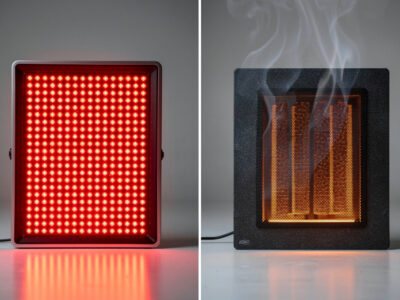
Practical takeaway: a premium panel at 50-100 mW/cm² gets you a meaningful exposure in 10-15 minutes at a reasonable distance. A cheap, weak panel needs much longer sessions at close range to deliver anything comparable — and plenty of budget panels simply don’t have the output their marketing claims. If you’re shopping, ask for the manufacturer’s irradiance spec at a stated distance, not just total wattage.
A Sensible Way to Start Using One
New users do better easing in than starting at full session length. Skin can be mildly sensitive to LED exposure at first, and eyes need time to adjust to a bright panel even with protection on. This is comfort and acclimation guidance, not a medical dosing schedule — think of it the same way you’d ease into any new light or heat exposure.
| Week | Sessions per week | Time per session | Distance from panel | Notes |
|---|---|---|---|---|
| 1 | 2-3 | 5-8 minutes | 18-24 inches | Get used to the brightness and warmth |
| 2 | 3-4 | 8-12 minutes | 15-20 inches | Increase gradually, watch skin response |
| 3+ | 3-5 | 10-20 minutes | 12-18 inches | Settle into whatever feels sustainable |
Watch for two things during the first couple of weeks: skin redness that lingers more than an hour or two (back off distance or time next session) and any eye discomfort (verify your eye protection is actually working, or increase distance). Mild warmth and brief post-session pinkness are normal. There’s no “peak protocol” phase to chase — frequency and consistency matter more than pushing intensity.
Eye Protection Is Not Optional
This is the one place I’ll be blunt rather than hedged: direct exposure to a bright LED panel at close range is a real eye-safety concern, and it’s the most-skipped rule I see people ignore. Use closed eyes, a sleep mask, or NIR-rated safety goggles every session — including face sessions where it’s tempting to skip it. (Affiliate link — I may earn a small commission at no cost to you; I only point to gear I’d actually use.) Peripheral vision still picks up meaningful light even when you’re looking away, so “I’ll just glance elsewhere” isn’t real protection. If you have any pre-existing eye condition, talk to an ophthalmologist before using a panel at all — this is exactly the kind of question a home-use guide can’t answer for you.
What the Research Actually Shows — Attributed, Not Promised
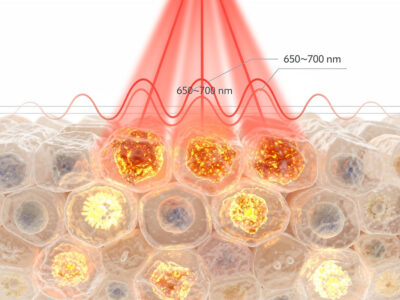
Photobiomodulation (the mechanism behind red and near-infrared light effects on tissue) is a genuinely active research area, and it’s worth being honest about where the evidence is solid versus thin. Reviews of the skin literature report photobiomodulation influencing cellular pathways involved in collagen production and tissue repair (recent review, skin regeneration and rejuvenation) — that’s a real, attributed research finding, not a guarantee of a specific visible outcome for any individual user. Study designs, light sources, and reported outcomes vary considerably across the literature, which is part of why you’ll see wildly different “protocols” marketed with false precision.
What I won’t do is quote you a specific week-by-week timeline for a specific health condition, because that’s not something an equipment guide can honestly promise, and because outcomes for skin, joint comfort, or recovery are individual and study-dependent. If you’re using a panel for a diagnosed condition — chronic joint pain, a skin condition, anything ongoing — that belongs in a conversation with your physician or dermatologist, who can weigh red light against your actual medical picture. What I can tell you with confidence is the equipment side: what irradiance your panel is actually producing, how distance changes that number, and how to use one without hurting your eyes or wasting your time on an underpowered panel.
Combining Red Light With a Sauna Session
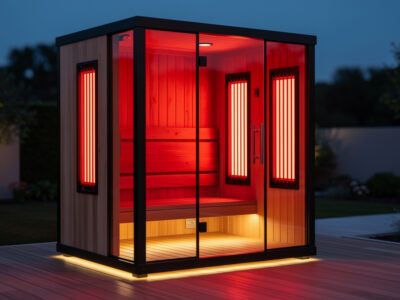
For combined red light sauna sessions where heat and LED run simultaneously, a simple structure works well: heat-only warmup, then LED active during the heated middle portion, then heat-only to finish. This is a comfort and equipment sequencing choice, not a clinical protocol — run it however feels good, and skip the LED phase entirely on days you just want the heat. More on the combined-cabin format in the red light sauna hub.
One real safety note that applies to any light-plus-heat combination: some medications (certain antibiotics, retinoids, some antifungals) carry photosensitivity warnings on the label. If you’re on a new prescription, check the label or ask your pharmacist before adding a bright-light session to your routine — this is basic medication safety, not sauna-specific.
Keeping Track, If You Want To
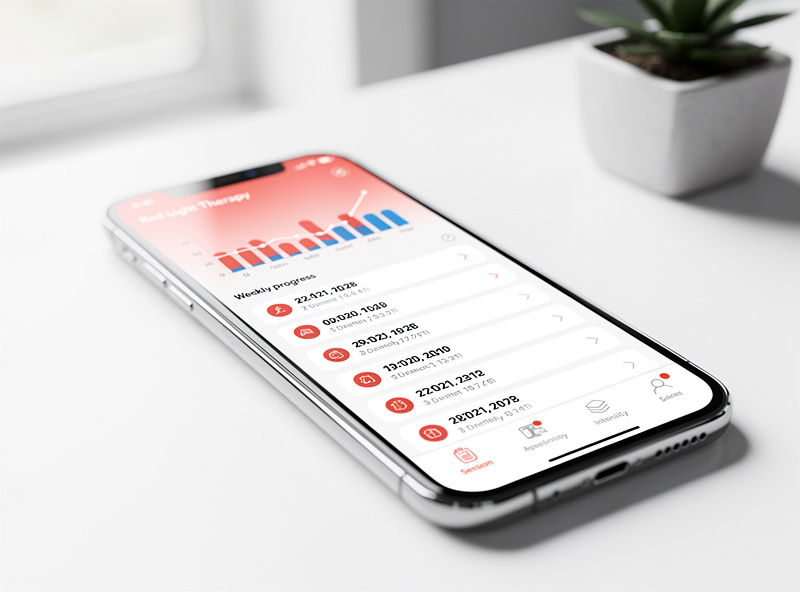
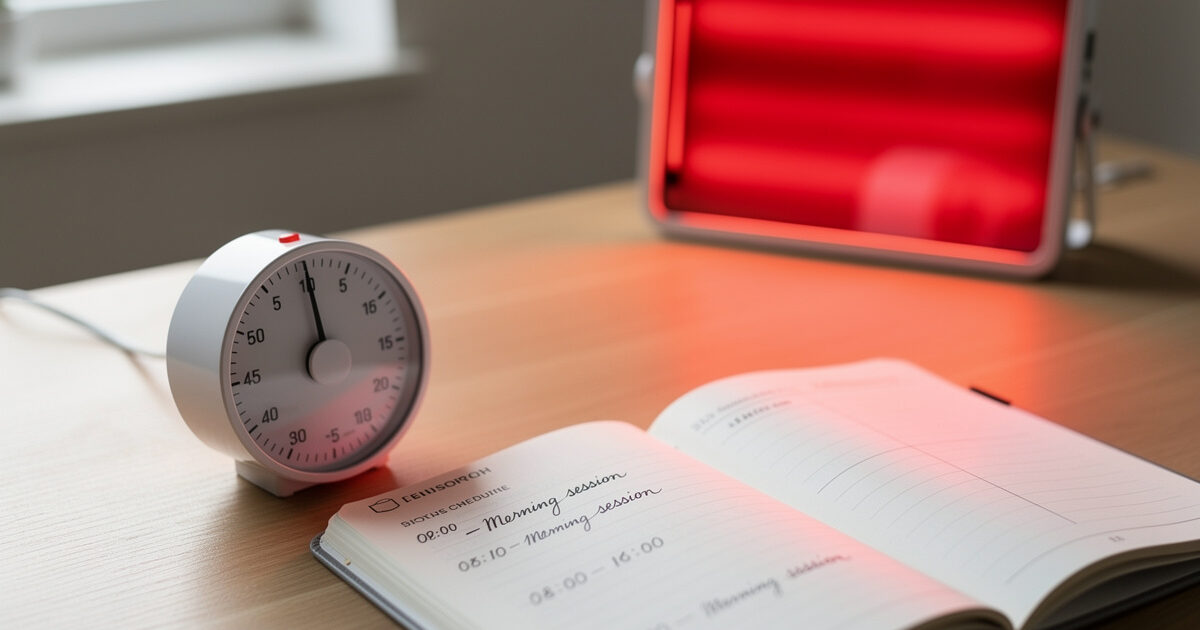
If you like data, a simple log helps more than a fancy app: date, session length, approximate distance, and how you felt. Most people overestimate how consistent they’ve actually been — what feels like “daily” is often three or four sessions a week once you check the calendar. A notes-app line or a basic spreadsheet is plenty; you don’t need a dedicated tracking product to get the benefit of noticing your own patterns.
Common Equipment and Usage Mistakes
The mistakes I see most often are equipment and habit problems, not “wrong protocol” problems:
- Standing too far from a weak panel. Irradiance drops fast with distance, and a lot of budget panels simply don’t have the output to matter beyond a foot or two. Check your panel’s actual spec sheet.
- Skipping eye protection “just this once.” Every session, no exceptions — see above.
- Using sunscreen, lotion, or makeup during face sessions. Topicals sit on the skin and reduce how much light actually reaches it. Do skincare after, not before.
- Expecting a visible change in a week or two. Whatever your goal, this isn’t a fast-acting intervention, and nobody honest can promise you a specific timeline.
- Buying on wattage alone. Total wattage without a stated irradiance-at-distance spec tells you very little. Ask for the number that actually matters.
My authority on this page is the equipment: I run a near-infrared lamp alongside my far-infrared cabin and have metered the irradiance at different distances myself with a light meter. What the research says about tissue effects is attributed to the studies above — I’m reporting what’s published, not what I’ve personally proven works.
The lamp itself is a standalone red light therapy panel on its own stand next to the cabin, not something built into the walls — the setup most readers end up replicating at home rather than buying an integrated unit outright. (Affiliate link — I may earn a small commission at no cost to you.)
Frequently Asked Questions
How far should I stand from a red light panel?
It depends on the panel’s actual irradiance output, not a fixed universal number. Closer distances (6-12 inches) deliver more light per minute; farther distances (18-36 inches) cover more of the body at a lower rate. Check your panel’s manufacturer spec for irradiance at a given distance rather than relying on a generic chart.
How long should a red light session last?
There is no single correct answer — published research uses a wide range of exposure times and energy densities. A reasonable starting point for a new user is 5-10 minutes, gradually increasing to 15-20 minutes as you get comfortable, at whatever distance your panel’s spec sheet suggests for meaningful output.
Do I need eye protection during red light therapy?
Yes, every session, no exceptions. Direct exposure to a bright LED panel at close range is a genuine eye-safety concern. Use closed eyes, a sleep mask, or NIR-rated safety goggles, including during face sessions. Peripheral vision still picks up meaningful light even when you look away.
Does red light therapy actually work?
Photobiomodulation is an active research area with published findings on cellular pathways involved in skin and tissue effects, but study designs and reported outcomes vary widely, and there is no guaranteed timeline or outcome for any individual. Treat marketed ‘protocols’ with specific week-by-week promises skeptically.
Can I combine red light therapy with an infrared sauna?
Yes, many people run them together — heat-only warmup, then LED active during the middle of a session, then heat-only to finish. This is a comfort and sequencing choice, not a clinical requirement. Skip the light entirely on days you just want the heat.
What panel wattage should I look for?
Total wattage alone tells you little. Look for the manufacturer’s stated irradiance (mW/cm²) at a specific distance — that number tells you what you’re actually getting. A high-wattage panel with a poor optical design can underperform a smaller, well-engineered one.
Is red light therapy safe with medications?
Some medications, including certain antibiotics, retinoids, and antifungals, carry photosensitivity warnings. Check your prescription label or ask a pharmacist before adding bright-light sessions to your routine if you are on a new medication.
Related Articles
- Red Light Sauna Hub — combined therapy cabin format
- Red Light Sauna Benefits Science — what the evidence supports
- Red Light Sauna at Home Setup — install and best home cabins
- Red Light vs Infrared Sauna — wavelength and mechanism comparison
- Infrared Sauna Safety Guide — session safety and contraindications