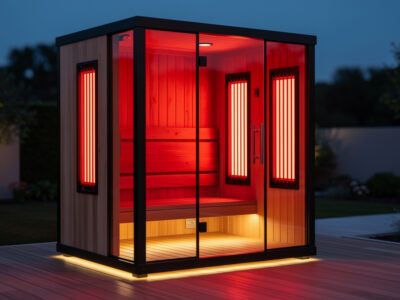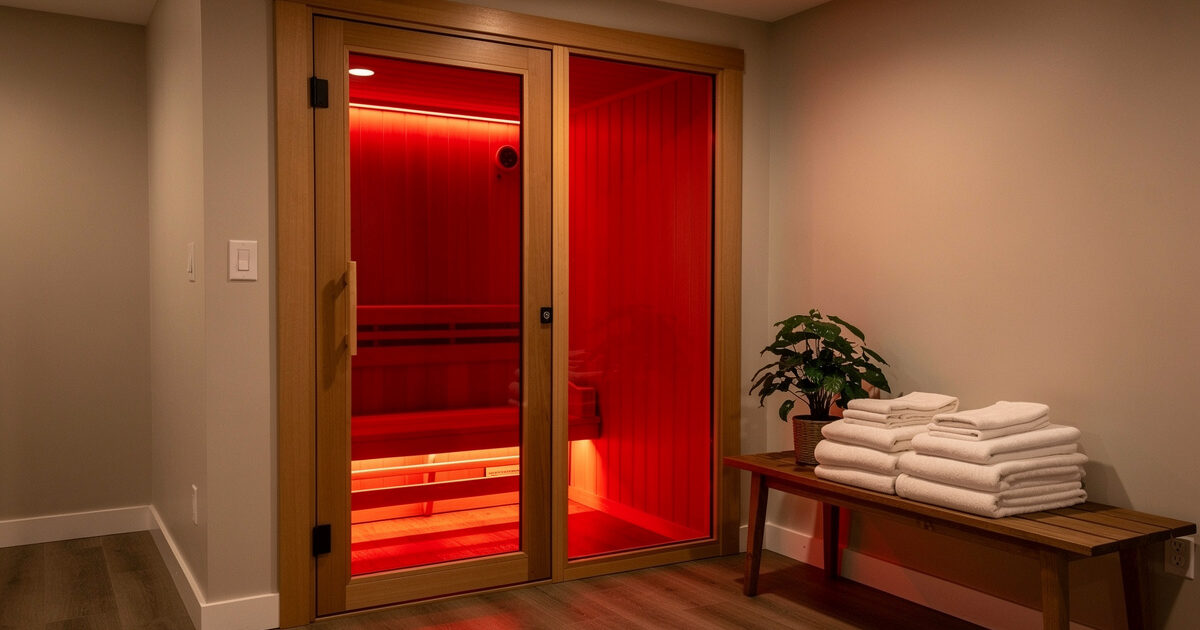
A red light sauna at home is a 1-3 person infrared cabin with integrated 660nm and 850nm LED panels that plugs into a standard 110V outlet (or 240V for larger 4-person models). The home setup runs $2,499 to $8,495 fully installed, takes 60-90 minutes to assemble, and slots into a spare bedroom, finished basement, or large bathroom — no permits or special construction.
This guide covers the home install workflow, top picks for indoor red light saunas, and the room-by-room placement decisions specific to this format. For the broader category context, see the red light sauna hub; for general home cabin setup, see the home infrared sauna setup guide.
As an Amazon Associate I earn from qualifying purchases.
Home Install Overview
Setting up a red light sauna at home follows the same general workflow as any home infrared cabin install with one additional step: verifying LED panel function during the burn-in session. The full process takes 90-120 minutes for the cabin assembly plus 60 minutes for the burn-in test, total 2.5-3 hours of work.
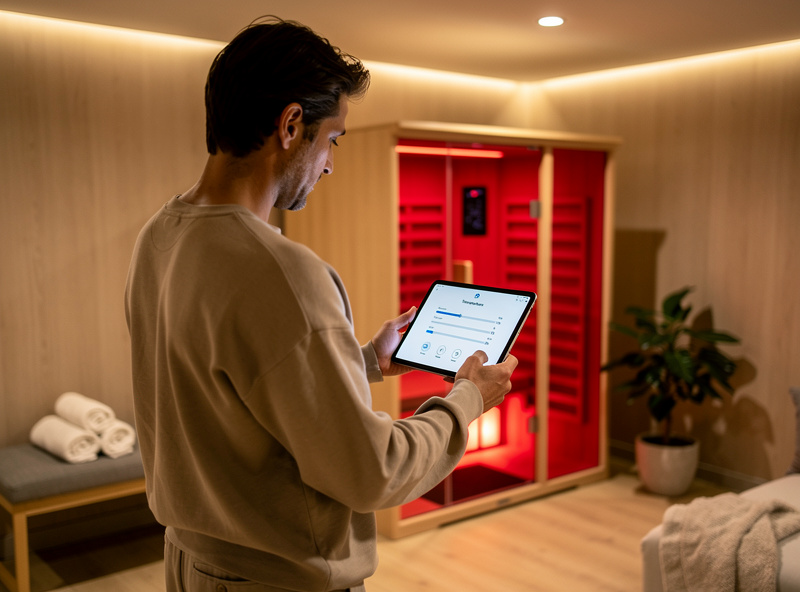
The five-step home install:
- Pre-delivery: verify dedicated circuit availability. Red light saunas draw 1,800-2,400W (1-2 person) or 4,200-5,400W (3-4 person) — meaningfully more than non-LED cabins. Use the breaker test from our home infrared sauna hub to confirm a dedicated circuit. About 70% of home installs need an electrician to add the circuit.
- Cabin assembly: 60-90 minutes with two people. Standard modular panel snap-together with Phillips screwdriver. The LED panels ship as a separate component that mounts on the back wall (or whichever wall your specific cabin uses).
- LED panel wiring: 15-20 minutes. The LED panel connects to the cabin controller via a dedicated wiring harness. Follow the cabin’s manual exactly — do not improvise.
- 60-minute burn-in test: heat-only first, then activate LEDs. Run the cabin at full temperature for 30 minutes with LEDs off (off-gassing factory residue). Then activate LEDs at full intensity for 30 more minutes (verifying LED function and any LED-specific factory smell).
- First user session: start at 50% LED intensity. The LED light is more intense than expected on first session — start at 50% and ramp to 100% across the first 5 sessions to acclimate to the brightness. This is not marketing caution — the first time I ran a near-IR array at full tilt I closed my eyes and still saw it, and a session you spend squinting is a session you cut short. Ramp the brightness the way you would ramp the heat.
Top Home Red Light Saunas in 2026
| Rank | Cabin | Price | Persons | Power | LED specs | Best for |
|---|---|---|---|---|---|---|
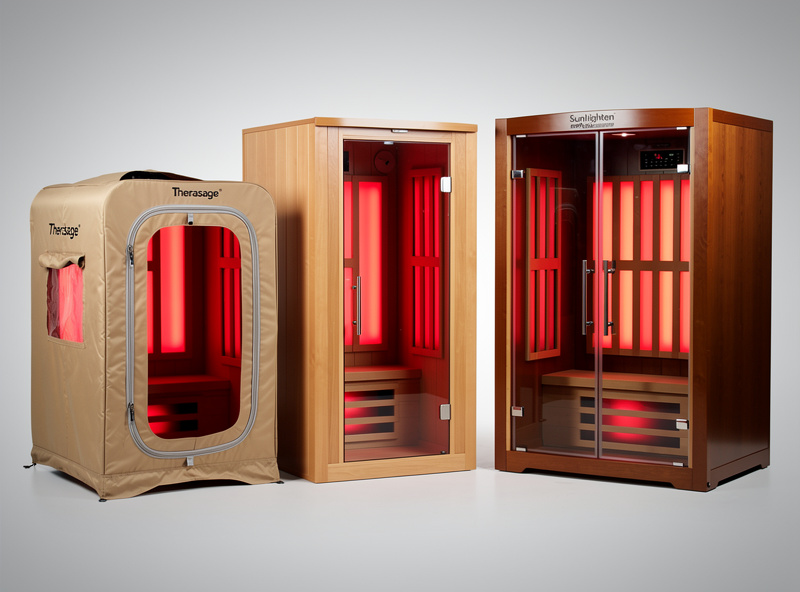
| 1 | Sun Home Luminar Red Light 2 | $5,995 | 2 | 110V 20A | 660nm + 850nm full back wall | Best overall integration |
| 2 | Therasage TheraSauna Pro Red | $4,799 | 2 | 110V 20A | 660nm + 850nm low-EMF | Best low-EMF home pick |
| 3 | HigherDose Infrared Sauna Red | $5,499 | 2 | 110V 20A | 660nm + 850nm aesthetic | Best wellness lifestyle |
| 4 | Clearlight Sanctuary 2 + Red Add-On | $6,990 | 2 | 110V 20A | 660nm + 850nm modular | Best modular upgrade |
| 5 | Sunlighten mPulse Aspire | $8,495 | 3 | 240V 30A | 630nm + 850nm full-spectrum | Best premium 3-person |
| 6 | Therasage Solo Red | $2,499 | 1 | 110V 15A | 660nm single panel | Best budget 1-person |
Best Rooms for a Red Light Sauna at Home
Red light saunas have all the same placement requirements as regular infrared cabins (covered in our indoor placement guide) plus three additional considerations specific to the LED panels:
- Power draw matters more. The added LED wattage means circuit availability is the #1 placement factor. Choose rooms where you can verify or add a 20-amp dedicated circuit easily.
- Light leakage from glass doors. Red and near-IR light bleeds through the cabin’s glass door into the surrounding room during sessions. Master bedrooms and bathrooms work fine; living rooms with TVs or work areas may have light pollution issues during evening sessions.
- EMF-sensitive room placement. If the cabin will share a wall with a bedroom or workspace, premium low-EMF brands matter more than regular infrared cabins because of the LED driver contribution. Stick to the under-1 mG cabins (Therasage, Sun Home, Clearlight) for shared-wall placements. The LED driver is the part people forget to meter — it is a switching power supply, and on my own TriField TF2 a cheap driver shows up on the electric-field and RF readings even when the heater panels are clean. If the cabin backs onto a bedroom wall, a TriField TF2 meter on the far side of that wall tells you in a minute whether the driver is something you will notice.
The five practical placement rooms in order: spare bedroom (top choice for 55% of red light installs), finished basement, master bathroom, insulated attached garage, and large walk-in closet. Apartment dwellers should consider the alternatives in our apartment sauna guide — red light saunas don’t come in apartment-friendly formats.
Electrical Setup for Red Light Saunas
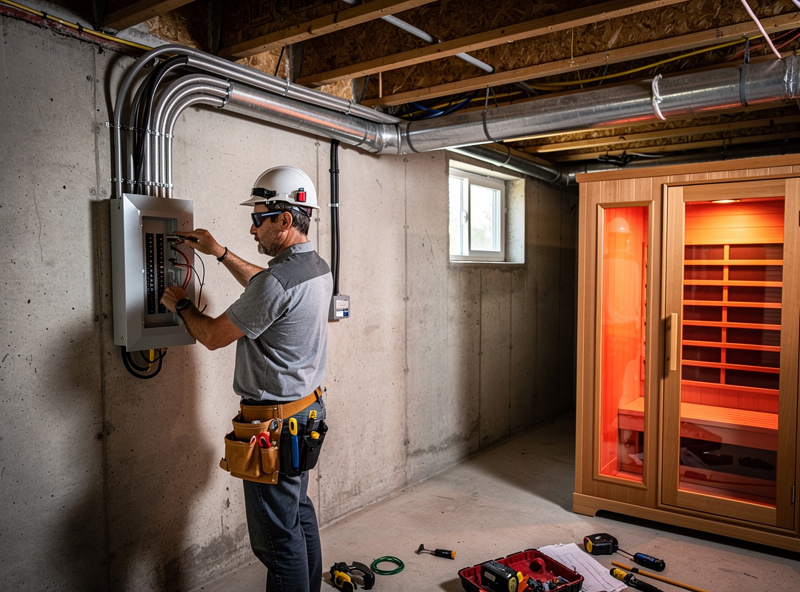
Red light sauna electrical requirements differ slightly from regular infrared cabins because the LEDs add 200-600W on top of the heater wattage. Verify the exact spec on the manufacturer’s data sheet before ordering — wattage varies meaningfully between brands.
| Cabin size | Heater wattage | LED wattage | Total draw | Required circuit |
|---|---|---|---|---|
| 1-person | 1,200W | 200W | 1,400W | 110V 15A dedicated |
| 2-person | 1,500W | 400W | 1,900W | 110V 20A dedicated |
| 3-person | 1,950W | 500W | 2,450W | 110V 20A or 240V 20A |
| 4-person | 3,400W | 600W | 4,000W | 240V 30A dedicated |
For 1-2 person cabins, the standard 110V dedicated circuit at 15-20 amps handles everything. For 3-person cabins, some brands fit on 110V 20-amp and some require 240V — verify the spec sheet. For 4-person cabins, 240V is mandatory across all brands. Once the circuit is in, most owners add scheduled pre-heat rather than manually starting the cabin every session — the smart plug for infrared sauna guide covers which plugs actually handle the combined heater-plus-LED amperage safely.
Cost and Budget Planning
Realistic delivered cost for a home red light sauna runs $2,710 to $9,000 depending on cabin tier. The all-in budget includes cabin sticker price plus optional accessories (typically $200-$500), dedicated circuit if needed ($200-$900 depending on 110V vs 240V), and inside-delivery upgrade for premium cabins ($150-$300). If the cabin is going in a basement, add a rubber floor mat under it on day one — it is the cheapest line in the whole budget and it stops moisture and scuffing before they start.
| Cost component | Budget cabin | Mid-range cabin | Premium cabin |
|---|---|---|---|
| Cabin sticker price | $2,499 | $5,499 | $8,495 |
| Inside-delivery upgrade | $0 | $200 | $300 |
| Dedicated circuit (if needed) | $200 | $300 | $500 |
| Floor mat for basement install | $80 | $80 | $140 |
| Cleaning supplies kit | $25 | $35 | $45 |
| Realistic delivered total | $2,804 | $6,114 | $9,480 |
For broader cost comparison and ROI math against gym red light access or wellness spa visits, see our infrared sauna at home cost guide. Red light sauna ROI is similar to regular infrared but with slightly stronger payback for users running specific photobiomodulation protocols (skin, joint, recovery) since equivalent commercial sessions cost $40-$80 vs $25-$45 for regular sauna access.
Who Should Install a Red Light Sauna at Home
The right home red light sauna buyer matches three criteria:
- Has dedicated 100+ sq ft of indoor wellness space (spare bedroom, basement, master bath) for permanent install.
- Specific therapy goals beyond general sauna sessions — skin and collagen, joint inflammation, mitochondrial health, or recovery protocols where the 660nm/850nm wavelengths matter.
- Budget of $4,500+ delivered — below this tier, you’re buying compromised LED specs that reduce the format’s actual value over a regular infrared cabin.
If you only meet two of three criteria, consider alternatives: a regular infrared cabin plus a standalone 660/850nm red light panel added later (cabin from 2026 best home cabins) is the route I would take myself — you get a far-IR sweat cabin and a red-light panel you can aim exactly where you want it, usually for less than an integrated red-light cabin costs. A near-IR DIY lamp setup from our NIR lamp guide is the budget-conscious version of the same idea.
Frequently Asked Questions
Can I install a red light sauna at home myself?
Yes for the cabin assembly — most red light saunas ship as modular panels that snap together with a Phillips screwdriver in 60-90 minutes. The dedicated electrical circuit usually needs an electrician ($200-$900). LED panel wiring follows the cabin manual and adds 15-20 minutes to assembly.
What is the best red light sauna for home use in 2026?
The Sun Home Luminar Red Light 2 at $5,995 is the best overall home red light sauna. It uses 660nm and 850nm LEDs across a full back wall, runs on a 110V 20-amp dedicated circuit, and integrates the LED system cleanly with the carbon panel heaters. Premium tier without 240V wiring requirement.
Where should I put a red light sauna in my house?
Spare bedroom is the top choice for 55% of installs. Finished basement is second (best session quality from cool ambient temperature). Master bathroom works for spaces 80+ sq ft. Insulated garage works year-round if conditioned. Apartment dwellers don’t have apartment-friendly red light formats and should look at portable alternatives.
Do red light saunas need a 240V outlet?
Only 4-person cabins require 240V (across all brands). 1-2 person cabins run on 110V 15-amp or 20-amp dedicated circuits. 3-person cabins vary — some brands fit on 110V 20-amp, others need 240V. Always verify the manufacturer spec sheet before ordering and checking circuit availability.
How much does a home red light sauna cost installed?
Realistic delivered cost: $2,804 (budget Therasage Solo Red), $6,114 (mid-range Sun Home Luminar Red), or $9,480 (premium Sunlighten mPulse Aspire). Cost includes cabin, optional accessories, dedicated circuit if needed, floor mat for basement installs, and basic cleaning supplies. Inside-delivery and assembly are extra on premium cabins.
Will a home red light sauna increase my electric bill?
Modestly. A 2-person red light sauna at 4 sessions/week adds about $25-$30/year to your electric bill at US average rates of $0.16/kWh — slightly more than a regular infrared cabin due to the LED panel draw. Heavy daily users at 7 sessions/week see $45-$55/year added. Comparable to running a treadmill.
Can I add red light therapy to my existing infrared sauna at home?
Yes. Standalone red light panels from Joovv ($800-$2,500), PlatinumLED ($300-$1,000), or Mito Red ($600-$2,000) mount inside or beside an existing cabin. This is more cost-effective than buying a new integrated red light sauna for owners of existing infrared cabins.
Related Articles
- Red Light Sauna Hub — the parent guide on photobiomodulation therapy
- Home Infrared Sauna Setup Guide — full home cabin install framework
- Where to Put Your Infrared Sauna — room-by-room placement
- Infrared Sauna at Home: Costs and ROI — cost breakdown framework
- Sun Home Saunas Review — top-pick brand profile