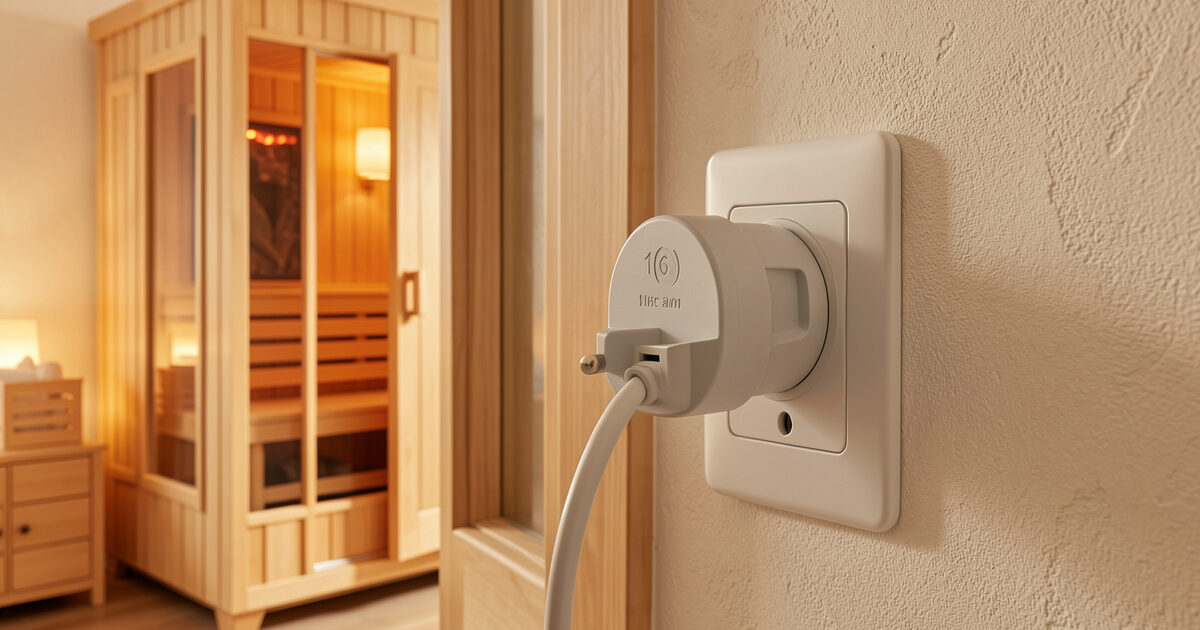
The right smart plug for an infrared sauna is one rated for at least 16A continuous with a metal-contact relay — because a 2-person far-infrared cabin pulls roughly 13–15A for the length of a session, not the brief spike a cheap lamp plug is built for. Get the rating right and a smart plug is the best $30 you will spend on the cabin. Get it wrong and you melt a housing.
I have hung plugs off every unit on my bench, metered the load with a kill-a-watt, and felt the difference between a properly rated switch and an underrated one after a full session. This is what actually matters when you pick one, in the order it matters — and where a plug stops being the right tool at all.
Why a sauna is a hard load for a smart plug
An infrared cabin is a resistive heating load, which is the demanding case for any switch. Unlike a lamp or a TV that draws a fraction of an amp, a 1,500–1,800W far-infrared unit on a 120V circuit pulls a steady 13–15A for 30–60 minutes straight. That continuous draw is what cooks an undersized plug. The relay contacts carry the full current the whole time, and a budget plug built around a 10A relay simply runs hot.
On my bench the symptom is easy to feel: an underrated plug’s housing was noticeably warm at the outlet within about 20 minutes, while a 16A-rated unit stayed barely above room temperature through the same session. Heat at the housing is the early warning. Left alone, the failure mode is a welded relay (the plug stops switching off) or discolouration and softening of the plastic around the contacts. Neither is something you want carrying 1,600W in a room you sit in. The plug’s rating must cover the cabin’s continuous current with margin, full stop.
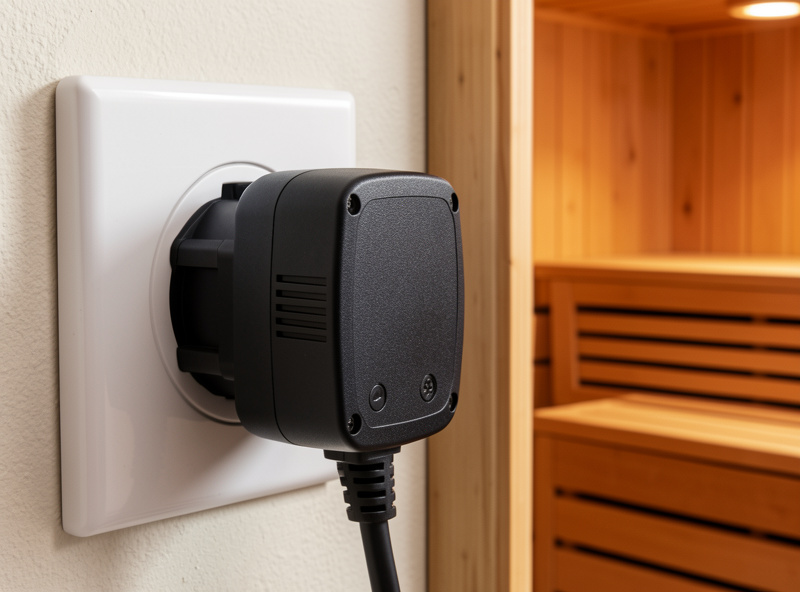
Match the plug to your cabin’s amperage
Start with your cabin’s wattage, which is on the spec plate, and divide by your voltage to get amps. A 1,600W unit on 120V is 13.3A. Add the usual 25% continuous-load headroom and you want a plug comfortable at roughly 16–17A. That rules out most of the cheap plugs, which top out at 10A or 12–15A “max” ratings that are really inrush numbers.
Here is the line that catches people: a 4-person or full-spectrum cabin on a 240V circuit draws more power and often more than any plug-in smart switch should carry. At that point a plug is the wrong tool — you are into a hardwired contactor or an in-wall relay, which is an electrician’s job, not a plug-in swap. Know which side of that line your cabin sits on before you buy anything. The broader wiring context is in my installation requirements guide and the smart infrared sauna controls hub.
| Plug type | Continuous rating | Right for | Watch out for |
|---|---|---|---|
| Budget mini plug | ~10A | Lamps, fans, the chromotherapy light | Overheats on a sauna heater — do not use |
| Standard 15A plug | 12–15A claimed | Small portable IR panels only | Often an inrush rating, not continuous |
| Heavy-duty 16A+ plug | 16A continuous | Most 120V 2-person cabins | Confirm “continuous,” not “max” |
| Hardwired contactor/relay | 20A+ wired | 240V and 4-person cabins | Electrician + local code required |
Features worth paying for, and ones to ignore
Beyond the rating, two features genuinely earn their place: energy monitoring and local scheduling. Energy monitoring turns the plug into a meter so you know the real electricity cost per session — covered in depth in sauna smart plug energy monitoring. Local scheduling lets the plug preheat the cabin on a timer even if your Wi-Fi or the manufacturer’s cloud is down.
What I would not pay extra for: voice assistants baked into the plug, RGB status lights, or any plug whose scheduling only works through a cloud account. A plug that bricks when a server goes offline is a liability on a device you rely on nightly. I want the schedule stored locally and the relay to switch whether or not the internet is up. If you run a proper hub, a plug that exposes a local API — or works with a local platform — is worth seeking out, which I get into in Home Assistant sauna automation.
Where the EMF question actually lands
People ask whether a smart plug raises the cabin’s EMF, and on my TriField the honest answer is: not meaningfully, where it counts. The plug sits at the wall, well away from where you sit, and its electric field there is trivial compared with the magnetic field coming off the heater panels and the wiring runs right behind your back. A switching relay mounted inside the cabin near the bench would matter — a plug at the outlet does not.
So if low EMF is your priority, spend the attention on heater type, wiring routing, and where the controller sits, not on worrying about the plug. I walk through metering it yourself in measuring sauna EMF with a TriField and what the low-EMF label really means. The plug is the safe part of the EMF story, not the risky one.
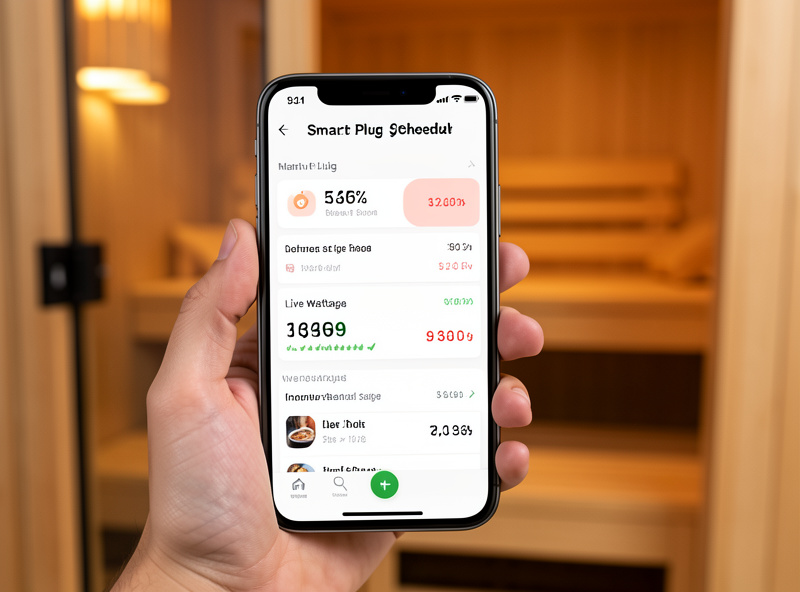
What a smart plug does not solve
A smart plug switches power on and off — it does not regulate temperature, and confusing the two is a common setup mistake. The cabin’s own controller still decides the set temp and cycles the panels to hold it; the plug just decides whether the controller has power at all. So a plug gives you remote on/off, scheduling, and metering, but it will not make a cabin that reads its temperature wrong suddenly read right.
If your unit overshoots or its display does not match the felt heat, that is a job for a room thermostat, not a plug. The two work together: the plug carries and schedules the load, the thermostat or the factory controller manages the temperature within it. I keep the factory controller as the final safety timer for exactly this reason — the plug is the muscle, not the brain, and I never want a schedule to be the only thing that can shut the heat off. Think of the plug as the layer that gets the cabin powered and warm on time, and the controller as the layer that keeps it at a sane temperature once it is.
How I install and test a new plug
My routine is boring on purpose. I plug it into the cabin’s dedicated GFCI outlet directly — never through an extension lead or a power strip, both of which add their own resistance and heat under a heavy continuous load. Then I run a full session and put my hand on the plug housing at the 20-minute mark and again at the end. Barely warm is fine. Hot is a fail, and the plug comes off the heater and goes back to running a lamp.
I also confirm the schedule fires locally by switching the cabin’s Wi-Fi off and watching the preheat run anyway. If it does not, the plug is cloud-dependent and I treat that as a downgrade. Finally I note the steady-state wattage on the plug’s monitor against my kill-a-watt — they should agree within a few percent, and if the plug reads wildly off, its energy data is decoration, not a meter. As an Amazon Associate I earn from qualifying purchases. When buying, search for a heavy-duty 16A smart plug with energy monitoring and read the continuous rating in the spec table, not the headline.
Keep Building
Once the plug is sorted, the payoff features are remote preheat so the cabin is hot when you arrive and energy monitoring so you know what it costs. Start from the smart infrared sauna controls hub for how the plug fits the wider control stack, add a room thermostat if your cabin misreads temperature, and keep the whole thing on its own segment with smart sauna networking.
Frequently Asked Questions
What amperage smart plug do I need for an infrared sauna?
For a typical 120V 2-person far-infrared cabin drawing 1,500-1,800W, you need a plug rated for at least 16A continuous. That covers the steady 13-15A draw plus headroom. A 4-person or 240V cabin needs a hardwired contactor, not a plug.
Can I use a cheap smart plug on my sauna?
No. A budget 10A plug is built for lamps and brief loads, not a heater pulling 13-15A for an hour straight. It runs hot, and can weld the relay or soften the housing. Use a 16A-rated plug with a metal-contact relay instead.
Will a smart plug work if my Wi-Fi goes down?
Only if the schedule is stored locally on the plug. Cloud-only plugs stop scheduling when the internet or the maker’s server is offline. Choose a plug that holds its schedule locally so preheat still fires without a connection.
Does a sauna smart plug increase EMF?
Not meaningfully where you sit. On a meter the plug’s field at the wall is trivial next to the magnetic field from the heater panels and wiring behind the bench. A relay mounted inside the cabin matters; a plug at the outlet does not.
Should I plug the sauna into a power strip or extension cord?
No. Plug the cabin directly into its dedicated GFCI outlet. Extension cords and power strips add resistance and heat under continuous high-current loads, and many are not rated for a sustained 13-15A draw. A direct connection is the safe path.
How do I know if my smart plug is overheating?
Feel the housing at the wall about 20 minutes into a session and again at the end. Barely warm is normal. If it is hot to the touch, the plug is underrated for the load. Stop using it on the heater and move to a 16A-rated unit.