Chromotherapy sauna light control means pulling the cabin’s colour LED bar onto the same system that switches and schedules everything else — so the lighting follows the session instead of needing a separate remote you lose down the back of the bench. It is the lowest-stakes upgrade in the whole smart sauna control stack: a few watts, no load or EMF concern, and pure ambience payoff.
I will be straight about one thing up front, because it is where this topic goes wrong: I treat chromotherapy as comfort and atmosphere, not therapy. The colour-equals-health claims are marketing, and I keep that line clear. What controllable lighting genuinely does is make the cabin somewhere you actually want to sit in a dark Swedish January — and in this niche, a cabin you use is worth far more than one with an impressive spec sheet you avoid.
What a chromotherapy light actually is
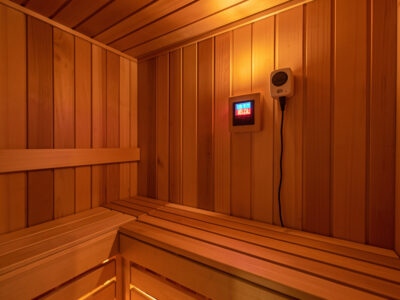
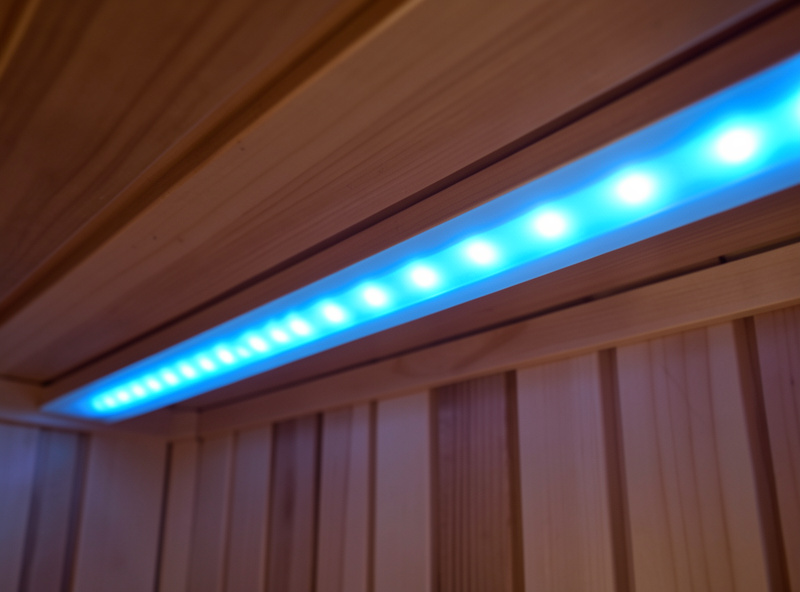
The chromotherapy bar in most infrared cabins is a low-wattage RGB LED strip or panel, usually 10–30W, with a handheld or wall remote that cycles colours and dimming. Electrically it is trivial — it draws a fraction of an amp, carries no meaningful EMF, and sits nowhere near the load concerns of the heater. That is exactly why it is the easy thing to automate: there is no rating to worry about and no safety line to respect beyond ordinary low-voltage wiring.
It is worth separating it cleanly from near-infrared therapy lighting, because the marketing blurs them. A coloured LED is for ambience. A near-infrared emitter is a different category of hardware entirely, with real wavelength and intensity specs, covered in red light sauna and near-infrared lamp setups. Do not let a cabin’s RGB bar be sold to you as photobiomodulation — they are not the same device, and conflating them is the competence slip that tells you a vendor is overselling.
Three ways to bring it onto your control layer
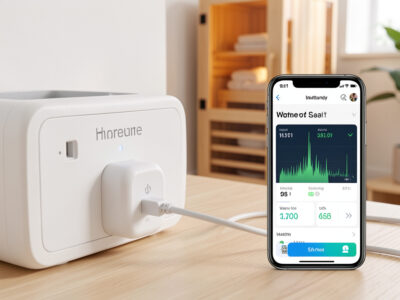
There are three practical routes, and which one fits depends on how the factory light is wired. The simplest is to leave the LED bar on its own circuit and just put its power on a small smart plug or the same plug that feeds the cabin — crude, but it means the light comes on with the preheat. The middle route is a smart bulb or smart LED controller in place of the factory strip, giving you app and scene control of colour and dimming directly. The most integrated route is a smart RGB controller wired inline that exposes the existing bar to your hub.
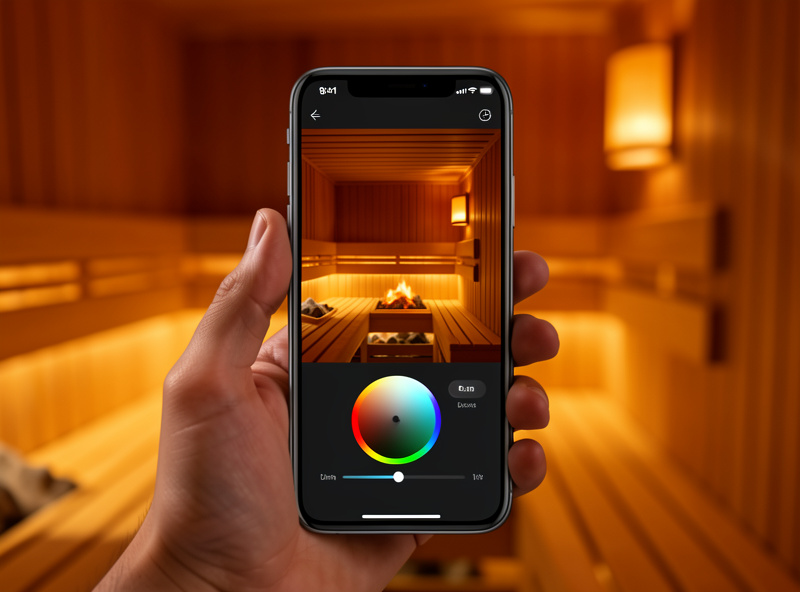
I run the middle route on my daily-driver cabin: I swapped the factory controller for a smart LED controller so the bar is an entity in the same hub that runs the sauna automation. That means the light is part of a scene, not a separate gadget. If your factory bar is sealed or low-voltage in a way that resists swapping, the smart-plug route is the no-fuss fallback and still gets you “light follows the session.” Match the route to your wiring, not to the fanciest option.
Building a session scene
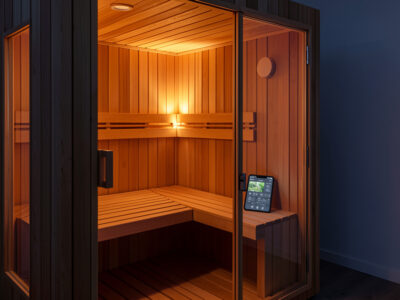
The point of control is the scene — one tap or one schedule that sets the whole mood. Mine is simple: on preheat, the bar comes up warm and dim so the cabin looks inviting while it warms; during the session, it holds whatever colour I picked that night; at the end, it fades off with the plug. Tying the light to the same trigger as the remote preheat is what makes it feel designed rather than bolted on.
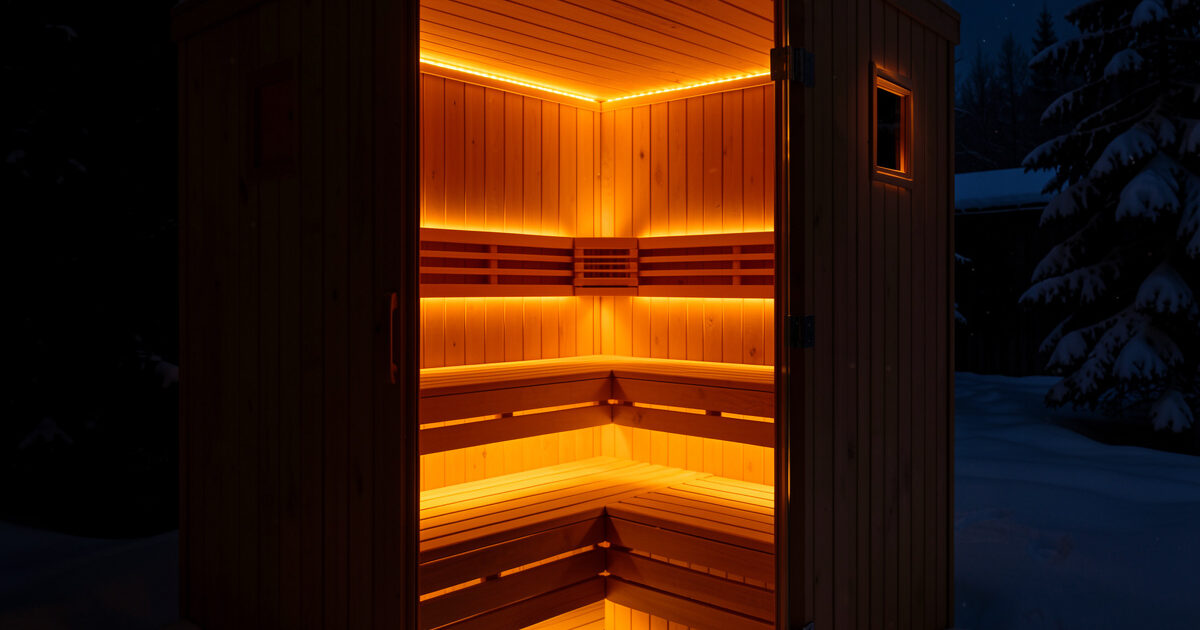
Colour choice is entirely personal and I make no claims for it. I tend toward warm amber on dark winter evenings and a cooler blue when I want the cabin to feel calmer — not because of any physiological effect, but because that is what feels right to me in the moment. The honest framing is aesthetic preference, full stop. If a colour helps you relax into the session, that is reason enough; it does not need a health claim attached, and any source telling you a specific colour treats a specific condition has left the evidence behind.
What the colours are sold as, and what I actually say
Chromotherapy marketing assigns each colour a job — red for energy, blue for calm, green for balance, and so on — and you will see those claims repeated as if they were settled science. They are not. The honest position is that controllable, dimmable colour changes the atmosphere of the cabin, and atmosphere genuinely affects whether a dark-evening session feels inviting or clinical. That is a real, useful effect. It is not a medical one.
So when I describe my own use, I describe preference, not prescription: amber feels warm and den-like, blue feels quiet, a dimmed low light at the end of a session feels like winding down. None of that is a claim that a wavelength of visible light treated anything in my body. I keep the language at “this is what I like” because that is all I can honestly stand behind, and because the moment a sauna site starts assigning therapeutic powers to a colour LED, it has wandered into exactly the overselling this niche should be the antidote to. If the calm of a well-lit cabin makes you use it more often, the benefit is that you used it — not the colour.
The wiring and heat caveats
Two practical notes keep this trouble-free. First, any LED hardware inside the cabin has to tolerate the heat — a sauna runs well above where cheap consumer LED strips are happy, and a bargain strip will discolour or fail early near the panels. Use fixtures rated for the temperature, or mount the controller outside the hot zone and run only the LED element inside. Second, keep the low-voltage lighting wiring separate from the heater’s high-current runs; it avoids both interference and the temptation to share a circuit that should stay dedicated, as covered in my wiring guide.
On EMF there is essentially nothing to report, which is the nice part. A few watts of LED adds nothing my TriField can distinguish from background next to the heater panels, so unlike the switching hardware this is one cabin component you can mount wherever it looks best without metering it. The only discipline is heat tolerance and tidy low-voltage routing.
If you are choosing a replacement strip, look for one rated to at least the cabin’s peak air temperature with margin, silicone-sheathed rather than bare, and ideally with the driver and controller designed to sit outside the hot zone. The LED emitters themselves tolerate heat far better than the little control board, so the failure I see most is a controller cooked by being mounted inside the cabin when it could have lived just outside the wall. Route the low-voltage run through the same penetration as little else as possible, keep it clear of the heater’s high-current cabling, and you will never think about it again.
My actual setup
On my far-infrared daily driver the factory RGB bar runs through a smart LED controller mounted just outside the cabin wall, with only the silicone strip inside the hot zone. It is a single entity in the same hub that handles the preheat and the energy plug, so it belongs to one “sauna” scene rather than living on its own remote. When the evening preheat fires, the bar comes up warm and dim; I tap a colour for the night if I feel like it; when the session ends and the plug cuts, the light fades with it. The whole thing took an afternoon and a cheap controller, and the only part I had to think about was keeping the control board out of the heat. A winter’s use later it has not skipped a beat, and the cabin genuinely feels like a place rather than a box — which, on a dark January evening, is most of why I walk down to it.
Is it worth automating at all?
For some owners, no — if your cabin’s factory remote works and you are happy reaching for it, automating the light is the definition of optional. I would not tell anyone it is a priority over a correctly rated smart plug or honest energy monitoring, which actually change how you use and pay for the cabin. The light is the finishing touch you add once the load-bearing parts are sorted.
But it is a genuinely nice finishing touch, and it is cheap. Once the bar lives on the same hub as everything else, the cabin has one “sauna” scene that warms it, sets the light, and logs the session — and a dark winter cabin that lights itself the moment you start the preheat is a small pleasure that earns its tiny cost. If you want to take the next step, the natural companions are the smart controls hub for how the scene fits the wider stack, the Home Assistant automation guide for building the scene logic, and the sauna timer app guide for the session side — and if it is actual light therapy you are after rather than ambience, that is the entirely separate world of red light saunas.