Infrared sauna remote preheat is the feature that turns the cabin from a chore into a habit: a schedule or a phone tap warms it while you finish dinner, so you walk into a hot cabin instead of waiting 20 minutes in front of cold panels. In my session log it is the single change that moved my own use from twice a week to a genuine winter routine. Everything else in smart control is nice; this is the one that earns its electricity bill.
The mechanics are simple — a rated smart plug with a schedule, or a hub rule tied to your calendar or your phone’s location. The discipline is in the timing and the guardrails, because the failure mode is heating an empty box for an hour. Here is how I set preheat up so it is hot when I arrive and off when it should be.
Why preheat matters more than it sounds
An infrared cabin needs roughly 15–25 minutes to bring its panels and air to a usable set temp from a cold start, and that wait is the friction that quietly kills the habit. When you flip the unit on after you get home, the gap between “I want a session” and “the cabin is ready” is exactly long enough to talk yourself out of it on a tired evening. Remove the wait and the decision gets easy.
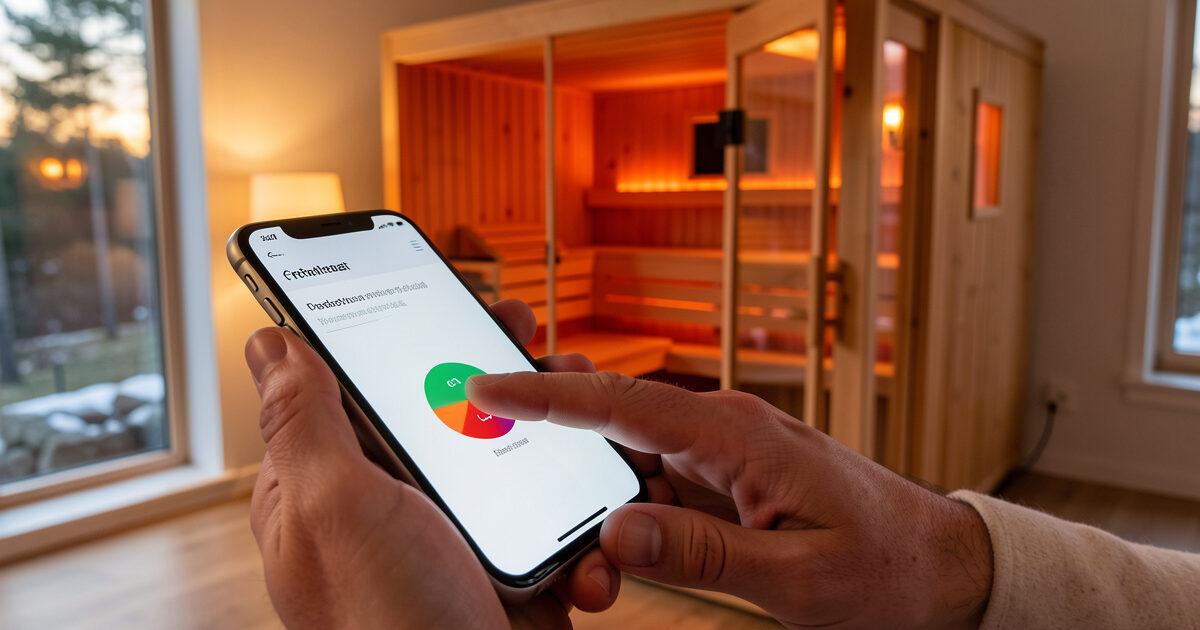
That is the real value, and it is behavioural, not technical. The cabin does not perform better because it was preheated on a schedule — you just actually use it. On a dark Swedish January evening, walking down to a cabin that is already at temperature is the difference between a routine you keep and gear that gathers dust. The preheat is also where remote control pays off over a wall timer: a schedule handles the predictable nights, and a phone tap or location trigger covers the spontaneous ones. The wider control picture is in the smart sauna controls hub.
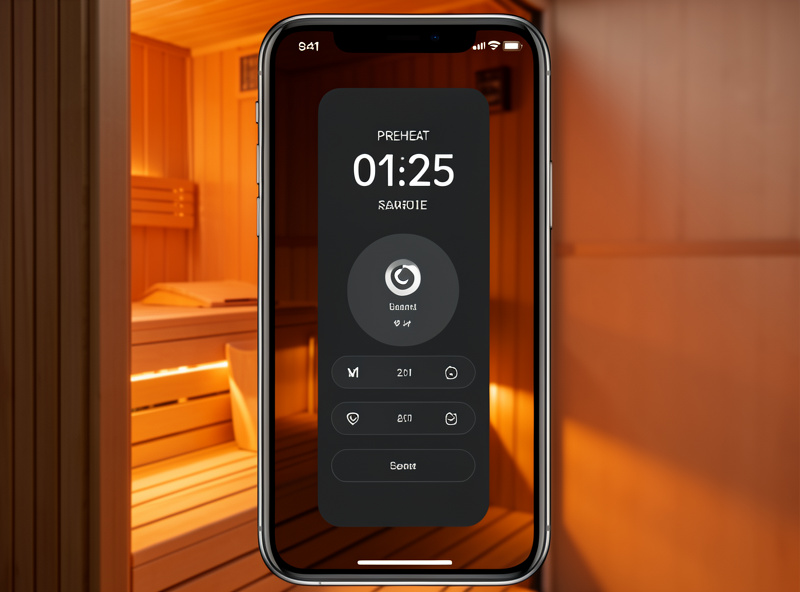
How long to preheat, by heater type
Preheat time is not one number, and setting a single fixed timer is where people get it wrong. Across the heaters I have lived with, ramp behaviour differs enough to matter. A carbon-fiber panel warms gently and evenly and wants a longer, earlier preheat. Ceramic rods hit surface temperature fast and heat the air quickly but throw a narrower radiant footprint. A near-infrared halogen emitter in a full-spectrum unit comes up almost instantly but only warms what it faces.
| Heater type | Approx. preheat from cold | Preheat strategy |
|---|---|---|
| Carbon-fiber panel | 20–25 min | Longer, earlier schedule |
| Ceramic rod | 12–18 min | Shorter; mind cold spots off-axis |
| Carbon/ceramic hybrid | 15–20 min | Middle ground; the common case |
| Full-spectrum / NIR | ~10 min to felt heat | Short; the emitter is near-instant |
These are starting-room dependent too — a cabin beginning at near-freezing in an unheated garage takes longer than one in a warm house. The honest way to set your number is to preheat once with a temperature probe or thermometer at bench height and note how long it actually takes to reach your felt temperature, then set the schedule to finish at that point. If you do not know your heater type, start with carbon vs ceramic and infrared sauna temperature.
The guardrail: never heat an empty cabin
The one trap that turns a convenience into waste is a recurring schedule firing on a night you are away, heating an empty box for an hour. The fix is presence gating: tie the preheat to your phone being home, so the schedule only fires when someone is actually there. I run mine as “weekday evening AND phone home,” which covers my routine without ever heating to nobody.
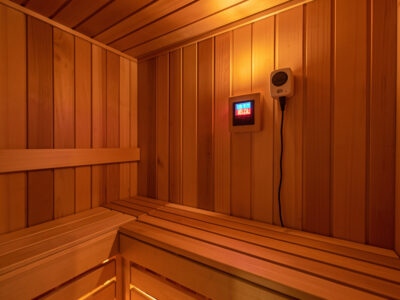
This is also a safety point, not just a cost one. Running a 1,600W heater unattended on an open-ended schedule is a fire-safety line, and presence gating plus a hard auto-off keeps it the right side of that line. I always keep the factory controller’s mechanical timer in the loop as the backstop, so even if a rule misfires the cabin shuts itself off. The full safe-automation design is in Home Assistant sauna automation, and the general cautions in sauna safety. Automate the convenience; never automate away the off switch.
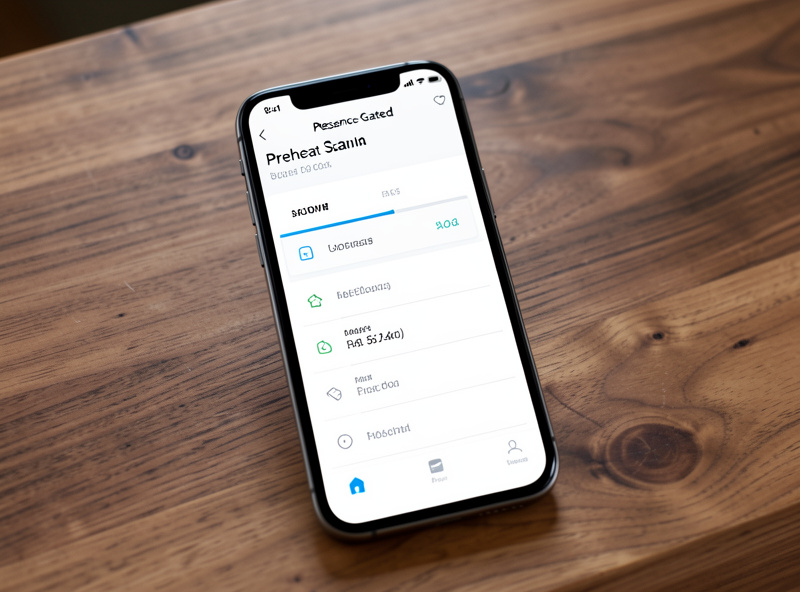
Three ways to trigger a preheat
There are three triggers worth using, and most people settle on a mix. A fixed schedule suits regular nights — same evenings, finishing at the time you usually start. A location trigger fires when your phone leaves work or enters a geofence near home, so the cabin is ready as you arrive. And a manual tap or voice command covers the spontaneous session, which is where voice control genuinely shines — “preheat the sauna” from the kitchen, hands full.
I lean on the schedule for the predictable nights and a manual tap for everything else, with presence gating underneath all of it. The location trigger is the cleverest and the one I trust least, because a geofence that fires on a drive-by can preheat when you are not actually coming home — so I gate it hard. The right mix is whatever matches your real routine; the technology should fit how you already live, not impose a schedule you then work around.
The energy side of preheat
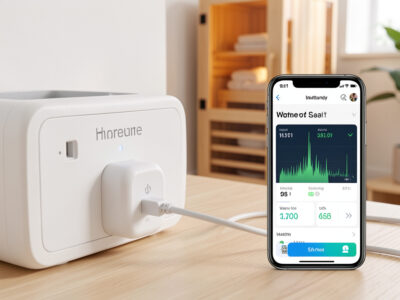
Preheat costs real kWh, and a monitoring plug is how you keep it honest. The ramp pulls full wattage, so the preheat window is the most power-hungry part of a session — which is exactly why heating an empty cabin is wasteful, and why a probe-based “stop at temperature” preheat beats an over-long fixed timer. In my cabin the difference between a tuned 18-minute preheat and a lazy 30-minute one is visible on the plug’s chart over a month. Reading that data is covered in sauna smart plug energy monitoring, and the running-cost picture in infrared sauna electricity cost.
How I set mine up
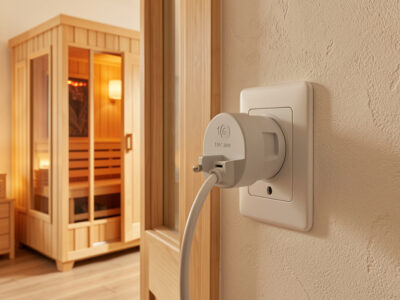
My far-infrared cabin preheats on weekday evenings, gated on my phone being home, through its 16A monitoring plug. The schedule is set to finish at the time I usually start, based on the 18 minutes a probe told me it actually takes from a cool house. A manual tap on the hub covers off-schedule nights. The factory controller sits a few degrees higher as the backstop and provides the mechanical safety timer. When I open the door the cabin is at felt temperature, the chromotherapy light is already warm, and I have waited for nothing. That is the entire promise of remote preheat, and once you have it you do not go back to flipping a cold cabin on and standing around.
Related Guides
- Smart Infrared Sauna Controls: The Owner-Installer Guide
- Smart Plug for Infrared Sauna: Pick a Safe-Rated Switch
- Home Assistant Sauna Automation: Rules and Sensors
- Sauna Smart Plug Energy Monitoring: Real kWh Per Session
- Voice-Controlled Sauna: Alexa, Google Home, and HomeKit
Frequently Asked Questions
How long should I preheat an infrared sauna?
Roughly 15 to 25 minutes from cold, depending on heater type and how cold the room starts. Carbon panels want the longer end, ceramic and full-spectrum units less. The honest way is to preheat once with a thermometer at bench height and note when it reaches your felt temperature.
How do I set up remote sauna preheat?
Use a smart plug rated for the cabin’s amperage with a local schedule, or a hub rule tied to a calendar, geofence, or phone presence. Set the schedule to finish at your usual start time, and gate it on someone being home so it never heats an empty cabin.
Is it safe to preheat a sauna while away from home?
Only with guardrails. Gate the preheat on presence so it fires only when someone is home, add a hard auto-off, and keep the factory mechanical timer as a backstop. Running a heater unattended on an open-ended schedule is a fire-safety line, not a convenience.
Does remote preheat use more electricity?
Preheat is the most power-hungry part of a session because the ramp pulls full wattage, but a tuned preheat that stops at temperature uses less than a lazy over-long fixed timer. The waste comes from heating an empty cabin, which presence gating prevents.
Can I preheat with my voice?
Yes, if the plug or hub is linked to a voice assistant. A spoken command like preheat the sauna is handy for spontaneous sessions when your hands are full. Keep the same presence and auto-off guardrails as any other trigger so a stray command cannot leave it running.
Why does my sauna take so long to preheat?
Cold starting rooms and gentle heaters both extend it. A carbon-panel cabin in an unheated garage at near-freezing can take well over 20 minutes, while a full-spectrum unit in a warm house reaches felt heat in about 10. Heater type and room temperature set the number.