Infrared saunas operate at 110 to 150°F — significantly cooler than traditional Finnish saunas at 175 to 200°F. The lower air temperature is a feature, not a bug: infrared energy heats the body directly via radiant penetration of 1 to 2 inches into tissue, producing the same physiological effects (core temperature rise, vasodilation, sweat) at half the air temperature. This guide covers temperature ranges by experience level, why 130°F is the practical sweet spot, and the science behind why lower air temperature does not mean less effective sessions.
As an Amazon Associate I earn from qualifying purchases.
Quick Answer: What Temperature for Infrared Sauna?
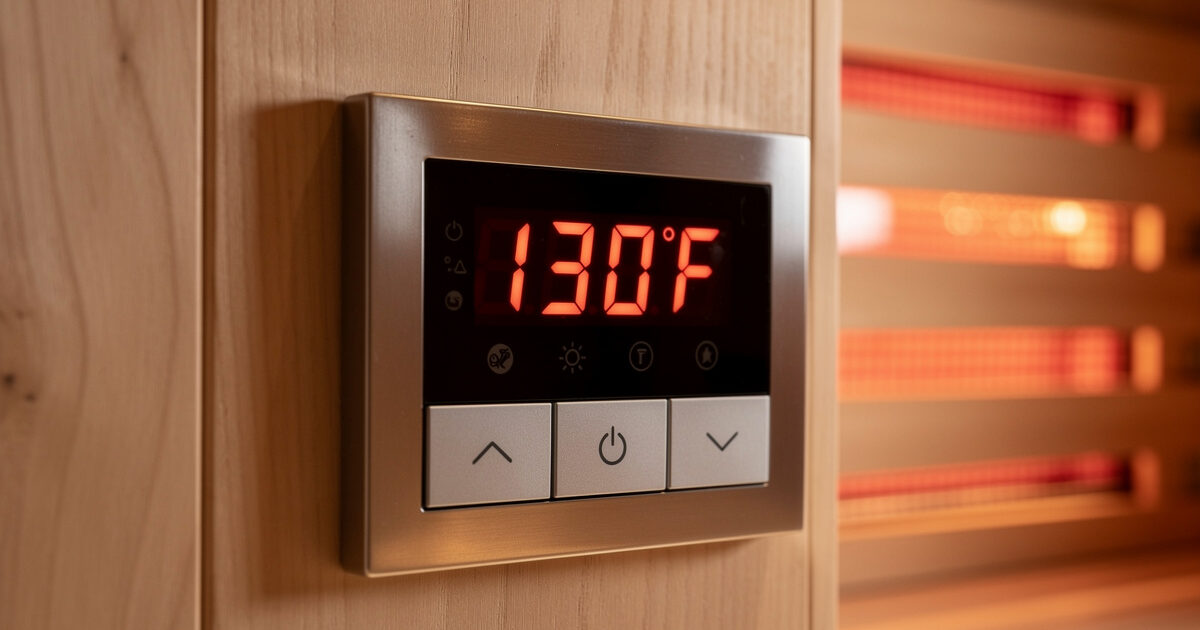
Beginners: 110 to 120°F. Standard home use: 120 to 130°F. Cardio benefit zone: 130 to 140°F. Maximum (advanced users only): 140 to 150°F. Most home infrared saunas top out at 140 to 150°F. The 130°F mark is the practical sweet spot — produces full sweat response by minute 10, allows comfortable 30-minute sessions, and is below the dehydration acceleration threshold.
Temperature Ranges Explained
| Temperature | Use Case | Sweat Response | Tolerance Time |
|---|---|---|---|
| 110-115°F | First-time / sensitive users | Light, by minute 18-20 | Easy 30+ min |
| 115-125°F | Beginners weeks 2-4 | Moderate, by minute 12-15 | Comfortable 25-30 min |
| 125-135°F | Standard regular use | Full sweat by minute 8-12 | Standard 25-35 min |
| 135-145°F | Cardio / detox protocol | Heavy sweat by minute 5-8 | Limit 20-30 min |
| 145-150°F | Advanced users only | Almost immediate | Limit 15-20 min |
Why Infrared at 130°F = Finnish Sauna at 180°F
Traditional Finnish saunas heat the air to 175-200°F. The body absorbs heat from the surrounding air via convection — a slow, surface-only process. The skin gets hot first; core body temperature rises gradually.
Infrared saunas use radiant infrared energy at 110-140°F air temperature. The infrared waves penetrate 1-2 inches into body tissue, heating the body directly. Core body temperature rises faster than air-temperature would suggest, because the heat source is internal.
Result: comparable physiological response (core temperature elevation, vasodilation, sweating, heart rate increase) at significantly lower air temperatures. Many users find infrared more tolerable for longer sessions because the air is breathable and the sensation is “deeper warmth” rather than “hot air.”
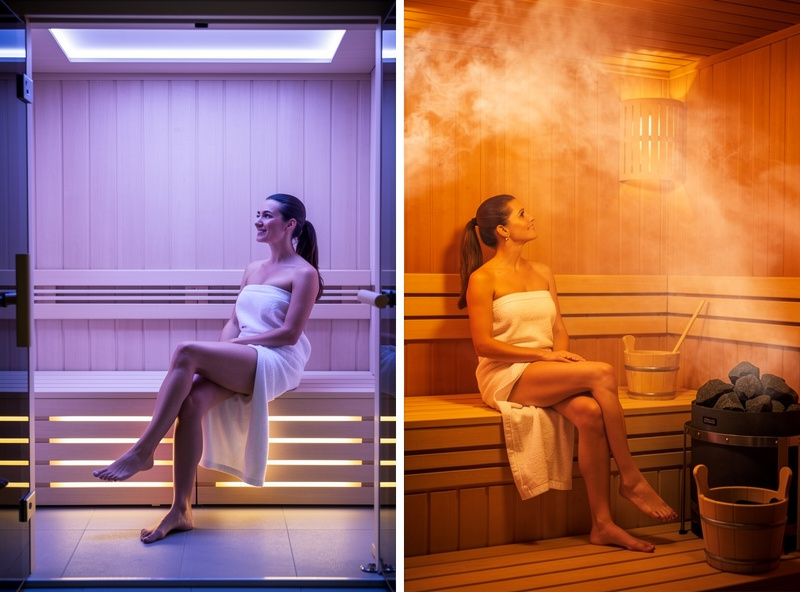
Research published in Journal of Cardiac Failure (2002) showed comparable cardiovascular response in 60-minute infrared sauna at 140°F and 30-minute Finnish sauna at 180°F.
For broader context on session execution, see our How to Use an Infrared Sauna guide.
Why 130°F Is the Sweet Spot
For most home users, 130°F is the practical optimum:
- Full sweat response: Body sweats normally by minute 10-12. Earlier sweat means lower temperatures aren’t achieving thermal load.
- Tolerable for 30 minutes: Long enough sessions to hit JAMA-supported cardiovascular benefit ranges.
- Below dehydration acceleration: 130°F produces 16-24 oz sweat in 30 minutes; 140°F+ accelerates loss to 24-32+ oz.
- Hardware reliable: Most infrared sauna heaters operate efficiently at this range; they push hardest above 140°F where lifespan drops.
- Sustainable for daily use: 130°F sessions feel manageable as a daily habit; 140°F+ feels demanding and gets dropped.
How Temperature Affects Heat Shock Protein Response
Heat shock proteins (HSP70 specifically) are produced when core body temperature rises 1.5 to 2.5°F above baseline. The body’s response is similar across infrared sauna temperatures, with proportionally faster onset at higher temperatures:
- 120°F session: HSP70 rise begins at minute 18-22
- 130°F session: HSP70 rise begins at minute 12-15
- 140°F session: HSP70 rise begins at minute 8-10
The total HSP70 response is similar across these temperatures if session length is adjusted. A 35-minute session at 125°F produces comparable HSP70 to a 25-minute session at 135°F.
This is why session length and temperature are partial substitutes — you can dial up one and dial down the other for similar effect.
Temperature by Goal
| Goal | Recommended Temp | Rationale |
|---|---|---|
| General wellness | 125-130°F | Sustainable for daily use, full benefits |
| Cardiovascular health | 130-140°F | JAMA-supported range |
| Detox / sweat protocol | 135-145°F | Maximum sweat output |
| Stress relief | 120-130°F | Lower temp, longer session |
| Sleep improvement | 120-130°F | Avoid over-stimulation pre-bed |
| Athletic recovery | 120-130°F | Body already stressed from workout |
| Beginner / first month | 110-120°F | Build tolerance progressively |
| Skin health | 120-125°F | Promotes circulation without overstress |
Pre-Heat Time
Most home infrared saunas reach 130°F in 10 to 20 minutes. Higher temperatures take longer:
- 120°F: 8-12 minutes
- 130°F: 10-15 minutes
- 140°F: 15-25 minutes
- 150°F: 25-40 minutes (some saunas struggle to maintain)
Pre-heat time depends on heater wattage, sauna size, room temperature, and whether you’re starting from cold or recently used. Plan 15 minutes of pre-heat into your session schedule.
Adjusting Temperature During Session
Most modern infrared saunas allow temperature adjustment during use. This is useful for:
- Cooling down mid-session: If temperature feels too aggressive, drop 5-10°F at minute 10-15.
- Pyramid sessions: Start at 120°F, ramp to 135°F at minute 15, hold for 10 minutes, then ramp down to 125°F for last 5 minutes.
- Gradual heat tolerance build: Start at 115°F for first session; if comfortable at minute 10, ramp to 120°F.
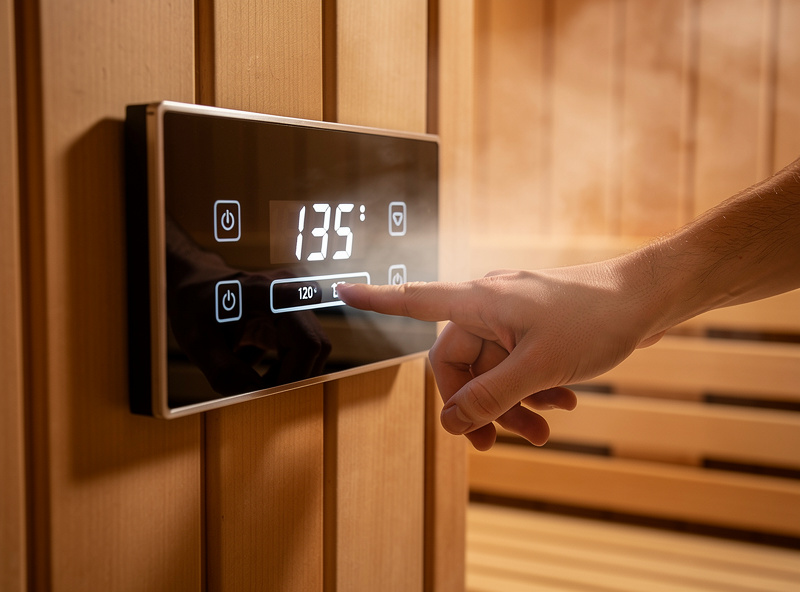
The temperature you set is a target, not an instant change. Adjustments take 5-10 minutes to register fully.
What If Your Sauna Won’t Reach Target Temperature?
Some home infrared saunas struggle to reach 140°F+ in cold rooms or during long sessions. Common causes:
- Cold room: Saunas in unheated garages or basements lose 5-15°F to ambient. Pre-heat the room or accept the lower max.
- Open vents: Some saunas have vents users open. For maximum temperature, close vents (but reopen for breathability if needed).
- Heater age: After 5-7 years, infrared heaters lose 10-20 percent output. Replace heater elements ($100-300 per heater).
- Insufficient amperage: Some 110V saunas can’t achieve 140°F+ even on full power. Upgrade to 220V model is the only fix.
For sauna selection that handles your temperature targets, see our How to Choose the Best Infrared Sauna guide.
Common Temperature Mistakes
Maxing out for first session. Beginners who jump to 140°F often get headaches, nausea, or dizziness within 15 minutes. Start at 110-115°F.
Comparing to traditional sauna temperatures. Don’t expect to need 180°F+ in infrared. The lower air temperature does the same physiological work via different mechanism.
Confusing setpoint with current temperature. The temperature display usually shows current air temperature, which lags setpoint by 5-15 minutes. Sometimes both are displayed; check your manual.
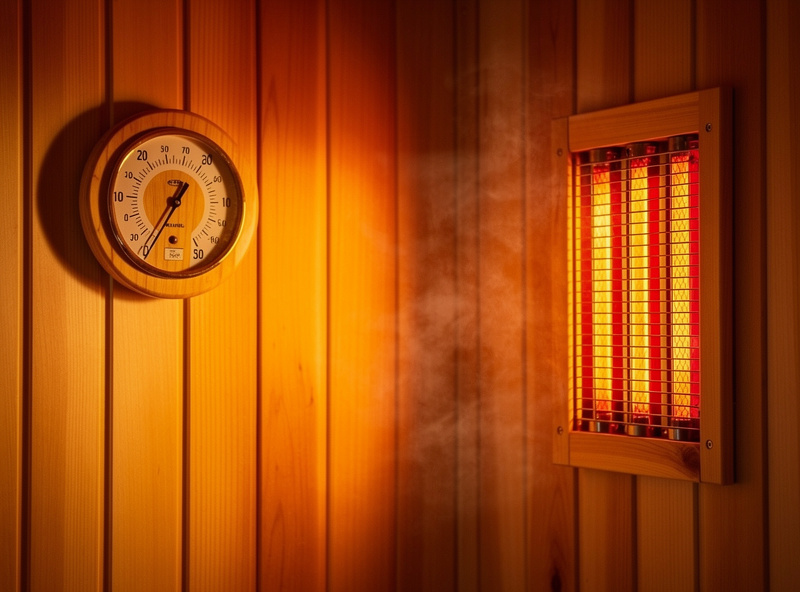
On my own cabin I gave up trusting the wall panel years ago — panel sensors tend to read a few degrees optimistic, especially in the first ten minutes. I keep a separate infrared sauna thermometer clipped to the bench and a small sauna hygrometer next to it — humidity is the variable most people never check, and it changes how the same set temp actually feels on skin.
Assuming hotter is always better. Above 140°F, dehydration risk and stress response increase faster than benefit. Most measurable health outcomes happen in the 125-140°F range.
Ignoring how you feel. Some users tolerate 140°F daily; others find 130°F their natural ceiling. Listen to body signals over chart targets.
For the broader cluster context, see our How Often Infrared Sauna guide and How Long Infrared Sauna guide.
What temperature should an infrared sauna be?
110-120°F for beginners. 120-130°F for standard regular use. 130-140°F for the cardio benefit zone with full sweat response. 140-150°F maximum, advanced users only. The 130°F mark is the practical sweet spot for most home users.
Is 120 degrees enough for an infrared sauna?
Yes for beginners and stress-relief sessions. 120°F produces moderate sweat by minute 12-15 and is sustainable for 25-30 minute sessions. For cardiovascular benefits per JAMA research, the 130-140°F range is more effective.
Can infrared sauna get too hot?
Above 150°F is unnecessarily hot for most benefits and increases dehydration and stress-response risk. Most home infrared saunas top out at 140-150°F. If you find yourself wanting hotter, you may want a traditional Finnish-style sauna at 175-200°F instead.
Why is infrared sauna cooler than regular sauna?
Infrared waves penetrate 1-2 inches into body tissue and heat the body directly. Traditional saunas heat the air around you to 175-200°F, which then heats your skin via convection. Infrared at 130°F produces comparable physiological response (Journal of Cardiac Failure, 2002).
How long does it take to heat up an infrared sauna?
8-12 minutes to 120°F, 10-15 minutes to 130°F, 15-25 minutes to 140°F. Time depends on heater wattage, sauna size, room temperature, and prior use. Plan 15 minutes of pre-heat into your session schedule.
Should I increase temperature during the session?
Yes if comfortable. Pyramid sessions (start lower, ramp up mid-session, ramp back down) work for some users. Adjustments take 5-10 minutes to register fully. Most users set 125-135°F at start and don’t change during the session.