My post-lift sauna routine is short and deliberate: 30–90 minutes after training I rehydrate and eat, then take a 15–25 minute sit at a 50 °C set temp, heart-rate strap on, electrolyte water waiting. The heat lands after the work is done, never before, and never the night before a key session. That structure is the difference between a sit that helps recovery and one that quietly adds to the load.
I built this routine the hard way over eight winters of logging sessions in a two-person low-EMF cabin — duration, set temp, panel surface temp on my thermal camera, kWh on the kill-a-watt, and how my legs felt the next morning. What follows is not a template I invented; it is what survived the mistakes. This is the practical companion to my workout recovery guide — the guide tells you why heat helps, this tells you exactly how I run the session.
How Long After Lifting Should the Sauna Session Start?
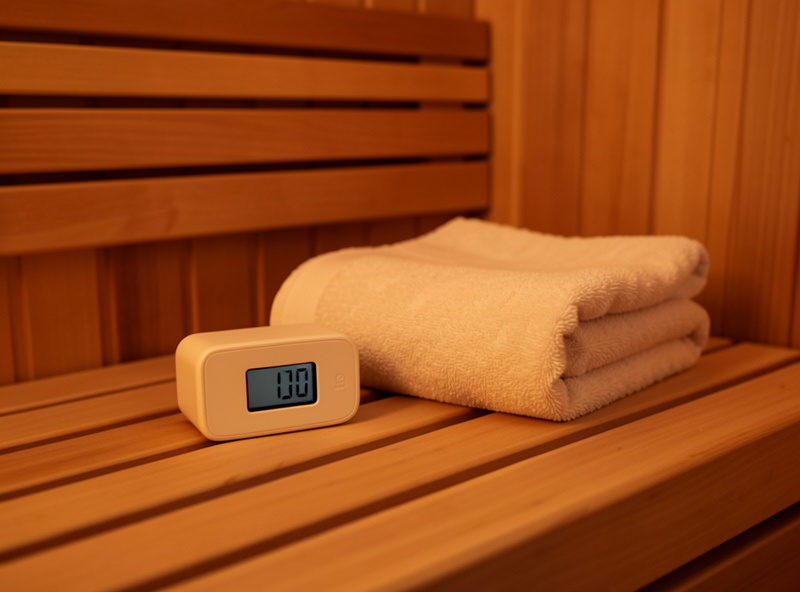
I wait 30–90 minutes, and the wait is doing real work. Straight after a heavy session my heart rate is still up, I am sweating, and I am carrying a fluid deficit — dropping into a hot cabin right then just deepens the hole. Giving it that window lets me rehydrate, get some food in, and let heart rate settle back toward resting, so the sauna lands on a body ready to relax into it rather than one still fighting to recover from the barbell.
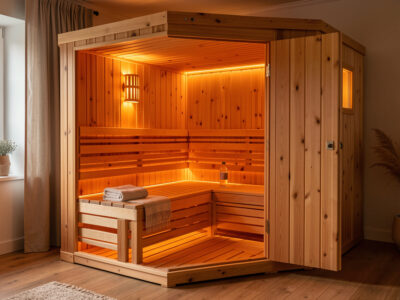
The preheat is scheduled around that window. I keep a smart plug on the cabin — the same rule-engine hub that pre-heats other things in the house — set to bring the panels up while I am eating and rehydrating, so the cabin is at temp the moment I am ready, and I am not paying to hold an empty box hot. On my kill-a-watt that scheduled preheat plus a 20-minute sit runs about 0.15–0.30 kWh once warm; I break the numbers down in the electricity cost guide. The window is flexible — after an easy session I will go sooner, after a brutal one I will wait the full ninety — but the check is always the same: rehydrated, fed, heart rate down. Then I sit.
What Temperature and Duration Do I Actually Run?
A 50 °C set temp for 15–25 minutes, with panel surface temps around 200–220 °C on my thermal camera. That is a recovery dose, not a maximum-sweat session — deliberately lower and shorter than the longest, hottest sit the cabin can deliver. The goal is to end relaxed, not wrung out, because a session that leaves me flat has cost me tomorrow’s training.
The trap here is set temp versus felt heat. The wall thermostat can read 50 °C while the radiant load on my skin feels far stronger, because the panels throw energy straight at me rather than heating the air. Early on I chased the thermostat number, cranked it, sat longer, and woke up with dead legs. Now I read my body instead: if I cannot comfortably hold a conversation, I am past a recovery dose and into training-stress territory, and I cut it short. Duration scales with how beaten up I am — a light day gets 15 minutes, a rest day gets a relaxed 25 — but I almost never go past 25 for pure recovery. More heat is not more recovery; it is just more load.
My Step-by-Step Post-Lift Sauna Routine
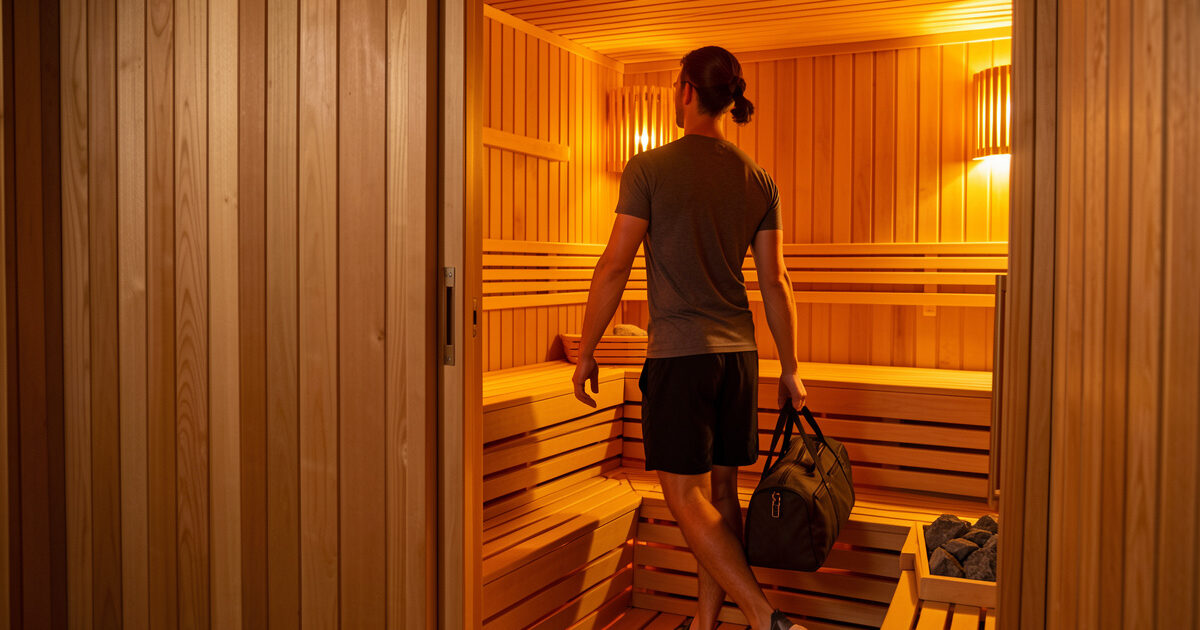
Here is the whole thing, start to finish, the way it runs on a normal training evening:
- Finish training, then stop. No straight-from-the-rack-into-the-cabin. Change, breathe, let the heart rate come down.
- Rehydrate and eat (30–90 min). Water with electrolytes and a real meal or protein. This is the single most-skipped step and the one that ruins the session if you miss it.
- Preheat the cabin. Scheduled on the smart plug so it is at a 50 °C set temp by the time I am ready — no waiting, no wasted kWh.
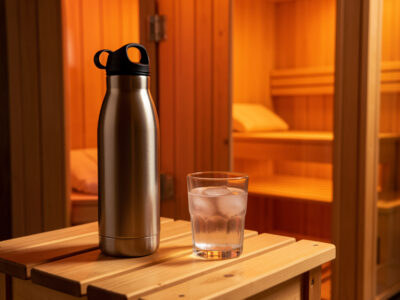
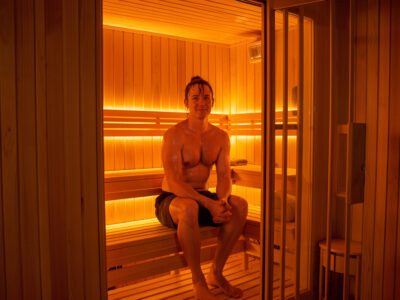
- Strap on and sit (15–25 min). Heart-rate monitor on, electrolyte bottle in the cabin, timer set. I sit, breathe, and read something or just close my eyes.
- Read the body, not the clock. If I cannot hold a conversation, I am done early. Comfort is the ceiling.
- Cool down gradually. Step out, let heart rate settle, keep sipping. No cold shock unless I am deliberately doing contrast — that is a separate decision.
- Log it. Duration, set temp, kWh, and a one-word note on how I feel. The log is what turns this from ritual into data.
None of these steps is complicated, and that is the point — a routine you will actually repeat beats a perfect one you abandon. The two that people skip are the ones that matter most: rehydrating before, and logging after.
How Do I Hydrate Around the Session?
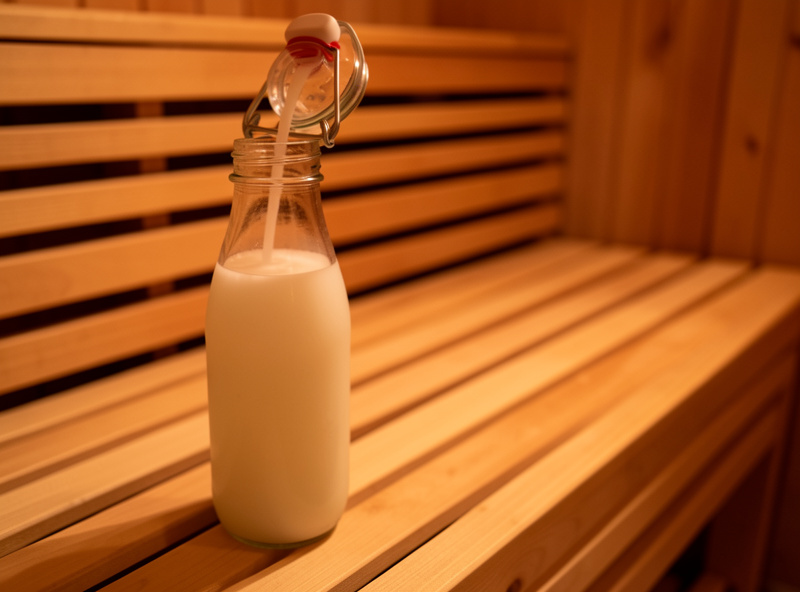
I drink before I sit, sip during a longer session, and replace sodium after — not just plain water. On my scale I come out of a 20-minute recovery sit down 300–600 g of body water, essentially all sweat, and after a training session that fluid loss stacks on what I already lost lifting. Plain water alone after that much sweating can leave me flat and headachy, which is exactly what happened the first winter before I sorted it out.
What I actually do is straightforward and personal, not a protocol I would prescribe: electrolyte water going into the session, a bottle within reach during it, and something with sodium afterward. Hydration is the weak link that quietly undermines every other part of the routine, so I gave it a full write-up in hydration and electrolytes around a recovery session. If you get one thing right from this article beyond timing, make it this.
Should I Track the Session?
Yes — a heart-rate strap turns “that felt like a lot” into a number, and the number is what keeps the routine honest. Sitting in a 50 °C cabin drifts my heart rate up into an easy-cardio zone even at rest, purely from the thermal and fluid-shift demand. That is genuine cardiovascular load, and watching it tells me whether a given sit was a gentle recovery dose or something closer to a workout I did not mean to do.
The real payoff is next-morning data. If a session bumps my resting heart rate the following day and my legs feel flat on the first set, the log is telling me I overcooked the heat load. I explain exactly how I capture and read it — in-session response and next-day readiness — in tracking heart rate and session load. You do not need lab gear; a chest strap and a habit of noting how you feel are enough to catch the pattern.
How Does the Routine Change Around Hard Sessions?
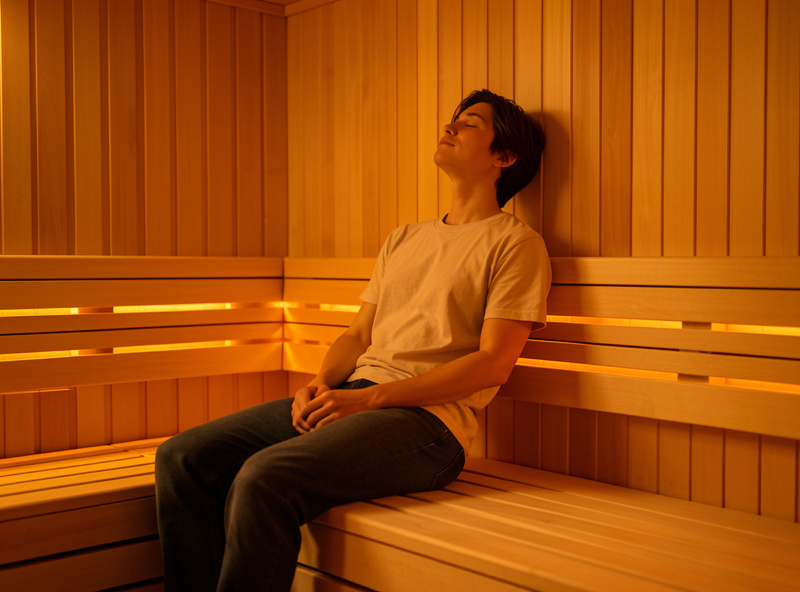
The routine flexes based on how much stress the day already carried. After an easy lift or a recovery run, I will take a relaxed full sit — the stakes are low and the heat feels great. After a max-effort session or a long run that already cost me kilos of sweat, I either shorten the sit hard or skip it entirely, because piling a big heat-and-fluid load on top of a big training load is subtraction, not addition. And I never sit the night before a key workout — that lesson is burned into my log from a month of ruined Thursday intervals.
This is the part people get wrong when they turn a good routine into a rigid one. The sauna is a variable you add to fill the low-stress gaps in a week, not a box to tick after every session regardless of what the session cost you. Runners especially need to think about this, because long-run fluid loss changes the maths — I cover that in before or after a workout and the beginner on-ramp in the beginner schedule. Match the dose to the day, and the routine works for years instead of blowing up your training block.
What Gear Actually Earns Its Place in the Routine?
The routine needs almost nothing beyond the cabin, and I am wary of anyone selling you a drawer of recovery gadgets. Three things earn their keep in my session log: a way to schedule the preheat, a way to measure the load, and a way to hydrate properly. Everything else is optional. A basic smart plug turns the preheat into a set-and-forget routine so the cabin is ready without wasting kWh; a chest-strap heart-rate monitor turns the sit into data; and an insulated bottle plus an electrolyte mix keeps hydration from becoming the weak link.
As an Amazon Associate I earn from qualifying purchases.
If you are filling those three gaps, a simple Wi-Fi smart plug for scheduled preheat and a chest-strap heart-rate monitor are the two that changed how I run the session. I resisted the smart plug for a year thinking it was a gimmick; once I stopped either waiting on a cold cabin or paying to hold a hot empty one, I used the sauna far more consistently — and consistency is what actually delivers recovery, not any single perfect session.
What I’d Do Starting Tonight
If you lifted today, here is the routine in one breath: finish, change, rehydrate and eat for half an hour, preheat the cabin to 50 °C, sit 20 minutes with a heart-rate strap and electrolyte water, read your body instead of the clock, cool down slowly, and write down how you feel. Do that after your easy sessions this week, keep it away from the night before anything hard, and check your morning legs. The structure is simple on purpose — the discipline is in the timing and the hydration, and those are exactly where I ruined sessions before I learned to respect them.
How long after a workout should I use an infrared sauna?
I wait 30 to 90 minutes so I can rehydrate, eat, and let my heart rate settle first. Going straight from a hard session into a hot cabin deepens the fluid deficit you already built while training and turns recovery into a second stressor.
What temperature and duration should a post-workout sauna session be?
For recovery I run a 50 degree Celsius set temp for 15 to 25 minutes, which is lower and shorter than a maximum-sweat session. Read your body rather than the thermostat: if you cannot hold a conversation, you have gone past a recovery dose into training-stress territory.
Should I sauna after every workout?
No. Match the dose to the day. Take a relaxed sit after easy sessions, shorten it hard or skip it after a max effort or a long sweaty run, and never sit the night before a key workout. Stacking heat load on top of heavy training load subtracts from recovery.
Do I need to hydrate differently around a recovery sauna?
Yes. You can lose several hundred grams of body water in a 20-minute sit on top of what you lost training. Drink before, sip during a longer session, and replace sodium afterward rather than only drinking plain water, which can leave you flat.
Is it worth tracking the session with a heart-rate monitor?
Yes. A hot sit drives your heart rate into an easy-cardio zone even at rest, so a chest strap shows whether a session was a gentle recovery dose or a hidden workout. The bigger signal is your resting heart rate and how your legs feel the next morning.
Sources: Post-exercise heat and recovery research is indexed at PubMed; hydration-around-exercise guidance is published by the American College of Sports Medicine.
Further Reading
- Infrared sauna for workout recovery — the full guide behind this routine.
- Before or after a workout — why the heat goes after.
- What a home sauna costs to run — the numbers behind the preheat.