An infrared sauna earns its place in a training week as a heat-based recovery tool, not a performance shortcut. Fifteen to thirty minutes at a felt heat of 45–55 °C after a hard session is what I run, and research on far-infrared bathing reports faster subjective recovery of neuromuscular power in trained men. The heat does the work while you sit still — that is the whole point.
I have run a two-person low-EMF far-infrared cabin through eight Swedish winters, plus a full-spectrum unit and a portable blanket alongside it, and I have wired the dedicated circuit that feeds the main cabin myself. So when I talk about recovery I am talking about a real routine logged in a real session book: duration, set temp, panel surface temp on my thermal camera, kWh on the kill-a-watt, and how my legs actually felt the next morning. That log is the difference between “saunas are good for recovery” and knowing exactly where the heat helps and where it does nothing.
Here is the cost of getting it wrong: cook yourself too hard the evening before a key workout and you show up dehydrated, under-slept, and slower — the heat load stacks on top of the training load instead of clearing it. This guide is the map for the whole recovery cluster, and every deeper question branches off from it.
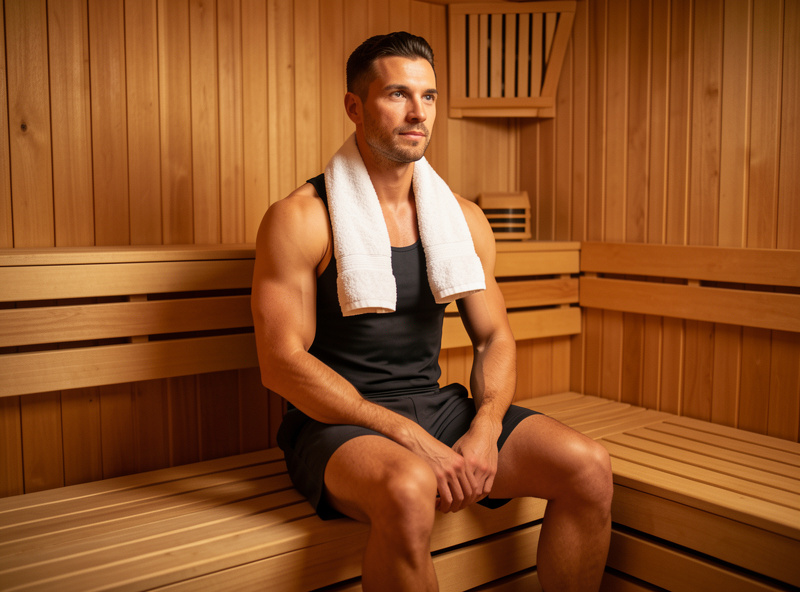
Does an Infrared Sauna Actually Help Workout Recovery?
Research reports modest, specific benefits — mostly around perceived recovery and short-term neuromuscular restoration — not the sweeping “detox and repair” claims marketing leans on. A 2015 SpringerPlus study by Mero and colleagues on far-infrared sauna bathing after strength and endurance sessions reported faster recovery of maximal neuromuscular performance compared with a passive control, without harming adaptation. That is the honest headline: studied and reported, not promised.
What the heat is doing physically is easier to state with confidence than the outcomes. Far-infrared warms tissue directly rather than heating the air around you, so at a lower ambient temperature than a traditional Finnish sauna you still drive a strong thermal load, raise skin and core temperature, and dilate peripheral blood vessels. In my own sessions my core-temp readout climbs roughly 0.5–1.0 °C over twenty minutes at a 50 °C set temp — a real physiological stimulus, gentle enough to sit through when your legs are already trashed.
Where I am careful: I do not claim it clears lactate, “flushes toxins,” or burns a specific calorie count. Those are the exact spots where wellness content oversells and where a real training log shows nothing reliable. The defensible use is comfort-driven recovery — a warm, low-effort way to sit still, get blood moving, and end the day relaxed — with the research-reported neuromuscular angle as a bonus, not the headline. If you want the timing nuance, I break it down in my piece on whether to use an infrared sauna before or after a workout.
Should You Sauna Before or After Training?
After, almost always — for recovery. A pre-workout sauna raises core temperature and adds cardiovascular and fluid-loss stress before you have done any real work, which is the opposite of what you want going into a heavy lift or an interval session. I keep the heat on the recovery side of the session, ideally 30–90 minutes after I have refuelled and rehydrated.
There is a narrow case for heat before training — heat acclimation protocols used by endurance athletes going into hot races — but that is a deliberate adaptation block, not everyday recovery, and it is scheduled on easy days. For the everyday lifter or runner, “after” is the rule. I lay out exactly how I sequence the post-session heat in my post-workout infrared sauna routine, and the before-versus-after evidence in more depth here.
How Hot and How Long for Recovery?
For recovery I run lower and shorter than a “sweat as hard as possible” session: a 45–55 °C set temp for 15–25 minutes, panels reading around 200–220 °C surface on my thermal camera. Recovery is not the day to chase your longest, hottest sit — a lighter dose leaves you relaxed instead of wrung out.
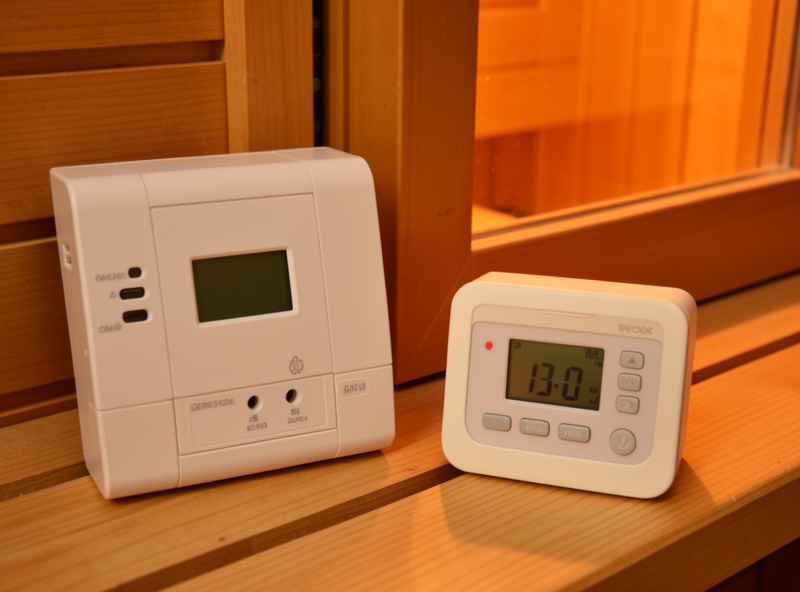
The distinction that trips people up is set temp versus felt heat. An infrared cabin’s air can read 50 °C on the wall thermostat while the radiant load on your skin feels far more intense, because the panels are throwing energy straight at you. That is why I stopped chasing the thermostat number years ago and started reading how my body responds — core temp, heart rate, and the simple question of whether I could hold a conversation. If you cannot, you are past recovery dose and into training-stress dose. The full session structure lives in my post-lift routine.
Recovery Modalities Compared: Where the Sauna Fits
The sauna is one tool among several, and it is not always the right one. Here is how I actually decide between the recovery options I keep in rotation, based on what each one does and what it costs in time, money, and next-day readiness.
| Modality | Best for | Typical session | Running cost | When I skip it |
|---|---|---|---|---|
| Infrared sauna | Relaxed heat recovery, easy days | 15–25 min, 45–55 °C | ~0.15–0.30 kWh/session | Night before a key session |
| Cold plunge | Acute soreness, feeling “reset” | 3–8 min, 8–12 °C | Ice or chiller cost | Within hours of hypertrophy work |
| Contrast (heat + cold) | General freshness, circulation feel | ~20 min alternating | Both setups | When short on time |
| Active recovery walk | Blood flow, zero equipment | 20–40 min easy | Free | Never — it always works |
| Sleep + food | Actual tissue repair | 7–9 h nightly | Free | Never — non-negotiable |
The honest takeaway from that table: the sauna competes with cold, contrast, and a walk for the feel-better slot, but nothing on the list substitutes for sleep and food, which do the real repair. I treat the cabin as the pleasant, low-effort option that also gives me a research-reported neuromuscular edge — not as the thing that “recovers” me. The heat-versus-cold decision is its own deep topic, and I walk through exactly when I reach for each in my breakdown of the sauna vs cold plunge timing question — the interference effect around strength work is the part most people get wrong.
How Do You Track Whether the Sauna Is Helping?
Without numbers you are guessing, and the sauna is exactly the kind of ritual that feels productive whether or not it is. I track two simple things: session load in the cabin (heart rate response and how long I sit) and next-morning readiness (resting heart rate and how my legs feel on the first set). If a hot sauna the night before a session bumps my morning resting HR and my legs feel flat, that is the log telling me I overdid the heat load.
My chest strap reads a genuine cardiovascular response to a hot sit — heart rate drifts up into an easy-cardio zone even though I am sitting still, purely from the thermal and fluid-shift demand. That is useful data, not a workout. I explain how I actually capture and read it in tracking heart rate and session load in the sauna. Pair that with a plug-in energy meter and you also learn what each session costs you — I dig into the real numbers in the electricity cost guide.
Hydration: The Part Most People Get Backwards
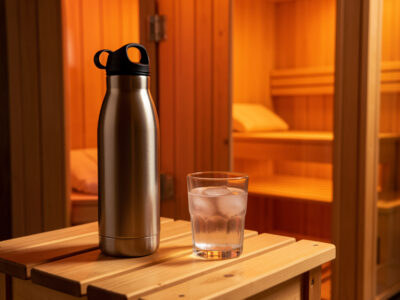
You lose real fluid and electrolytes in a recovery sauna — on my scale I am routinely down 300–600 g of body water after a 20-minute sit, essentially all sweat. Show up already dehydrated from training and you compound the deficit, which is the fastest way to turn a recovery tool into a next-day headache and a sluggish morning. Rehydrating around the session, not just chugging water after, is the fix.
I drink before, sip during if it is a longer sit, and replace with something that carries sodium afterward — plain water alone after heavy sweating can leave you flat. I am not going to hand you a dosing protocol, because that is medical territory and it depends on you; instead I describe what I actually do and why in hydration and electrolytes around a recovery session. Get this wrong and every other part of the routine underperforms.
How Often Should You Sauna for Recovery?
Three to four sessions a week is my recovery baseline, placed on easy or rest days and after — never before — key workouts. More is not better here: the sauna adds a cardiovascular and fluid-loss load, and stacking daily hot sits on top of hard training is how you dig a hole instead of climbing out of one. The heat is a stressor you are choosing to add, and stressors need managing.
Frequency is genuinely individual — bodyweight, training volume, heat tolerance, and how well you sleep all move the number. I go deep on how to find your own ceiling without overcooking in how often to sauna for recovery, and for absolute beginners I keep a gentler on-ramp in the beginner schedule. Runners in particular need to slot heat carefully around long runs and quality days, which is its own puzzle I unpack in sauna for runners.
Does the Heater Type Matter for Recovery?
For recovery specifically, comfort and consistent radiant coverage matter more than the wavelength band on the brochure. Across the heaters I have lived with — ceramic rod, carbon-fiber panel, carbon/ceramic hybrid, and a full-spectrum unit with a near-infrared halogen emitter — the hybrid carbon/ceramic panels in my daily cabin give the most even radiant footprint, which means fewer cold spots and a more restful sit. A cabin that cooks your shins while your shoulders stay cool is not relaxing, and relaxation is half the recovery.
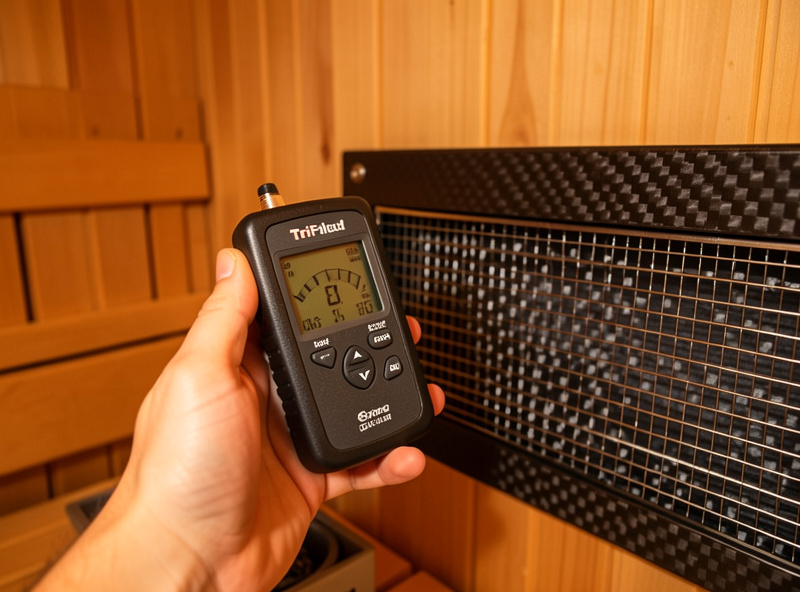
Here is the mistake I made early: I bought partly on a “full-spectrum” sticker, assuming near-infrared meant better recovery. In practice a lot of cheap full-spectrum units are one weak NIR bulb bolted into a far-infrared cabin, and for sitting-still recovery the difference was marginal in my log. What mattered more was even coverage and a low EMF signature so I was comfortable sitting close to the panels. I metered every heater myself with a TriField TF2 — that is the lens no affiliate review brings — and the results shaped which cabin I actually recover in. If you are choosing hardware, start with near vs far vs full-spectrum and my guide to metering EMF with a TriField, and if low-field exposure matters to you, low-EMF cabins.
What Does a Recovery Session Actually Cost to Run?
On my kill-a-watt a 20-minute recovery session on the two-person cabin draws roughly 0.15–0.30 kWh once it is up to temp, plus the preheat. At typical European electricity prices that is small money per session — but it is the line most buyers never run before they buy, and over a winter of four sessions a week it adds up to a real number. I keep a smart plug on the cabin to schedule preheat so I am not paying to hold an empty cabin hot, and so it is ready the moment I walk in from a run.
The full breakdown — preheat cost, session cost, and how cabin size and insulation move it — is in my home cost guide and the detailed electricity cost piece. Running the numbers before you buy is the single most useful engineering habit for a recovery sauna, because the cabin only helps if you actually use it, and you only use it if the running cost does not nag at you.
How Is Infrared Different From a Traditional Sauna for Recovery?
The practical difference is where the heat lives. A traditional Finnish sauna heats the air to 70–90 °C and lets that hot air heat you; an infrared cabin runs the air far cooler — my recovery sits sit at 45–55 °C ambient — because the panels radiate energy that your skin absorbs directly. For recovery that lower air temperature is the selling point: you get a strong thermal load without the airway-searing hot-air blast, which makes a 20-minute sit after training something you can actually relax into rather than endure.
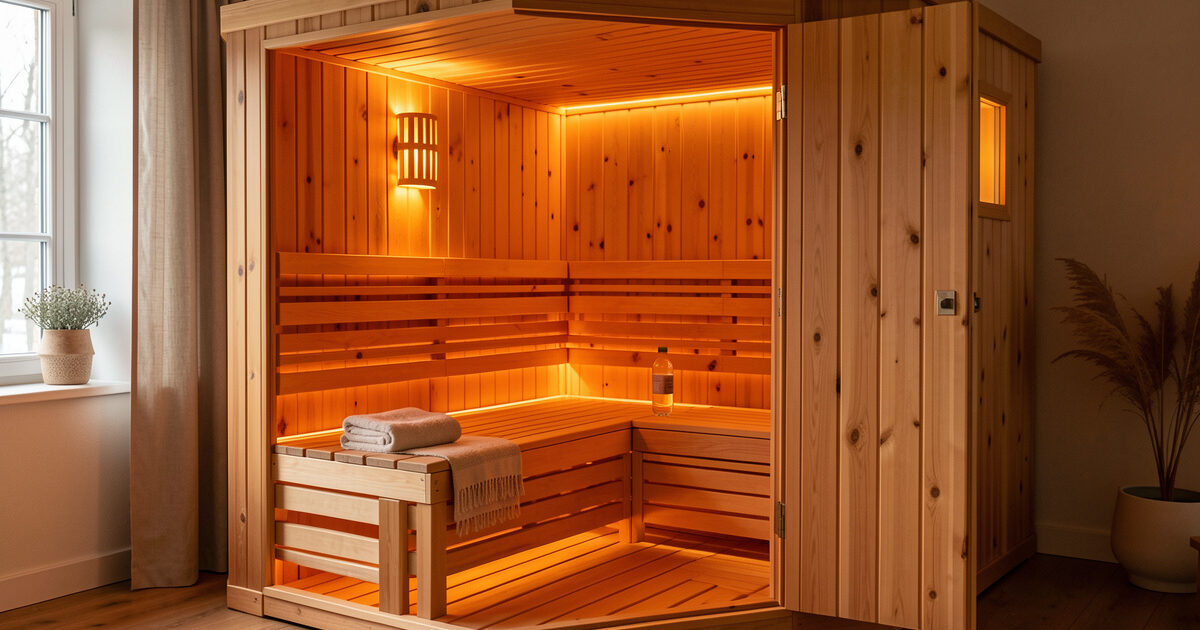
That matters more than it sounds. Recovery only works if you keep doing it, and I have watched training partners bounce off a traditional sauna because it felt like another hard effort. The infrared cabin’s gentler air, dry heat, and the ability to sit and read or just breathe made the habit stick for me across eight winters. The trade-off is ramp time and radiant coverage — an infrared cabin only warms what the panels can “see,” so posture and panel placement decide whether your hamstrings get the same dose as your chest. I map cold spots with a thermal camera precisely because a badly laid-out cabin leaves half of you under-dosed. The wavelength-band details — near versus mid versus far — sit in my heater wavelength guide, but for recovery, coverage and comfort beat band every time.
One more honest caveat: a traditional sauna’s convective heat and higher temperatures drive a bigger sweat rate, which some people prefer for the “wrung out” feeling. Neither is better for recovery in any way research has clearly separated — the studied benefits track total heat exposure and comfort more than the delivery method. I chose infrared for the lower running cost, the low-EMF engineering I could control, and the fact that it fits a normal room without a 8 kW heater and a floor drain.
What Does a Week of Training With the Sauna Slotted In Look Like?
The whole cluster comes together in a weekly plan, so here is roughly how I place the heat around training in a normal winter week. The rule underneath it is simple: sauna after, never before quality, and never the night before the hardest session.
| Day | Training | Sauna? | Why |
|---|---|---|---|
| Monday | Heavy lower-body lift | No | Let cold or a walk handle soreness; save heat load |
| Tuesday | Easy run | Yes, 20 min after | Recovery day; heat is relaxing, low stakes |
| Wednesday | Upper-body lift | Yes, 15 min after | Short sit; legs fresh for Thursday |
| Thursday | Intervals (key session) | No before, optional short after | Protect the quality workout |
| Friday | Rest | Yes, 25 min | Full rest day; longest, most relaxed sit |
| Saturday | Long run | No | Big fluid loss already; do not stack heat |
| Sunday | Rest | Yes, 20 min | Cap the week; unwind before Monday |
That is three to four sessions, all on easy or rest days, none the evening before Thursday’s intervals or Saturday’s long run. It is a template, not a prescription — a runner peaking for a race and a lifter in a hypertrophy block would place the heat differently, which is exactly why the runners’ piece and the frequency guide exist. The point of showing you my week is to make the placement logic concrete: the sauna slots into the gaps in training stress, it does not create new ones.
The Recovery Sauna Mistakes I Made First
I did nearly everything wrong the first winter, and every mistake is now a rule. The biggest one: I used the sauna the night before hard sessions because it “felt like recovery.” It is not — a hot 30-minute sit at 9 pm left me dehydrated and under-slept, and my Thursday intervals suffered for weeks before I connected the dots in my session log. Heat is a stressor; stacking it onto a training peak is subtraction, not addition.
The second mistake was chasing temperature. I ran the cabin as hot as it would go and sat as long as I could stand, treating a bigger sweat as more recovery. All I got was flat legs the next day and a bigger electricity bill. Once I dropped to a 50 °C set temp and 20 minutes, I recovered better and used the cabin more — because it stopped being a test of endurance. And the third: I ignored hydration entirely, drank a glass of water afterward, and wondered why I woke up with a headache. Replacing sodium after heavy sweating, not just water, fixed that in a week. Those three lessons — timing, dose, hydration — are the spine of every deeper article in this cluster, and I would rather you learn them from my log than from your own ruined training block.
Does EMF Matter When You Sit Close for Recovery?
For a recovery sit you are parked inches from the heater panels for twenty-plus minutes, several times a week, all winter — which is exactly the exposure profile where I care about EMF. On my TriField TF2 the magnetic field off a well-designed low-EMF carbon panel drops to low single-digit milligauss at seated distance, while a cheaper cabin I metered read noticeably higher right where my back rests. That is not a health claim — the science on low-level field exposure is genuinely unsettled and I will not pretend otherwise — but it is a measurable engineering difference, and given how much time a recovery routine puts you against those panels, I would rather sit in the low-field cabin.
The field comes from three places: the heaters themselves, the wiring feeding them, and the controller. Routing and grounding move the number as much as the heater choice does, which is why I metered my own install rather than trusting a sticker. If you want to do the same, I walk through it in metering EMF with a TriField and cover what “low-EMF” labelling actually changes in low-EMF cabins. For a recovery routine specifically, the takeaway is simple: you are going to log a lot of hours in that seat, so the field you sit in is worth measuring once.
My Recovery Gear Shortlist
The equipment that actually earns its place in a recovery setup is unglamorous: a way to meter, a way to hydrate, and a way to schedule. A plug-in energy meter tells you what each session costs; a chest-strap heart-rate monitor turns “that felt like a lot” into a number; and an insulated bottle with an electrolyte mix keeps hydration from becoming the weak link. I run a TriField TF2 for EMF, a thermal camera for cold-spot mapping, and a simple smart plug for scheduled preheat — none of it exotic, all of it earning its keep in the session log.
As an Amazon Associate I earn from qualifying purchases.
If you are assembling the basics, a decent plug-in energy meter and a chest-strap heart-rate monitor are the two tools that moved my recovery routine from vibes to data. Everything else is optional; those two tell you whether the sauna is helping or just feeling nice.
Who Should Be Cautious With Recovery Heat?
Heat is a real cardiovascular and fluid load, and it is not right for everyone or every day. This is the one place I hand the decision to a professional rather than my session log: if you are pregnant, manage a heart condition or blood-pressure medication, are recovering from illness, or are already dehydrated or fighting a fever, a hot recovery sit is not a neutral choice — talk to your doctor before making it a routine. Research on sauna use skews toward healthy adults, and I will not extrapolate past that.
Even for healthy trainees there are days to skip: when you are sick, when you slept badly, when you are already flat from a hard block, or when you finished a long run down two kilos of sweat. On those days the heat adds to the hole instead of filling it. The engineering side I will speak to with full confidence — panels, EMF, install, cost. The medical side I will not, and any content that promises a hot cabin “treats” or “cures” anything is selling you past what the research supports. Use the heat as a comfort-and-recovery tool inside sensible limits, and check with a professional before you push those limits.
The Full Recovery Cluster
This guide is the trailhead. Each question below has its own detailed piece, built from the same session log and the same metered cabin:
- Infrared sauna before or after a workout — what the research reports on timing.
- A post-lift sauna routine — how I structure the session around training.
- Sauna for runners — slotting heat into a training week without wrecking quality days.
- Tracking heart rate and session load — turning the sit into data.
- Hydration and electrolytes — the part most people get backwards.
- Sauna vs cold plunge — when I reach for each.
- How often to sauna for recovery — finding your ceiling without overdoing the heat load.
What I’d Do Starting Today
If you are adding a sauna to your training this week, keep it stupidly simple: one 20-minute sit at 50 °C on an easy day, after you have eaten and rehydrated, with a heart-rate strap on and a glass of electrolyte water waiting. Note how you feel the next morning. Do that three times, read your own log instead of the marketing, and you will know more about whether infrared sauna helps your recovery than any single study can tell you. The heat is a good tool. It is not magic, and treating it like an engineer rather than a believer is exactly how you get the most out of it.
Is an infrared sauna good for muscle recovery?
Research reports modest benefits, mainly faster subjective and neuromuscular recovery after training, rather than dramatic effects. A 2015 study on far-infrared sauna bathing reported faster recovery of maximal neuromuscular performance versus passive rest. Treat it as a relaxing heat-recovery tool with a research-reported edge, not a guaranteed outcome.
Should I use an infrared sauna before or after a workout?
After, for recovery. A pre-workout sauna raises core temperature and adds cardiovascular and fluid-loss stress before you have trained, which works against a hard session. The main exception is deliberate heat-acclimation for endurance athletes, which is scheduled on easy days, not before key workouts.
How long and how hot should a recovery sauna session be?
For recovery I run 15 to 25 minutes at a 45 to 55 degree Celsius set temp, which is lower and shorter than a maximum-sweat session. Read your body rather than the thermostat: if you cannot hold a conversation, you have gone past a recovery dose into a training-stress dose.
How often should I use an infrared sauna for recovery?
Three to four sessions a week on easy or rest days is a sensible baseline, placed after key workouts rather than before. More is not better, because the heat adds its own cardiovascular and fluid-loss load. The right number is individual and depends on training volume, sleep, and heat tolerance.
Do I need to worry about hydration with a recovery sauna?
Yes. You lose real fluid and electrolytes in a hot session, often several hundred grams of body water in twenty minutes. Rehydrate around the session and replace sodium after heavy sweating rather than only drinking plain water, or hydration becomes the weak link that undermines the rest of your recovery.
Sources: Peer-reviewed research on far-infrared sauna bathing and recovery is indexed at PubMed; general guidance on heat, hydration, and exercise is available from the American College of Sports Medicine.