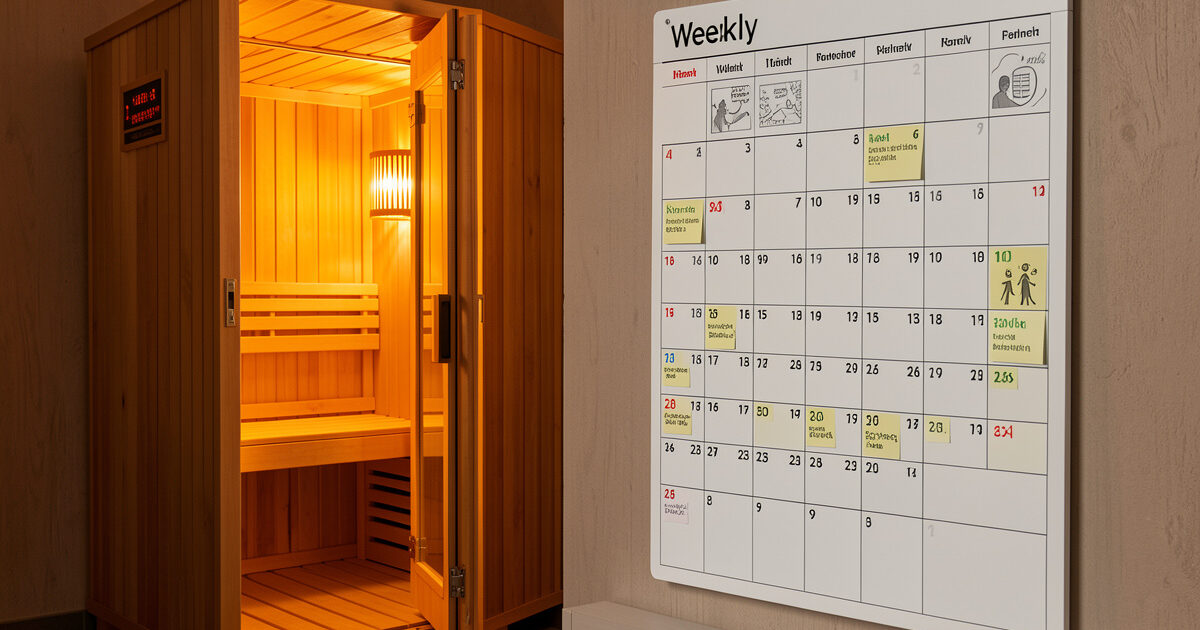
For recovery, three to four sauna sessions a week is a sensible baseline for most people — placed on easy or rest days, kept after rather than before hard training, and never stacked on the night before a key workout. That is my own long-run cadence across eight winters of logged sessions. More is not better here: the heat is a real cardiovascular and fluid-loss load, and piling daily hot sits on top of hard training digs a hole rather than filling one.
The honest answer, though, is that the right number is individual, and the interesting part is how you find yours without overcooking. Bodyweight, training volume, sweat rate, sleep, and heat tolerance all move the ceiling, and the only way to know where yours sits is to watch how you actually respond. This is the frequency chapter of my workout recovery guide, and getting the dose wrong is the most common way I see a good recovery tool quietly turn into a source of fatigue.
Why Three to Four Sessions Is a Good Starting Point
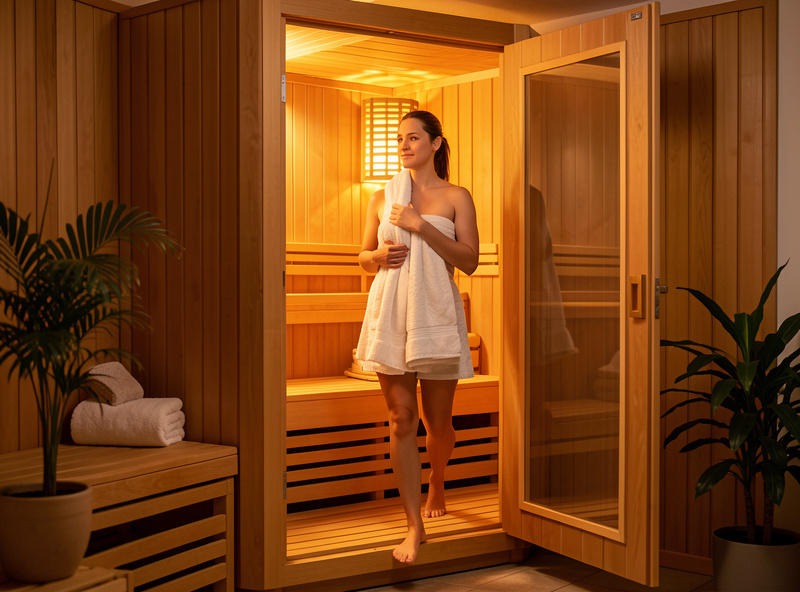
It gives you regular heat exposure without letting the heat itself become a training stress you never accounted for. At three or four sits a week I get the relaxed, research-adjacent recovery benefit on the days it helps most, while leaving enough clear days that the cardiovascular and fluid load never accumulates. In my session log, this is the cadence where my morning resting heart rate stays clean and my legs feel fresh — the two signals I trust most.
The number is a starting point, not a rule handed down from a study. Some people thrive on more, especially lighter, shorter sits; others find even three taxing during a hard training block. What makes three-to-four a smart default is that it is almost always safe: enough to build a habit and feel the benefit, rarely enough to overreach. From there you adjust up or down based on your own response rather than a generic prescription — which is the whole point of tracking, covered in my piece on tracking heart rate and session load.
How Do You Know You’re Overdoing the Heat Load?
Your body tells you, and the signals are consistent if you are paying attention. The clearest one is an elevated resting heart rate the morning after a session, paired with flat, heavy legs on the first hard effort. When I see that pattern after sauna days, it is unambiguous: the heat added stress I had not cleared. Other tells are lingering fatigue, poor sleep after evening sits, persistent thirst or headaches, and a general sense that recovery is going backward rather than forward.
The trap is that a sauna feels restorative even when it is overreaching, so people push frequency up assuming more heat means more recovery. It does not. The heat is a stressor you are choosing to add, and stressors need managing like any other training variable — you would not add a fourth hard session a week without expecting fatigue, and a daily hot sit is closer to that than to a rest day. When the morning numbers creep up, the answer is fewer sessions, shorter sits, or a lower set temp, not pushing through. Dehydration makes all of this worse, which is why I sort hydration first — the full approach is in hydration and electrolytes around a session.
How Does Frequency Change With Your Training?
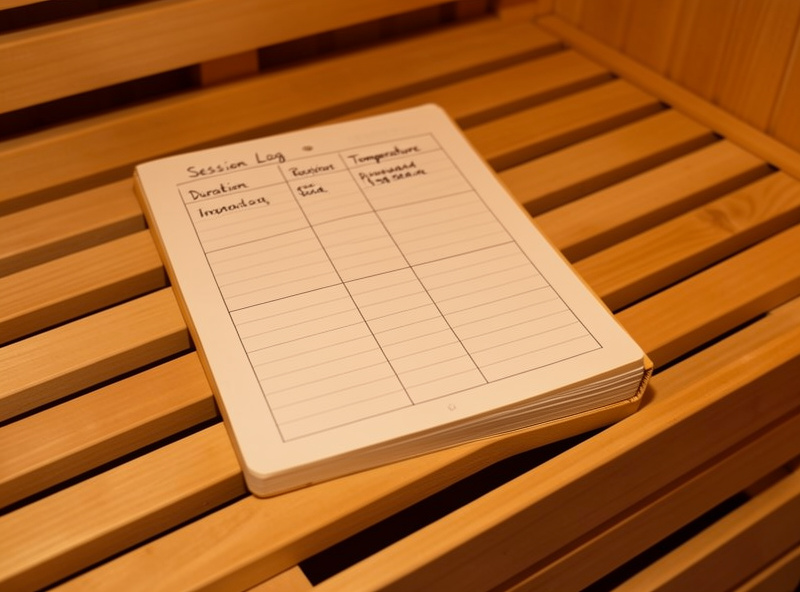
The right number tracks your training load, not the calendar. Someone in a heavy lifting or high-mileage block has less spare capacity to absorb the sauna’s load, so I would keep frequency modest and dose the sits lighter. Someone in a lower-volume phase, or using the sauna mostly to unwind, can often handle more. Here is roughly how I scale it.
| Training situation | Sessions per week | Notes |
|---|---|---|
| Heavy strength / hypertrophy block | 2–3 | After easy days; keep off the night before big lifts |
| High-mileage running block | 2–3 | Off long-run days; watch fluid loss closely |
| General fitness / maintenance | 3–4 | The comfortable default |
| Low-volume or off-season | 4–5 | More capacity; lighter sits |
| Beginner (first month) | 2–3, short | Build tolerance gradually |
The pattern underneath the table is that frequency and training load pull against each other: when one is high, keep the other in check. This is exactly why I keep the sauna off long-run days for runners — that whole discussion is in sauna for runners — and why I default to the sauna over cold in a muscle-building block, which I cover in sauna vs cold plunge. Frequency is not a fixed number; it is a dial you turn as your training changes.
Does Session Length Change How Often You Can Go?
Very much so — frequency and duration trade off against each other, because what matters is total heat load, not session count. Five short 12-minute sits at a modest temperature can be an easier weekly load than three long, hot 30-minute sessions. When I want to use the cabin more often, I shorten and cool the individual sits; when I want a longer, more relaxing session, I take fewer of them. Thinking in terms of total weekly heat exposure rather than “how many days” is what keeps the dose sane.
This is where the set-temp-versus-felt-heat distinction matters again. A 50 °C set temp for 20 minutes is my standard recovery dose, but I can trade a hotter, shorter sit for a cooler, longer one and land on a similar load. The structure of an individual session — temperature, duration, how I read my body mid-sit — is laid out in my post-lift routine. The takeaway for frequency is simple: if you want to go more often, go lighter each time, and let your morning numbers confirm the total is still manageable.
Should Beginners Start at a Lower Frequency?
Yes — heat tolerance is trainable, and it takes a few weeks to build. Starting at two or three short sits a week lets your body adapt to the cardiovascular and fluid demand before you add volume, and it dramatically lowers the chance of that overreached, flat feeling that makes people quit in the first month. I made the opposite mistake early, going too hot and too often out of enthusiasm, and paid for it with weeks of stalled training before I dialled it back. A gentle on-ramp would have saved me the detour; I lay one out in the beginner schedule.
The other beginner reality is cost, which quietly shapes how often you will actually use the cabin. If every session feels expensive you will use it less, and inconsistency undercuts recovery more than a slightly lower frequency ever would. Running the real numbers once — I break them down in the electricity cost guide — removes that nag and lets you settle into a sustainable rhythm. Build tolerance slowly, know your per-session cost, and the habit sticks.
Can You Sauna Every Day for Recovery?
Some people can, but most should not treat daily as a goal — and if you do go daily, the individual sits have to be lighter to keep the total load sane. Daily heat is where the fluid-loss and cardiovascular demand accumulate fastest, and it is the frequency where I most often see the overreach signals show up: elevated morning resting heart rate, poor sleep, that persistent flat feeling. In my own log, daily hot sits during a hard training block were clearly counterproductive; on a light off-season week, short daily sits were fine.
The distinction that matters is what else your body is handling. Daily sauna on top of daily hard training is two stressors stacked with no recovery gap between them, and something gives — usually the training. Daily sauna during a rest week, with short, cooler sits and good hydration, is a different proposition and can be perfectly sustainable. So the honest answer to “can I sauna every day” is: sometimes, if you drop the intensity of each session and your morning numbers stay clean, but it is not a target to chase, and it is the first thing I cut when training gets hard. Frequency serves recovery, not the other way around.
Does the Season Change How Often You Should Go?
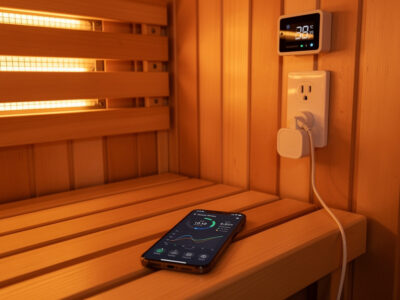
For me it changes everything, and it is worth naming because it is a real pattern in my kill-a-watt log, not a theory. Through the dark Swedish winter the cabin runs three or four times a week — the cold, the early nights, and the training all line up to make a warm sit genuinely welcome, and consistency comes easily. Through summer it barely gets switched on; the appeal drops, and honestly my body needs it less when I am not fighting cold and dark.
That seasonal swing is fine — better than fine, actually. Forcing a fixed year-round frequency ignores that your training, your stress, and your environment all shift across the year, and the sauna should shift with them. The one caution is the winter tendency to under-hydrate, because cold masks thirst and you feel the fluid loss less; higher winter frequency needs more hydration attention, not less. If you let the season set a sensible rhythm rather than fighting it, the cabin stays a tool you want to use instead of a chore you have committed to — and wanting to use it is what keeps the habit, and the recovery benefit, alive across years rather than weeks.
Finding Your Own Number, and What I’d Do Starting Today
The most useful thing I can leave you with is a method, not a number, because the number is yours to discover. Start at three sessions a week of 15–20 minute sits at a 50 °C set temp, all on easy or rest days, and log each one alongside your next-morning resting heart rate and how your legs feel. Give it two weeks. If your morning numbers stay clean and you feel good, you have room to add a session or lengthen the sits. If they creep up, pull back — fewer sits, shorter, or cooler. That feedback loop, run on your own body, will beat any general guideline including this one.
What I would not do is chase frequency for its own sake or assume that because the sauna feels good, more of it must be better. It is a stressor with a dose, like everything else in training. Respect the heat load, watch the morning signals, keep hydration sorted, and place the sessions where your training has room for them — and three or four relaxed sits a week will do exactly what you want without ever turning into the thing that holds your training back. If you are just getting started, my full workout recovery guide ties the whole routine together.
Sources: Research on sauna use, heat exposure, and recovery is indexed at PubMed; training-load and recovery guidance is published by the American College of Sports Medicine.
Related Articles
- Infrared sauna for workout recovery — the full recovery guide.
- Tracking heart rate and session load — the signals that tell you if the dose is right.
- Sauna for runners — placing sessions around a training week.
- Sauna vs cold plunge — when heat beats cold for recovery.