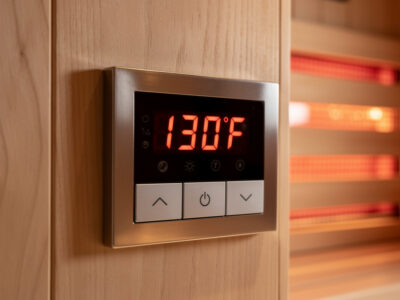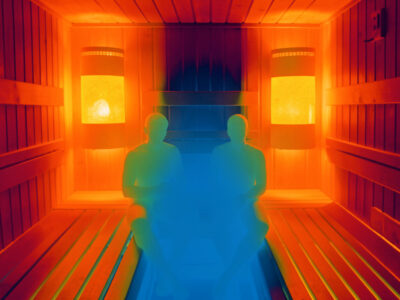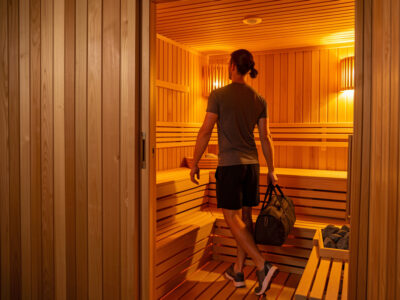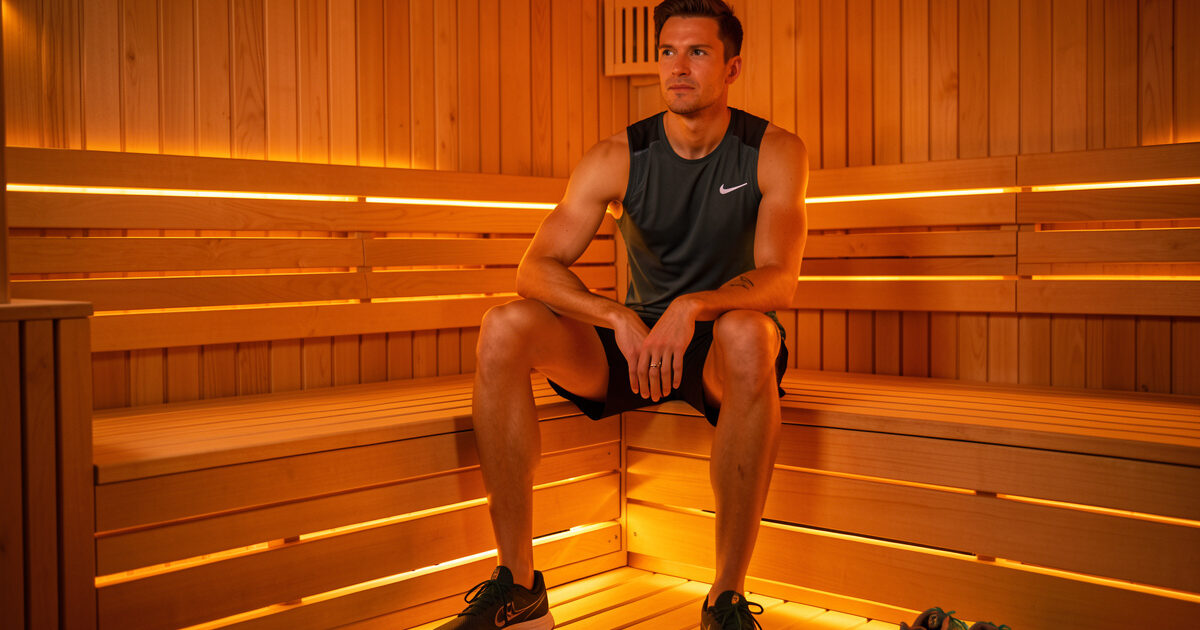
For runners the sauna is a recovery tool with one extra complication: you are already losing serious fluid on every run, so heat placement matters more than it does for lifters. My rule is a 15–20 minute sit at 50 °C on easy or rest days, never the same day as a long run or a quality session. Slot it wrong and you compound a fluid deficit; slot it right and it is a pleasant, research-adjacent recovery aid.
I run through Swedish winters where the dark months are exactly when the cabin earns its electricity bill, and I have logged years of pairing heat with mileage — easy days, long-run weekends, interval blocks — in a two-person low-EMF cabin. This is the runner-specific chapter of my workout recovery guide, and the fluid-loss maths is what makes running different from lifting. Get it wrong on a marathon build and you will feel it on your next long run.
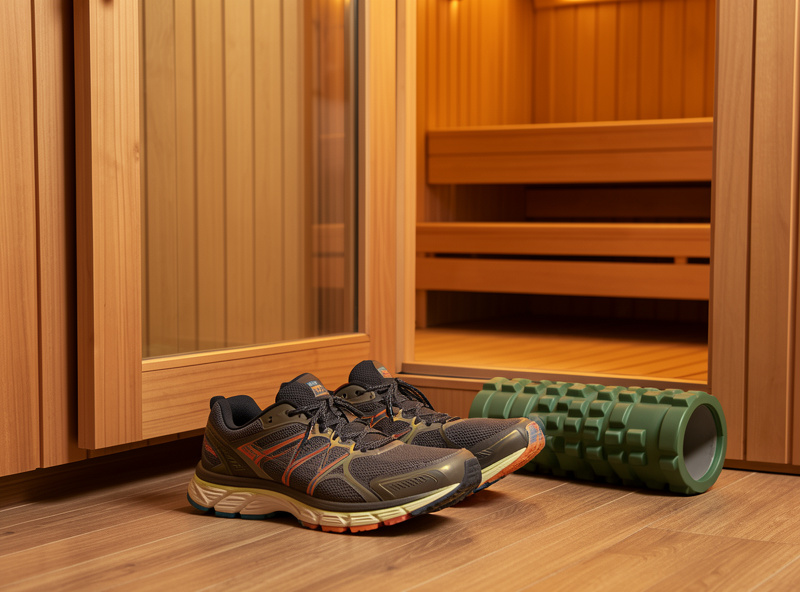
Is an Infrared Sauna Good for Runners’ Recovery?
Research reports two separate things for runners, and it is worth keeping them apart. First, post-exercise heat is studied as a general recovery aid — the same modest, mostly subjective and neuromuscular benefits that show up across the sauna-recovery literature. Second, and more specific to endurance athletes, heat acclimation has been studied for performance in the heat: a 2007 study by Scoon and colleagues reported that post-run sauna bathing was associated with improvements in endurance running performance measures in a small group of trained runners.
I flag that as reported, not promised — it was a small study, and I am not going to tell you the sauna will drop your 10k time. What I will say from my own log is that the heat is a comfortable, low-effort way to close out an easy day, and that the acclimation angle is real enough that endurance athletes building for a hot race treat it as a deliberate training block. For everyday recovery, though, the value is comfort and a research-adjacent edge, not a performance guarantee. The engineering is where I speak with full confidence; the physiology I attribute to the studies.
How Do I Slot the Sauna Into a Running Week?
The heat goes on the low-stress days and stays away from the days that already tax fluid and legs. A long run on Saturday already costs me kilos of sweat and a big glycogen and fluid deficit; stacking a hot cabin on top of that the same day is exactly the over-reach that leaves me flat on Sunday. So the sit moves to a genuine recovery day instead, where its own cardiovascular and fluid load is the only stress on the schedule.
Here is how I actually place it across a typical build week.
| Run type | Sauna same day? | Why |
|---|---|---|
| Easy / recovery run | Yes, 15–20 min after | Low stress; heat is relaxing and stakes are low |
| Long run | No | Big fluid loss already; do not stack heat the same day |
| Intervals / tempo (key) | No before; skip or short after | Protect the quality session; heat before pre-fatigues |
| Rest day | Yes, 20 min | Only stressor on the day; most relaxed sit |
| Race week taper | Sparingly, easy days only | Keep fluid status and legs fresh; no new stress |
The pattern underneath the table is simple: sauna fills the easy gaps, it never sits on top of the hard days. That is three to four sessions in a normal week, all on days where the heat is the only demand. If you are chasing heat acclimation for a hot goal race, that changes the calculus — acclimation is a deliberate block of accumulated heat exposure on easy days — but for ordinary recovery, protect your long run and your quality sessions and put the heat everywhere else.
Why Fluid Loss Makes Runners Different
Runners walk into the cabin already down fluid, and that is the whole reason the placement rules are stricter. On my scale a 20-minute recovery sit costs me 300–600 g of body water on its own; after a long run I might already be down a couple of kilos before I even sit down. Add those together the same day and you are deep into a deficit that plain water will not fix quickly — I have woken up the morning after a stacked long-run-plus-sauna day with a headache and dead legs, and the log made the cause obvious.
The fix is partly scheduling and partly hydration. I keep the sauna off long-run days, and when I do sit I replace sodium, not just water, because heavy sweating strips electrolytes and topping up with plain water alone can leave me flat. This is the single most important habit for a runner using heat, and it has its own full write-up in hydration and electrolytes around a recovery session. Treat the fluid loss as real — because on a scale, it is — and the sauna stays an asset instead of becoming a liability.
Should Runners Sauna Before a Run?
No — not for a normal run. A pre-run sit raises core temperature and starts a fluid deficit before you have taken a step, which is the last thing you want going into a tempo or a long run. The only exception is deliberate heat acclimation for a hot goal race, and even that is scheduled as its own easy-day work, never before a quality session. I lay out the full before-versus-after case in before or after a workout.
I made this mistake early — sat before a Thursday tempo because it felt like a warm-up — and the session fell apart, as did the next few before I connected it to the heat in my log. A warm-up raises muscle temperature through movement without draining you; a hot sit raises core temperature and costs you fluid while you sit still. They are not the same, and for a runner the fluid cost bites harder than for almost anyone. Keep the heat after the run.
How Do I Track Whether It’s Helping My Running?
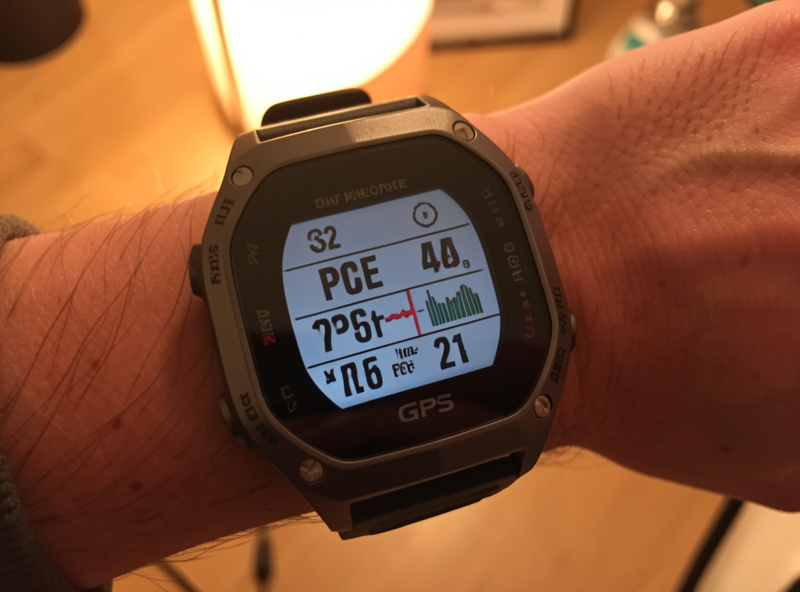
The same way I track anything else: in-session heart rate and next-morning readiness. A hot sit drifts my heart rate into an easy aerobic zone even sitting still, which tells me the session’s load; more useful is my resting heart rate and how my legs feel on the first easy kilometre the next day. If a sauna day leaves my morning resting HR elevated and my legs heavy, I placed the heat wrong or dosed it too high, and I adjust. The method — capturing the response and reading the morning numbers — is in tracking heart rate and session load.
Runners already live by their watch data, so this is an easy habit to add. The point is not to turn recovery into another workout to optimise; it is to catch the pattern where heat is quietly adding fatigue instead of clearing it. My own data is what taught me to keep the cabin off long-run days — I did not guess it, I saw it. For the overall dosing question across a week, I go deeper in how often to sauna for recovery.
What Does a Runner’s Sauna Session Cost to Run?
Small money, but worth knowing before you build the habit. On my kill-a-watt a 15–20 minute recovery sit draws roughly 0.15–0.30 kWh once the cabin is warm, plus preheat. I keep a smart plug on the cabin to schedule the preheat so it is ready when I get back from an easy run and I am not paying to hold an empty box hot. Over a winter of three or four sessions a week that adds up to a real line item, which I break down in the electricity cost guide and the broader home cost guide.
I mention cost because the sauna only helps if you actually use it, and you only keep using it if the running cost does not nag at you every session. For a runner already spending on shoes every few hundred kilometres, the sauna’s per-session cost is trivial — but running the number once, like everything else in this routine, beats guessing.
Does Winter Change the Runner’s Sauna Routine?
For me it changes everything, because winter is when the cabin actually earns its keep. Coming in from a dark, sub-zero Swedish easy run, the appeal of a warm sit is obvious in a way it never is in July — and honestly, the consistency the cold months bring is half the benefit. The sauna I use three or four times a week from November to March barely gets switched on in summer, and that seasonal pattern shows up plainly in my kill-a-watt log.
There is a practical wrinkle, though: coming in cold and dehydrated from a winter run is a worse starting point than it feels. The cold masks thirst, so I am often more fluid-down than I realise, and dropping straight into heat then makes the deficit worse. My winter fix is a mug of something warm and an electrolyte drink first, a few minutes to actually warm up and rehydrate, then the sit — the same sequence that pre-heats the cabin on a smart plug also buys me those minutes. The northern winter is the runner’s best argument for a home sauna, but it is also the season where the hydration discipline matters most, precisely because you feel the loss least.
What I’d Do Starting This Week
If you are a runner adding heat, put one 15–20 minute sit at 50 °C on an easy day this week, keep it off your long-run and quality days entirely, and replace sodium afterward rather than just chugging water. Strap on a heart-rate monitor, note how your legs feel on the next easy run, and let that tell you whether the placement is right. Protect the hard days, hydrate like the fluid loss is real — because it is — and the sauna becomes a genuinely pleasant part of a training week instead of a hidden tax on your mileage.
Is an infrared sauna good for runners’ recovery?
Research reports modest recovery benefits from post-exercise heat, and a small 2007 study associated post-run sauna bathing with improved endurance running performance measures. Treat it as a relaxing, research-adjacent recovery aid on easy days rather than a guaranteed performance boost.
Should runners sauna on long-run days?
No. A long run already costs you a large amount of fluid, often a couple of kilos of sweat, and stacking a hot sauna the same day compounds that deficit. Move the sit to a genuine recovery or rest day where the heat is the only stressor on the schedule.
Should I use the sauna before a run?
Not for a normal run. A pre-run sit raises core temperature and starts a fluid deficit before you have taken a step, which hurts a tempo or long run. The only exception is deliberate heat acclimation for a hot goal race, scheduled on easy days, never before a quality session.
How often should a runner use an infrared sauna?
Three to four short sits a week on easy or rest days is a reasonable baseline, kept away from long runs and quality sessions. The right number depends on your training volume, sweat rate, sleep, and heat tolerance, so track your morning resting heart rate and legs and adjust.
Sources: Endurance and heat research is indexed at PubMed; running hydration and heat guidance is published by the American College of Sports Medicine.
Related Articles
- Infrared sauna for workout recovery — the full recovery guide.
- A post-lift sauna routine — the session structured step by step.
- Before or after a workout — the timing evidence.