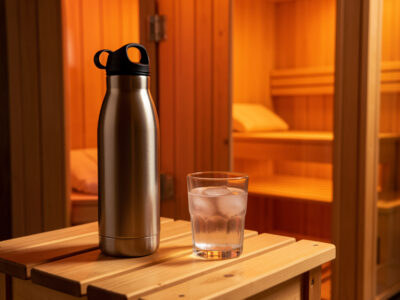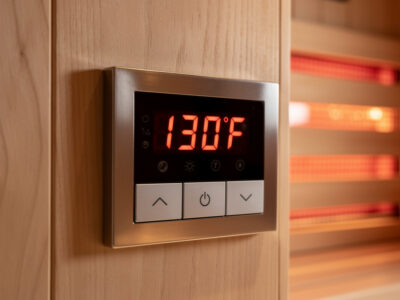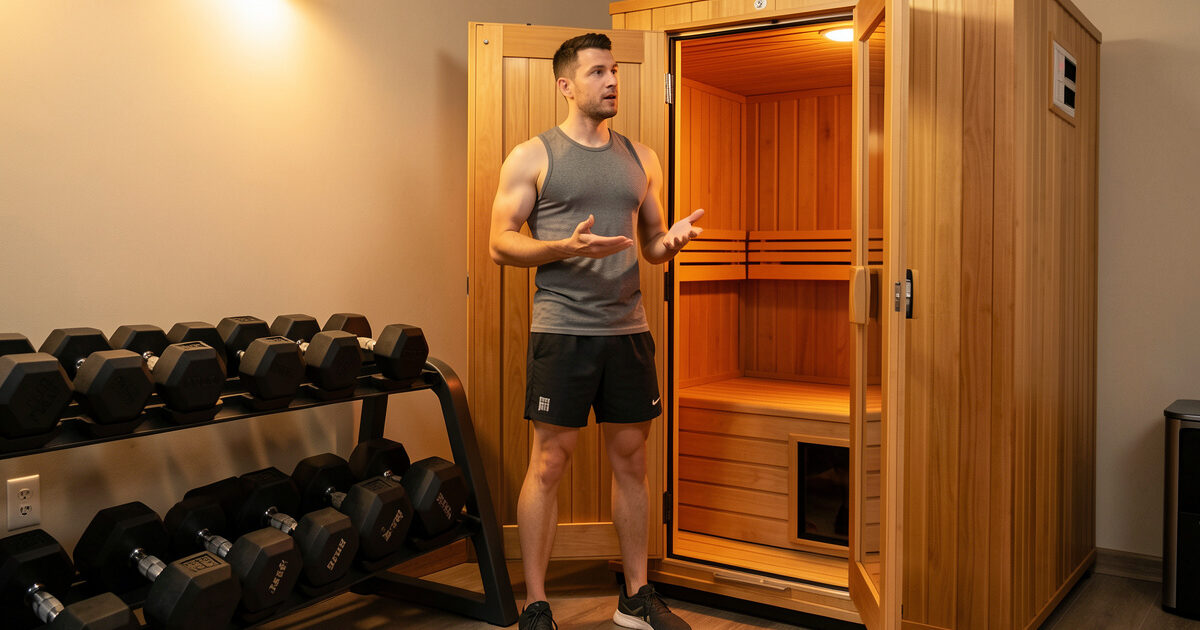
For recovery, use the infrared sauna after your workout, not before. A pre-workout sit raises core temperature and adds cardiovascular and fluid-loss stress before you have lifted a single plate, which blunts a hard session; the research that reports recovery benefits studied heat applied after training. The one real exception is deliberate heat acclimation for endurance athletes, and that is scheduled on easy days.
I learned this the expensive way. My first winter with the cabin I sat for 25 minutes before Thursday intervals because it “warmed me up,” and my splits fell off a cliff for a month before I connected it to the heat in my session log. Get the order wrong and you are not warming up — you are pre-fatiguing. This piece is the timing chapter of my workout recovery guide, and timing is the single decision that changes whether the sauna helps or quietly hurts.
What Does the Research Actually Report on Sauna Timing?
The studies that report recovery benefits used heat after exercise, not before. A 2015 SpringerPlus study by Mero and colleagues on far-infrared sauna bathing following strength and endurance sessions reported faster recovery of maximal neuromuscular performance versus passive rest — post-exercise heat. That is the pattern across the recovery literature: heat is studied as a recovery stimulus, applied once the work is done.
Pre-exercise heat shows up in a different body of research entirely — heat acclimation, where endurance athletes deliberately raise their heat tolerance ahead of a hot race. That is a targeted adaptation protocol, not a warm-up, and it is not what most people mean when they ask about a sauna before a workout. I want to be precise here because the health-and-fitness content around this is sloppy: “research says sauna helps performance” usually means acclimation studies that have nothing to do with sitting in a cabin before your Tuesday lift. When I say the evidence favours “after,” I mean the recovery evidence specifically — and even that reports modest, mostly subjective and neuromuscular effects, not dramatic ones.
Why After a Workout Is the Default
After training your work is done, so the sauna’s cardiovascular and fluid-loss load lands during recovery instead of stealing from performance. That is the whole logic. Sitting in a 50 °C cabin drives my heart rate into an easy-cardio zone even at rest — a genuine demand — and I would rather spend that demand when I have nothing left to do but recover.
There is a comfort argument too. After a hard session I am already warm, a little beaten up, and glad to sit still; the dry radiant heat feels earned rather than draining. I typically wait 30–90 minutes, long enough to rehydrate and eat something, then run a 15–25 minute sit. The delay matters: going straight from a max-effort session into a hot cabin while already sweating and depleted is how you turn recovery into a second stressor. Refuel first, then heat. The full session structure — what I do minute by minute — lives in my post-lift routine.
When Would You Ever Sauna Before a Workout?
Only two cases justify heat before training, and neither is everyday recovery. The first is heat acclimation: an endurance athlete building tolerance for a hot event might sit in the sauna on easy days to accumulate heat exposure, deliberately and progressively, as a training block of its own. The second is a light mobility warm-up in a cold room — a few minutes of gentle heat to loosen up before easy movement, nowhere near a full session and never before a quality workout.
What I never do is a hot, long sit before intervals, a heavy lift, or a long run. My own log is unambiguous on this: the sessions I sabotaged were the ones I “prepared” for with heat. If you are chasing acclimation for a race, that is a real and separate protocol worth building deliberately — but treat it as training, schedule it on easy days, and keep it away from your key sessions. For everyone else, “before” is a mistake wearing a warm-up costume.

Before vs After: A Side-by-Side
Here is how the two actually compare on the things that decide whether it helps your training.
| Factor | Sauna before workout | Sauna after workout |
|---|---|---|
| Effect on the session | Pre-fatigue, raised core temp | None — work already done |
| Fluid status going in | Starts you dehydrated | You can rehydrate first |
| Research support | Only for heat acclimation | Recovery studies use post-exercise heat |
| Best day to do it | Easy days only, if at all | Easy and rest days after training |
| My verdict | Skip it for recovery | The default |
The table makes the choice look obvious because, for recovery, it is. The only row where “before” wins is heat acclimation, and that is a specialist’s tool. If your goal is to recover better and feel fresher tomorrow, the heat goes after the work.
How Long After a Workout Should You Wait?
I wait 30–90 minutes, and the reason is fluid and food. Straight after a hard session you are already sweating, your heart rate is up, and you are running a fluid deficit — piling a hot cabin on top of that immediately just deepens the hole. Giving it half an hour to rehydrate, eat, and let heart rate settle means the sauna lands on a body that can actually use a relaxed heat load rather than one still scrambling to recover from the workout itself.
On travel days or after an easy session I will sometimes go sooner, because the demand was lower to begin with. The rule I actually follow is not a stopwatch but a check: am I rehydrated, is my heart rate back near resting, have I eaten something? If yes, the cabin is a good idea. If I am still flushed and thirsty, I wait. Hydration is doing a lot of quiet work in that decision, which is why I gave it its own deep dive in hydration and electrolytes around a session.
Does Timing Change for Runners vs Lifters?
The “after, not before” rule holds for both, but the placement in the week differs. For lifters the heat sits nicely after upper-body or easy days and stays away from the night before heavy lower-body work. For runners the big variable is fluid loss — a long run already costs you kilos of sweat, so stacking a sauna the same day can be too much, and I usually push the sit to a rest day instead. I break the running side down fully in sauna for runners, and the overall frequency question in how often to sauna for recovery.
Either way, the tracking is what keeps you honest. I put a heart-rate strap on for sessions near hard training precisely to see whether the heat is helping or adding load — the method is in tracking heart rate and session load. A number the morning after tells you far more than how virtuous the sauna felt the night before.
What the Heat Is Actually Doing to Your Body
Whether you sit before or after, the physiology is the same — only the timing changes whether it helps or hurts. Far-infrared warms your tissue directly, so within a few minutes skin temperature climbs, peripheral blood vessels dilate, and your body starts shunting blood toward the surface to shed heat. In my sessions my core-temp readout drifts up roughly 0.5–1.0 °C over twenty minutes at a 50 °C set temp, and my heart rate rises into an easy-cardio zone purely from that thermal demand, even sitting still.
Now put that on either side of a workout. Before a session, you have just raised core temp, started losing fluid, and nudged your heart rate up — so you begin training already partway toward fatigue, with less thermal headroom and a fluid deficit. After a session, that same blood-flow response and gentle cardiovascular load land on a body whose hard work is finished, where a relaxed heat sit is a pleasant close rather than a hidden tax. Same heater, same panels, same milligauss on my TriField — completely different outcome, decided entirely by when you sit. That is why I treat timing as the whole game and everything else as detail.
The Pre-Workout Sauna Mistake I Keep Seeing
The trap is dressing a hot sit up as a warm-up. I fell for it, and I watch training partners fall for it every winter: the cabin feels good, the muscles feel loose, so it seems like ideal preparation. Then the working sets feel heavy, the intervals come in slow, and nobody connects the dots because “the sauna is recovery, it can’t be the problem.” It can. A proper warm-up raises muscle temperature through movement without draining you; a 20-minute infrared sit raises core temperature and starts a fluid deficit while you do nothing. Those are not the same thing.
My fix was mechanical: the cabin is scheduled for after training or on rest days, full stop, and my smart plug’s preheat routine is timed to evening recovery windows, not pre-session slots. Removing the option removed the temptation. If you have been using heat to “get ready,” try two weeks of moving it strictly to after your sessions and watch your key-workout numbers — I would bet your log tells the same story mine did.
The Bottom Line on Timing
After training, on easy or rest days, once you have rehydrated and eaten — that is where the heat earns its place. Before a hard session it is a liability dressed up as preparation, with real research support only for the narrow, deliberate case of heat acclimation. If you take one thing from this: never sauna the night before a key workout, and never go straight from a max effort into a hot cabin. Wait, refuel, then sit. Start there and let your own morning numbers, not the marketing, tell you the rest.
Should I use an infrared sauna before or after a workout?
After, for recovery. A pre-workout sauna raises core temperature and adds cardiovascular and fluid-loss stress before you have trained, which works against a hard session. The recovery research that reports benefits used heat applied after exercise, not before.
Is it ever okay to sauna before exercise?
Only in two narrow cases: deliberate heat acclimation for endurance athletes preparing for a hot event, done on easy days, and a very light warm-up in a cold room. Neither is everyday recovery, and you should never take a long hot sit before a key workout.
How long should I wait after a workout before the sauna?
I wait 30 to 90 minutes so I can rehydrate, eat something, and let my heart rate settle first. Going straight from a hard, sweaty session into a hot cabin deepens your fluid deficit instead of aiding recovery.
Does a sauna before a workout improve performance?
Not for a normal session. The performance research people cite is usually heat-acclimation work aimed at hot-weather racing, which is a separate deliberate protocol. A hot sit before your regular training pre-fatigues you and tends to hurt the session.
Sources: Recovery and heat-acclimation research is indexed at PubMed; hydration and exercise-in-heat guidance is published by the American College of Sports Medicine.
Keep Building
- Infrared sauna for workout recovery — the full guide this branches from.
- A post-lift sauna routine — the session structured minute by minute.
- How often to sauna for recovery — placing sessions across the week.