From a preheated cabin, most people start sweating in an infrared sauna somewhere between 8 and 15 minutes, but the heater type changes that number more than anything else. On my own session log, a saturated ceramic unit gets me sweating in 6–9 minutes, a large carbon-panel cabin in 8–11, and a portable blanket can take 10–15. From a cold start, add roughly ten minutes to all of those.
“How long until I sweat” is the question every new owner asks, usually while sitting in a cabin that feels like it is doing nothing. The honest answer is that it depends on the hardware, the preheat, your hydration, and how adapted you are — but the heater technology sets the baseline, and I have lived with all the main types side by side long enough to give real numbers. Here is how each one behaves and why.
Why Infrared Sweat Is Slow to Start
Infrared cabins run cooler air than traditional saunas — typically 120–140°F versus 180–195°F — because the panels heat your body directly with radiant energy instead of heating the air. Your sweat follows your rising core temperature rather than the room, so the first few minutes always feel like nothing is happening even when the cabin is working perfectly. That is physics, not a fault.
This is why the time-to-sweat numbers matter: they reset your expectations so you stop bailing out early. If you know your carbon cabin typically takes ten minutes to get you going, you ride out the first eight instead of giving up at six and assuming it is broken. The detailed causes of genuine under-sweating are in my not-sweating guide, but most of the time the answer is simply that infrared takes longer than the hot-rock sauna people are comparing it to.
Ceramic Rod Heaters: Fast Ramp, Intense Footprint
Ceramic rod heaters get hot fast and run a high surface temperature, which gives them a quick, intense radiant footprint. In my ceramic-heavy unit, once it is saturated I start sweating in roughly 6–9 minutes from a preheated start. The trade-off is that the footprint is smaller and more localized — you feel intense heat where a rod faces you and noticeably less where one does not.
That intensity is why ceramic units can feel like they sweat you fastest, but it is also why placement matters so much with them: a hot rod aimed at your shoulders does nothing for your lower back. If you are chasing fast sweat with ceramic, the move is to make sure the rods actually face the large surfaces of your body and to give the unit a full preheat so the rods are saturated before you sit. The hardware differences between ceramic and carbon are covered in my carbon vs ceramic guide.
Carbon-Fiber Panels: Slower Start, More Even Sweat
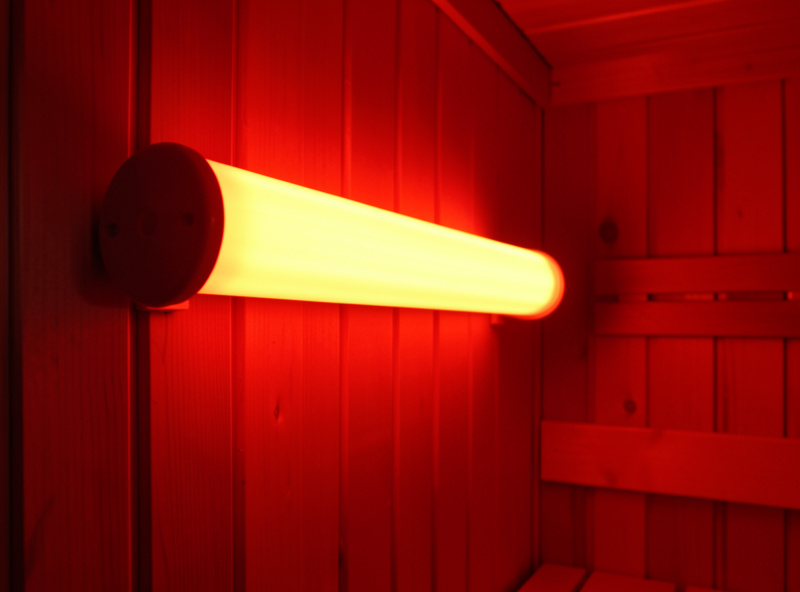
Carbon-fiber panels run a lower surface temperature but cover a much larger area, so they heat you more evenly and a little more slowly. In my large carbon-panel cabin, time-to-first-sweat from a preheated start runs about 8–11 minutes. It feels gentler at first because no single spot is blasting you, but the even coverage means once you start sweating it is uniform rather than patchy.
I find carbon the most comfortable for longer sessions precisely because of that even, lower-intensity heat — there are fewer hot spots to flinch away from. The slight cost is patience: you wait a couple of extra minutes versus ceramic. Preheating matters even more here because the larger panel area takes longer to saturate. This is the heater type in my daily-driver low-EMF cabin, and it is also why carbon units tend to post the better EMF numbers, which I get into in my heater and EMF guide.
Carbon/Ceramic Hybrids: Splitting the Difference
Hybrid units combine carbon panels with ceramic elements to try to get both the even coverage and the faster, more intense ramp. In practice they sweat me in about 7–10 minutes — between the two pure types, as you would expect. The warmer hot zones from the ceramic give a quicker subjective onset while the carbon fills in the coverage around them.
Whether a hybrid is worth it depends on the specific layout — a good hybrid genuinely gets the best of both, while a lazy one just scatters a couple of ceramic elements among the carbon and calls it full-coverage. The same placement logic applies: the elements have to actually face you. If you are shopping hybrids, look at where the heat lands more than the total wattage, which is gamed constantly and tells you very little about your real time-to-sweat.
Near-Infrared (NIR) Emitters: Fast but Directional
A near-infrared halogen emitter, the kind you find in full-spectrum cabins, is a different animal. Near infrared sits in roughly the 0.7–1.4µm band and the emitter is very directional and very fast — in the beam, it can get me sweating in 5–8 minutes. The catch is the word “beam.” A single NIR emitter heats a narrow zone, so you have to rotate to spread the load, and the area outside the beam stays comparatively cool.
NIR is also where a lot of “full-spectrum” marketing falls apart: a cheap full-spectrum sticker is often one weak halogen bulb that adds very little. A real NIR emitter is fast and intense but demands active positioning — it is not a sit-and-forget heat. If you want the fast subjective onset, NIR delivers it, but you work for the even coverage. I unpack what each wavelength band actually does in my near vs far vs full-spectrum guide and spectrum explainer.
Portable Blankets and Tents: Slowest to Sweat
Portable infrared blankets and tents heat by wrapping contact rather than open radiant load, and they are the slowest to get me going — usually 10–15 minutes, and unevenly. The parts of you in firm contact with the heating layer warm quickly while the gaps lag. They make up for it with convenience and travel, not speed.
If a blanket feels slow, that is normal for the form factor, not a defect. The fix is the same as everything else: preheat the blanket before you climb in, and hydrate first. I keep one for travel and small rooms specifically because it trades sweat speed for portability, and I would not judge it against a full cabin on time-to-sweat. My picks and the trade-offs are in my portable sauna guide.
The Cold-Start Tax: Why Preheat Changes Everything
Across every heater type, the single biggest variable in time-to-sweat is whether the cabin was preheated. A cold cabin spends its first 10–15 minutes bringing the panels and wood up to temperature, so you are effectively sitting through the warm-up before any real radiant load reaches you. That is the roughly ten-minute “cold-start tax” you see added to every row in my table.
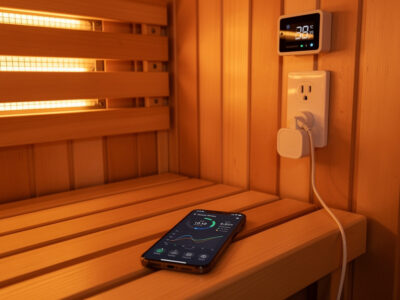
This is why a ceramic unit that should sweat you in seven minutes can feel like fifteen if you climbed in the moment you hit the switch. The fix is free: a rated smart plug on a timer that starts the cabin 20–30 minutes before you sit. I run mine that way for exactly this reason, and it is the cheapest way to make any heater type hit its fast number. The full routine is in my warm-up guide, and the smart-plug side is in my smart plug guide.
Time to Sweat by Heater Type
Here is the side-by-side from my own session log. Treat these as preheated-cabin baselines for an adapted body — your numbers shift with hydration, posture, and how many weeks you have been using the unit.
| Heater Type | Time to First Sweat (preheated) | From Cold Start | Footprint |
|---|---|---|---|
| Ceramic rod | 6-9 min | ~16-19 min | Small, intense, localized |
| Carbon-fiber panel | 8-11 min | ~18-21 min | Large, even, gentle |
| Carbon/ceramic hybrid | 7-10 min | ~17-20 min | Even with warmer zones |
| Near-infrared (NIR) | 5-8 min (in beam) | ~12-16 min | Narrow beam, rotate |
| Portable blanket/tent | 10-15 min | ~15-20 min | Contact, uneven |
The four things that shift every row up or down are preheat, hydration, posture, and adaptation. Get those right and even the slow form factors come down; get them wrong and the fast ceramic unit still leaves you waiting. The full set of levers is in my sweat-more method, and the warm-up that shaves minutes off every row is in my warm-up guide.
Frequently Asked Questions
How long does it take to start sweating in an infrared sauna?
From a preheated cabin, most people sweat between 8 and 15 minutes depending on heater type, hydration, and adaptation. From a cold cabin and cold body, add about ten minutes. Ceramic and near-infrared units start fastest; large carbon panels and portable blankets take a little longer.
Which infrared heater type makes you sweat fastest?
Ceramic rods and near-infrared emitters give the fastest subjective onset because they run high surface temperatures with intense, directional heat, often 6-9 minutes once saturated. The trade-off is a smaller footprint, so the heat must face your body. Carbon panels are a couple of minutes slower but more even.
Why does my infrared sauna take 20 minutes to make me sweat?
A 20-minute delay usually means you started from a cold cabin, you are dehydrated, or you are early in the weeks-long adaptation period. Preheating for 20-30 minutes and drinking water beforehand typically cuts that in half. If a panel also reads cold on a thermometer, the heater itself may be at fault.
Do portable infrared blankets sweat you slower than a cabin?
Yes, generally 10-15 minutes versus 8-11 for a carbon cabin, because blankets heat by contact rather than open radiant load and warm you unevenly. That is normal for the form factor, not a defect. Preheating the blanket and hydrating first helps, but blankets trade sweat speed for portability.
Does a hotter setting make you sweat sooner?
Only up to a point. The display reads air temperature, not the radiant heat your body receives, so cranking it past the panel’s working range mostly overheats the air. Preheating, sitting closer to the panels, and good hydration bring your first sweat forward far more reliably than a higher set point.