If your infrared sauna feels cooler than the number on the display, it is almost always because the sensor reads wall air temperature while your body responds to radiant heat — two different things. In my own cabins I have measured a 15–25°F gap between a wall-mounted set point and the felt radiant heat at bench level. The display is not lying so much as measuring the wrong thing for how your body experiences the session.
This trips up nearly every new owner: the controller says 140°F, but it feels lukewarm, so they crank it higher and still feel underwhelmed. The fix is understanding where your heat actually comes from in an infrared cabin, which is genuinely different from a traditional sauna. Here is what the display is really telling you, why the gap exists, and how I close it without just chasing a bigger number.
Set Temp Measures Air. Your Body Feels Radiation.
A traditional sauna heats the air, and the air heats you, so the air temperature on the thermometer closely matches what you feel. An infrared sauna works the opposite way: the panels emit longwave radiant energy that your skin and the tissue under it absorb directly, while the air stays relatively cool — typically 120–140°F versus 180–195°F in a hot-rock sauna. Your sweat follows the radiant load and your rising core temperature, not the air reading.
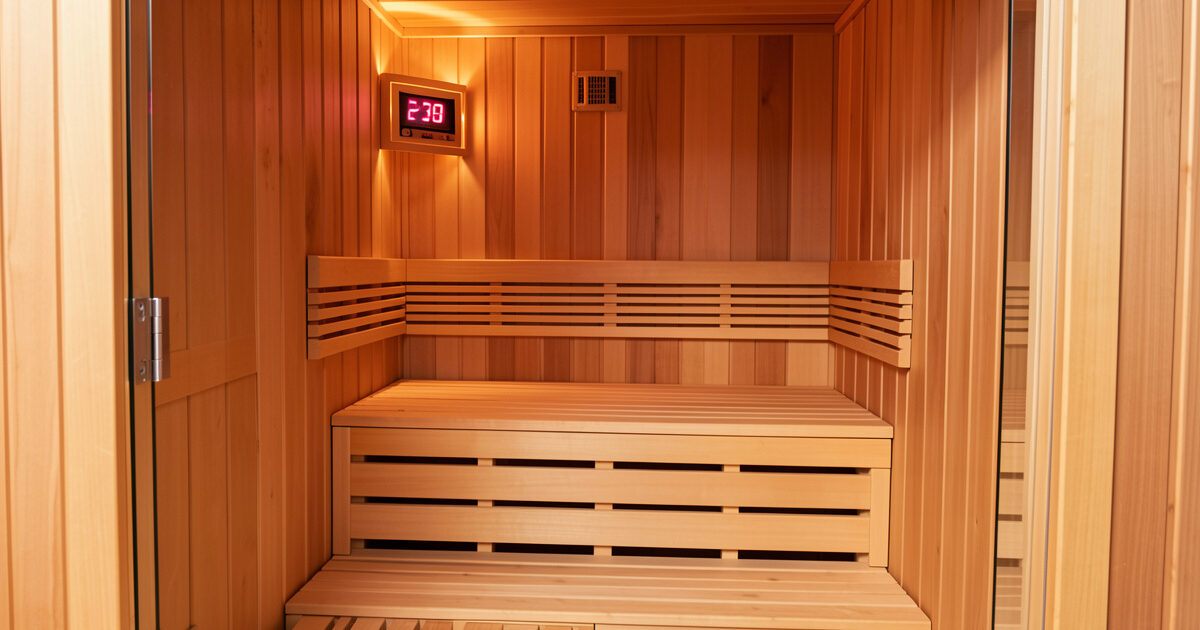
So the set temperature is genuinely a poor proxy for what your body receives. The controller’s sensor usually sits high on a wall, reading the warmest, most convection-stratified air in the cabin, while you sit lower where the air is cooler but the panels are closer. That structural mismatch is the whole reason an infrared cabin can read “hot” and feel “mild.” Once you understand it, you stop treating the display as a heat gauge and start treating it as one input among several.
Why the Gap Exists: Sensor Placement and Stratification
Two things drive the gap. First, sensor placement: the thermistor is mounted high because heat rises, so it reads the hottest layer in the cabin. At bench height where you actually sit, the air can be 15–25°F cooler than the display claims — I have confirmed this with a separate thermometer at seat level in my own units. Second, stratification: in a dry, still cabin the warm air pools at the ceiling and the cooler air sits at the bench, exaggerating the difference.
None of this means the cabin is broken. It means the one number you were given describes a spot near the ceiling, not your body. This is also why two cabins set to the same temperature can feel completely different — panel layout, sensor height, and how close you sit all move the felt heat independently of the set point. I map all of this with a thermal camera and a seat-level thermometer, the same kit I use to find cold spots in my heater placement guide.
Felt Heat Depends on Distance and Body Position
The biggest lever on felt heat is not the set temp at all — it is how close you sit to the panels and how much of your skin faces them. Radiant intensity falls off with distance, so the same panel feels noticeably hotter at six inches than at eighteen. Lean forward off the rear panel and you have just shielded the largest radiant surface on your body from the largest heater in the cabin, and the session immediately feels cooler regardless of the display.
This is why I get more from sitting back, shoulders against the rear panel, than from any thermostat adjustment. The radiant load reaching me changes more from a few inches of position than from ten degrees on the controller. It is also why a bigger cabin can feel cooler at the same set temp — you are simply sitting farther from the panels. The posture side of this is its own guide: breathing and posture in the cabin.
How I Close the Gap Without Just Cranking It
Chasing felt heat by raising the set temp is the beginner move, and it mostly overheats the air without adding much radiant load. The better fixes target the actual cause: preheat fully so the panels are saturated and the wood is warm before you sit, sit closer and face the panels, and give the cabin a full warm-up rather than trusting the display’s “ready” signal, which often arrives before the panels have caught up.
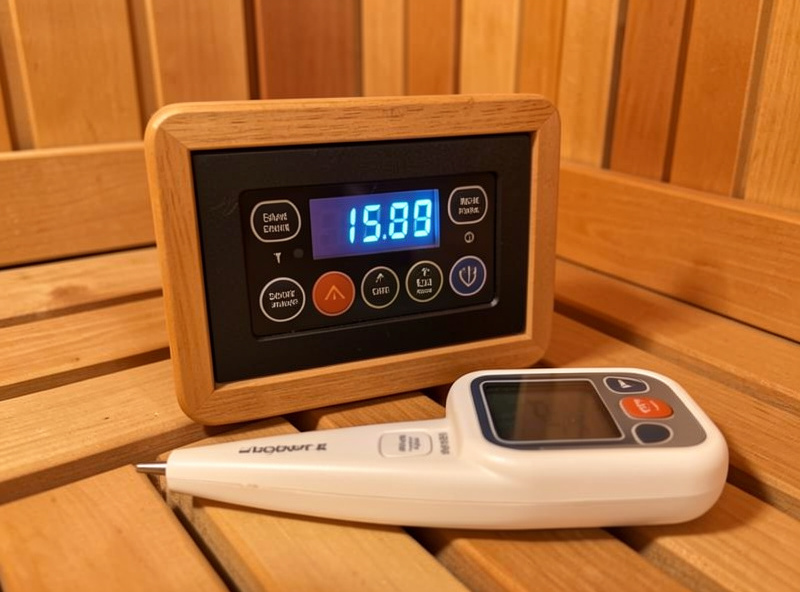
When I do adjust the set temp, I treat it as a coarse control and position as the fine control. A modest set point with good positioning beats a high set point with you hunched in the middle of the cabin. If you want to actually know what is happening, a cheap second thermometer at seat level tells you the real air temperature, and an infrared thermometer on the panels tells you whether they are saturated. As an Amazon Associate I earn from qualifying purchases. A basic infrared thermometer turns “it feels cool” into a number you can act on. The preheat side is covered in my warm-up guide.
When It Is Actually a Heater Problem
Most “feels cooler than the display” cases are the normal sensor-versus-radiation gap, but a few are genuine faults, and it is worth knowing how to tell them apart before you accept a lukewarm cabin. The tell is the panels themselves. If a panel reads cold or barely warm on an infrared thermometer while its neighbors are at working surface temperature, that panel is not pulling its weight — that is a fault, not stratification.
The other check is power draw. A plug-in energy meter at the wall tells you whether the cabin is actually consuming its rated wattage. If a 1,500-watt unit is only pulling 900 at the wall and a panel is cold, an element has likely failed and the cabin genuinely cannot reach temperature — worth a warranty call. The reason I keep both an infrared thermometer and an energy meter on hand is exactly this: they separate “the display measures the wrong spot” from “the heater is broken” in a couple of minutes. The full metering method is in my not-sweating guide and TriField EMF guide, which uses the same diagnostic mindset.
Don’t Trust the “Ready” Signal Either
A related trap is the controller announcing the cabin is “ready” the moment the air sensor hits the set point, while the panels and wood are still climbing. The air can reach 140°F well before the panels are saturated, so a session you start at the “ready” beep feels cooler than one you start ten minutes later even though the display reads the same. That lag between air-ready and panel-ready is the same reason a full preheat beats trusting the display.
I give the cabin the full 20–30 minute preheat regardless of when the controller claims it is ready, because the radiant load keeps building after the air number stops moving. If your sessions feel cool despite a high display reading, this is often the hidden cause — you are sitting down at air-ready instead of panel-ready.
Set Temp vs Felt Heat at a Glance
| What Changes It | Effect on Display | Effect on Felt Heat |
|---|---|---|
| Raising set temp | Large | Small (mostly hotter air) |
| Sitting closer to panels | None | Large |
| Facing skin to panels | None | Large |
| Full preheat (saturated panels) | Small | Large |
| Bigger cabin, same setting | None | Cooler (farther from panels) |
The takeaway is that the controls that move the display and the controls that move your experience are mostly different controls. Once you stop reading the set temp as a felt-heat gauge, the whole session gets easier to tune — and you stop overheating the air trying to fix a radiant problem. This is the same principle behind the optimal temperature guide and the broader sweat-more method.
Frequently Asked Questions
Why does my infrared sauna feel cooler than the temperature display?
Because the sensor reads wall air temperature while your body responds to radiant heat from the panels. The thermistor sits high where air is hottest, but you sit lower where air is cooler. In my cabins the gap between the display and seat-level felt heat runs 15-25°F. The display is measuring the wrong thing for how your body experiences the session.
Should I raise the temperature if my sauna feels too cool?
Usually not. Raising the set point mostly overheats the air without adding much radiant load. Sitting closer to the panels, facing your skin to them, and preheating fully add far more felt heat. Treat the set temp as a coarse control and your position as the fine control.
Is the temperature reading on an infrared sauna accurate?
It accurately reads air temperature at the sensor, which is mounted high where heat pools. It is just not a good measure of the radiant heat your body receives lower in the cabin. A second thermometer at bench level shows the real seat-height air temperature, often 15-25°F below the display.
Why do two infrared saunas at the same temperature feel different?
Panel layout, sensor height, cabin size, and how close you sit all change felt heat independently of the set point. A larger cabin feels cooler at the same setting because you sit farther from the panels. Felt heat is about radiant load and distance, not the number on the controller.
How can I tell what temperature my infrared sauna really is?
Put a separate thermometer at bench level to read the air where you actually sit, and point an infrared thermometer at the panels to see whether they have reached working surface temperature. Together they tell you whether a cool-feeling session is poor positioning, an incomplete preheat, or a genuine heater problem.