If you want to sweat more in an infrared sauna, the levers that actually move the needle are preheat time, set temp versus felt heat, hydration, and session length — not buying a hotter cabin. In the low-EMF far-infrared cabin I run at home, a proper 20-minute preheat and a pre-session warm-up routine roughly doubles how fast I start dripping compared to walking in cold.
I have lived with four different infrared setups through full Swedish winters — a 2-person far-infrared cabin as my daily driver, a full-spectrum unit with a near-infrared emitter, a single carbon-panel cabin, and a portable blanket for travel — and the pattern is consistent across all of them. Sweat in an infrared sauna is a slow-build response, not a switch you flip. This guide is the whole system I use to tune it, with each part broken out into its own deeper guide below.
Why You Sweat Differently in Infrared Than in a Traditional Sauna
Infrared saunas run cooler air than traditional ones — typically 120–140°F versus 180–195°F in a Finnish sauna — because they heat your body directly with radiant energy instead of heating the air around you. That lower air temperature is exactly why the sweat takes longer to start and why so many first-timers panic that the cabin is “broken.”
In a hot-rock sauna, scorching air convects heat onto your skin and you sweat within a couple of minutes mostly as a surface response to the air. In an infrared cabin, the panels emit longwave radiant heat (far infrared sits roughly in the 3–1000µm band) that your skin and the tissue just under it absorb. Your core temperature climbs gradually, and the sweat response follows the core, not the room thermometer. On my session log, the first real sweat in my far-infrared cabin shows up around the 12–18 minute mark from a cold start — and closer to 8 minutes if I have preheated and primed properly. Understanding that radiant-versus-convective difference is the foundation for everything else here, because it means the things that change your sweat are mostly about your body and your ramp, not the wattage sticker.
The Variables That Actually Change Your Sweat Response
Across every heater type I have metered and lived with, six variables explain almost all of the difference between a session where I am soaked and one where I barely glow. Stack them and the cabin feels twice as effective without changing a single watt of output.
The big six, in rough order of impact: preheat and body warm-up (a cold cabin and a cold body both delay sweat), set temp versus felt heat (the display lies more than you think), heater type and radiant footprint (where the heat actually lands on you), hydration and electrolytes (you cannot sweat water you do not have), breathing and posture (small cabin geometry changes how much skin sees the panels), and session length and consistency (the response trains over weeks). The rest of this guide walks each one, and every section points to a full deep-dive guide where I get into the meter readings and the exact routine.
Preheat the Cabin and Prime Your Body First
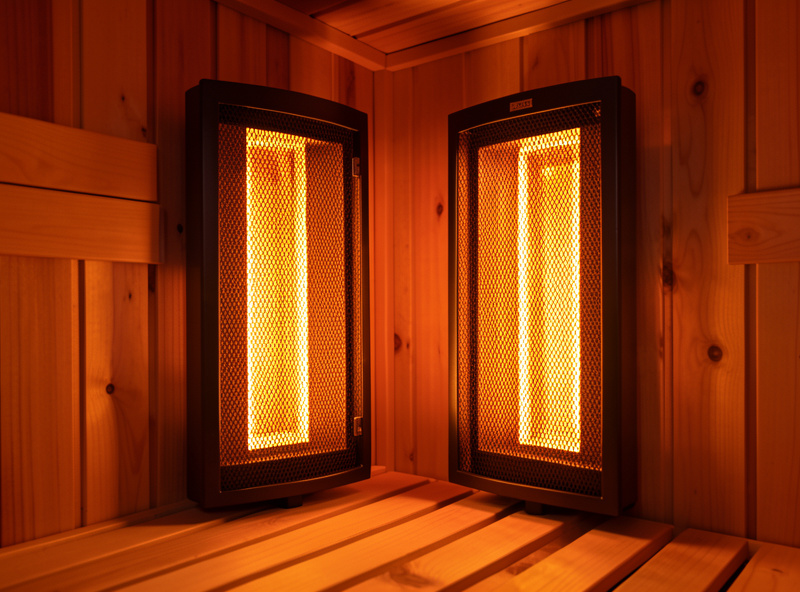
The single biggest free upgrade to your sweat is preheating. A cold cabin spends the first 10–15 minutes of your session just bringing the panels and the wood up to temperature, which is time your body is not getting full radiant load. I run a smart plug on my cabin scheduled to start the panels 20–30 minutes before I sit down, so the wood is warm and the air has stabilized before I even open the door.
Priming your body matters just as much as priming the cabin. If I walk in cold off a Swedish winter evening, my skin is constricted and my core is low, and the sweat is slow no matter how good the panels are. A short warm-up — light movement to raise the core a little, sometimes a warm shower beforehand — gets the response started before I sit. I break the full routine down in my infrared sauna warm-up guide, and the pre-shower question gets its own treatment in should you shower before an infrared sauna, because the answer is not what most people assume.
Set Temp vs Felt Heat: Why the Display Lies
The number on your controller is almost never the heat your body is actually receiving. The sensor usually sits high on a wall reading air temperature, while the radiant energy you feel depends on panel surface temp, how close you are sitting, and how much of your skin faces a panel. I have measured a 15–25°F gap between a wall-mounted set point and the felt radiant heat at bench level in my own cabins.
This is why a sauna can read 140°F on the display and still feel cool — the air is at temperature but the panels have not saturated, or you are sitting in a radiant cold spot. Chasing a higher set temp to “fix” weak sweat is the classic beginner mistake; you end up overheating the air and still not getting good radiant load. The fix is understanding where your heat actually comes from, which I map with a thermal camera and lay out in set temp vs felt heat. It pairs directly with the cold-spot work in my heater placement guide.
Heater Type and How Long It Takes to Sweat
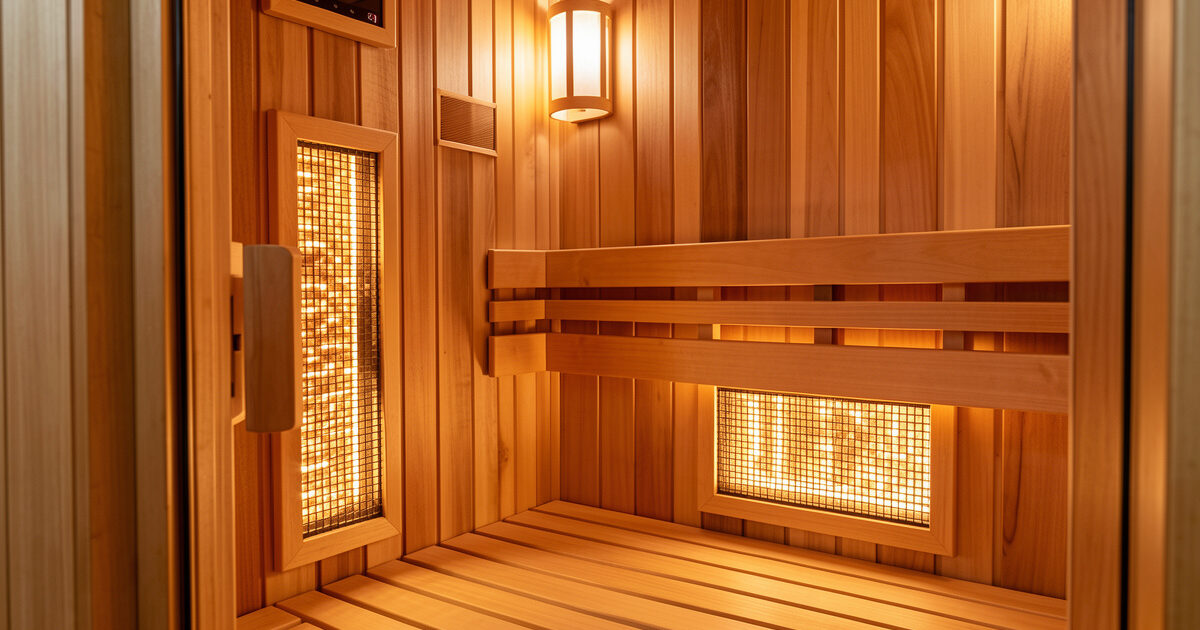
Different heater technologies ramp at different speeds and put their radiant footprint in different places, and that changes your time-to-sweat more than total wattage does. Ceramic rods get hot fast and run a small intense footprint; carbon-fiber panels run cooler at the surface but cover a much larger area more evenly; a near-infrared halogen emitter in a full-spectrum unit is a different animal again, heating very directly but in a narrow beam.
In my session log, time-to-first-sweat from a preheated start runs roughly 8–10 minutes in the carbon-panel cabin, 6–8 minutes in the ceramic-heavy unit once it is saturated, and longest in the portable blanket where contact heating is uneven. None of that is about one heater being “better” — it is about matching your expectations and your ramp to the hardware. I break the full comparison down by technology in how long it takes to sweat by heater type, and the underlying hardware differences live in my carbon vs ceramic guide and the broader heater and EMF engineering guide.
| Heater Type | Ramp Speed | Radiant Footprint | Typical Time to First Sweat* |
|---|---|---|---|
| Ceramic rod | Fast (hot surface) | Small, intense, localized | 6–9 min |
| Carbon-fiber panel | Moderate | Large, even, lower surface temp | 8–11 min |
| Carbon/ceramic hybrid | Moderate-fast | Broad with warmer hot zones | 7–10 min |
| Near-infrared (NIR) halogen | Very fast, very directional | Narrow beam, must rotate | 5–8 min (in beam) |
| Portable blanket | Slow, contact-based | Wrap contact, uneven | 10–15 min |
*From a preheated cabin, on my own session log. Your numbers will vary with body, hydration, and clothing.
Hydration and Electrolytes: You Cannot Sweat Water You Do Not Have
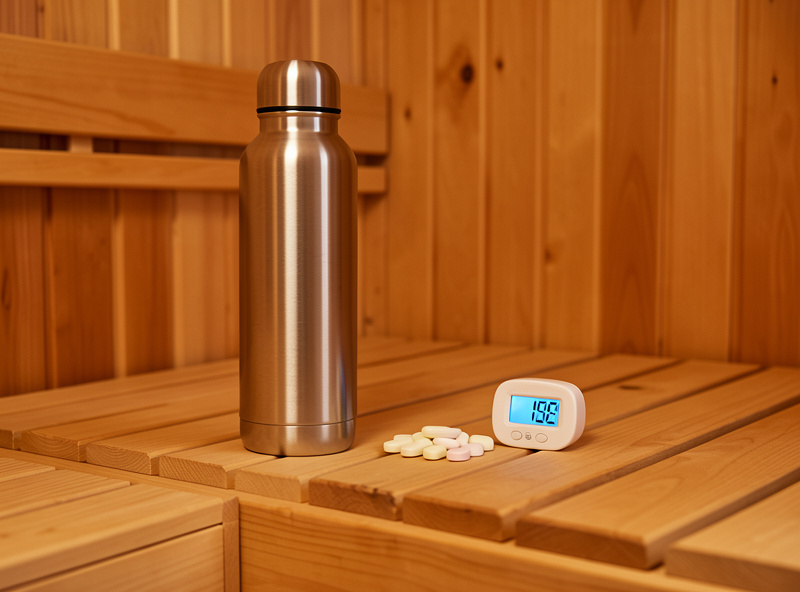
Sweat is mostly water, and if you walk into the cabin already low on fluid you will not produce much of it no matter how good your technique is. I drink 400–500ml of water in the 30–60 minutes before a session and keep a bottle in the cabin, and on longer sessions I add electrolytes because what leaves in sweat is not just water — it is sodium and other minerals.
This is also where the “more sweat is always better” thinking gets dangerous. The goal is a comfortable, sustainable sweat, not wringing yourself out. Heavy sweating without replacing electrolytes is exactly what tips people into the lightheaded feeling I cover in why I feel dizzy in the sauna and how I dial it back. A simple electrolyte tablet in your water bottle covers most of it. As an Amazon Associate I earn from qualifying purchases. You can find electrolyte tablets cheaply, and they matter more than any gadget for a good sweat. For tracking your fluid loss honestly, a basic scale before and after tells you more than any wellness app.
Breathing and Posture Inside the Cabin
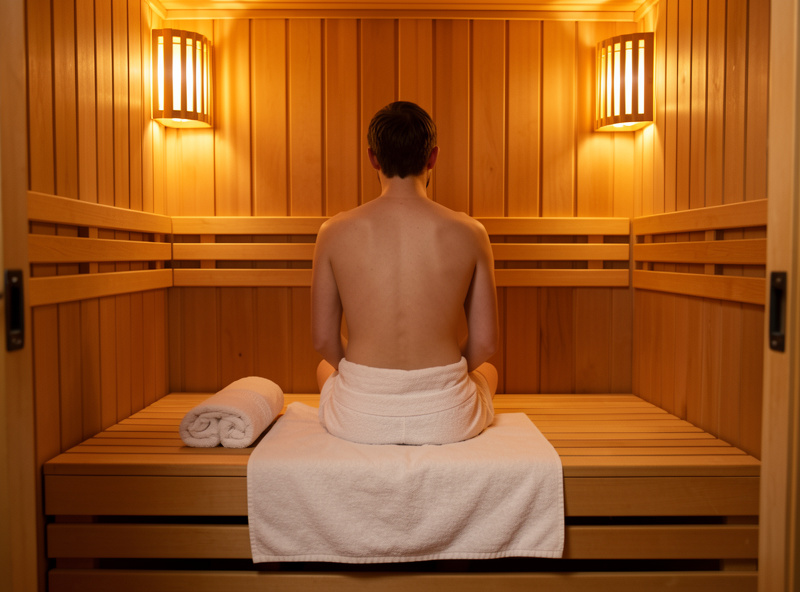
This is the tweak almost nobody talks about, and in a small infrared cabin it is genuinely significant. How you sit determines how much of your skin faces the panels and how relaxed your nervous system is — both of which change your sweat. Hunched forward with your back off the rear panel, you are shielding the largest radiant surface on your body from the largest heater in the cabin.
Sitting back so your spine and shoulders are exposed to the rear panel, dropping your shoulders, and breathing slowly through the nose all nudge the response. I notice a real difference between a tense, shallow-breathing session and a relaxed one — the relaxed one sweats earlier and more evenly. The full set of cabin-geometry and breathing tweaks is in breathing and posture in the cabin. It is the cheapest upgrade in this entire guide because it costs nothing.
When You Are Doing Everything Right and Still Not Sweating
Sometimes you preheat, hydrate, sit correctly, and still barely sweat. That usually points to one of a short list of fixable causes: an underpowered or partially failed heater, a cabin that genuinely never reaches temperature, sitting in a radiant cold spot, being dehydrated, or simply being early in the weeks-long adaptation where your sweat response is still ramping up. New owners especially under-sweat for the first couple of weeks and then the response opens up.
I walk through diagnosing each of these — including how I used a thermal camera and a plug-in energy meter to prove one of my own cabins was under-performing — in why you are not sweating and how I fixed mine. If the cabin itself is the problem, the meter does not lie, and that guide shows you how to tell a hardware fault from a technique fault before you blame yourself.
Why Wattage Claims Don’t Predict Your Sweat
Buyers fixate on total wattage as if it were a sweat rating, and it is one of the most gamed numbers in the category. A cabin advertised at 2,000 watts spread across poorly placed panels can deliver less useful radiant load to your body than a 1,500-watt cabin with panels positioned where your back, sides, and calves actually are. Watts heat the cabin; placement and surface temperature decide how much reaches you.
I proved this to myself with a plug-in energy meter and a thermal camera. One unit drew its rated power happily but had a noticeable radiant cold spot at lower-back height because the rear panels started too high — so the part of me with the most surface area was getting the least heat. Re-checking panel placement and sitting position fixed the sweat without touching the power draw at all. The lesson is to stop reading the spec sheet as a sweat promise and start paying attention to where the heat lands, which is exactly the felt-heat-versus-set-temp problem the rest of this guide keeps circling back to. The full hardware breakdown is in my heater technology and EMF guide.
Humidity, Clothing, and the Cabin Environment
Two environmental details get ignored and both change your sweat noticeably: how much skin is exposed and how dry the cabin is. Infrared cabins run dry — I usually read 15–25% relative humidity on my hygrometer mid-session, far below a steam room — and dry air lets sweat evaporate fast, which can make you feel like you are sweating less than you are. A towel under you absorbs it before you ever see it pool.
Clothing is the simpler lever. The more skin that faces the panels, the more radiant load your body absorbs and the more you sweat. A heavy t-shirt is effectively a reflective barrier between you and the heater. In my own sessions I wear as little as comfort allows and keep a towel under me and one to wipe down with. If you want to actually see your sweat rate climb, that single change — less fabric between skin and panel — does more than nudging the thermostat up another five degrees. A good absorbent cotton sauna towel set is worth more to the session than most accessories people buy. Keeping the cabin properly ventilated and dried out between sessions matters too, and I cover that in my cabin ventilation guide.
The Adaptation Curve: What My Session Log Showed
The most important thing I can tell a new owner is that your sweat response is not fixed — it adapts over weeks of consistent use, and the early disappointment is normal. When I first started logging sessions, my time-to-first-sweat from a preheated cabin sat around 14–16 minutes. After a few weeks of regular sessions it had dropped into the 8–10 minute range at the same set temp, and the overall volume climbed noticeably. Nothing about the hardware changed — my body did.
This is why I tell people not to judge an infrared sauna in week one. The cabin that “barely makes you sweat” in the first few sessions is often the same cabin that has you dripping a month later, purely from adaptation. It is also why consistency beats intensity: three steady 20-minute sessions a week trained my response better than occasional long, hot sessions that just left me dehydrated. I track all of this loosely in a session log — duration, set temp, panel temp, kWh, comfort — and the automation side of that is its own rabbit hole I get into in my session tracking guide. The schedule that builds this adaptation is laid out in my beginner schedule and how-often guide.
Sweat More Without Overdoing It: The Safety Line
More sweat is a goal right up until it tips into feeling dizzy, nauseous, or lightheaded — and infrared’s slow, deep heating makes it easy to push past your limit without the early air-temperature warning a hot sauna gives you. The fix is rarely “tough it out.” It is shorter sessions, better hydration, a lower set temp, and standing up slowly.
I treat the lightheaded feeling as data, not failure: it usually means I went too long, started dehydrated, or stood up too fast and dropped my blood pressure. The full set of dial-it-back adjustments is in why I feel dizzy or lightheaded and how I dial it back, and the broader risk picture lives in my infrared sauna safety guide. Anyone with a cardiovascular condition or who is pregnant should talk to a doctor before using a sauna at all — the research on heat and the body is studied and reported, not a promise, and this niche is one where the medical questions belong with a professional.
Build the Session, Not Just the Sweat
Sweating more is the visible signal, but what you are really tuning is the whole session: a warm cabin, a primed body, the right felt heat, good hydration, relaxed posture, and a length that leaves you recovered rather than wrecked. Get those right and the sweat takes care of itself — and you stop chasing the temperature display.
The trap I watch new owners fall into is treating one variable as the whole answer — buying a hotter cabin, or cranking the set temp, or sitting longer — when the real gains come from stacking the small things. A preheated cabin, a primed body, less fabric, better hydration, relaxed posture, and a few weeks of consistency compound into a session that feels nothing like the disappointing first week. None of it is exotic, and none of it is on the spec sheet.
If you are setting your routine from scratch, pair this with my guides on how long to sit in an infrared sauna, how often to use one, and the optimal temperature. Those cover the schedule; everything above covers the technique that makes the schedule actually work.
Frequently Asked Questions
How do I sweat more in an infrared sauna?
Preheat the cabin 20-30 minutes before you sit, prime your body with light movement or a warm shower, hydrate with water and electrolytes beforehand, sit back so your skin faces the panels, and give the response weeks to adapt. These technique changes move your sweat far more than a higher temperature setting.
Why am I not sweating in my infrared sauna?
The most common causes are a cabin that was not preheated, dehydration, sitting in a radiant cold spot, an underpowered or partially failed heater, or simply being in the first couple of weeks before your sweat response adapts. A plug-in energy meter and a thermometer tell you whether it is the hardware or your technique.
How long should it take to start sweating in an infrared sauna?
From a preheated cabin, most people start sweating between 8 and 15 minutes depending on heater type, hydration, and adaptation. From a cold cabin and cold body it can take 20 minutes or more. Ceramic and near-infrared units tend to start fastest; portable blankets are slowest.
Does a higher temperature setting make you sweat more?
Not as much as you would expect. The display usually reads wall air temperature, not the radiant heat your body receives. Beyond a point you just overheat the air. Preheat, proximity to the panels, posture, and hydration change your sweat far more than chasing a higher set point.
Should I drink water before or during an infrared sauna session?
Both. Drink 400-500ml in the 30-60 minutes before, and keep water in the cabin. On longer sessions add electrolytes, because sweat carries sodium and minerals, not just water. Starting dehydrated is one of the most common reasons people barely sweat and then feel lightheaded.
Is sweating more in a sauna actually better for you?
More sweat is a sign your body is responding to the heat, but it is not a health outcome in itself and chasing maximum sweat can tip you into dizziness or dehydration. Aim for a comfortable, repeatable sweat. Any therapeutic benefit of sauna use is studied and reported in research, not something the sweat volume measures.
Related Guides
- Why You’re Not Sweating in an Infrared Sauna and How I Fixed Mine
- Infrared Sauna Warm-Up Routine: Priming Your Body Before You Sit
- How Long It Takes to Sweat in an Infrared Sauna by Heater Type
- Set Temp vs Felt Heat: Why Your Sauna Feels Cooler Than the Display
- Breathing and Posture in the Cabin: Small Tweaks That Change the Session
- Should You Shower Before an Infrared Sauna?
- Why I Feel Dizzy or Lightheaded in the Sauna and How I Dial It Back