Breathing and posture are the cheapest upgrades to an infrared sauna session, and in a small cabin they matter more than people expect. Sitting back so your spine and shoulders face the rear panel, dropping your shoulders, and breathing slowly through the nose all change how much radiant heat reaches you and how relaxed your nervous system is. In my own sessions, the difference between a tense, hunched session and a relaxed, open one is a measurably earlier and more even sweat — and it costs nothing.
Most session advice stops at temperature and duration, but how you actually sit inside the cabin is a lever almost nobody talks about. Infrared heat is directional, so your body position decides which parts of you get heated, and your breathing decides whether you spend the session fighting the heat or settling into it. Here are the small tweaks I have settled on after years of full Swedish winters in the cabin.
Posture Decides How Much Skin Faces the Panels
Because infrared panels heat by line-of-sight radiant energy, the parts of your body facing a panel get heated and the parts that do not, do not. When you hunch forward over your knees — the default phone-scrolling position — you pull the largest radiant surface on your body, your back, away from the largest heater in the cabin, the rear panel. The session immediately delivers less heat to you even though nothing about the cabin changed.
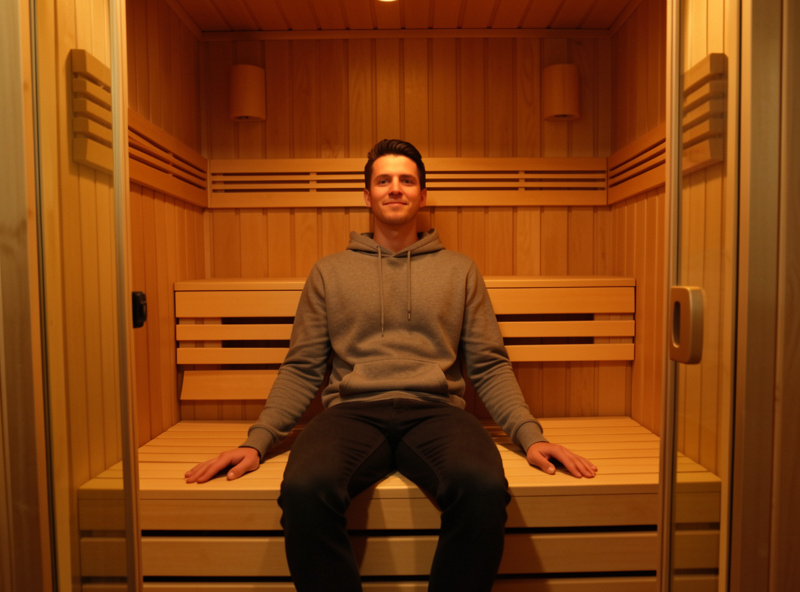
Sitting back so your spine and shoulders rest against or near the rear panel exposes that large surface to the heat, and the sweat starts earlier and spreads more evenly. I think of it as presenting maximum surface area to the panels: back against the rear, shoulders open, not curled inward. This is the same principle behind why distance from the panels changes felt heat so much, which I cover in my set temp vs felt heat guide. Position is doing more work than the thermostat.
The Small Position Tweaks That Add Up
Beyond the basic sit-back, a handful of small adjustments each nudge the heat distribution. Keeping your arms slightly away from your torso lets the side panels reach your flanks instead of being blocked by your upper arms. Planting your feet flat rather than tucking them under the bench keeps your calves and shins in the radiant field. Rolling your shoulders back instead of letting them round forward opens up your chest and upper back to the heat.
None of these is dramatic on its own, but stacked together they noticeably change where and how fast I sweat. The legs are the most commonly neglected — people heat their upper body well and then wonder why their lower half stays dry, usually because their legs are tucked away out of the radiant footprint. If you have a unit with floor or under-bench heaters, foot position matters even more. The broader question of where the heat lands and why cold spots happen is in my heater placement guide.
Breathing: Slow, Nasal, and Relaxed
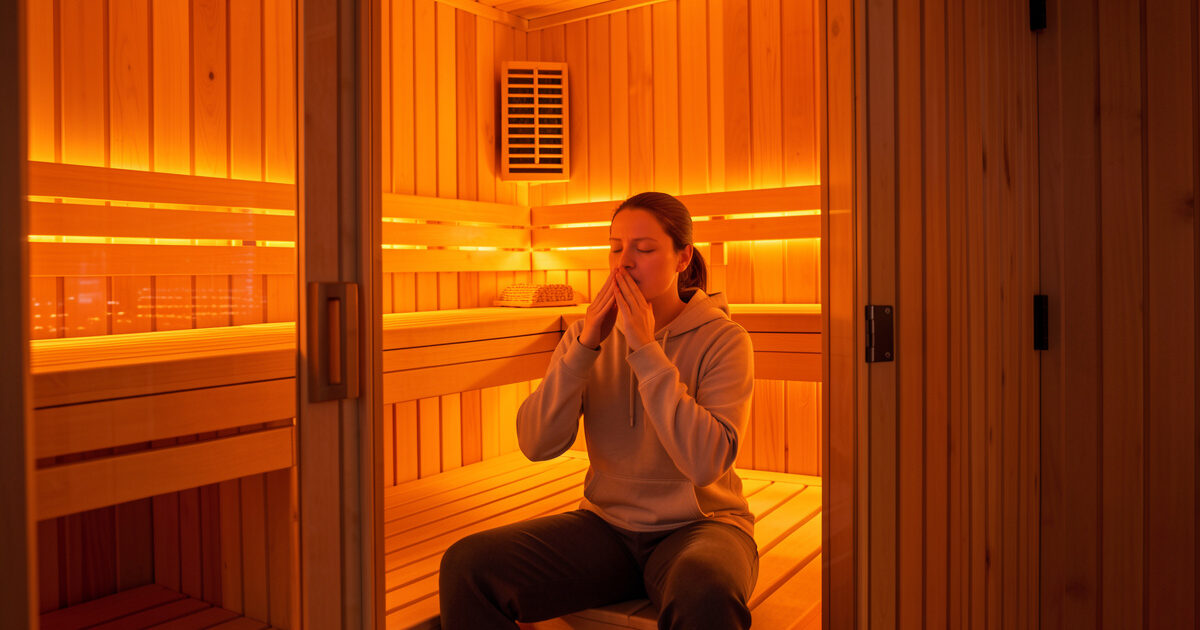
Breathing changes the session through your nervous system rather than the heat directly. Slow nasal breathing nudges you toward a parasympathetic, relaxed state, and a relaxed body sweats more readily than a tense one bracing against the heat. When I catch myself shallow-breathing through the mouth early in a session, it usually means I am fighting the heat, and the sweat is slower for it.
My default is a slow inhale through the nose, an easy pause, and a longer exhale — nothing forced or elaborate, just unhurried. The goal is to let the heat happen rather than endure it. This is also the difference between a session that feels restorative and one that feels like a test of willpower. If you find yourself breathing fast and shallow, that is often the early signal you are pushing too hard, which ties directly into the lightheaded territory I cover in my dizzy and lightheaded guide.
Posture and the Lightheaded Risk
One posture detail is a genuine safety matter, not just comfort: how you stand up at the end. Infrared sessions warm you deeply and dilate your blood vessels, and standing up fast from a seated position can drop your blood pressure and leave you dizzy. I always stand up slowly, give it a few seconds, and steady myself before stepping out of the cabin.
The same goes for changing position mid-session — move deliberately rather than abruptly. This is cheap insurance against the most common unpleasant moment in a sauna, and it costs you nothing but a few seconds of patience. Pair it with good hydration and you remove most of the reasons a session ends badly. The full set of dial-it-back adjustments is in my lightheaded guide, and the broader picture is in my safety guide.
Cabin Size Changes the Posture That Works
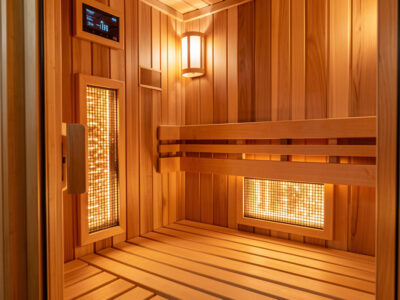
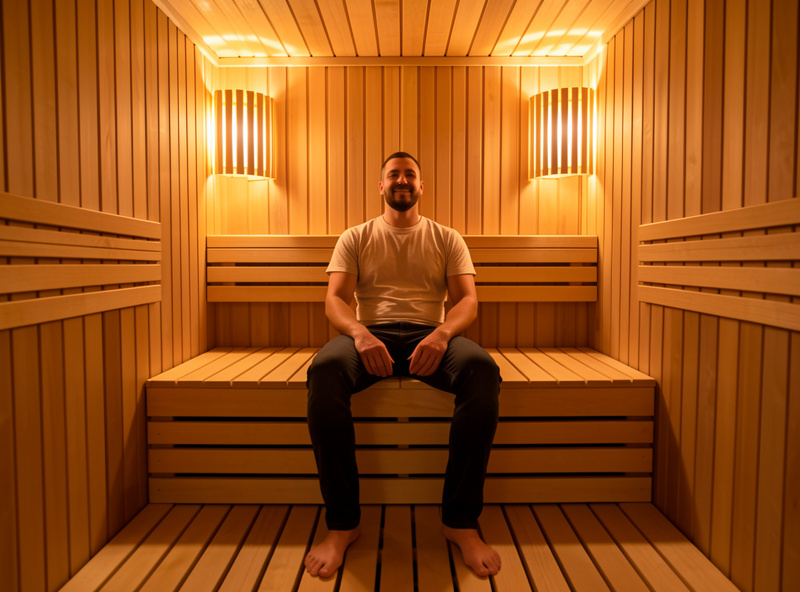
The right position is not identical in every cabin, because cabin size changes how far you sit from the panels. In a snug one- or two-person unit like the carbon cabin I run daily, the rear panel is close enough that simply sitting back puts your spine right in the heat. In a larger three- or four-person cabin, the same sit-back can still leave you a foot or more off the panel, so you may want to sit toward one end where you are closer to a heater rather than centered in the middle of the box.
This is the posture version of the felt-heat-versus-distance problem: a bigger cabin at the same set temp feels cooler because you are farther from the panels, and where you choose to sit can recover a lot of that. In my full-spectrum unit with a near-infrared emitter, position matters even more because the NIR beam is narrow and directional — you actively orient toward it and rotate, rather than just leaning back. Matching your posture to your heater type and cabin size is part of why I never give a single “sit like this” rule. The hardware differences are in my heater and EMF guide.
Why the Small Stuff Beats the Big Stuff
It is easy to assume the path to a better session runs through more expensive hardware — a hotter cabin, more panels, higher wattage. In practice, the free adjustments usually move my session more than any upgrade would. Sitting back instead of hunching forward changes the radiant load reaching my body more than ten degrees on the controller. Breathing slowly instead of bracing changes how readily I sweat more than another few hundred watts ever would.
That is the quiet argument of this whole guide: the cheapest tweaks are also some of the most effective, and they work on the cabin you already own. Before anyone goes shopping to fix a disappointing session, I tell them to fix the preheat, the hydration, and the posture first — three free changes that solve most complaints. Only once those are dialed in does the hardware become the limiting factor, and by then you actually know what you are missing rather than guessing.
A Simple Posture Checklist
This is what I run through, more or less automatically now, when I settle into a session. None of it is rigid — comfort comes first — but each item earns its place by getting more heat to more of you while keeping you relaxed.
| Body Part | Do This | Why |
|---|---|---|
| Back | Against or near rear panel | Exposes largest surface to largest heater |
| Shoulders | Rolled back, dropped, relaxed | Opens chest and upper back; reduces tension |
| Arms | Slightly away from torso | Lets side panels reach your flanks |
| Legs / feet | Feet flat, shins in the field | Heats the commonly neglected lower body |
| Breathing | Slow, nasal, longer exhale | Shifts you to a relaxed, easier-sweating state |
| Standing up | Slowly, with a pause | Prevents the blood-pressure dizzy drop |
The reason I keep coming back to posture and breathing is that they are free and they work on any cabin, any heater type, any budget. You cannot upgrade your way out of sitting wrong, but you can fix it in a second. Combined with a proper preheat and good hydration, relaxed and open is the position that turns a mediocre session into a good one — and it is the first thing I check when a session feels off before I touch any setting.
Comfort Comes First
One caveat on all of this: comfort wins over optimization every time. A “perfect” radiant posture you cannot hold for twenty minutes is worse than a slightly less efficient one you can actually relax into, because tension works against your sweat. I shift position during a session, lean forward to cool off when I want to, and stretch out when it feels good. The checklist is a default to return to, not a rigid pose to endure.
The point of paying attention to posture and breathing is to make the session easier and more effective, not to turn it into another thing to get right. Once the open, relaxed, panel-facing position becomes your habit, you stop thinking about it — you just notice that sessions feel better and the sweat comes sooner. That is the whole return on a free adjustment.
Keep Tuning the Session
Posture is one lever in a connected set. If you want the rest of the system, start with the full sweat-more method, then layer in the pre-session warm-up, the set temp vs felt heat fix, and the troubleshooting in my not-sweating guide. Together they cover almost everything that decides how a session actually goes.