A warm infrared sauna session after a long endurance sim-racing block is a genuinely pleasant recovery habit — and it’s grounded in real, attributed research on post-exercise heat exposure, not the precise clinical-sounding numbers you’ll see thrown around online. Research on post-exercise infrared sauna use reports improvements in muscle soreness and neuromuscular recovery measures (Kirby et al., post-exercise infrared sauna and recovery, 2023), and separate research on sauna bathing reports favorable effects on cardiac autonomic activity — the heart-rate-variability side of recovery (Hannuksela et al., sauna bathing and cardiac autonomic nervous system). Neither study is sim-racing-specific, but the underlying physical stress — sustained isometric load, elevated heart rate, sympathetic activation — overlaps enough with general post-exertion recovery research to make the connection reasonable. This is a comfort-and-habit routine below, not a clinical protocol with guaranteed numbers attached.
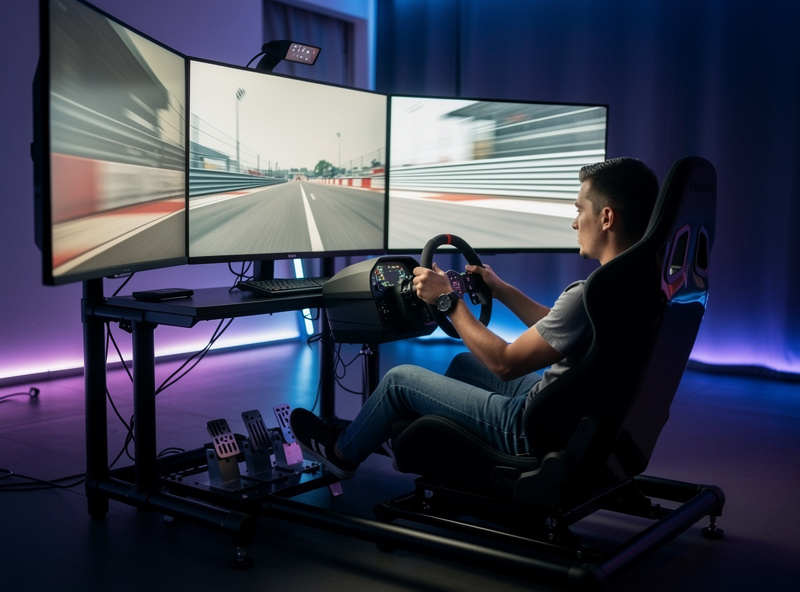
Sim racers running 2-4 hour endurance blocks in iRacing or Le Mans Ultimate are doing something genuinely demanding on the body, even though “they’re just sitting there.” Heart rates of 120-150 BPM are routine. Forearm and grip fatigue from a direct-drive wheel running real torque is real fatigue. The cumulative effect of a full weekend of racing can leave you stiff and under-recovered heading into the next week if you don’t do anything about it. A sauna is one reasonable, low-impact way to unwind after that kind of load — not a scientifically dosed intervention with a guaranteed lap-time payoff.
What Sim Racing Actually Does to the Body
Three load patterns dominate. First, isometric upper-body load: forearms, shoulders and core hold the wheel against feedback torque for hours, with virtually no recovery cycle. Second, sympathetic-nervous-system activation: the same fight-or-flight response that drives heart rate at 120+ BPM under wheel-to-wheel pressure. Third, prolonged seated posture: hip flexors, hamstrings and lower back compress for hours, and the cumulative stiffness builds across consecutive sessions.
The recovery problem is that none of these loads cause the obvious “I worked out today” signal that triggers normal recovery behaviour. You finish the session, get up, and your body is silently mid-flush of cortisol and adrenaline with no visible muscle damage to motivate stretching, hydration or sleep prioritization. That neglect compounds across a season — see the SimRacerCentral sim racing driving techniques guide for the technique-side of why session quality decays so fast when recovery is skipped, which is the gap this recovery habit is meant to help close.
Why Infrared Rather Than a Traditional Sauna
Traditional saunas at 180-200°F are hot enough that most people’s session length is limited by tolerance rather than choice. Infrared saunas run at a lower ambient temperature (130-140°F is comfortable for most people) while still producing a real, sustained heat load and heavy sweating — which allows a longer, more relaxed session without the tolerance ceiling a traditional sauna imposes. For deeper background on the temperature science, our infrared sauna temperature guide walks through the physics.
The general mechanisms at play are genuinely studied, even if sim racing itself hasn’t been — heat exposure triggers a heat-shock protein response (Patrick & Johnson, sauna and healthspan review, 2021), and the post-session cooldown is when a lot of people, myself included, feel the most parasympathetic “settling.” I notice a subjective consistency improvement in my own sessions the next day, but that’s a personal, unverifiable observation — not something I’ll dress up as a measured lap-time result.
A Sensible Post-Session Routine
This is the general shape of a routine after long endurance sessions — a comfort habit, not a clinical regimen. Adjust durations to your individual heat tolerance, and treat your first few sessions as gentle introductions rather than jumping straight to the longer end of any range.
Timing. Don’t head straight in — give yourself roughly an hour after the racing session ends before starting, which gives you time to rehydrate before adding heat. Any time the same evening is a reasonable practical window; there’s no proven sharp cutoff beyond which the habit stops being worthwhile.
Pre-session. 16-20 oz of water with electrolytes (LMNT, Liquid IV, or a homemade pinch of salt and a squeeze of lemon). A small banana or 100-150 calories of simple carbs if it has been more than 90 minutes since the last meal. Heat tolerance is dramatically worse on an empty stomach or when dehydrated.
Session structure. 130 °F for 5 minutes (warmup), then 135-140 °F for the main block. Total session length: 25-35 minutes for established users, 15-20 minutes for the first 2 weeks. Stop earlier if heart rate exceeds 130 BPM at rest in the cabin or if you feel lightheaded standing up. The full session-length curve is in our how long to sit in an infrared sauna guide.
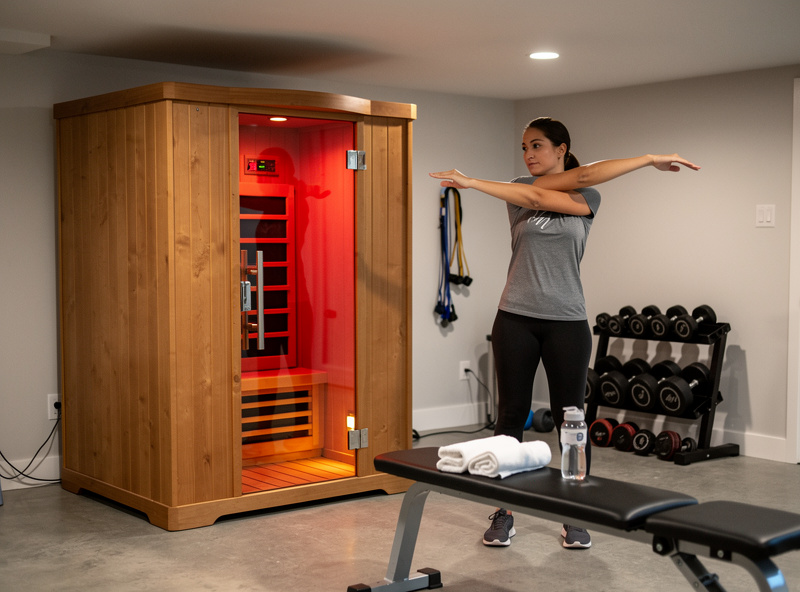
During the session. Spend 5-10 minutes doing low-effort mobility work targeting forearm flexors, wrist circles, neck rotations and a seated thoracic twist. The combination of heat and gentle movement is what makes the upper-body soreness reduction visible by the next morning. Avoid hard stretching — heat softens connective tissue enough that aggressive stretching risks micro-injury.
Post-session. 5-minute cool-down sitting upright, 16-24 oz of water with electrolytes, contrast cold rinse if you tolerate it (30-60 seconds, not a full ice plunge). Do not jump straight into a meal or another physical task — the parasympathetic rebound that drives the recovery benefit is interrupted by sympathetic re-activation.
How Often to Build This Into a Race Weekend
A few sessions a week is a reasonable, sustainable habit for most sim racers — for example, one after each race-weekend block plus an optional mid-week session. There’s no proven “optimal” frequency backed by sim-racing-specific research, so treat this as a starting shape to adjust to what you’ll actually keep doing, not a dosing schedule. Daily use isn’t necessarily better — more isn’t automatically more effective, and consistency matters more than maximizing session count.
Our how often to use an infrared sauna guide covers the broader frequency curve and exactly what the diminishing returns look like. The sim-racing-specific bottom line: 2-4 sessions per week, never more than two on consecutive days when starting out, always rest day after a high-volume race weekend.
If You Want to Track It Yourself
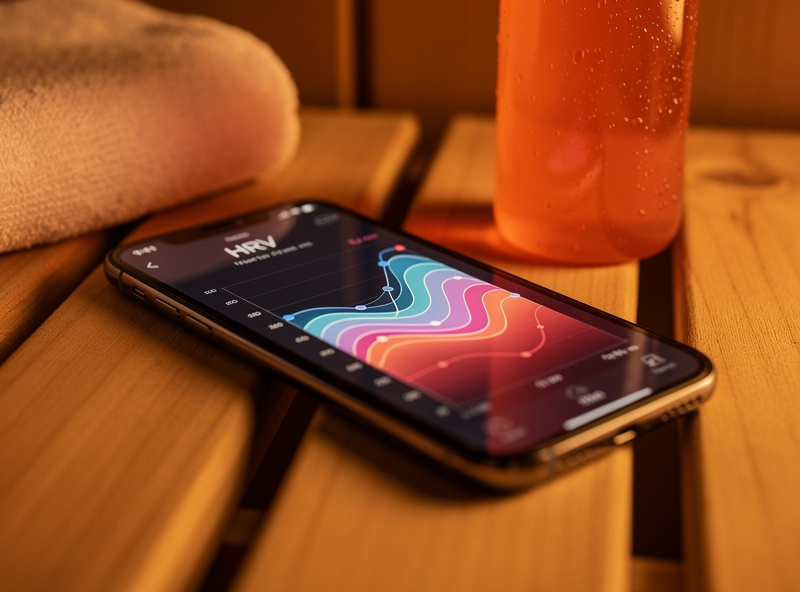
If you’re the type who likes data, a simple self-tracking approach beats chasing someone else’s numbers online — every body responds differently, and I’m not going to hand you a fabricated-sounding “expect X ms of HRV improvement” figure, because no sim-racing-specific research backs a number that precise. A wearable that tracks HRV and resting heart rate (Whoop, Garmin, Oura) will show you your own trend over a few weeks of consistent use, which is far more useful than a generic target.
For soreness, the simplest tracking is a 1-10 self-rating of forearm and shoulder fatigue at the start of each next-day session, logged over a month. Look for your own trend, not a specific target number. If nothing improves after several weeks, the limiting factor is usually sleep or hydration, not the sauna — or your rig ergonomics, covered below.
Equipment: Which Sauna Format Works for a Sim Racer
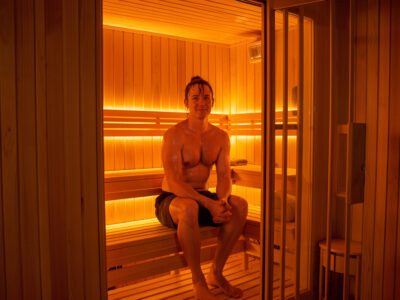
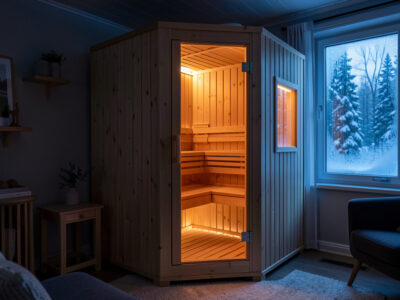
For most sim racers running this from a home office or basement, a compact 1-person infrared cabin in a small footprint is the practical fit. Our best 1-person infrared saunas guide covers specific models. For renters or apartment dwellers, the portable infrared sauna options (blanket, tent, or box format) deliver a meaningful chunk of the same warmth-and-sweat routine in a much smaller footprint and at lower cost — the trade-off is less room for the mid-session mobility work below.
If you’re brand new to saunas generally and want a gentler, week-by-week ramp before layering in a race-recovery habit, our first 30 days comfort guide covers the same hydration and duration-ramp basics for a beginner.
What a Sauna Habit Does Not Replace
A sauna session is additive to, not a substitute for, the basics: enough sleep, hydration through the day (not just around sessions), an actual stretching routine, and an ergonomic rig setup that doesn’t produce wrist or back issues mechanically. If you are already getting forearm pain during sessions, the rig geometry is the problem and no amount of post-session sauna will fix it. The SimRacerCentral setting up a sim racing space article covers the cable management, lighting and ergonomic setup that fixes the upstream cause.
Frequently Asked Questions
How long after a sim racing session should I use the sauna?
There’s no strict window, but waiting roughly an hour or so after the session ends gives you time to rehydrate before adding heat. The same evening as a long race block is a reasonable, practical choice for most people.
What temperature is best for sim racing recovery?
Around 130 to 140 degrees Fahrenheit is comfortable for most people and allows a longer, more relaxed session than a hotter traditional sauna, which tends to limit session length through sheer tolerance rather than any recovery advantage.
How long should each session be?
25 to 35 minutes once you’re used to it, shorter (15 to 20 minutes) for your first couple of weeks. Stop earlier if your heart rate feels uncomfortably elevated at rest in the cabin or if you feel lightheaded standing up.
How often should I do this each week?
A few sessions a week is a sustainable habit for most people, for example one after each race weekend plus an optional mid-week session. There’s no proven ideal frequency backed by sim-racing-specific research, so build a rhythm you’ll actually keep.
Will it actually make me a faster sim racer?
Only indirectly, and I won’t promise you a number. The plausible mechanism is reduced forearm and shoulder fatigue plus better next-day recovery, which can make longer, higher-quality practice blocks more sustainable. Any lap-time improvement comes from being able to train more consistently, not from the sauna itself.
Can I do this in a portable sauna blanket instead of a cabin?
Yes. Sauna blankets and tents deliver a meaningful chunk of the same warmth-and-sweat routine at lower cost and in a much smaller footprint. The trade-off is no mid-session mobility work, since you’re lying flat in the blanket. A cabin format is more versatile if you have room for one.