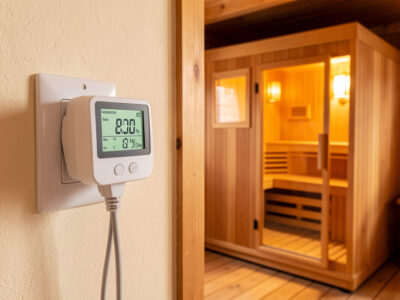
The fix for a 45-minute winter preheat is to schedule it with a smart plug so the cabin starts before you get up. In my setup a scheduled 06:15 start means a January session is ready when I am, instead of standing in a cold room watching the controller climb. The one rule that matters: the plug must be rated for the sauna’s full continuous amperage, or it is a fire risk, not a convenience.
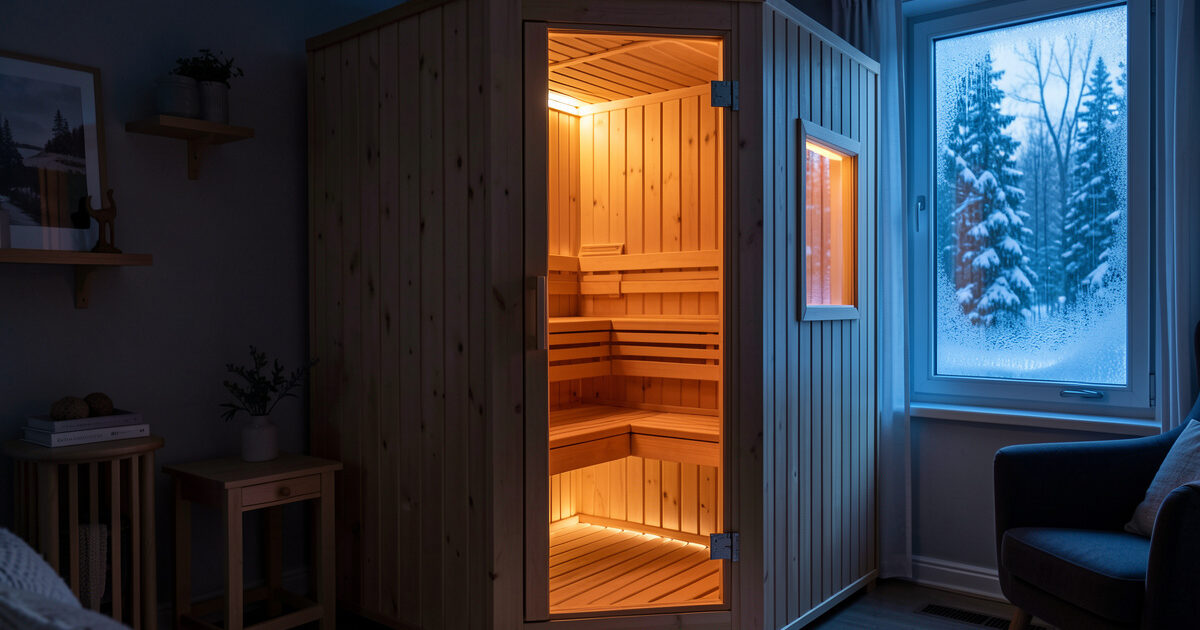
Winter is exactly when a home sauna gets skipped, because nobody wants to trigger a preheat and then wait most of an hour in the cold and dark. Automating the preheat is the single change that keeps mine in regular winter use. I run it off the same smart-home hub that handles the rest of the house, and here is how I set it up safely.
Why Scheduling Beats Waiting or Leaving It On
There are three ways to deal with a long winter preheat: wait for it, leave the sauna running, or schedule it. Waiting wastes your time and makes the sauna feel like a chore. Leaving it on all day wastes enormous energy — a cabin idling for hours dwarfs the 1.5 to 2.2 kWh a scheduled session actually uses. Scheduling is the only option that costs nothing extra: the preheat still takes its 45 minutes, but those minutes happen while you are still asleep or having coffee, not shivering by the door.
That is the whole trick. A smart plug does not change the physics of the winter preheat penalty — it just moves the wait to a time you do not have to be present for it. For a cold-climate cabin that is the difference between a sauna you use twice a week in January and one you use twice all winter.
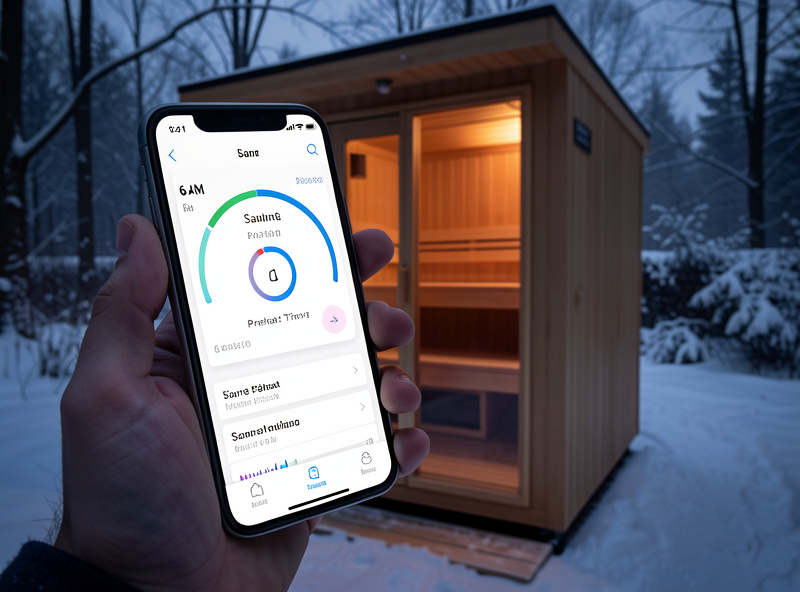
The Non-Negotiable: Rate the Plug for the Load
This is where I get firm, because it is a safety issue. A sauna is a continuous high-current load, and most consumer smart plugs are rated for far less than a sauna heater draws. Putting a 10A-rated plug in front of a heater pulling 8A continuously runs the plug at the edge of its rating for the whole session, every session — that is how plugs overheat and melt. The plug’s continuous rating must comfortably exceed the sauna’s actual draw, with headroom, not just match it on paper.
Here is what I check before a smart plug goes anywhere near the cabin:
| Check | What to look for | Why it matters |
|---|---|---|
| Continuous current rating | Comfortably above the sauna’s real draw | Sustained load, not brief peaks, is what overheats a plug |
| Resistive-load rating | Rated for heaters, not just “lamps/electronics” | Heater loads are harsher than the plug’s headline figure suggests |
| Measured draw, not the label | Confirm actual amps on a plug-in meter | Marketing wattage is often gamed; measure it |
| Dedicated circuit behind it | Plug feeds off the sauna’s own circuit | Sharing the circuit invites nuisance trips |
| Local code / GFCI | Confirm smart plugs are permitted in the run | Requirements are jurisdiction-specific |
If your cabin’s draw is high enough that no consumer smart plug covers it safely — common on 3 to 4-person and 240V units — then scheduling belongs at the controller or via a properly rated relay wired by an electrician, not a plug-in gadget. I would rather you skip the automation than run an under-rated plug. Confirm the draw first with the method in my cold-climate wattage guide, and if the sauna is tripping the breaker, sort that before adding anything to the circuit.
How I Set the Schedule for Winter Mornings
My routine is simple. I know from my session log that a cold-start winter preheat runs 40 to 45 minutes to a comfortable bench, so I set the plug to switch on about 50 minutes before I want to climb in — a little extra because in winter I give the cabin time past setpoint for the surfaces to catch up. For a 07:00 session that means a 06:10 start. I vary it with the day: earlier on work mornings, later on weekends.
The sauna’s own controller stays set to my target temperature; the smart plug just supplies power on schedule, and the controller takes over from there. That layering matters — the plug handles “when,” the controller handles “how hot.” If your unit powers up into standby rather than actively heating when it gets power, you will need a controller-level schedule or a smart controller instead; I cover those options in remote preheat and smart plugs for infrared saunas.
One Hub for Everything That Draws Current
The nice part of running this on a real smart-home hub rather than a standalone timer is that the sauna becomes one more scheduled load among many. The same rule engine that pre-heats the cabin runs the grow lights and the rest of the winter routine — one place to manage everything that draws current through the dark months. I can nudge the start time from my phone if plans change, and I get energy logging alongside it, which feeds straight into tracking running cost. If you want to go deeper on integration, Home Assistant sauna automation and smart-plug energy monitoring cover the setup.
One habit I keep: I do not treat scheduled preheat as fully unattended. The cabin starts on schedule, but I am home and awake by the time it is running — I am not firing a heater in an empty house from across town. Automate the wait, not the supervision. For the full winter picture across preheat, wattage, and placement, start with the cold-climate performance field guide. If you want a plug to start with, choose a high-amp smart plug rated for heater loads and verify its rating against your measured draw. As an Amazon Associate I earn from qualifying purchases.
Further Reading
- Infrared Sauna Cold-Climate Performance: A Swedish Winter Field Guide
- Why My Sauna Takes Longer to Preheat in Winter
- Smart Plugs for Infrared Saunas
- Home Assistant Sauna Automation
- Infrared Sauna Electricity Cost
Frequently Asked Questions
Can I use a smart plug to preheat my infrared sauna on a schedule?
Yes, and it is the best fix for a long winter preheat. The plug supplies power on schedule and the sauna controller takes over the temperature. The critical condition is that the plug’s continuous current rating comfortably exceeds the sauna’s real draw, with headroom, or it can overheat.
Is it safe to run an infrared sauna heater through a smart plug?
Only if the plug is rated for the continuous load with margin and rated for heater (resistive) loads, not just lamps and electronics. Measure the sauna’s actual draw on a plug-in meter first. If no consumer plug covers it safely, schedule at the controller or via a properly wired relay instead.
What time should I schedule the preheat for a winter morning?
Work back from your session time by your measured cold-start preheat. Mine runs 40 to 45 minutes in winter, so for a 07:00 session I set a 06:10 start, allowing a little extra for the surfaces to catch up past setpoint. Log a few winter preheats and set the timer to match.
Is it cheaper to schedule the sauna or leave it running?
Scheduling is far cheaper. A scheduled winter session uses roughly 1.5 to 2.2 kWh including preheat, while leaving the cabin idling for hours to avoid the wait uses many times that. Scheduling gives you a ready cabin at almost no extra energy over the session itself.
Should I leave a scheduled sauna preheat completely unattended?
I do not. The cabin starts on schedule, but I am home and awake by the time it is heating, rather than firing a heater in an empty house remotely. Automate the wait, not the supervision, a continuous heating load deserves someone present, and local rules may require it.
My sauna powers up into standby instead of heating, will a smart plug still work?
Not on its own. If the unit needs a control-panel start after power is applied, a plug that only supplies power will leave it in standby. You need a controller-level schedule or a smart controller for those units. Check how your cabin behaves when power is cut and restored before relying on a plug.