Home Assistant sauna automation is what turns a smart plug and a temperature probe into a cabin that preheats when you are on your way home, logs every session’s kWh, and refuses to run an empty box. In my setup it is the layer that moved the sauna from “twice a week when I remember” to a real winter routine — one rule engine doing the scheduling, the metering, and the safety guardrails.
This is the deep end of smart infrared sauna controls, and it is genuinely worth it if you already run a hub. I run the same Home Assistant instance that handles my grow lights and pulls the EMF picture together; adding the sauna was a handful of entities and three automations. Here is exactly how I structure it, what to sense, and the failure modes to design around — because automating a heater is the one place you do not get to be sloppy.
What Home Assistant actually controls
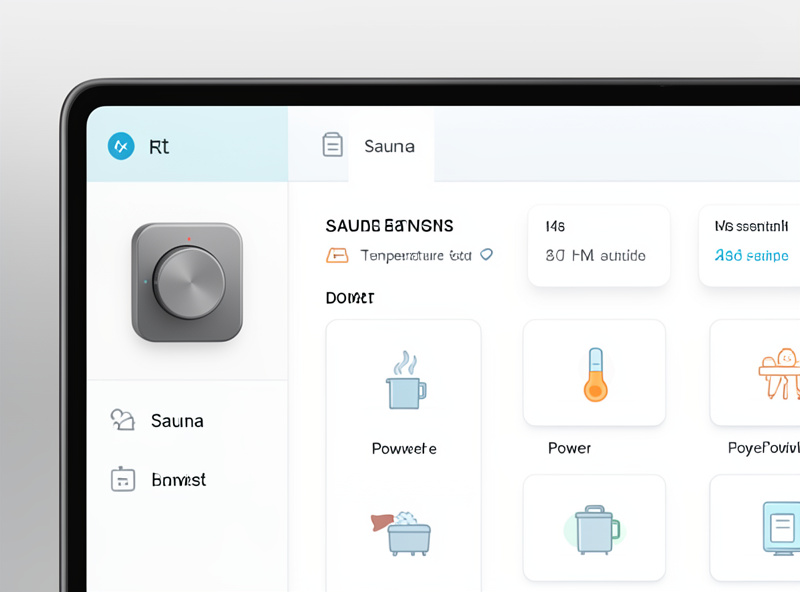
Home Assistant does not regulate the heater — your cabin’s controller still does that. What the hub controls is power and information: it switches the load through a rated smart plug or relay, reads temperature from a probe, watches energy from the plug’s monitor, and ties presence and calendar data into when the cabin should be warm. The factory controller keeps doing temperature and acts as the final safety timer.
That division of labour is the whole design. The hub is the brain for scheduling and logic; the plug is the muscle; the factory controller is the dumb, reliable backstop that ends the session no matter what the software does. I never let an automation be the only thing that can shut off the heat. Once you accept that split, the entities you need are obvious: a switch (the plug), a temperature sensor (the probe), a power/energy sensor (the plug’s monitor), and a presence signal (a phone or device tracker). Everything else is built from those four.
The three automations that matter
I run three, and they cover almost everything. The first is the presence-gated preheat: on the evenings I usually use the cabin, fire the plug on for a preheat window — but only if my phone is home. The second is the auto-off safety net: if the plug has been on for longer than any real session plus preheat, force it off regardless of anything else. The third is the session log: when the plug switches off, write the session’s duration and total kWh to a log.
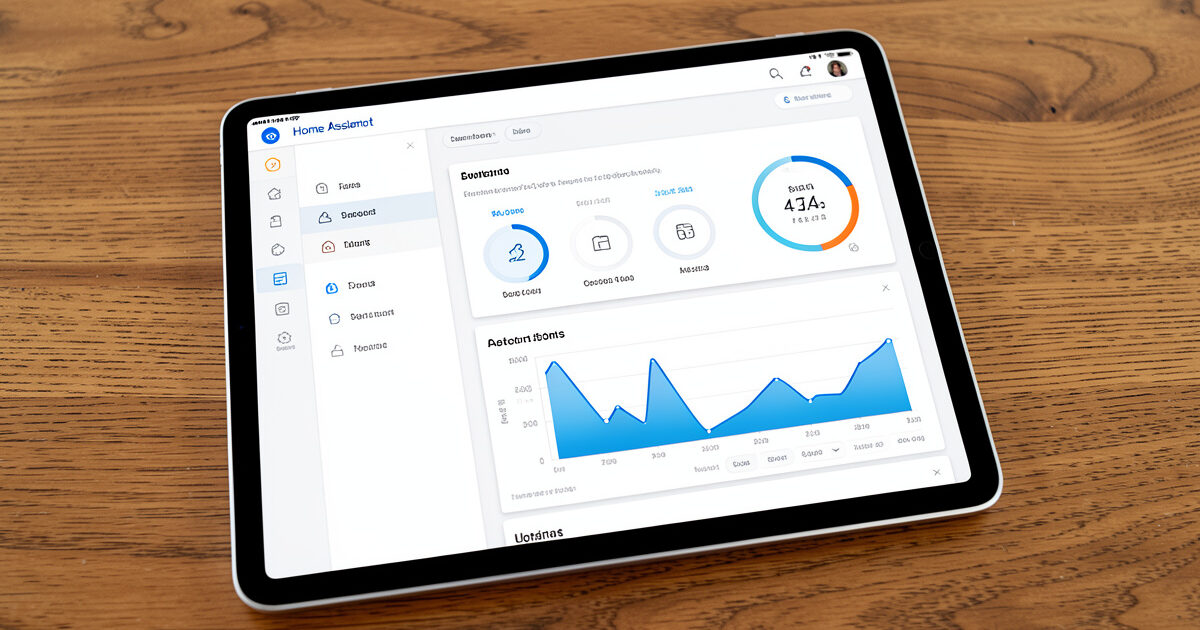
The presence gate is the one that saves money and worry — it is the answer to “did I leave the sauna running while I was at work.” The auto-off is non-negotiable; it is the software backstop behind the factory hardware timer, belt and braces. The logging is the quiet gold: it is how I noticed one cabin’s per-session kWh creeping up as a panel aged. The detail of reading that energy data lives in sauna smart plug energy monitoring, and the preheat timing math in infrared sauna remote preheat.
| Trigger | Condition | Action |
|---|---|---|
| Evening time / calendar | Phone is home | Switch plug on for preheat window |
| Plug on > max session time | Always | Force plug off (safety net) |
| Plug switches off | After a session | Log duration + kWh |
| Voice or button | Phone is home | Manual preheat override |
Sensors worth adding
The minimum is the plug’s own power monitor, which gives you on/off state and live wattage for free. Two additions make the system genuinely smart. A temperature probe at bench height gives Home Assistant the real felt-heat reading, so a preheat can finish on “cabin reached temperature” rather than a fixed timer — the same logic I cover in sauna room thermostat control. And a door sensor tells the hub whether anyone actually opened the cabin, which is a cheap way to detect a preheat that ran to nobody.
I deliberately keep it modest. A core-temp or heart-rate feed is session-tracking territory, not automation, and I treat it as a loose log rather than a control input — covered in automated session tracking. The control loop only needs power, temperature, presence, and ideally a door. Adding more sensors than the logic uses is just more things to break.
Failure modes to design around
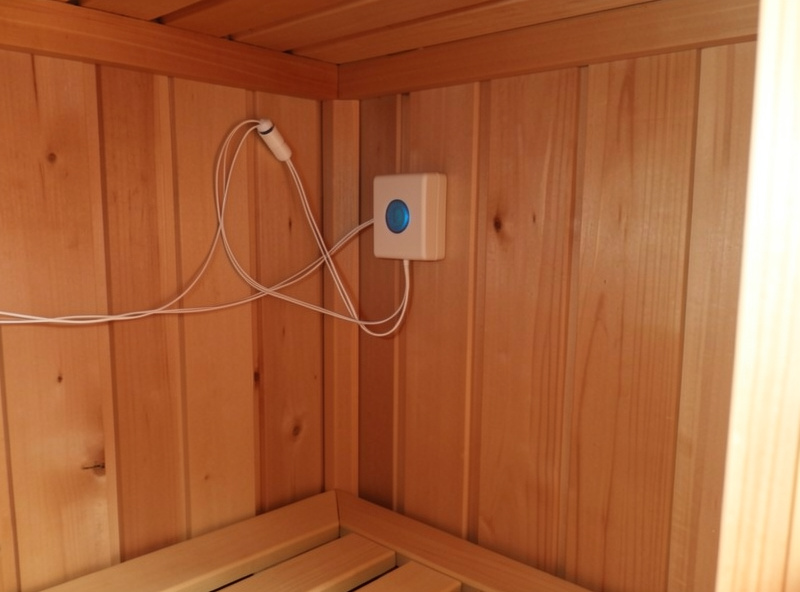
Automating a heater means designing for what happens when something breaks, and there are three failures I build around explicitly. Network loss: the plug must hold its schedule locally and the factory timer must work without the hub, so a dead router never leaves the cabin stuck on. Stuck-on relay: the auto-off automation plus the hardware timer are two independent shut-offs, because one will eventually fail. And the empty-cabin run: presence gating plus the door sensor catch the case where a schedule fires on a night nobody uses it.
The principle is that no single point of failure can leave a 1,600W heater running unattended. That is why I will not use a cloud-only plug for the switching layer, and why the factory controller’s mechanical timer stays in the loop. Software is allowed to make the cabin convenient; it is not allowed to be the only thing standing between a panel and an overheat. Read sauna safety before you trust any automation with applied heat, and keep the cabin on its own network segment per smart sauna networking.
The EMF and wiring reality
Home Assistant changes none of the EMF picture, because the hub is just deciding when the plug switches — it adds no field of its own near the bench. The thing to watch is still where any switching relay lives: at the wall, not next to you, the same rule as everywhere else in this niche. If your automation drives an in-cabin relay or contactor for a larger unit, mount it low and outboard and meter it with a TriField. For 240V cabins the switching hardware is an electrician’s job, automation or not — see 240V and breaker requirements.
What I deliberately leave manual
Not everything belongs in an automation, and knowing what to leave alone is part of doing this well. I never automate the set temperature — I pick a felt heat once and the factory controller holds it; a rule that changes temperature mid-session solves a problem nobody has. I do not automate the end of a session based on a timer alone, because I would rather decide when to get out than have software end it on me. And I keep a physical, obvious way to kill power that needs no app, phone, or network at all.
The pattern is that automation handles the predictable, low-stakes parts — when to start warming, logging what happened, catching mistakes — and the human keeps the judgement calls and the final off switch. That boundary is what keeps the system something I trust rather than something I babysit, and it is the same boundary I draw on every always-on device that draws real current.
How I built mine
My instance reads the far-infrared cabin’s 16A monitoring plug as a switch-and-power entity, a bench-height probe as the temperature entity, and my phone as the presence signal. The preheat automation fires on weekday evenings only when I am home, runs until the probe hits felt temperature or a hard time cap, and the factory controller sits a few degrees higher as the backstop. When the plug turns off, a small script appends duration and kWh to a log I skim monthly. It is deliberately unglamorous, and it has run a full winter without once leaving the cabin on by mistake. That reliability is the entire point — automation you cannot trust around a heater is worse than no automation at all.
Further Reading
- Smart Infrared Sauna Controls: The Owner-Installer Guide
- Infrared Sauna Remote Preheat: Walk Into a Hot Cabin
- Sauna Smart Plug Energy Monitoring: Real kWh Per Session
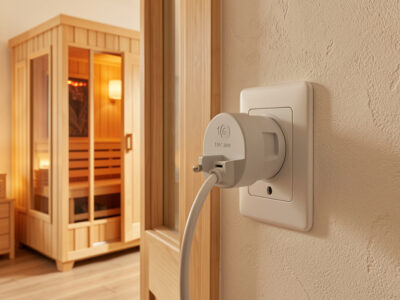
- Smart Plug for Infrared Sauna: Pick a Safe-Rated Switch
- Voice-Controlled Sauna: Alexa, Google Home, and HomeKit
Frequently Asked Questions
What can Home Assistant control on an infrared sauna?
It controls power and information, not temperature. The hub switches the load through a rated smart plug, reads a temperature probe and the plug’s energy monitor, and uses presence and calendar data to decide when to preheat. The factory controller still regulates temperature and acts as the safety timer.
Do I need a temperature probe for sauna automation?
Not for basic scheduling, but it makes the system much smarter. With a bench-height probe, a preheat can finish on cabin-reached-temperature instead of a fixed timer. Without one, you schedule by time, which is fine but less precise across cold and mild starting rooms.
How do I stop the sauna running when nobody is home?
Gate the preheat automation on presence, so it only fires when a phone or device tracker shows someone home. Add a door sensor to detect a preheat that ran to nobody, and an auto-off rule that forces the plug off after any realistic session length.
Is it safe to automate a sauna heater?
Yes, if no single failure can leave it running unattended. Use a plug that holds its schedule locally, keep the factory mechanical timer as a hardware backstop, and add a software auto-off. Two independent shut-offs plus presence gating is the safe design.
Does Home Assistant add EMF to the sauna?
No. The hub only decides when the plug switches and adds no field near the bench. The EMF source is still the heater panels and any switching relay, so mount relays at the wall and away from where you sit, and meter with a TriField if unsure.
Can I automate a 240V or 4-person sauna?
Yes, but the switching hardware is a contactor or in-wall relay wired by an electrician, not a plug-in switch. The automation logic is identical; only the device carrying the load changes. Confirm local code for the wiring before adding any control layer.