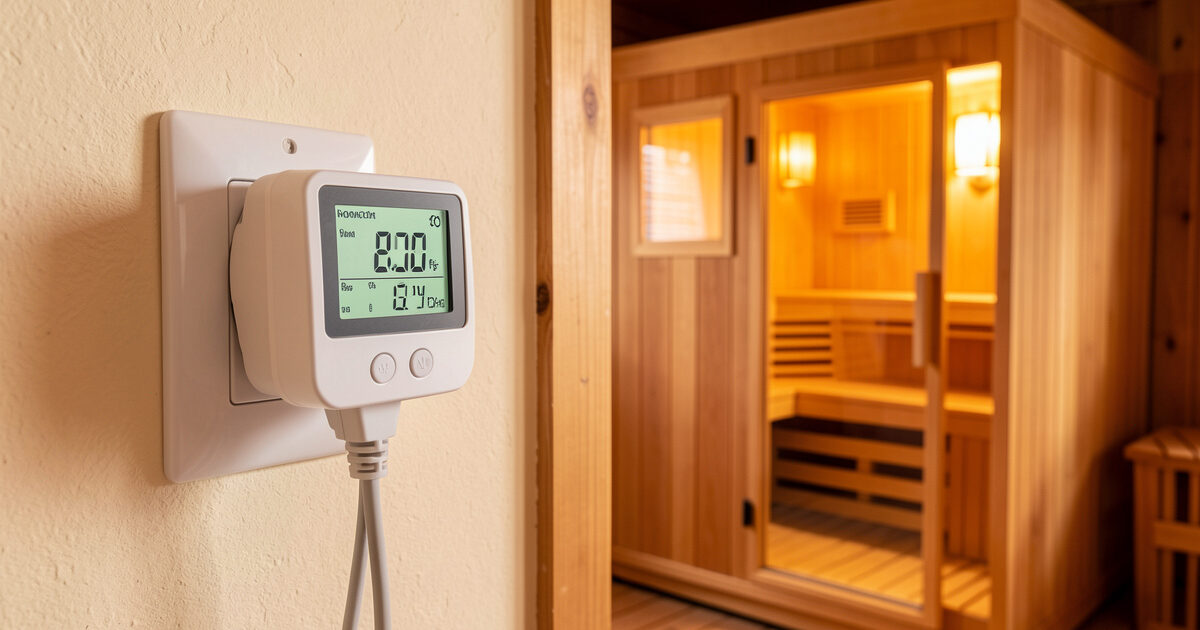
Two people barely cost more to run than one — an infrared cabin’s heaters draw the same wattage regardless of how many bodies are inside, because the panels run to hold a set temp, not to warm people. On my kill-a-watt meter a shared session lands maybe 3–8% above a solo one, not double. A typical 45-minute session costs well under fifty cents at average electricity prices.
This trips people up because the intuition is “two bodies to heat, twice the energy.” But you’re not heating the bodies — the radiant panels warm surfaces and the person directly, and they’d run at the same wattage into an empty cabin. The second person adds a little thermal mass and blocks some panel output, so the heaters cycle slightly more to hold temp, but the difference is small change. The real cost levers are somewhere else entirely, and once you meter it yourself you stop worrying about the second person and start watching the preheat.
Does Two People Cost More to Run an Infrared Sauna?
Only marginally. The heaters are thermostat-controlled, so they draw power to reach and hold the set temp whether the cabin holds one person or two. A second body slightly increases the heat the panels must supply — more mass to warm, some radiant output absorbed — so on my meter the heaters cycle on a little more often, adding roughly 3–8% to the session’s kWh. That’s cents, not dollars.
I’ve metered this directly: same cabin, same set temp, same duration, solo versus shared. The shared session pulls a touch more because the thermostat calls for heat slightly more often to overcome two bodies absorbing radiant energy and raising the humidity. But it’s nowhere near a doubling, because the baseline draw — the cost of keeping the cabin at temperature — is identical. If you want the underlying session economics for a single user, my guide to what a session really draws is the companion to this one; here we’re just adding the second person, and the answer is: not much.
Why Don’t the Heaters Care How Many People Are Inside?
Because an infrared cabin heats by radiant panels running to a target temperature, not by warming occupants directly. The controller reads the cabin’s air temp and switches the panels on until that target is met, then cycles to hold it. An empty cabin, a solo session, and a shared session all start from the same job: get the panels and air to set temp and keep them there.
The occupants are almost incidental to the energy budget. Your body does absorb some radiant heat — that’s the point — and two bodies absorb more, which is why the heaters top up a little more often for a shared session. But the dominant cost is bringing the cabin to temperature and holding it against heat lost through the walls, door, and vents, and that loss is the same no matter who’s inside. This is the same reason cranking the set temp for one demanding partner costs real money while adding a second person barely registers: you pay for temperature and time, not headcount. The felt-heat-versus-cost distinction runs through the whole couples guide.
How Much Does One Shared Session Actually Cost?
For a typical two-person cabin drawing 1,500–2,400 watts, a 45-minute session uses roughly 1.1–1.8 kWh. At the U.S. residential average price tracked by the U.S. Energy Information Administration — recently around 16 cents per kWh — that’s about 18 to 30 cents of electricity, plus a little for preheat. Two people sharing it changes that by a few cents at most.
Here’s the math laid out by cabin draw, at roughly 16 cents per kWh, for a 45-minute session:
| Cabin heater draw | kWh per 45-min session | Session cost (~16¢/kWh) | With 15-min preheat |
|---|---|---|---|
| 1,500 W | ~1.1 kWh | ~$0.18 | ~$0.24 |
| 1,800 W | ~1.35 kWh | ~$0.22 | ~$0.29 |
| 2,100 W | ~1.6 kWh | ~$0.25 | ~$0.34 |
| 2,400 W | ~1.8 kWh | ~$0.29 | ~$0.38 |
Add the 3–8% shared-session bump and the numbers barely move — a couple of cents. Where you live matters far more than the second person: here in Sweden, winter tariffs can run well above the U.S. average, so the same session costs me more than it would a reader in a low-rate region. That’s the number I actually watch in my session log, and it’s driven by my local rate and my habits, not by whether my partner joins me. For the full ownership picture including purchase price, my complete cost guide and prices by size cover the rest.
What Actually Drives the Bill: Preheat and Duration
Preheat time and session length drive the cost far more than occupancy. Every minute the panels run — warming an empty cabin during preheat, then holding temp through a long session — draws full or cycling wattage. Preheating a big cabin for 20 minutes and then sitting for only 15 is where the real waste lives, and that’s true for one person or two.
The mistake I made for years was over-preheating out of habit — flipping the cabin on and wandering off for half an hour when 15 minutes got it there. That’s pure wasted kWh with nobody inside. Duration is the other lever: a 60-minute session simply costs more than a 30-minute one at the same draw, occupants notwithstanding. For a sharing couple this is good news — you can run a genuinely social 45-minute session together for the price of a solo one, because the second person adds pennies while the preheat-and-duration cost is fixed. Manage those two and the running cost takes care of itself, which is why I treat disciplined preheat as the real economy move, not skipping the sauna or shortening company.
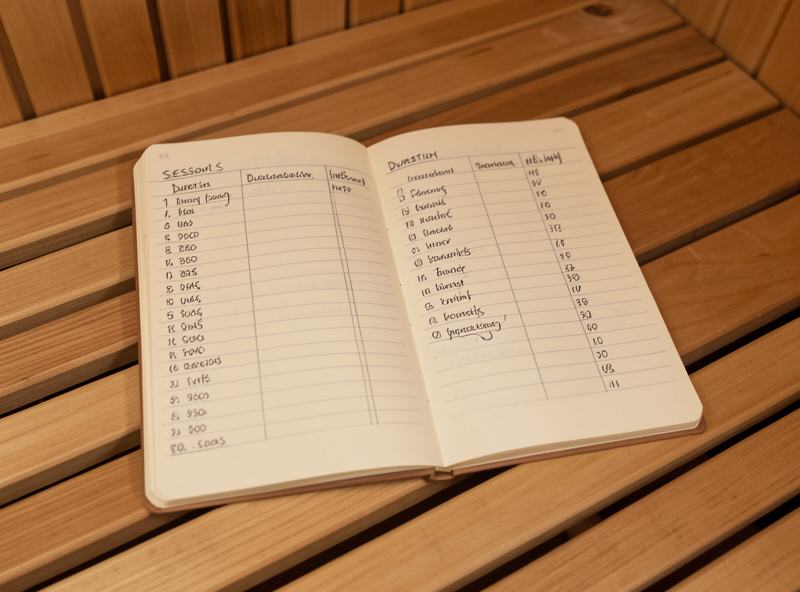
How Do You Measure Your Own Running Cost?
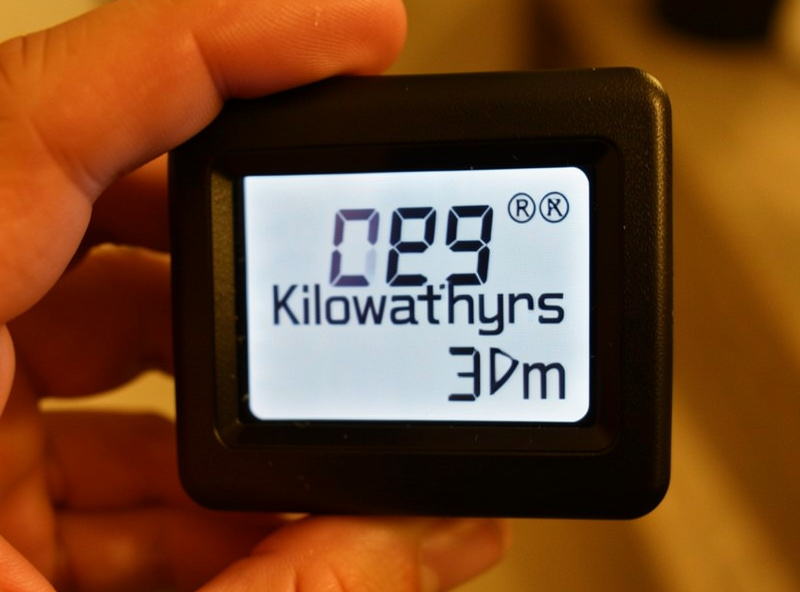
Plug the cabin into a kill-a-watt style energy meter and read the kWh after a real session. That single number, multiplied by your electricity rate from your utility bill, is your true per-session cost — no estimating from wattage stickers, which are often the peak draw rather than the cycling average. Measure a solo session and a shared one and you’ll see the small difference for yourself.
This is the metered lens I bring to everything on this site. The wattage on the box is the maximum the heaters can pull, but the thermostat cycles them, so actual consumption is lower and only a meter tells you the truth. A plug-in energy usage monitor costs little and pays for itself in clarity — the U.S. Department of Energy’s Energy Saver resources make the same point about measuring appliance draw rather than guessing. Run the meter for a week of normal shared use, divide the total kWh by sessions, multiply by your rate, and you have a per-session figure more accurate than any online calculator.
As an Amazon Associate I earn from qualifying purchases.
Does a Bigger Two-Person Cabin Cost More Than a One-Person?
Yes — but because it’s bigger, not because two people use it. A larger cabin has more panel area and more air and wood to heat, so it draws more wattage and loses more heat through its bigger surface. A two-person cabin therefore costs a little more per session than a one-person unit regardless of how many people are inside; the size is the cost driver, not the sharing.
This is the distinction that matters when you’re deciding between a solo cabin you use alone and a two-person cabin you share. The two-person unit costs marginally more to run each session because it’s a bigger box — more panels, more volume — but that cost is the same whether one or two people are in it. So if you’re going to share regularly, the per-person running cost of a two-person cabin is actually lower than two people each running their own solo cabins. Where that lands against purchase price and your room is the trade I walk through in the sizing guide for two and the couples hub.
How Do You Cut the Running Cost for Two?
Tighten preheat, automate it, and keep the cabin’s heat in. Preheat only as long as your cabin actually needs — meter it once and you’ll likely find it’s less than you think. A smart plug that starts the cabin on a schedule stops the “on for 30, sat for 15” waste, and good door seals plus a sited-right cabin cut the heat loss that makes the panels cycle.
My smart plug kicks the cabin on just before we’re ready — the same rule engine that runs the rest of the house handles the sauna, so it’s never heating an empty box longer than needed. Beyond that, the biggest efficiency wins are boring and structural: a cabin with a well-sealing door and full-height glass rather than gaps holds temp with less cycling, and one sited in a heated room rather than a cold garage loses less heat to start with. None of these depend on how many people share — they’re cabin-and-habit fixes. Do them and a shared session for two is one of the cheapest recovery rituals going, a few cents of electricity on a dark Swedish evening. Whatever the research on sauna heat may or may not report for health, the electricity math is simple, measurable, and firmly in my lane — and the second person is nearly free.
Related Reading
- Infrared Sauna for Couples: Sharing a Cabin Without Compromise
- How Much Room Two People Actually Need in an Infrared Sauna
- Bench Layout for Sharing: Facing Benches vs Side-by-Side
- Set Temp When Two People Disagree on Heat
- Shared-Sauna Hygiene: Towels, Covers, and Wiping Down
Does two people cost more to run an infrared sauna?
Only marginally. The heaters draw the same wattage whether one person or two is inside, because the panels run to hold a set temp rather than to warm bodies. On a plug-in energy meter a shared session runs about 3 to 8 percent more kWh than a solo one, since two bodies add thermal mass and block some panel output. That is cents, not a doubling.
How much does one infrared sauna session cost in electricity?
For a typical two-person cabin drawing 1,500 to 2,400 watts, a 45-minute session uses roughly 1.1 to 1.8 kWh. At the U.S. residential average of about 16 cents per kWh that is around 18 to 30 cents of electricity, plus a little for preheat. Your local rate changes this more than anything else.
What drives the electricity cost of an infrared sauna?
Preheat time and session length, not how many people are inside. Every minute the panels run draws power, so over-preheating an empty cabin and long sessions cost the most. Managing preheat and duration matters far more to the bill than whether one or two people use the sauna.
How do you measure your infrared sauna running cost?
Plug the cabin into a plug-in energy meter and read the kWh after a real session, then multiply by your electricity rate from your utility bill. The wattage on the box is usually peak draw, but the thermostat cycles the heaters, so only a meter shows true consumption. Measure a solo and a shared session to see the small difference.
Is a two-person cabin more expensive to run than a one-person?
Yes, but because it is a bigger box with more panels and more air to heat, not because two people use it. The larger cabin draws more wattage and loses more heat through its bigger surface. If you share regularly, the per-person running cost of one two-person cabin is lower than two people each running separate solo cabins.