An infrared sauna costs roughly $200 to $9,000 to buy and about $0.10 to $0.45 per session to run, but the sticker price is the smallest part of the real ownership picture. Across the units I have lived with — a 2-person far-infrared cabin, a full-spectrum unit, a single-person carbon box, and a portable blanket — the all-in number that matters is purchase plus electricity plus the install line nobody quotes you, spread over a 12-to-25-year cabin life.
This guide is the cost map for the whole category. It is not another “average price” page — it breaks ownership into the four numbers that actually move (purchase, electricity, install, and the slow ongoing costs), shows how each one changes by sauna type and size, and links out to the deep dives where a single number needs a full article behind it. If you want the at-home-specific budget worked line by line, my real at-home cost and ROI breakdown runs every receipt for a typical indoor install; this page is the level above it, covering every format and the long-horizon math.
The Four Numbers That Make Up the Real Cost
Total infrared sauna cost is made of four line items, not one: purchase price, electricity per session, one-time install, and ongoing running costs over the cabin’s life. For a typical 2-person cabin run four times a week, purchase dominates year one, electricity is a small recurring trickle of $25-$40 a year, install is a one-time $0-$900, and ongoing costs stay under $50 a year until a part wears out. Get those four straight and no quote will surprise you.
The mistake most buyers make is staring at the sticker and ignoring the other three. A $2,500 cabin that needs a $600 dedicated circuit and lives in a $0.30/kWh state has a very different real cost than the same cabin in a $0.13/kWh state with an outlet already on its own breaker. The way I dial my own budgets is to write the four numbers as a column before I look at any product page — it stops the sticker from doing all the thinking.

Purchase Cost by Type and Size
Purchase price spans an enormous range — roughly $200 for a portable blanket to $9,000 for a premium 4-person full-spectrum cabin — because “infrared sauna” covers four very different hardware classes. The format you choose sets your floor far more than the brand does. A blanket and a hemlock cabin are not the same purchase with a different price tag; they are different products that happen to share the infrared label.
The rough market bands I see hold up across the cabins I have shopped and lived with. Portable blankets and tents sit at the bottom because they are fabric and a few heating elements; carbon-panel cabins climb because you are paying for wood, a frame, and more panel area; full-spectrum units carry a premium for the added near-infrared emitter and its control electronics. Size multiplies all of it — every extra person of bench length adds wood, panels, and shipping weight.
| Format / Size | Typical price band | What you are paying for | Best fit |
|---|---|---|---|
| Portable blanket / tent | $200–$600 | Fabric shell, basic far-IR elements | Renters, travel, smallest budget |
| 1-person carbon cabin | $1,200–$2,800 | Wood box, carbon panels, single bench | Solo daily use, small rooms |
| 2-person far-IR cabin | $2,200–$5,000 | More panel area, hybrid panels, hardware | Couples, the most common buy |
| 2-3 person full-spectrum | $3,500–$6,500 | Adds NIR emitter + control electronics | Buyers who want near-infrared too |
| 4-person full-spectrum (240V) | $5,000–$9,000 | Largest cabin, 240V heater bank | Families, dedicated wellness room |
If you are deciding between formats on price alone, my deeper cost-by-size and cost-by-type breakdown builds the full matrix and shows where the price-per-bench-seat actually turns favourable. For absolute-cheapest formats, the under-$1,000 picks, the best blankets ranking, and the blanket-vs-cabin tradeoff are where the budget end lives. Full-spectrum’s premium is real but often oversold — a cheap “full-spectrum” sticker is frequently one weak NIR bulb, which is exactly the kind of spend I would not pay extra for.
Electricity Cost Per Session
An infrared sauna costs about $0.10 to $0.45 per session to run, putting it in the same electricity bracket as a treadmill — a real but small line on the bill. The math is simple and worth doing yourself: cabin wattage multiplied by session length in hours multiplied by your local rate per kWh. A 1,500W 2-person cabin run 45 minutes at $0.16/kWh costs about $0.18; the same session in a $0.30/kWh state costs about $0.34.
I do not estimate this number — I read it. A plug-in kill-a-watt meter on the sauna circuit shows the real draw, including the preheat that the spec sheet quietly leaves out, and in my own session log a 2-person carbon cabin lands right where the formula predicts. Two variables swing the result more than people expect: your local rate (US averages run from about $0.13/kWh in Texas to $0.30/kWh in California) and your preheat habit, since a long pre-warm before you ever step in adds kWh to every session. The full metered method, regional rate tables, and the standby-and-preheat traps are in the electricity cost deep dive.
Install Cost: The Line Nobody Quotes You
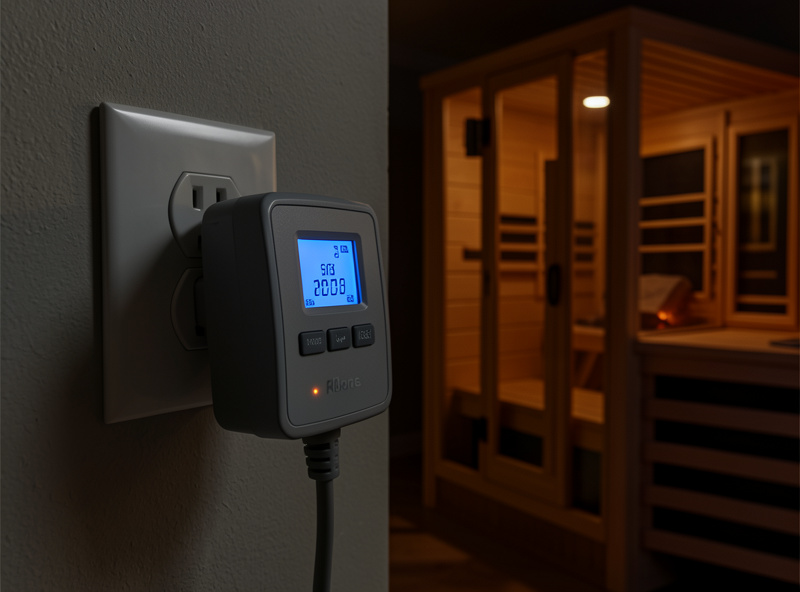
Installation cost ranges from $0 to about $1,200 and turns almost entirely on one question: does your cabin’s spot already have a dedicated circuit? If the outlet is on its own breaker and nothing else shares it, most 110V cabins plug in for free. If not, roughly 60% of home installs need an electrician to run a dedicated circuit — and that is the cost most buyers never see coming.
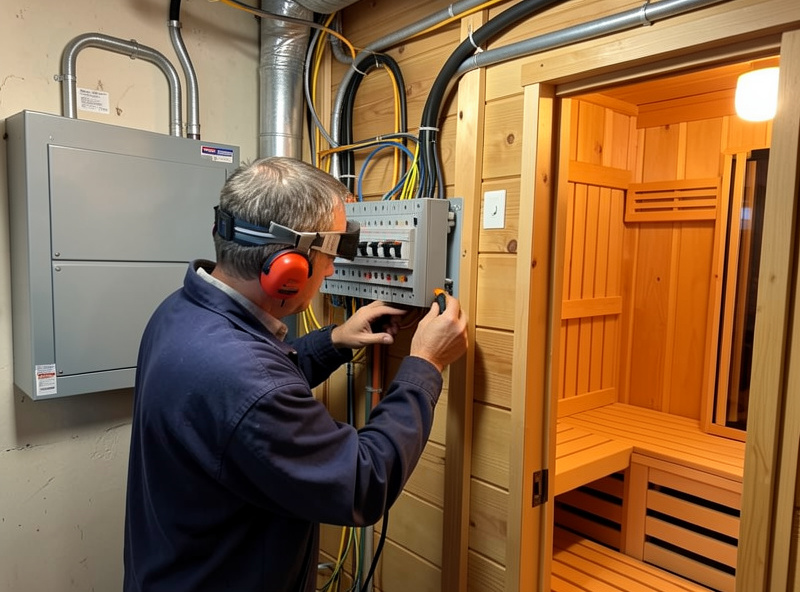
The price driver is wire-run distance and wall access, not the circuit type itself. A short 110V run through an accessible attic lands at the low end; a long run through finished walls, or a 240V circuit for a 4-person cabin, lands at the high end. I wired my own dedicated circuit and the one thing I would never cut is the “dedicated” part — sharing a heater this hungry with a laundry line is how you trip a breaker mid-session and slowly cook the connections. For the engineering side of this — breaker sizing, clearance, and permits — the installation requirements guide is the companion, with the 240V breaker requirements and wiring an outlet deep dives behind it. Outdoor installs change this math entirely, which the backyard setup guide covers.
DIY Build vs Prefab: Where the Money Actually Goes
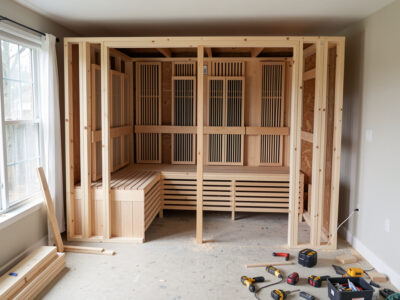
A DIY infrared sauna build can land under $1,500 in materials for a converted closet, well below a comparable prefab cabin — but the saving is real only if you already own the tools and the time, and the wiring is done to code. Prefab cabins bundle the wood, the panels, the controller, and the engineering into one shipped box; a DIY build unbundles all of that and hands you the labour.
The honest comparison is not “DIY is cheaper” — it is which line items you are willing to take on. Panels and a controller are the irreducible cost either way; what you save on a DIY build is the cabinetry markup and the brand premium, and what you spend is weekends and the risk of a wiring or ventilation mistake a prefab unit handles for you. I lay out the full materials-versus-bundled breakdown, and where the DIY saving evaporates, in the DIY vs prefab cost comparison. The at-home setup guide is the practical companion if you go the converted-room route.
Ongoing and Hidden Running Costs
Beyond electricity, an infrared sauna costs roughly $20 to $60 a year in ongoing items most buyers forget — wood care, the occasional door gasket, cleaning supplies, and the rare panel or bulb replacement. None of these are large, but they are easier to budget for than to absorb by surprise at year five. A door gasket that hardens and leaks at year 5-7, for example, quietly raises your warmup time and your per-session cost until you replace a $30 part.
The other hidden costs are situational rather than annual: a rubber floor mat for a basement install, an optional surge protector while the electrician is already at the panel, and a homeowner’s-insurance endorsement that some carriers ask for once a cabin’s value crosses about $5,000. The full ongoing-ownership ledger — including which “lifetime warranty” claims actually hold and which wear items they exclude — is in the hidden and ongoing costs guide.
Home Cabin vs Gym or Spa Cost Over Time
A home cabin beats ongoing membership cost surprisingly fast: against a $35 spa drop-in four times a week — about $7,000 a year — a $4,400 mid-range cabin pays for itself in well under a year, then runs at pennies per session for the next decade-plus. Against a cheaper gym membership the math is slower and depends on whether you would keep the gym anyway, which is where the comparison gets genuinely interesting.
The break-even is not a single number; it is a curve that depends on your session frequency, your local electricity rate, and what you are actually replacing. Replace a $40 spa habit and you are ahead in months; add sauna access you never had before and the right metric is cost-per-session over the cabin’s life, which can drop under $1.50. The full break-even modelling across spa, gym, and no-prior-access scenarios is in the home cabin vs gym and spa cost comparison. For the solo-use economics specifically, the personal solo-setup guide covers the single-user case, and the portable sauna guide covers the cheapest entry format if a full cabin is more than you need.
Long-Term Value and Resale
Infrared saunas hold value better than most large wellness purchases: a well-kept cabin typically resells for 40% to 60% of its original price after several years, because the heaters and wood age slowly and the unit is a fixed-cost item buyers want secondhand. Depreciation is gentlest on mid-range cabins from established makers and steepest on the cheapest blankets, which wear out rather than resell.
If you ever expect to move or upgrade, two choices at purchase protect resale value most: a cabin that breaks down into flat panels (far easier to sell and ship than a glued unit) and one whose maker still exists to honour transferable warranties. The full depreciation curve by format, what hurts resale most, and how the long-horizon value math changes the “is it worth it” question all live in the long-term value and resale guide. Brand longevity matters here too — the brand comparison is where established-maker resale strength shows up.
What Actually Drives the Price Gap Between Cabins
The difference between a $2,500 cabin and a $6,000 one is not “twice the quality” — it is a handful of specific cost drivers, and knowing them lets you spot where a premium is earned versus padded. The biggest single driver is panel area and panel type: more square feet of carbon or carbon/ceramic hybrid panel costs more to build and runs more evenly, and that is a difference you can feel as fewer cold spots at the same set temperature. On my own bench, the cabins that map cleanest under a thermal camera are also the ones that cost more — the correlation is real, not marketing.
After panels, the costs that move the sticker are wood grade (clear hemlock or cedar versus knotty), the heater control electronics (a real PID controller versus a basic timer), and whether a near-infrared emitter is fitted at all. Glass area, chromotherapy lighting, and audio are genuine add-ons but they are the cheapest part of the bill to add later, so paying a premium for a cabin that bundles them is usually the weakest-value spend. The line I hold is simple: pay up for panel area, even heat, and a controller that holds set temperature; treat lighting and audio as optional upgrades you can buy separately for less. The brand comparison is where these drivers separate the makers worth their premium from the ones charging for a sticker.
The Cost Mistakes That Hurt Most
Three budgeting mistakes cost owners far more than the cabin’s price difference would. The first is ignoring the circuit question until delivery day — discovering you need a $600 dedicated run after the cabin is already in the room turns a planned purchase into a stalled one, and rushed electrician bookings cost more. Check your breaker panel before you buy, not after.
The second is buying for the wrong cadence. A cabin sized and priced for daily family use is wasted money if you will realistically run it three times a week solo, and a too-small cabin you outgrow becomes a resale loss. Match the size to honest usage, not aspiration. The third is chasing the lowest sticker without reading the running and ongoing costs: a cheap cabin with thin panels, a weak controller, and no replaceable wear parts can cost more over a decade than a mid-range cabin that holds set temperature and resells. The cheapest cabin and the cheapest ownership are rarely the same cabin — which is the entire reason this guide treats cost as four numbers, not one.
How to Build Your Own Cost Estimate
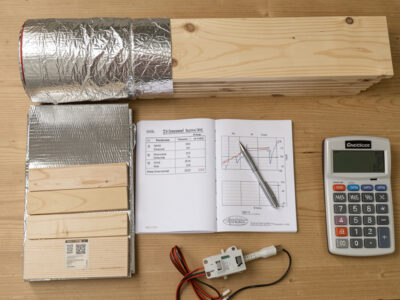
To estimate your real total, write the four numbers in order: pick a format and size for the purchase band, multiply your cabin wattage by your session length and local rate for electricity, add $0-$900 for install depending on whether you need a dedicated circuit, and pencil in $30-$60 a year for ongoing costs. That column tells you the real first-year cost and the real per-session cost over time far better than any single “average” figure. A worked example: a $2,495 budget 2-person cabin, plugged into an existing dedicated outlet, run 45 minutes four times a week at $0.16/kWh, with $40 a year in wood care and cleaning, costs about $2,535 in year one and roughly $2,700 across five years — which works out to under $2.60 a session over that span, before you even count the cabin’s remaining resale value. Run the same column with a 240V 4-person cabin in a $0.30/kWh state and the numbers triple, which is exactly why a single advertised price tells you so little.
The cabin you choose interacts with cost in ways the sticker hides — a slightly pricier cabin that breaks down flat is cheaper to install and to resell, and a slightly cheaper one that needs a 240V circuit may cost more all-in. For the buying side of that tradeoff, the how-to-choose framework, the best home cabins ranking, and the sizing guide are where cost meets feature choice. Infrared sauna health effects are widely studied and reported, but this guide stays in its lane — the numbers, not the wellness claims.
Frequently Asked Questions
How much does an infrared sauna cost in total?
Purchase runs roughly $200 for a portable blanket to $9,000 for a premium 4-person cabin, electricity adds about $0.10 to $0.45 per session, install is a one-time $0 to $1,200, and ongoing costs run $20 to $60 a year over the cabin’s life.
What is the cheapest type of infrared sauna?
Portable blankets and tents are the cheapest format at roughly $200 to $600, since they are fabric and basic far-infrared elements rather than a wood cabin. They cost the least to buy and run but wear out faster and do not resell like a cabin.
How much does it cost to run an infrared sauna per session?
About $0.10 to $0.45 per session, depending on cabin wattage, session length, and your local electricity rate. A 1,500W two-person cabin run 45 minutes at $0.16 per kWh costs roughly $0.18; the same session in a $0.30 per kWh state costs about $0.34.
Does an infrared sauna add much to your electric bill?
Not much. At four sessions a week, annual electricity cost runs roughly $22 for a 1-person cabin to $85 for a 4-person 240V cabin, putting it in the same bracket as a home treadmill rather than a major appliance like a water heater.
Is a home infrared sauna cheaper than a gym or spa over time?
Usually yes against spa drop-ins. Against a $35 spa visit four times a week, a $4,400 cabin pays for itself in under a year, then runs at pennies per session. Versus a cheap gym membership the math is slower and depends on whether you would keep the gym anyway.
Do infrared saunas hold their resale value?
Better than most large wellness purchases. A well-kept cabin often resells for 40% to 60% of its original price after several years, because heaters and wood age slowly. Cabins that break down into flat panels and come from makers still in business resell best.