A DIY infrared sauna build can come in under $1,500 in materials for a converted closet, well below a comparable $2,500–$4,000 prefab cabin — but the saving is only real if you already own the tools, do the wiring to code, and value your weekends at zero. The honest comparison is not “DIY is cheaper”; it is which line items you are willing to take on yourself versus pay a manufacturer to bundle.
I have lived with prefab cabins and looked hard at the DIY route for a basement room, so this breaks the decision down by where the money actually goes on each path. Panels and a controller cost roughly the same either way — what you save on DIY is the cabinetry markup and the brand premium, and what you spend is labour and risk. For where this choice sits in total ownership cost, the complete cost guide stacks it against electricity, install, and resale.
Where the Cost Actually Splits
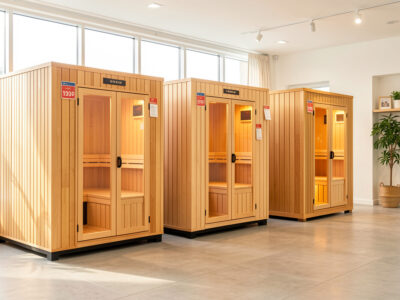
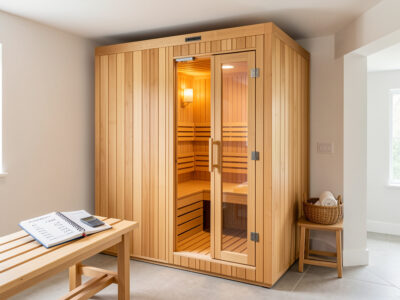
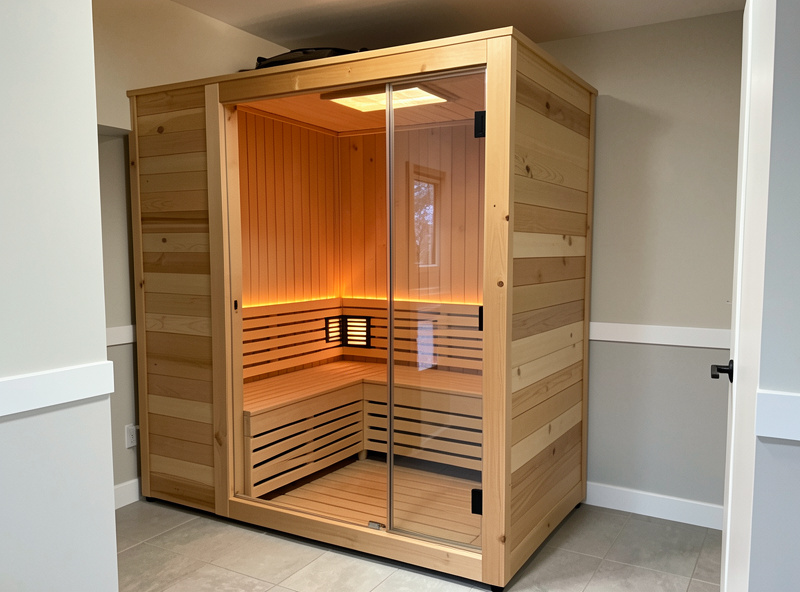
The irreducible cost on both paths is the same: infrared panels and a controller, roughly $600–$1,200 for a small room’s worth. Everything else is what separates DIY from prefab. A prefab cabin adds engineered cabinetry, pre-cut tongue-and-groove wood, a tested control system, and the brand’s margin; a DIY build replaces all of that with your materials, your labour, and your tolerance for getting the wiring and ventilation right.
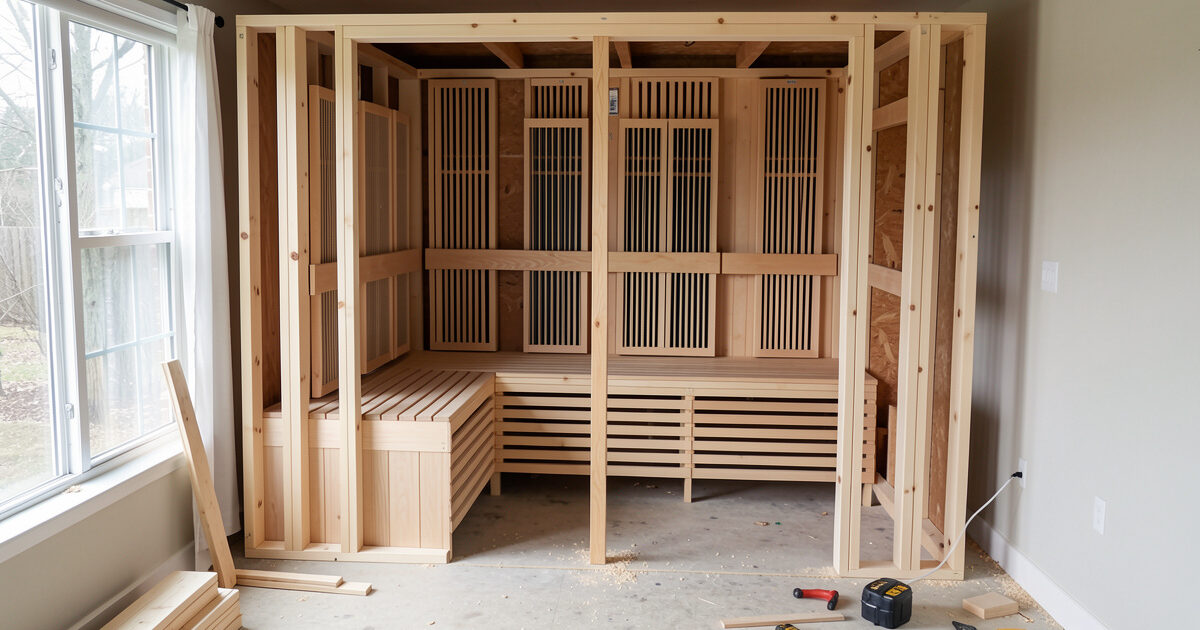
This is why the DIY saving is real but narrower than it looks. You are not avoiding the expensive parts — the panels cost what they cost — you are avoiding the cabinetry markup and the assembly labour. If you already have a stud-walled closet or basement nook to convert, you also skip the cabin shell entirely, which is where DIY genuinely undercuts prefab. Build from scratch in the open, framing and insulating a freestanding box, and the materials creep back toward prefab territory fast.
| Cost component | DIY (closet conversion) | Prefab cabin |
|---|---|---|
| Infrared panels | $500–$900 | Included |
| Controller / thermostat | $100–$250 | Included |
| Wood / cabinetry | $200–$600 (or existing walls) | Included |
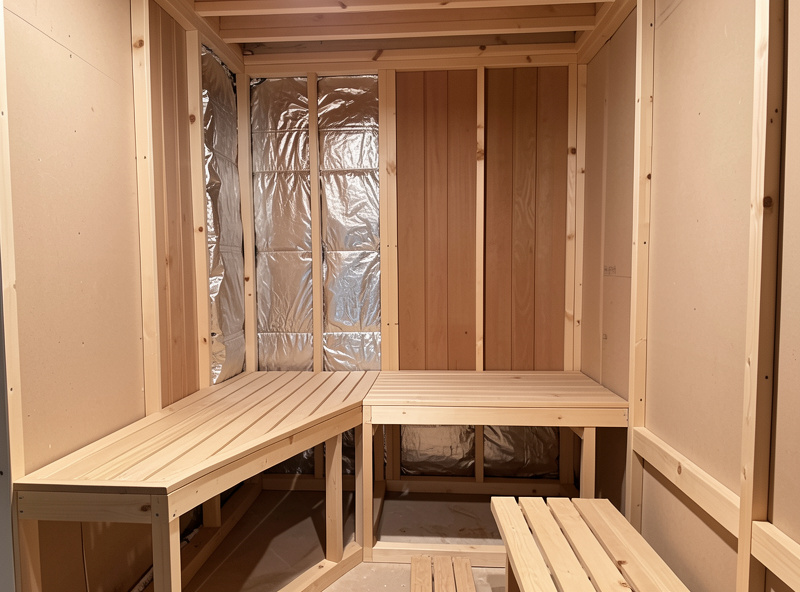
| Insulation + vapour barrier | $100–$300 | Included |
| Bench + door | $150–$400 | Included |
| Your labour | 1-3 weekends | 60-90 min assembly |
| Typical total | $1,050–$2,450 | $2,500–$4,000+ |
The DIY Costs That Eat the Saving
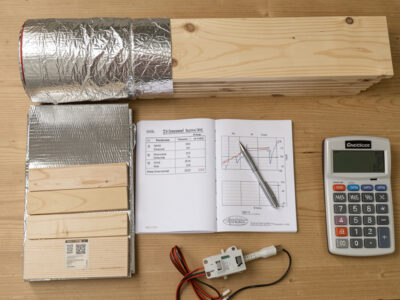
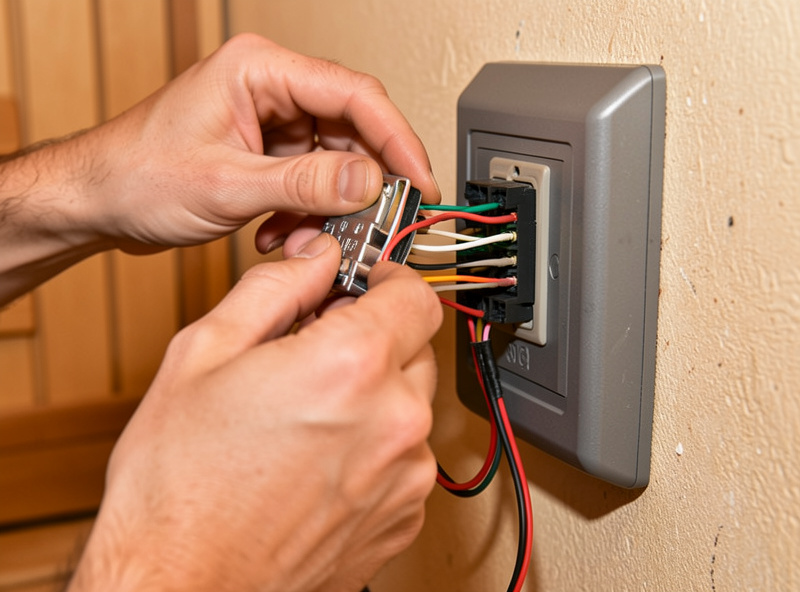
Three costs quietly close the gap on a DIY build. First, electrical work: if your room needs a dedicated circuit, the $200–$900 electrician bill lands on both paths equally, but DIY often needs more of it because you are wiring the panels yourself. Second, tools you may not own — a decent panel saw, a stud finder, and a multimeter add up if you are starting from nothing. Third, the cost of a mistake: a ventilation or vapour-barrier error that traps moisture is a rebuild, not a tweak.
None of these are dealbreakers, but they are why I tell people the DIY saving is real mainly for those who already own tools and have done finish-carpentry before. A prefab cabin’s price includes the manufacturer having already solved ventilation, panel spacing, and clearance — the engineering you would otherwise be testing on yourself. The installation requirements guide covers the clearance and ventilation rules a DIY build has to get right on its own.
When DIY Genuinely Wins on Cost
DIY wins clearly in one scenario: converting an existing insulated room — a closet, a spare bathroom, a basement nook — where the walls, floor, and door already exist. Here you buy only panels, a controller, and a bench, skip the entire cabin shell, and can land under $1,500 all-in. This is the configuration where DIY beats prefab by the widest margin and the labour is genuinely modest.
DIY also wins for non-standard spaces a prefab cabin simply does not fit — an odd-shaped attic corner, an extra-tall room, or a footprint between standard cabin sizes. There is also a quality-of-control argument that has nothing to do with cost: building it yourself lets you choose the exact panel layout and bench height, and route the wiring for the lowest field readings rather than accepting whatever the cabin shipped with. That is a real benefit if you care about the engineering details, but it is a reason to build, not a way to save money — and it is worth being honest with yourself about which one is actually driving the decision. What DIY does not reliably beat is a standard prefab cabin in a standard room: by the time you buy wood, insulation, a door, and a bench and spend the weekends, you are often at prefab cost without the warranty or the tested engineering. For the at-home version of this math with real receipts, see the at-home cost breakdown.
The Resale Footnote
One cost most DIY builders forget is resale: a converted-room sauna has essentially no resale value because it cannot be moved, while a prefab cabin that breaks down into flat panels resells for 40–60% of its price. If there is any chance you will move within a few years, that resale gap can erase the upfront DIY saving entirely.
This does not make DIY wrong — a built-in sauna can add appeal to a home the way a built-in wine room does — but it changes the math from “DIY saved me $1,500” to “DIY saved me $1,500 that I cannot recover later.” The prices-by-size guide shows what prefab cabins hold their value, and the broader cost guide folds resale into the full picture.
Frequently Asked Questions
Is it cheaper to build a DIY infrared sauna than buy a prefab one?
It can be, mainly when converting an existing insulated room like a closet, where you buy only panels, a controller, and a bench for under $1,500. Building a freestanding box from scratch often reaches prefab cost once you add wood, insulation, and labour.
How much do DIY infrared sauna panels cost?
Infrared panels for a small room run roughly $500 to $900, plus $100 to $250 for a controller or thermostat. Panels and the controller are the irreducible cost on both DIY and prefab paths, so they are not where DIY saves money.
What hidden costs make DIY infrared saunas more expensive?
Electrical work for a dedicated circuit ($200 to $900), tools you may not own, and the cost of fixing a ventilation or vapour-barrier mistake. These can close most of the gap between a DIY build and a prefab cabin for first-time builders.
Do DIY infrared saunas have resale value?
A converted-room DIY sauna has essentially no resale value because it cannot be moved, while a prefab cabin that breaks into flat panels resells for 40 to 60% of its price. If you may move soon, that gap can erase the upfront DIY saving.
When is a prefab infrared sauna the better value?
For a standard cabin size in a standard room, prefab often matches DIY cost once labour, wood, and a door are counted, and adds a warranty plus tested engineering for ventilation and clearance. Prefab also installs in under 90 minutes versus DIY weekends.
Can I convert a closet into an infrared sauna?
Yes, an insulated closet is the ideal DIY conversion: the walls, floor, and door already exist, so you only add panels, a controller, a bench, and a vapour barrier. This is the configuration where DIY most clearly beats prefab on cost.