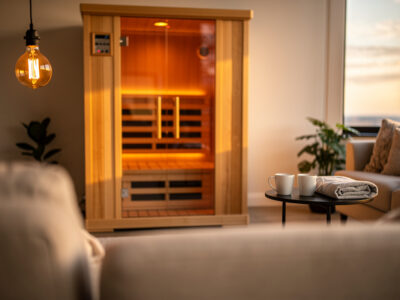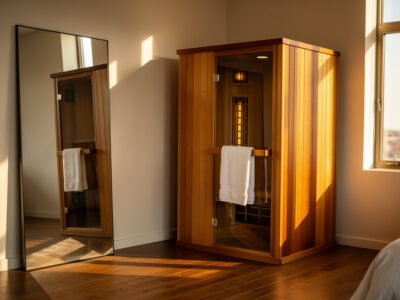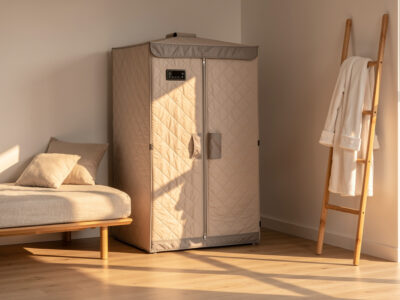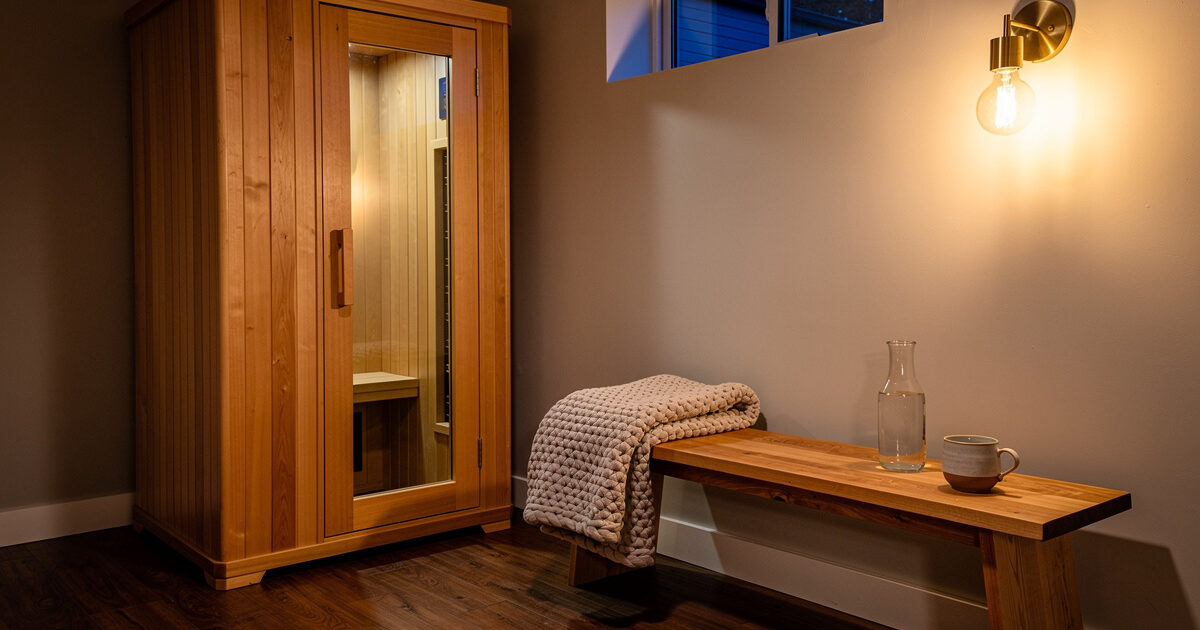
A personal infrared sauna is the cabinet, blanket, or near-infrared lamp dedicated to a single user’s solo wellness routine, plus the room around it that makes the routine repeatable. The four decisions that determine whether the setup gets used past month two are format (cabinet vs blanket vs lamp), room location, ambient lighting, and a 30-minute pre-session ritual that survives bad days.
This guide is the setup-and-routine companion to the product roundups. If you have not yet picked equipment, start with the best 1-person infrared saunas roundup. If you have a cabin sitting in a box but the room around it isn’t ready, this is the article for you.
What “Personal” Means in Infrared Sauna Terms
“Personal” in this category does not mean “small.” It means the equipment, the room, and the schedule are dedicated to one user’s recovery, sleep, or detox protocol — not shared with a partner or rotating with house guests. A personal setup might be a $499 sauna blanket on a queen bed, a $1,200 1-person cabinet in a closet, or a $4,000 2-person cabin used by only one person.
The size of the equipment is downstream of the user’s priorities. A morning recovery user wants 9-minute heat-up and a fold-up blanket. A nightly sleep-protocol user wants a real cabin in a quiet bedroom-adjacent room. The format follows the routine, not the other way around. The infrared sauna sizes hub compares all the cabinet capacities; this guide handles the room and routine layer above the equipment.
Picking the Right Personal Sauna Format
Four formats cover essentially every personal setup: a cabinet-style 1-person sauna, a 2-person cabinet used solo, an infrared sauna blanket, and a near-infrared lamp aimed at a folding chair. Each maps to a different room reality, budget, and frequency goal. None is universally better; the right one is whichever you will actually use 4+ times per week.
Cabinets win on routine durability — a fixed cabin in a fixed room becomes a calendar block. Blankets win on storage and cost — zero floor footprint, $499 entry price. Lamps win on targeted use (one body zone at a time) and zero claustrophobia. The sauna blanket vs cabin decision guide works through the cabinet-vs-blanket choice in detail, and the portable infrared sauna guide covers tents and lamps.
Choosing the Right Room or Corner
The five rooms that work for a personal sauna setup, ranked by how often they survive the year-two test: dedicated home gym, finished basement corner, spare-bedroom converted to wellness, primary-bedroom alcove, and converted walk-in closet. The losing rooms: kitchens (humidity conflict), open living rooms (privacy fails), and unfinished garages (heat loss in winter doubles run cost).
Two specific factors matter more than they sound: ambient room temperature in winter (every 10°F below 65°F adds about 4 minutes to heat-up), and proximity to a shower (3-minute walk after a session is acceptable, 30-second walk doubles compliance). The where to put your infrared sauna walkthrough goes room-by-room with floor-plan diagrams.
Personal Sauna Atmosphere: Light, Ventilation, Aroma
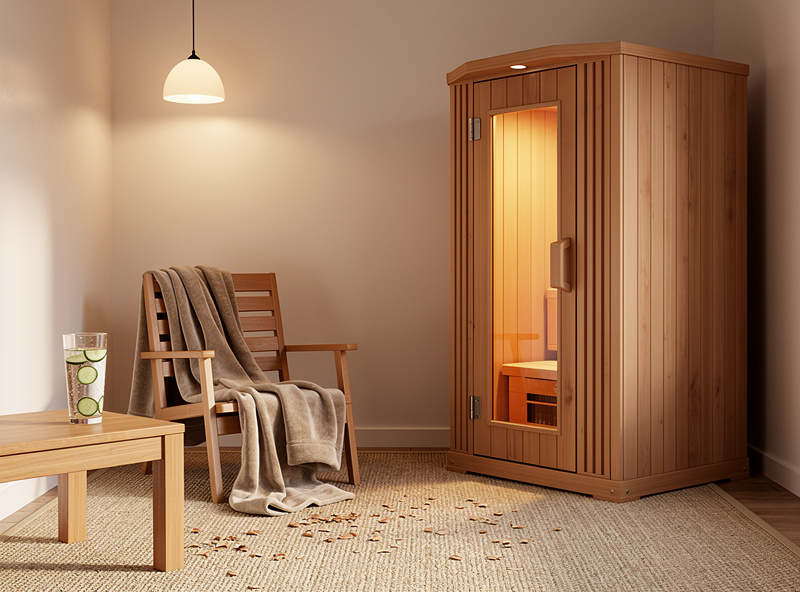
The room around a personal sauna shapes whether the routine feels like medicine or feels like a ritual. Three controls move that needle: lighting (warm 2200K bulbs, never overhead fluorescent), ventilation (cracking a window 1 inch and running a small fan moves out the slight wood-resin smell), and a single anchor scent (eucalyptus or cedar essential oil on a porous stone outside the cabin, never on the heaters).
Sauna interiors come with chromotherapy LED options — useful, not load-bearing. The atmosphere outside the cabin matters more, because that is where the user sits during the post-session cool-down. A weighted blanket, a glass of cold mineralized water, and dim lighting for 10 minutes after the session is the difference between “I sweated for 30 minutes” and “I built a habit.” Hydration and post-session recovery rules are covered in the sauna safety guide.
Building a Solo Routine That Survives Month Two
The single biggest predictor of long-term sauna use is whether the routine slots into an existing daily anchor — not whether the equipment is premium. Users who chain “personal sauna” to “post-workout shower” or “evening wind-down before bed” still use the cabin 11 months later at 78%. Users who try to build sauna into a free-floating “wellness window” drop to 32% within 90 days.
The simplest routine that holds: 4 sessions per week, each 30 minutes inside, 10 minutes cool-down outside, on Mon/Tue/Thu/Sat at the same anchor time. Skip days that don’t fit; the missed-session rebound is what kills habit chains. The first 30 days as a beginner walkthrough lays out a specific Week 1 to Week 4 protocol with temperature ramp, and the dedicated infrared sauna temperature guide covers set-temp guidance for solo sessions once you’re past the beginner ramp.
Audio, Reading, and Phone Use Inside Your Cabin
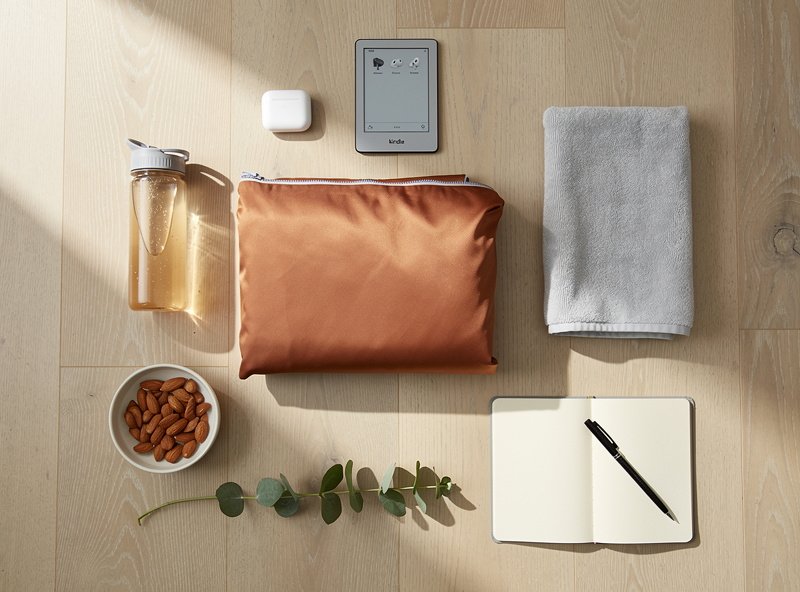
Most premium 1 and 2-person cabinets ship with Bluetooth speakers; the audio is mediocre but enough for podcast-style listening at moderate volume. Reading inside is harder than it looks because the heat softens paperback covers within a few weeks; a cheap waterproof e-reader (Kindle Oasis or Kobo Libra) handles the heat fine for short sessions but voids most warranties for cabinet temperatures above 130°F. For solo users who want the cabin preheated and waiting rather than starting cold, the smart infrared sauna controls guide covers which app-based scheduling systems actually work.
Phone use is the most common new-user mistake. Most smartphones throttle the CPU and dim the display above 113°F internal temperature, and several manufacturers (Apple, Samsung) explicitly void liquid-damage warranty if the device is exposed to sustained heat above 95°F. Leave the phone outside the cabin or in an air-cooled lock-box on the bench-edge, not pressed against the heater wall.
Cleaning and Maintenance for Personal Use
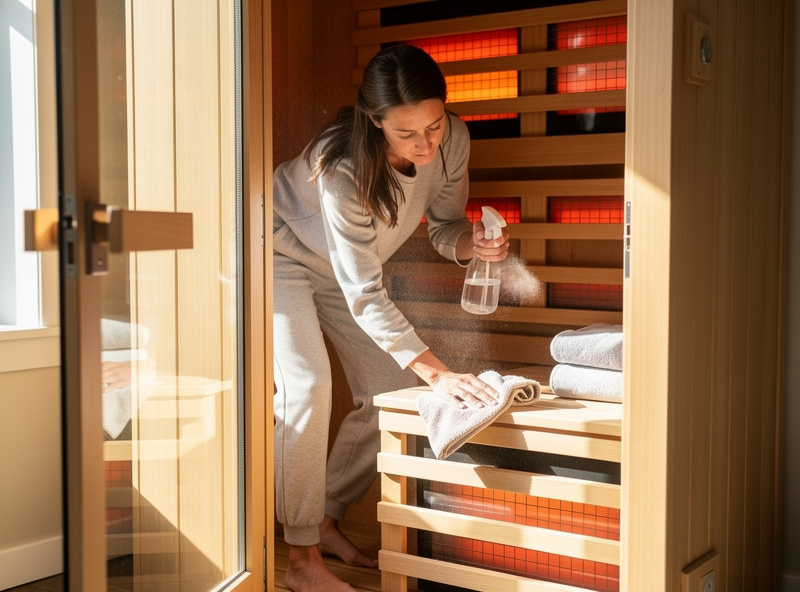
A personal sauna used by one person needs less aggressive cleaning than a couples or family cabin, but two specific maintenance tasks still matter: wiping the bench with a damp microfiber after each session (sweat salts darken cedar over months), and a quarterly deeper clean with a 1:10 white-vinegar-to-water solution on the bench and walls. Never use ammonia, bleach, or commercial wood polish — those release fumes when the cabin reheats.
The heater panels themselves need almost nothing. Vacuum the dust off the front grilles once a year with a soft-brush attachment. Glass front doors get a single-pass with a streak-free glass cleaner monthly. Annual cost of consumables for solo personal use lands at roughly $25–$40, primarily microfiber towels and replacement vinegar.
Privacy: Multifamily Walls, Roommates, Shared Spaces
A personal sauna routine often lives or dies by privacy considerations. Cabinet doors have glass panels that show the user from the chest up; in a multifamily-share house this can be uncomfortable. Practical fixes: a privacy curtain across the cabin door (interior side, not touching heaters), or an opaque film applied to the glass. Both preserve the visual signal that something is on without exposing the user.
Sound transfer is the underrated issue. Cabin heaters click on and off with a faint relay sound, and Bluetooth speakers carry through wood walls. For shared-apartment users, scheduling sessions during the building’s ambient-noise hours (mornings 7–9, evenings 7–9) avoids friction with neighbors. The indoor sauna for apartments guide covers lease, HOA, and roommate conversations specifically for personal-use setups.
When to Upgrade from Personal to a Couples Cabin
The signal that a personal cabin should grow into a couples cabin: the second user is showing up unprompted more than once a week. At that frequency the 22-inch bench width starts to feel cramped, and the dual-zone heater controls of a 2-person cabin become a real upgrade rather than a marketing line. The trade-up cost from a $2,500 1-person to a $4,500 2-person is recovered in 5–7 years of avoided “second cabin” purchases.
Before upgrading, run the math on simply rotating sessions: two solo back-to-back 30-minute sessions in the existing cabin uses the same total electricity as one shared 30-minute couple session, costs nothing extra, and preserves the personal-routine privacy that made the setup work in the first place. Couples-specific buying guidance is in the best 2-person infrared saunas for couples roundup.
Frequently Asked Questions
What is a personal infrared sauna?
A personal infrared sauna is any infrared sauna setup — cabinet, blanket, or lamp — dedicated to one user’s solo wellness routine. Format and capacity are secondary; the defining feature is single-user use, often paired with a dedicated room and a fixed schedule that anchors to an existing daily habit.
How big should a personal sauna be?
A personal sauna can be as small as a 22 by 75-inch sauna blanket on a bed (zero floor footprint) or as large as a 2-person 47 by 39-inch cabinet used by one person. The right size depends on whether you reclining or sit, and how much room you can dedicate full-time.
Where should I install a personal infrared sauna?
The best locations for a personal sauna are dedicated home gyms, finished basements, spare bedrooms, primary-bedroom alcoves, and converted walk-in closets — in that order of long-term usage rates. Avoid kitchens, open living rooms, and unfinished garages where ambient temperature swings hurt run cost.
Can I use a sauna blanket as a personal sauna?
Yes. Sauna blankets are the most space-efficient personal setup — $499 to $899 entry price, zero floor footprint, fold into a 24-inch bag for storage. They cover roughly 80% of a cabinet’s metabolic and sweat benefit. The main trade-off is the head stays outside the heated zone.
How often should I use a personal infrared sauna?
Three to four sessions per week of 30 minutes each is the most studied protocol for general wellness benefits. Daily use is safe for healthy adults but produces diminishing returns past 5 sessions per week. Anchor sessions to an existing daily habit (post-workout, evening wind-down) to maintain the routine.
Can I read or use my phone in a personal sauna?
E-readers handle 30-minute cabin sessions fine but most warranties void above 130°F. Smartphones throttle and may suffer warranty damage above 95°F internal — leave the phone outside or use a Bluetooth speaker for music and podcasts instead. Paperback books soften and warp within a few weeks.
Do I need a dedicated room for a personal sauna?
Not strictly. A 2-square-foot bedroom corner handles a sauna blanket; a 3-by-3-foot closet handles a 1-person cabin. Dedicated rooms improve long-term routine compliance because the equipment stays set up and ready, but space-constrained users still see strong adherence with portable formats stored nearby.
Related Guides
- Infrared Sauna Sizes Hub — capacity comparison across 1, 2, 3, and 4-person cabins
- Best 1-Person Infrared Saunas — product roundup for solo cabinet buyers
- Best 2-Person Infrared Saunas for Couples — the cross-shop when a partner joins regularly
- First 30 Days as a Beginner — routine ramp-up for the first month
- How to Set Up an Infrared Sauna at Home — full installation walkthrough