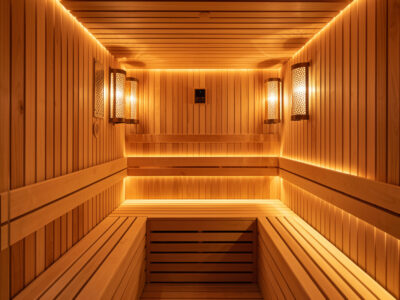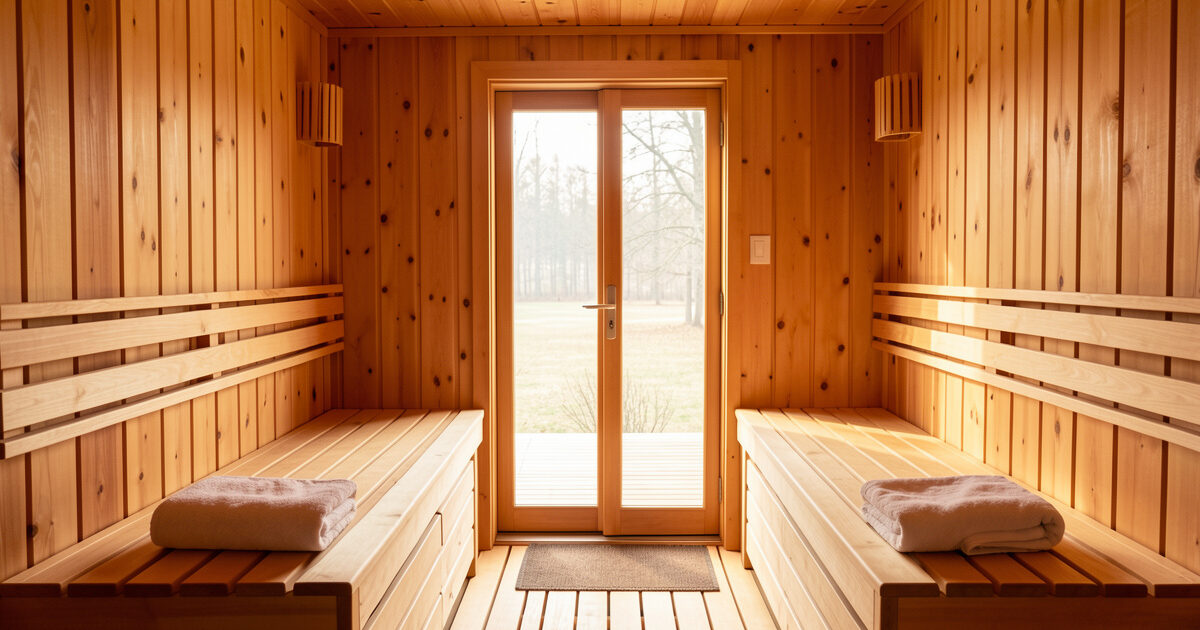
Two people can share an infrared sauna comfortably, but only if the cabin was chosen for two bodies from the start. A true two-person far-infrared unit needs roughly 16 to 20 square feet of interior floor, benches deep enough to sit without a knee war, and enough panel coverage that a second body doesn’t steal the heat off the first.
Here’s the thing almost nobody tells you before the box arrives: a sauna sized “for two” on the sticker is very often a roomy one-person cabin with a longer bench. I found that out the slow way. The 2-person low-EMF far-infrared cabin I run in my Swedish home is the unit I measure everything else against, and even it has a favorite seat — the one where no back panel sits behind your partner’s shoulders, quietly shaded from you.
Sharing a session changes the physics, the thermostat argument, the electricity bill, and the cleaning routine all at once. This guide is the map to every one of those, drawn from years of running four different infrared units side by side and metering what actually happens when a second person climbs in.
Can Two People Actually Share an Infrared Sauna Comfortably?
Yes — comfort for two comes down to three things the marketing never lists: usable bench depth (14 inches minimum per person), unobstructed panel coverage on the wall each person faces, and a heat setting you can both live with. Get those right and a shared session beats a solo one. Get them wrong and one of you is always cold.
The reason shared sessions feel worse in a cramped cabin is that infrared heat is radiant, not convective like a traditional Finnish sauna. In a hot-rock sauna the air itself is 80–100°C and it wraps around everyone equally. In an infrared cabin the air is comparatively mild — often 45–60°C — and the warmth you feel is the panels radiating directly onto your skin. Put a second body between you and a panel and that body absorbs the radiation meant for the wall behind it. The felt heat drops on the shaded side immediately.
So “comfortable for two” is really an engineering question, not a wellness one. It’s about geometry — where the panels are, where the bodies sit, and how the radiant footprint of each heater overlaps the seats. That’s the lens this whole site is built on, and it’s the lens the rest of this cluster runs with. Start with how much room two people actually need if you’re still shopping.
How Much Cabin Do Two People Really Need?
A comfortable two-person far-infrared cabin runs about 48 inches wide, 42 inches deep, and 75 inches tall — roughly 16 to 20 square feet of floor. Below 44 inches of bench width, two adults are shoulder to shoulder with no room to angle toward a panel. That single dimension decides more of the experience than any spec on the box.
Manufacturers love to label a cabin by the number of bodies you can physically wedge inside, not the number who can sit and rotate a shoulder toward the heat. My daily cabin has a 47-inch bench, and two of us fit with maybe four inches to spare. It works because the corner panels wrap the seating; a flat two-panel back wall the same width would leave a cold gutter right where the seam falls.
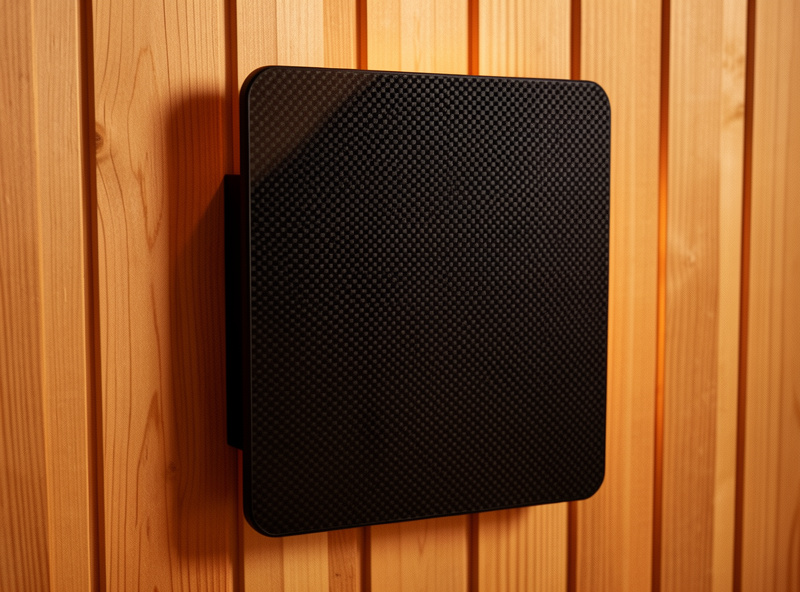
Ceiling height matters more than people expect for two, too. Heat stratifies — the air near the ceiling is always warmer — and taller occupants sitting upright put their heads and shoulders into a different thermal layer than a shorter partner. A 75-inch cabin gives enough headroom that neither of you is ducking, and enough vertical panel run that the warmth reaches shoulder height on both of you. For the full breakdown of footprint, bench depth, and door swing, I split that into its own guide on infrared sauna space for two people. If you’re weighing whether to jump to a bigger cabin entirely, my 1 vs 2 vs 4 person comparison lays out where each size stops making sense.
Why Does the Heat Feel Different With a Second Body in the Cabin?
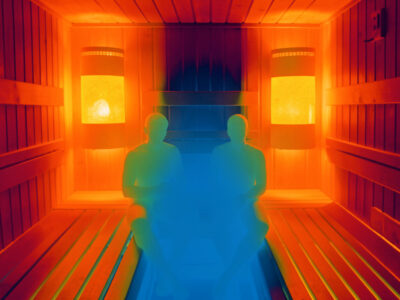
A second person creates cold spots. Each body blocks the radiant path between a panel and the seat behind or beside it, so the shaded partner can lose noticeable felt heat even while the thermostat reads a steady set temp. On my thermal camera, the wood directly behind a seated person often reads 8–12°C cooler than the exposed panel face beside it.
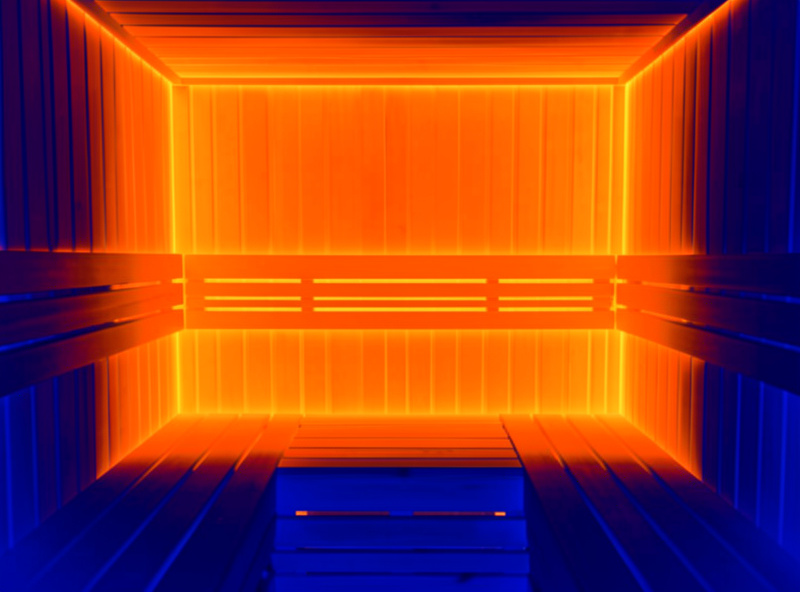
This is the single most under-discussed problem in shared saunas, and it’s pure physics. Infrared in the far band (roughly 3–1000µm, which is what most cabin panels emit) is line-of-sight. It doesn’t bend around a torso the way hot air circulates. So the person sitting between a side panel and the opposite wall effectively casts a “heat shadow” onto their partner. In a side-by-side layout, your inner shoulders shield each other from the back panels behind you.
I mapped this in my own cabin with a small thermal camera — the same one I use to chase cold spots on a 3D-print bed, incidentally — and the shaded gutter down the center of a two-person back wall was consistently the coolest wood in the room. The fix is layout and panel placement, not cranking the heat. I go deep on the mapping method and the seating tricks that beat it in cabin cold spots with two bodies blocking the panels, and the underlying heater-placement engineering lives in why cold spots happen.
What Happens When You Like It Hotter Than Your Partner?
Two people almost never want the same heat, and the good news is you don’t set “temperature” the way you think. In an infrared cabin the number on the controller is the target air temp, but felt heat is dominated by panel proximity and session length. The person who wants more heat sits closer to a panel; the one who wants less sits back and shortens their stay. Same set temp, two different doses.
This reframes the whole thermostat argument. In my session log, the difference between “too hot” and “just right” for two people in the same cabin is usually solved by seat position and a five-minute stagger, not by moving the dial. Set temp versus felt heat is a distinction I’ve written about at length for solo users in set temp vs felt heat; with two people it becomes the central skill.
There’s a hardware angle too. A few better cabins offer independently controlled front and back panel zones, and full-spectrum units let you dial the near-infrared emitter separately from the far panels. On the full-spectrum unit I’ve lived with, killing the NIR halogen emitter drops the intensity for the heat-sensitive partner while the far panels keep the cabin warm. The complete playbook — seating, staggering, zoning, and the compromise set temp that actually works — is in set temp when two people disagree on heat.
Facing Benches or Side-by-Side: Which Layout Shares Better?
Side-by-side is the standard two-person layout and the worst for even heat; facing benches share the radiant load far better but need a deeper cabin. When you sit side by side, your bodies shield each other from the back panels and you both roast your fronts while your backs stay cool. Facing each other, each person’s back gets a panel and only the front is shared.
Most consumer two-person cabins are built as a single bench against the back wall — cheaper to build, smaller footprint, and it photographs well for the sales page. It’s also the layout that produces the center cold gutter I mapped above. Facing-bench cabins (two shorter benches on opposite walls) cost more and eat more floor space, but every occupant gets a dedicated back panel and nobody’s in anyone’s heat shadow.
I’ve built and rebuilt bench setups enough to have opinions here, and the right answer depends on your cabin depth and how you actually use it — talking face to face versus each doing your own quiet session. The full trade-off, including the bench dimensions that keep panel clearance safe, is in bench layout for sharing. If you’re building or modifying benches yourself, my DIY sauna bench guide covers the dimensions and panel clearances.
Does Running It for Two Cost More Electricity?
Barely. An infrared cabin’s heaters draw the same wattage whether one person or two is inside — the panels run to hold a set temp, not to warm bodies. Two people add a little thermal mass and block some panel output, so the heaters cycle slightly more to hold temp, but on my kill-a-watt meter a shared session runs maybe 3–8% more kWh than a solo one, not double.
This surprises people who assume “two bodies to heat” means twice the bill. It doesn’t, because you’re not heating the bodies — the radiant panels warm the surfaces and the occupant directly. A typical two-person far-infrared cabin pulls somewhere between 1,500 and 2,400 watts. At a 40-minute session that’s roughly 1.0–1.6 kWh. At the U.S. residential average electricity price tracked by the U.S. Energy Information Administration, that’s well under fifty cents a session; here in Sweden, where winter tariffs bite harder, it’s the number I actually watch.
The real cost lever isn’t the second person — it’s preheat time and how disciplined you are about it. Preheating a big cabin for 20 minutes and then bailing after 15 is where the waste lives. I metered the whole thing in does two people cost more to run, and the general session-economics math is in what a session really draws.
How Do You Keep a Shared Cabin Clean?
A shared cabin needs a towel barrier under each person, a wipe-down of the benches and backrest after every session, and a proper dry-out with the door open. Two bodies mean twice the sweat soaking into untreated hemlock, and softwood that stays damp is where odor and staining start. This is maintenance, not squeamishness — the wood is the expensive part.
The sensory tell is unmistakable. Walk into a cabin that’s been shared and left shut and damp, and you get that faintly sour, over-warm wood smell before you’ve even sat down. A dry, well-aired hemlock cabin smells clean and resinous. The difference is one habit: towels down, wipe after, door open to dry. I learned this after letting my cabin sit closed through a busy week — the backrest developed a shadow of sweat staining that took a light sanding to lift. Lesson logged.
For two users you want each person on their own towel or seat cover, a quick wipe with a damp cloth (skip harsh chemicals on raw wood — they soak in and off-gas when the panels heat), and ventilation between sessions. The full routine, the cover options I actually use, and what to avoid putting on the wood are in shared-sauna hygiene.
What Should You Look For When Buying a Sauna for Two?
Buy for bench depth, panel coverage, and EMF — in that order — not for the “2-person” label. The best shared cabins put a heater on every wall an occupant faces, run 14+ inches of usable seat depth per person, and carry credible low-EMF documentation you can verify with a meter. Everything else is trim.
EMF is worth a sentence here because it doubles when you share. Two people means two bodies close to the same panels and wiring for longer combined hours per week, so if a cabin runs hot on the magnetic field, you’re both in it. On my TriField TF2, a well-built low-EMF carbon cabin reads under 2–3 milligauss at seat distance, while a bargain unit I tested spiked into the teens right behind the bench. That’s a heater-and-wiring problem, and it’s measurable — the method is in how to measure EMF with a TriField, and what the “low-EMF” sticker actually guarantees is in what the label really means.
Heater type feeds directly into shared comfort. Carbon panels give a broad, gentle radiant footprint that covers a wider seat area — good for two. Ceramic rods run hotter and more localized, which can feel intense up close and cold two feet away. My full comparison is in carbon vs ceramic. Here’s how the common two-person configurations stack up:
| Configuration | Typical bench width | Heat evenness for two | Cold-spot risk | Footprint | Best for |
|---|---|---|---|---|---|
| Single back bench, 2 rear panels | 44–48 in | Poor (center gutter) | High | Smallest | Budget, occasional sharing |
| Single bench, wrap-around corner panels | 47–50 in | Good | Low | Small | Most couples, my pick |
| Facing benches, panel per wall | 2 × 30 in | Excellent | Very low | Largest | Face-to-face sessions, space to spare |
| Full-spectrum with front NIR emitter | 46–50 in | Good, adjustable | Low–medium | Medium | Partners who disagree on intensity |
| Portable tent / blanket (two units) | n/a — separate | Independent | None (no sharing) | Tiny/stored | Small rooms, travel, zero-compromise heat |
As an Amazon Associate I earn from qualifying purchases.
If you’d rather each control your own heat entirely, two portable units sidestep every sharing problem in this guide — you can compare two-person infrared cabins or infrared sauna blankets to see the trade in person. On the used market, a two-person cabin is often the sweet spot on price — I walk through vetting one in buying a used 2-person infrared sauna, and where the money actually goes by size in prices by size and type.
How Long Should You Preheat for Two, and Can You Stagger Sessions?
Preheat a shared cabin the same 15–20 minutes you would for one, but plan the human logistics separately from the heat. The cabin doesn’t care how many people are coming; it needs the same run-up to bring the panels and wood to temp. What changes is scheduling two bodies around one door, and that’s where staggering earns its keep.
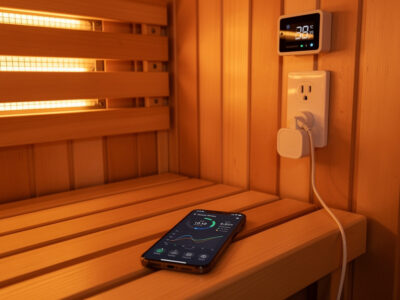
In my setup, the smart plug on the smart-home hub kicks the cabin on before I’ve finished making tea — the same rule engine that runs the hydroponic grow lights pre-heats the sauna, one controller for everything that draws current. By the time both of us are ready, the panels are already radiating and the wood has stopped acting as a heat sink. Cold wood is the silent tax on a session: sit down in an under-preheated cabin and the benches pull warmth off you for the first ten minutes. I go into scheduled pre-heat and controller options in smart infrared sauna controls, and if you’re building a full smart pre-heat routine, the automation side lives over on my home automation site.
Staggering is the underrated move for mismatched partners. The heat-sensitive person enters five minutes late and leaves five minutes early, so each of you gets your own comfortable dose inside one preheat. It costs nothing, wastes no electricity, and ends most of the “can we turn it down” negotiations before they start. I keep a loose session log — duration, set temp, panel temp, kWh — and the staggered shared sessions are consistently the ones where neither of us complains.
Does a Two-Person Cabin Need a Bigger Circuit?
Usually not a bigger one, but a dedicated one. Most plug-in two-person far-infrared cabins draw 1,500–1,800 watts and run on a standard 15A circuit, but they should not share that circuit with anything else. A full-spectrum unit with a near-infrared halogen emitter can push past 1,800 watts and wants its own 20A run. The number of occupants doesn’t change the draw — the heater rating does.
The mistake I see constantly is a big cabin plugged into a kitchen or bathroom circuit that’s already carrying other loads, then nuisance-tripping mid-session. My daily cabin runs on its own dedicated 16A circuit with a GFCI, and I checked the in-wall routing for low-EMF layout while I was at it — the wiring behind a cabin contributes to the field you sit in, not just the heaters. Jurisdiction-specific electrical and ventilation code for larger or hard-wired cabins is region-dependent; confirm anything permanent with a local electrician. The permit and code side is in infrared sauna permits and electrical codes.
Two more engineering notes for a shared cabin. First, ventilation: two bodies raise humidity, so a passive vent or a cracked door between sessions keeps the wood healthy. Second, if you’re running the cabin off-grid or on solar with battery backup, a two-person unit’s start-up surge is worth sizing for — I cover that draw profile on my battery storage site, and putting the sauna on its own network segment for smart control is a home-network question as much as an electrical one.
Is There Any Health Reason a Shared Session Is Different?
From a comfort and hydration standpoint, yes — two people in a warm cabin raise the humidity from combined sweat, which changes how the heat feels, and each person should manage their own hydration and session length. Research on infrared and traditional sauna use is studied for cardiovascular and recovery outcomes, but those are individual responses, not something a shared session changes.
I’ll stay in my lane here: I’m an owner-installer, not a clinician. What I can tell you is engineering. Combined sweat output nudges cabin humidity up, which my digital hygrometer confirms every shared session, and higher humidity makes a given set temp feel hotter. That’s why the heat-sensitive partner often wants to bail earlier in a shared session than a solo one — it’s not their imagination, it’s the moisture load. For any question about physiological effects, general guidance from bodies like the American Heart Association and your own physician is the right source; research is reported, never a promise I’ll make. Hydrate to your own thirst, mind electrolytes over long sessions, and let comfort — not a target temperature — end the session.
Further Reading
- How Much Room Two People Actually Need in an Infrared Sauna
- Set Temp When Two People Disagree on Heat
- Bench Layout for Sharing: Facing Benches vs Side-by-Side
- Cabin Cold Spots With Two Bodies Blocking the Panels
- Shared-Sauna Hygiene: Towels, Covers, and Wiping Down
- Does Two People Cost More to Run? kWh Per Shared Session
If I were setting up a shared cabin from scratch tomorrow, I’d start with panel coverage and bench depth, meter the EMF before I trusted any sticker, and accept from day one that “one temperature for two people” is a myth you solve with seating, not the dial. Do that and a shared session is the best part of a dark Swedish evening — the same window when the telescope comes out and the sourdough rises slowest is exactly when the sauna earns its electricity bill, and it’s better with someone in the other seat.
Is a 2-person infrared sauna big enough to actually share?
Often it is tight. Many cabins labeled 2-person are roomy one-person units with a longer bench. Look for at least 44 to 48 inches of bench width and 14 inches of usable seat depth per person, plus a heater panel on every wall an occupant faces, so neither person sits in a heat shadow.
Does two people use twice the electricity?
No. The heaters draw the same wattage whether one person or two is inside, because the panels run to hold a set temp rather than to warm bodies. On a plug-in energy meter a shared session runs only about 3 to 8 percent more kWh than a solo session, since two bodies add a little thermal mass and block some panel output.
How do two people share a sauna if they disagree on temperature?
You do not set one temperature that suits both. In an infrared cabin the felt heat depends mostly on how close you sit to a panel and how long you stay. The person who wants more heat sits closer and stays longer; the heat-sensitive person sits back and shortens the session. Same set temp, two different doses.
Why does one side of the cabin feel colder when two people share?
Infrared heat is line-of-sight radiant heat, so a second body blocks the panels behind or beside it and casts a heat shadow on their partner. On a thermal camera the wood directly behind a seated person can read 8 to 12 degrees Celsius cooler than the exposed panel beside it. Layout and panel placement fix this, not raising the temperature.
What is the best bench layout for two people?
Facing benches share heat best because each person gets a dedicated back panel, but they need a deeper cabin. Side-by-side is the common budget layout and the worst for even heat because your inner shoulders shield each other from the rear panels. A single bench with wrap-around corner panels is the best compromise for most couples.
How should you clean a sauna two people share?
Put a towel or seat cover under each person, wipe the benches and backrest with a damp cloth after every session, and leave the door open to dry the cabin fully. Avoid harsh chemicals on raw hemlock because they soak in and off-gas when the panels heat. Two bodies mean twice the sweat, so ventilation between sessions is what protects the wood.