The 1-person vs 2-person infrared sauna decision is the one most buyers get wrong, and it costs them on every session afterward. A 1-person cabin heats faster and draws less power; a 2-person fits couples and lets you lie down; a 4-person is a family unit, often drawing roughly double the watts, that you will usually run alone. Pick by real daily use, not by guest-room optimism.
I run a 2-person far-infrared cabin as my winter recovery ritual, and I have lived with a single-person carbon-panel unit and a portable tent alongside it, so this comparison comes from sitting in each one through full Swedish winters and watching the energy meter, not from a spec sheet. The sizing question decides footprint, preheat time, and electricity cost for years, so it is worth getting right before you fall in love with a particular cabin’s finish.
The Short Answer: Size for How You Actually Use It
Match the cabin to your real pattern: solo recovery use points to a 1-person, shared sessions point to a 2-person, and only genuine regular hosting justifies a 4-person. The most common regret I hear is buying a 3- or 4-person cabin “so we can do it together” and then running it alone five nights a week, heating four seats for one body and paying for it every time. Bigger is not more capable here; it is just more space to heat.
The 2-person cabin is the market’s default for a reason — it suits couples, gives a solo user room to lie back, and does not balloon the running cost the way a 4-person does. If you are torn between sizes, this is the broader infrared sauna sizes overview, and the full decision sits inside our infrared sauna buying guide.
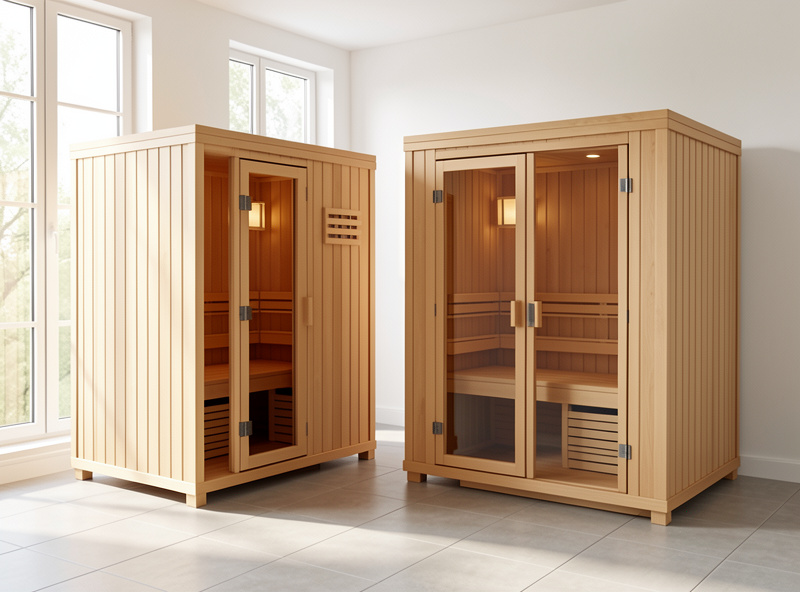
1-Person Infrared Sauna: Fast, Cheap to Run, Apartment-Friendly
A 1-person cabin is the efficiency champion: a small interior reaches set temperature fastest, sips the least power, and fits a corner or closet alcove most apartments can spare. Typical models occupy roughly a 36×36 inch footprint, draw around 1,200–1,500 watts, and run comfortably on a standard 15A outlet, which is why renters and small-space owners gravitate to them. In my logs the single-person unit is the quickest to a usable session, which matters on a dark winter evening when you do not want to wait.
The trade-off is room: you sit upright, knees fairly close, with no option to recline or share. For a dedicated solo user that is rarely a problem, and the lower purchase price and running cost are real advantages. See the picks in best 1-person infrared saunas and the solo-setup approach in personal infrared sauna setup; for the smallest spaces, mini and small saunas for apartments covers the compact end.
2-Person Infrared Sauna: The Default Sweet Spot
The 2-person cabin is where most buyers should land, because it serves both shared and solo use without the running cost of a larger unit. A typical 2-person occupies about a 48×48 inch footprint, draws roughly 1,500–1,800 watts, and usually still runs on a standard outlet, though a dedicated circuit is cleaner. The extra width is what lets a solo user stretch out or lie back — the single biggest comfort upgrade over a 1-person, and the reason I bought this size myself.
For couples it is the obvious choice, and for a single user who values being able to recline it is worth the modest footprint and power bump. It is the size I recommend by default for anyone who is unsure. The couple-focused shortlist is in best 2-person infrared saunas for couples. As an Amazon Associate I earn from qualifying purchases. If you want to browse current 2-person cabins, a 2-person infrared sauna search is a quick way to see the field.
4-Person Infrared Sauna: Family Capacity at a Real Running Cost
A 4-person cabin makes sense only if you genuinely use the capacity, because you heat the whole volume whether one person or four is inside. These units typically need roughly a 6×6 foot floor, draw 2,400–3,000+ watts, and frequently require a dedicated 20A or 240V circuit — a wiring job, not a plug-in. The purchase price steps up, but the running cost is the part that compounds: every solo session costs roughly double a 1-person cabin’s draw for the same time.
If you host regularly, have the floor space, and can wire the circuit, a 4-person delivers real comfort and the option of a shared session. If you are buying it “just in case,” you will likely pay the larger bill for a benefit you rarely use. The wiring reality is in 240V and breaker requirements, and the per-session economics in electricity cost.
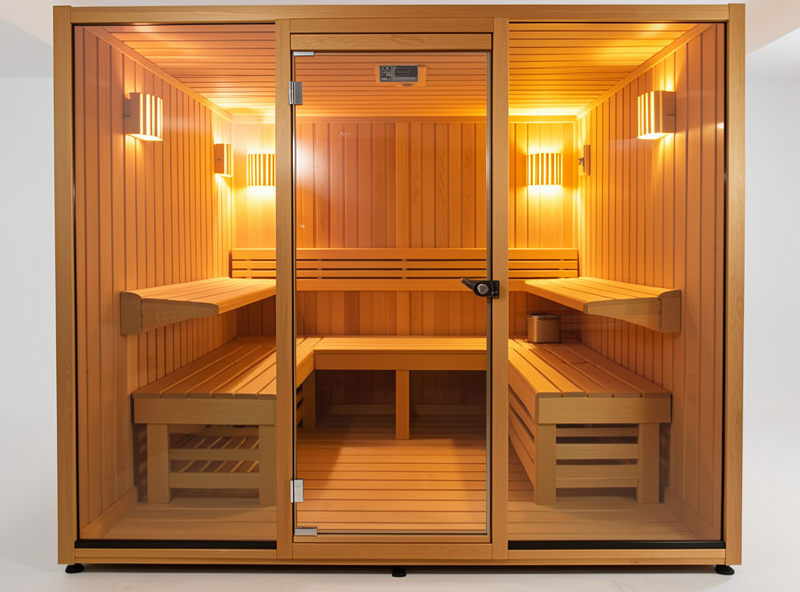
Size, Power, and Footprint Compared
The table below lines up the three sizes on the numbers that actually change your decision — footprint, typical wattage, circuit needs, preheat feel, and best use. Treat the wattages as representative ranges; individual cabins vary, and a full-spectrum unit at any size pushes higher.
| Attribute | 1-Person | 2-Person | 4-Person |
|---|---|---|---|
| Typical footprint | ~36×36 in | ~48×48 in | ~72×72 in |
| Typical wattage | 1,200–1,500 W | 1,500–1,800 W | 2,400–3,000+ W |
| Circuit | Standard outlet | Standard outlet | Often dedicated 20A/240V |
| Preheat feel | Fastest | Fast | Slowest |
| Recline / share | No | Recline solo, seats two | Lie down, seats four |
| Best for | Solo, apartments | Couples and most buyers | Families, regular hosting |
How I Would Decide
Walk it in this order: confirm the floor space you can give up, check the nearest circuit, then size to your honest weekly pattern. If you will mostly go alone and space or power is tight, the 1-person is the efficient, no-regret buy. If you want to share occasionally or lie back, the 2-person is the default sweet spot and the size I would choose again. Reserve the 4-person for households that genuinely run shared sessions and can wire the circuit for it.
Whatever size you choose, the heater type and EMF matter as much as the dimensions — a small cabin with a bad heater is a worse buy than a right-sized one done well. Once you have a size, line it up against budget in our budget-tier guide, decide format in prefab vs custom, and run the full spec check in what to look for when buying.
Frequently Asked Questions
Is a 1-person or 2-person infrared sauna better?
A 2-person is better for most buyers because it suits both shared and solo use and lets a single user recline, while still usually running on a standard outlet. Choose a 1-person only if space or power is tight and you will always use it alone, since it heats fastest and draws the least power.
How much bigger is the running cost of a 4-person sauna?
Roughly double a 1-person cabin for the same session length. A 4-person typically draws 2,400 to 3,000-plus watts versus 1,200 to 1,500 watts for a 1-person, and you heat the full volume whether one or four people are inside, so every solo session in a large cabin costs noticeably more.
Can a 2-person infrared sauna run on a normal outlet?
Usually yes. Most 2-person far-infrared cabins draw about 1,500 to 1,800 watts and run on a standard 15A outlet, though a dedicated circuit is cleaner and avoids sharing the line with other loads. Full-spectrum 2-person units draw more and may need their own circuit.
What size infrared sauna is best for one person who wants to lie down?
A 2-person cabin. A 1-person interior keeps you upright with knees close, while the extra width of a 2-person lets a solo user recline or stretch out. That reclining room is the single biggest comfort upgrade over a 1-person and is why many solo buyers size up to a 2-person.
Do I need a dedicated circuit for a 4-person infrared sauna?
Often yes. Four-person units commonly draw 2,400 to 3,000-plus watts and frequently require a dedicated 20A or 240V circuit rather than a standard plug. Confirm the cabin wattage against your panel and plan the wiring before buying, since this is an install job rather than a plug-and-play setup.
How much floor space does each sauna size need?
Plan for roughly a 36 by 36 inch footprint for a 1-person, about 48 by 48 inches for a 2-person, and around a 6 by 6 foot floor for a 4-person, all needing close to 7 feet of height. Measure the space and leave clearance for the door swing and rear ventilation before choosing.