What to look for when buying an infrared sauna is a short list of spec lines that decide your daily experience: heater type and coverage, honest wattage, real EMF documentation, the wavelength band, wood and glass quality, and warranty with available spare parts. Get those right — from full-wall panel coverage to a real sub-2 mG EMF reading at the seat — and the brand on the door barely matters — ignore them and a pretty cabin disappoints in week one.
I metered, ran, and lived with several units before I trusted my own buying checklist, and these are the lines I now read first on any spec sheet, in order. This is the inspection pass that turns marketing copy into a decision you can defend — written from the gear side, with the health claims left where they belong, as studied and reported rather than promised. It is the detailed companion to our infrared sauna buying guide.
Heater Type and Coverage
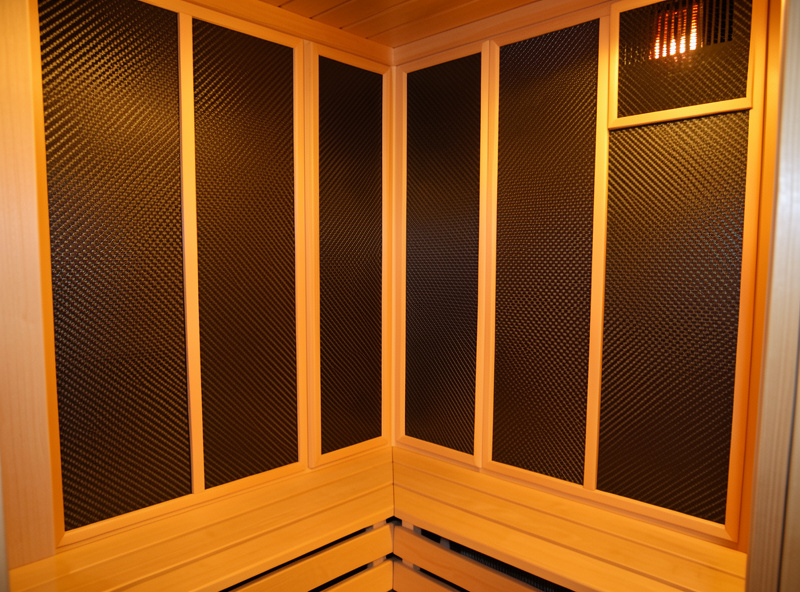
Heater type and how much of the cabin wall it covers is the first thing to read, because it drives comfort and even heat more than any headline number. Carbon-fiber panels run cooler and spread radiant heat over a large area; ceramic rods run hotter and more localized; a carbon/ceramic hybrid aims for carbon’s even footprint with ceramic’s penetration. What you want is broad panel coverage at back, sides, and calves — a cabin with two small panels leaves cold spots no matter how high the wattage reads.
Look for the number and placement of panels, not just the total watts. In my experience even, full-wall coverage feels warmer at the same set temperature than a high-wattage cabin with sparse panels. The full hardware comparison is in carbon vs ceramic and the heater types and EMF guide.
Honest Wattage and Power Draw
Wattage is the spec most often gamed, so read it as a fit-and-cost figure rather than a quality badge. A higher number is not better heat — it can simply mean a less efficient cabin that costs more to run, and some listings inflate “peak” wattage that the unit never sustains. What you actually need is to know the real running draw so you can match it to your circuit and estimate kWh per session.
Confirm the steady draw, check it against your outlet, and remember that 1- and 2-person cabins typically sit at 1,300–1,800 watts while larger and full-spectrum units climb past that and may need a dedicated line. The wiring side is in 240V and breaker requirements, and the per-session math is in our cost coverage.
Real EMF Documentation
EMF is the line where a real manufacturer separates itself from a sticker operation, so demand documentation rather than a “low-EMF” or “zero EMF” claim. There is no such thing as a zero-EMF heater; the magnetic field comes from the heating element, the internal wiring, and the controller, and a credible maker publishes measured figures at a stated distance. If the only evidence is a badge on the box, treat the claim as unverified.
The strongest move is to meter it yourself after delivery. As an Amazon Associate I earn from qualifying purchases. A TriField TF2 EMF meter is the tool I use to check every panel and wiring path, and it turns a marketing word into a milligauss reading you can act on. Understand the label first in low-EMF infrared sauna, then follow the method in measuring EMF with a TriField.
Wavelength: Far-Infrared vs Full-Spectrum
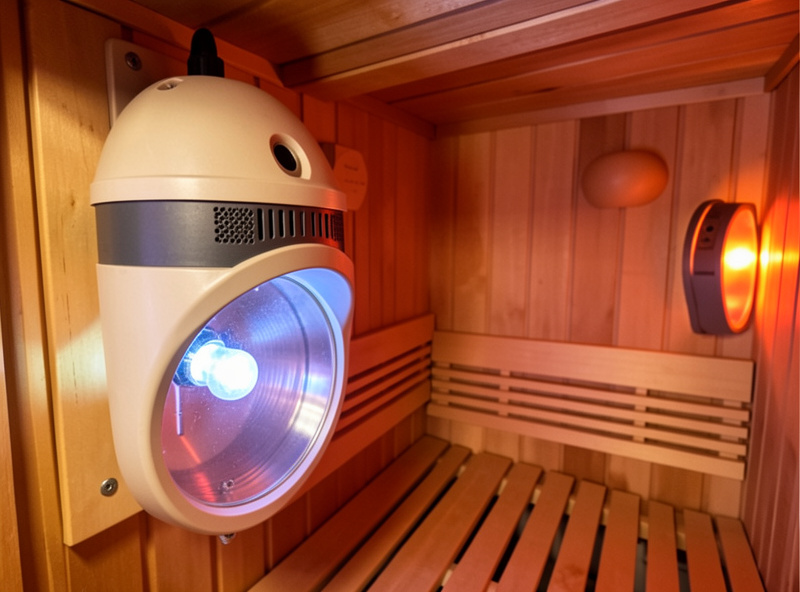
Read the wavelength claim carefully, because “full-spectrum” is the most stretched word on the spec sheet. Far-infrared (roughly 3–1000 microns) is what most cabins emit and is all most buyers need for a warm, sweat-inducing session. Full-spectrum adds a near-infrared emitter (about 0.7–1.4 microns), but a cheap unit often satisfies the label with one weak NIR bulb in an otherwise far-infrared cabin — you pay for the word, not the band.
If you specifically want near-infrared, look for a genuinely powerful emitter and a clear spec, not just the phrase. If you only want comfortable radiant heat, a quality far-infrared cabin is the better value and the one I reach for daily. The physics of each band is in near, mid and far infrared heaters.
Wood, Glass, Door, and Bench
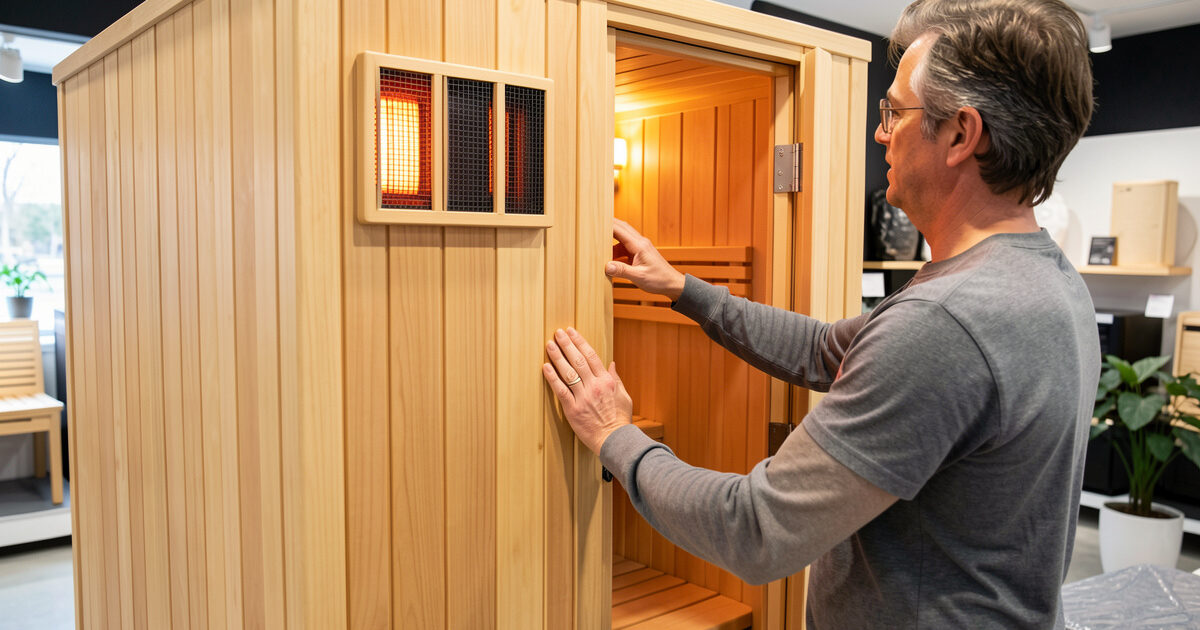
The body of the cabin decides how it ages and feels, so check the wood species, the glass, and the bench depth in person if you can. Quality cabins use low-resin Canadian hemlock or basswood that handles heat cycling without weeping sap; cheaper units use plywood or composite with adhesives that can off-gas a faint smell during the first few breaks. Tempered, low-iron glass is what you want in the door — thin single-pane doors both leak heat and feel flimsy.
Bench depth is the comfort line buyers miss: a shallow bench turns a “2-person” cabin into a tight 1.5-person, and a non-removable floorboard makes cleaning harder. Check the door seal too, since a poor seal lengthens preheat and shows up on the energy meter. None of this is in the headline specs, but all of it is what you live with for years.
Controls, Warranty, and Spare Parts
Finally, read the controller, the warranty, and whether you can buy spare parts — the things that decide whether the cabin is repairable in year four. A simple, reliable controller with clear temperature and timer settings beats a flashy touchscreen that fails out of warranty. Look for five years or more on the heaters from a maker that still answers the phone, and confirm replacement panels and controllers are actually sold separately; if they are not, the cabin is disposable rather than repairable.
A long warranty paired with available spares is a stronger buy signal than any single performance number. Pair this inspection with the channel choice in where to buy and the red flags in avoiding scams.
Ventilation Fit and the First Few Sessions
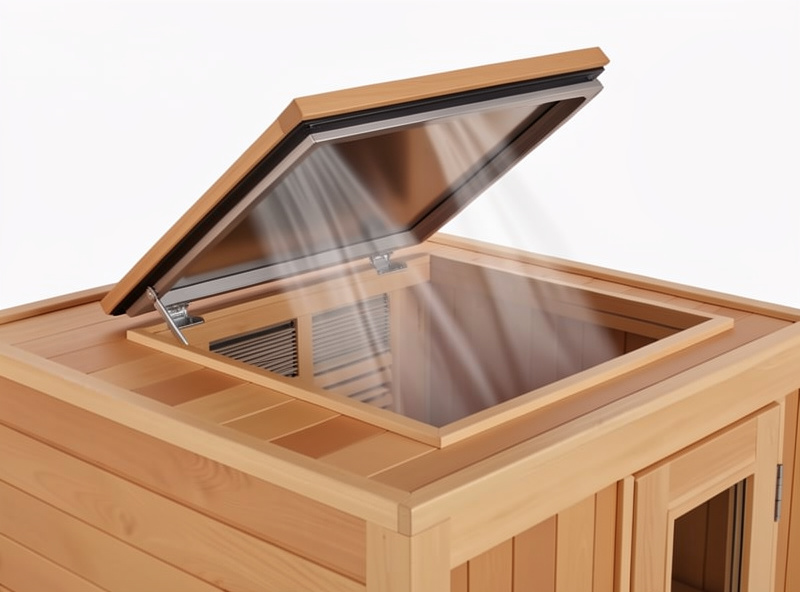
Check how the cabin breathes before you buy, because ventilation decides whether it dries out between sessions and how quickly any new-cabin odor clears. A good unit has adjustable roof and floor vents that let moisture escape and air move; a sealed box traps humidity, which is how mildew starts on the bench underside. In my own install a passive ceiling vent and a cracked door between sessions keep the cabin dry, and that single habit has done more for longevity than anything on the spec sheet.
Plan for a short break-in too. Cheaper cabins with composite panels can give off a faint adhesive smell during the first couple of high-temperature preheats; running two empty sessions with the vents open clears most of it. A quality hemlock or basswood cabin is effectively odorless after a cycle or two. The full airflow story is in our ventilation guide, and it matters as much for an indoor cabin as the heaters do.
Read the Reviews Behind the Marketing
Before committing, separate independent reviews from listings that read like ad copy, because the gap between them is where the real product lives. A spec sheet tells you what a cabin claims; honest owner reviews and hands-on comparisons tell you how the heaters hold up, whether support answers, and if the bench is as deep as advertised. Look for specifics — panel behavior over time, controller reliability, real warranty experiences — rather than glowing one-liners that could describe any box.
Our brand reviews exist for exactly this cross-check: a budget cabin like the one in our Dynamic Saunas review reads very differently in practice than its marketing, and premium comparisons such as Sunlighten vs Clearlight show what the top tier actually delivers. Use them to pressure-test the claims before money changes hands.
The Spec Sheet, Ranked by What Matters
This table orders the spec lines by how much they affect daily ownership, so you know where to spend your attention. Read top to bottom; the first few decide your experience, the rest refine it.
| Spec line | Why it matters | What good looks like |
|---|---|---|
| Heater coverage | Even heat, no cold spots | Full-wall panels, back/sides/calves |
| EMF documentation | Field at seated distance | Measured figures, not a sticker |
| Real wattage / draw | Circuit fit and running cost | Stated steady draw, matches your outlet |
| Wavelength | Far-infrared vs true full-spectrum | Honest band, real NIR if claimed |
| Wood and glass | Aging, off-gassing, heat loss | Hemlock/basswood, tempered low-iron glass |
| Warranty and parts | Repairable vs disposable | 5+ years, spares sold separately |
Quick Pre-Purchase Checklist
Before you buy, run this short list against any cabin you are considering. If a seller cannot answer these, that silence is itself an answer.
- Heater coverage: full-wall panels, not two small ones.
- EMF: measured figures at a stated distance — and plan to meter it yourself.
- Wattage: real steady draw, matched to your circuit.
- Wavelength: far-infrared confirmed, or genuine NIR if you want full-spectrum.
- Wood and glass: hemlock or basswood, tempered low-iron glass, good door seal.
- Bench: deep enough for how you will actually sit or recline.
- Warranty: five years or more on heaters, with spare parts available.
- Power fit: outlet or dedicated circuit confirmed before delivery.
With the inspection done, set your size in 1 vs 2 vs 4 person infrared sauna and your bracket in the budget-tier guide, and you have a defensible buy.