For a used infrared sauna, age matters far less than most buyers think — what actually ages out is parts availability and the controller, not the radiant heaters. A clean, lightly-used 8-to-10-year-old cabin from a brand that’s still in business and still sells panels is a better buy than a 2-year-old no-name import with no parts path the day something fails.
I run a low-EMF far-infrared cabin at home and have lived with several heater types long enough to watch how they age. The carbon and ceramic elements that do the actual work are remarkably durable; it’s the cheap electronics and the manufacturer’s survival that put a clock on a unit. This guide reframes “how old is too old” around the thing that really decides it. For the full purchase decision, start at the buying a used infrared sauna hub.
Why Age Is a Weak Signal
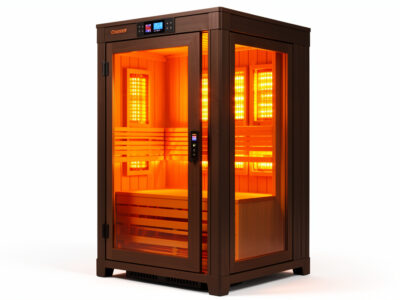
The radiant heaters are the expensive heart of the cabin, and they don’t wear out the way an engine does. A 10-year-old carbon panel that still warms is putting out essentially the same radiant footprint it did new — there’s no consumable, no fluid, no moving part to degrade. That’s the core reason a used cabin can be a genuinely good buy, and it’s why a decade-old unit isn’t automatically suspect.
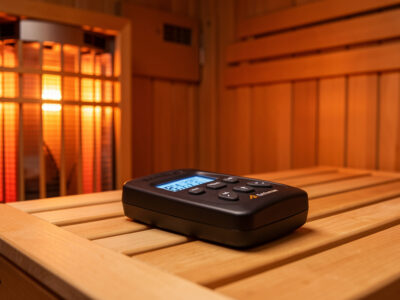
What does change with the calendar is everything around the heaters: the touch-panel controller (the most failure-prone part), the door seal, and — crucially — whether you can still buy a replacement for any of it. So “how old is too old” is really the question “when does this unit become unrepairable,” and that depends far more on the brand than on the manufacture date. Two cabins built the same year can have wildly different “real ages” depending on who made them.
What Actually Ages Out
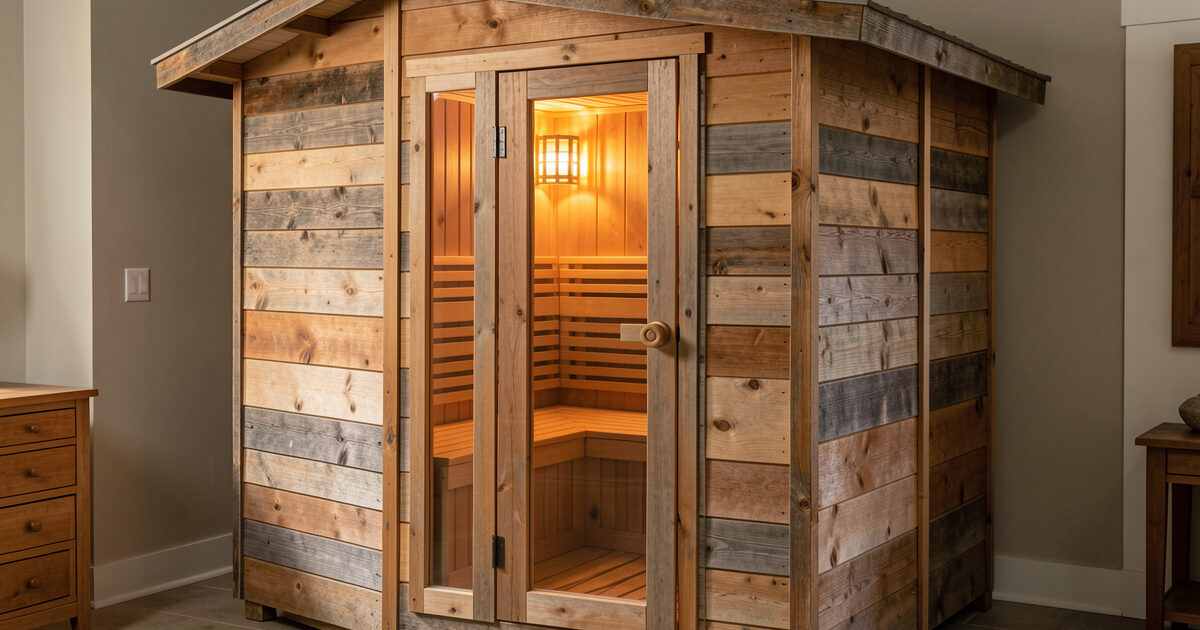
Run down the components by how they handle years, and the picture gets clear. The cabin shell — hemlock or cedar walls, the glass, the bench — is essentially indefinite; minor surface cracking in the wood is cosmetic. Carbon-fiber heater panels age gracefully and rarely fail. Ceramic rod heaters are a touch more brittle but, undisturbed, last a very long time too.
The parts with a real lifespan are the touch-panel controller and its low-voltage wiring, the door seal (which sags and starts leaking heat over many years), and, on full-spectrum units, the near-infrared halogen emitter, which is a bulb-type part with a genuine hour rating — manufacturer datasheets commonly spec these around 5,000 hours — and will eventually need replacing. If you’re buying a full-spectrum cabin, ask about NIR emitter hours specifically — that’s the one true consumable in the system. My full-spectrum guide explains what that emitter is and does.
The Question That Actually Decides It: Parts
Before you fixate on the year, do the parts check: is the manufacturer still in business, and do they still sell controllers and panels for this model? A live brand with an online parts catalog means a dead controller is a $150 fix and a weekend. A vanished import brand means the same dead controller turns the whole cabin into firewood, no matter how good the heaters still are. I got caught by exactly this once: a tidy off-brand cabin whose controller died about a year in, and with the importer gone there was no board to buy and no pinout to match — perfectly good heaters, no way to switch them on. That unit taught me to make the parts call before the price talk, every time.
This is why I’d happily take a clean nine-year-old cabin from an established maker over a two-year-old mystery unit. The older one is repairable; the newer one is a gamble on a company that may already be gone. Email the manufacturer with the model and serial number and ask point-blank whether they still supply parts for it. The answer reframes the age question entirely — and it ties straight into used sauna warranty considerations, since a brand that still sells parts is also the kind that might honor some coverage — and under the federal Magnuson-Moss Warranty Act, any transferable terms come from that same live manufacturer, as the FTC’s warranty guidance lays out.
My Rough Age Guidelines
With the parts reality in mind, here’s how I actually think about age on the used market:
- Known brand, still in business, 0–10 years: Fine, if it tests clean. Buy on tested condition, not the year. Confirm parts are still listed.
- Known brand, discontinued model, any age: Workable, but verify a parts stash exists before you commit. Price in the risk that the controller is now irreplaceable.
- Off-brand or unidentifiable, under 5 years: Treat as zero parts support from day one. Buy only if the price reflects “heaters and wood, no repairs possible.”
- Off-brand, over 5–6 years: Buy for the price of the bench and the glass, assume nothing electronic is replaceable, and only if it tests perfectly today.
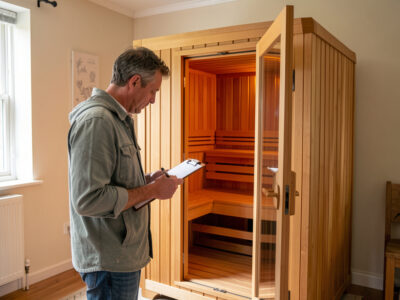
Notice none of these lead with the number. A unit’s manufacture sticker is data, not a verdict — pair it with the live heater test from how to test used sauna heaters and the parts check above, and the age sorts itself out. An old cabin that tests clean and has parts behind it is a bargain; a young one with no parts path is a liability.
How to Date a Used Cabin
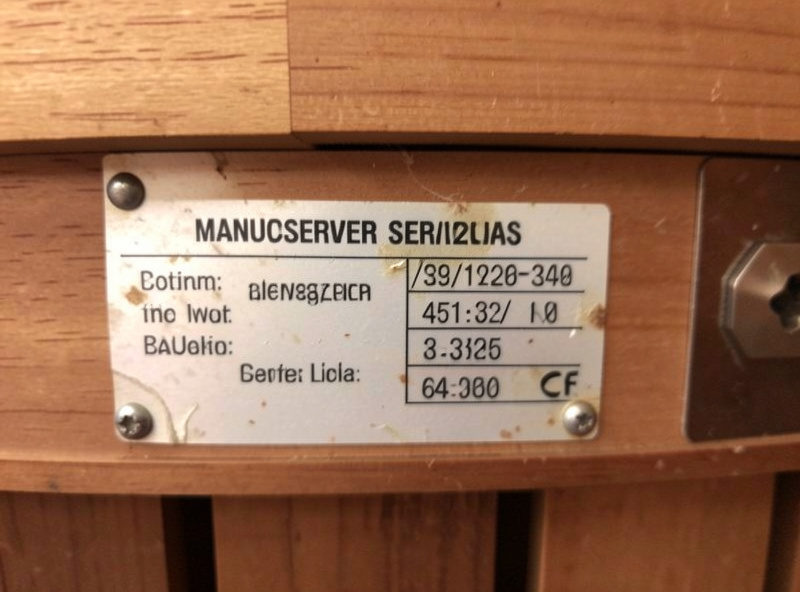
Most cabins carry a manufacture date or a serial number on a sticker, usually on the back panel or inside near the controller. If the date isn’t printed, the serial number often encodes it — the manufacturer can decode it for you, which is another good reason to contact them. Failing that, the controller’s design and the connector style are rough era clues; older units use simpler push-button controllers, newer ones lean on capacitive touch panels.
Don’t over-index on knowing the exact year. Whether a cabin is seven or nine years old changes almost nothing about the decision — whether its maker still sells parts changes everything. Date it well enough to judge the brand era, then spend your energy on the test and the parts call.
Frequently Asked Questions
How old is too old for a used infrared sauna?
There is no fixed age cutoff. A clean, lightly-used 8 to 10 year old cabin from a brand still in business and still selling parts is a good buy. For discontinued or off-brand units, treat anything past 5 to 6 years as a buy-for-the-wood purchase with no parts support, only if it tests perfectly.
Do infrared sauna heaters wear out with age?
Carbon-fiber panels age very well and rarely fail, putting out essentially the same radiant footprint at ten years as when new. Ceramic rod heaters are slightly more brittle but last a long time undisturbed. The parts that actually age out are the controller, the door seal, and full-spectrum NIR halogen emitters.
Is a 10-year-old infrared sauna worth buying?
It can be an excellent buy if it is from a brand still in business, still has parts available, and tests clean with every heater panel warming evenly. A ten-year-old cabin from an established maker is often a better purchase than a two-year-old no-name import with no repair path.
What is the first thing to check on an older used sauna?
Parts availability. Confirm the manufacturer still exists and still sells controllers and panels for that model, ideally by emailing them the model and serial number. A live parts catalog turns a dead controller into a cheap fix; a vanished brand turns the same fault into a write-off.
How can I tell how old a used infrared sauna is?
Look for a manufacture date or serial number sticker on the back panel or near the controller. If only a serial number is present, the manufacturer can usually decode the build date from it. Controller style is a rough era clue, with older units using push buttons and newer ones using touch panels.