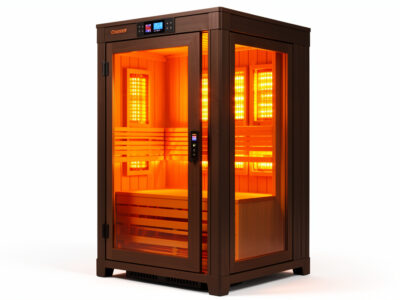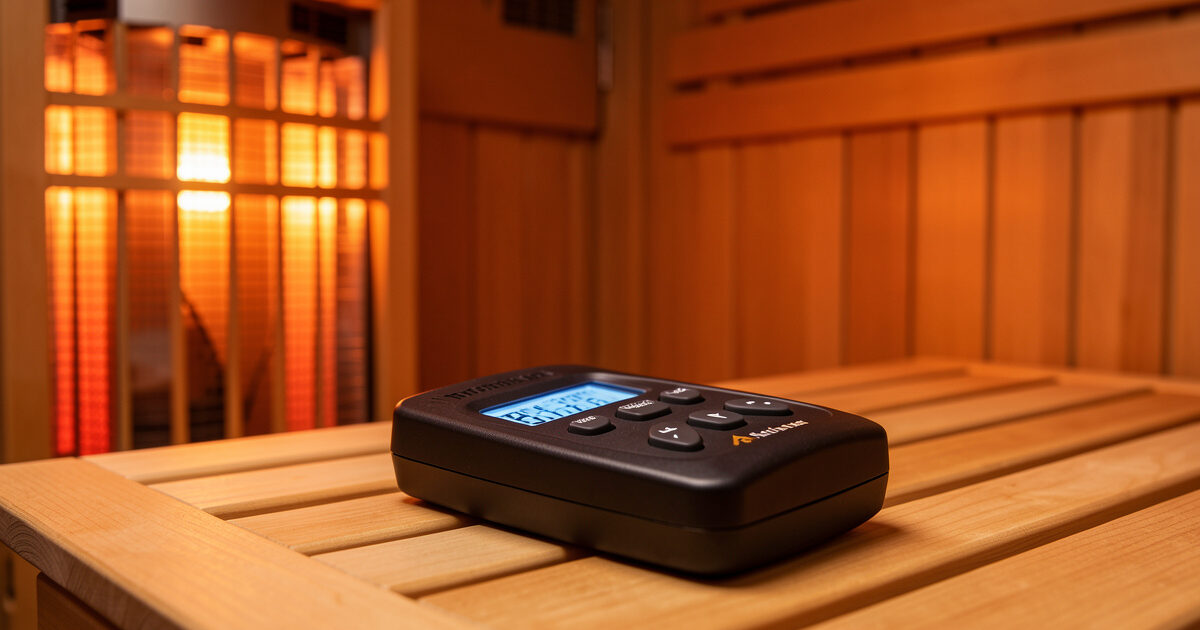
To check EMF on a used infrared sauna, run the cabin and read the magnetic field with a meter at the bench seat — where your back actually rests — not at the heater face. A used unit’s field is not guaranteed to match the “low-EMF” label it shipped with, because wiring shifts over years and a controller may have been swapped, so metering it yourself is the only way to know the hardware you’re buying.
This is the check almost no other used-buying guide bothers with, and it’s the one I care most about. I run a low-EMF carbon cabin at home and put a TriField on every unit I look at. To be clear up front: none of this is a health claim — high or low EMF here is a property of the hardware, the same way panel temperature is, and I report it as such. This guide is the full method. For the wider purchase, see the buying a used infrared sauna hub; for the deeper physics, my heater and EMF engineering guide.
Why a Used Unit’s EMF Is Worth Re-Checking
When a cabin is new, the maker’s “low-EMF” claim reflects how that unit left the factory. Years later, several things can have changed it. The low-voltage wiring runs can sag or get re-routed during a move; a failed controller may have been replaced with a generic aftermarket one that doesn’t match the original’s shielding; and “low-EMF” was never a regulated, standardized consumer term in the first place — unlike the published reference levels for power-frequency magnetic fields from ICNIRP, the body national regulators defer to, which at least give you an external yardstick the marketing badge does not, so two brands’ labels can mean different things. The only way to know what a specific second-hand unit reads is to meter it.
That’s also why the used market is exactly where a meter earns its keep. On a new cabin you’re trusting a spec sheet; on a used one you can — and should — verify. If low-EMF was part of why you wanted this cabin, bring the meter. What the label on the door promised in 2018 is not necessarily what the bench seat reads today.
The Three Fields You’re Actually Measuring
“EMF” is shorthand for three different things, and a used cabin can read fine on one and high on another. A proper meter reads all three, and you should note each separately rather than collapsing them into a single number.
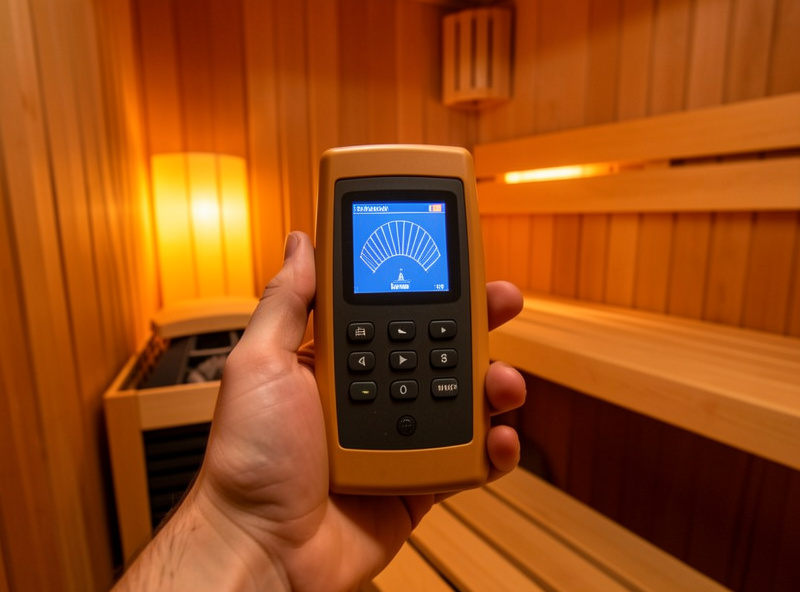
- Magnetic field (measured in milligauss): the one most people mean by sauna EMF, generated by current flowing through the heaters and wiring. This is the headline reading and the one that varies most by heater type and wiring path.
- Electric field (volts per metre): comes from voltage being present in the wiring whether or not much current flows, and is strongly affected by grounding. A unit with a poor ground can read high here.
- Radio frequency (RF): from any wireless controller, Bluetooth, or Wi-Fi module. Many basic cabins have none; “smart” units do. Worth a glance so you know what’s in the box.
The distinction matters because the fixes differ — magnetic field is about the heaters and wiring layout, electric field is largely about grounding, and RF is about whatever wireless module the unit carries. My ELF vs RF guide breaks down why these are two genuinely different problems.
The Meter and the Method
I use a TriField TF2 because it reads magnetic, electric, and RF on one device and is the de facto reference in this niche. As an Amazon Associate I earn from qualifying purchases. A cheaper single-axis magnetic meter works for a rough magnetic-only check, but it’ll miss the electric-field and RF picture. Whatever you bring, the method is the same.
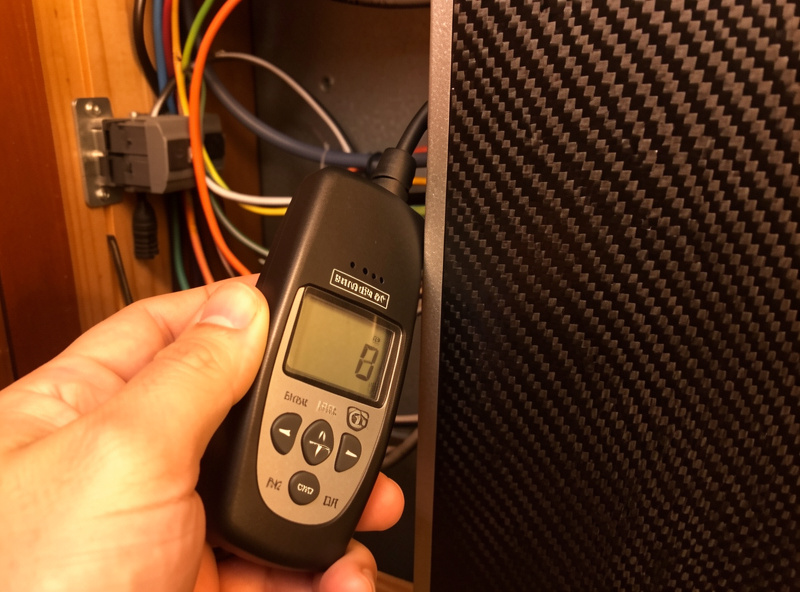
The procedure: with the cabin powered and the heaters actively running (the field is highest under load, so a cold cabin reads deceptively low), place the meter at the bench seat at back and torso height — where a person actually sits. That seat reading is the number that matters, not a reading taken two feet from a heater element where nobody’s body is. Take readings at the seat, then map the field by moving the meter toward each panel and along the wiring runs to find where it’s coming from. The full meter technique, including how to hold and zero it, is in measuring sauna EMF with a TriField. I learned the load part the embarrassing way: early on I metered a cabin stone-cold, saw a tidy low number, and nearly bought on it — then ran it hot and watched the seat reading climb as the heaters pulled current. A cold cabin always flatters itself; read under load or do not bother.
What Readings Are Reasonable
Here’s a practical frame for what I see across the heaters I’ve lived with, measured at the bench seat with the cabin under load. Treat these as orientation, not a pass/fail standard — your meter, stance, and the specific unit all move the number.
| Reading location (cabin running) | What a low-EMF carbon cabin tends to show | What it tells you |
|---|---|---|
| Magnetic field at bench seat | Low single-digit milligauss | The headline number — the seat is where it counts |
| Magnetic field at panel face | Higher, climbs as you approach a heater | Normal; nobody sits pressed to a panel |
| Magnetic field along wiring run | Localized spikes near connectors/cabling | Shows the field’s source is wiring, not just heaters |
| Electric field at seat | Lower on a well-grounded unit | High here points at a grounding problem |
| RF at seat | Effectively none on a non-wireless cabin | Any reading means a wireless module is present |
The pattern to recognize: the field falls off quickly with distance from its source, which is exactly why the seat reading — not the panel reading — is the meaningful one. A used unit that reads higher at the seat than you expected for its “low-EMF” badge isn’t dangerous-by-definition; it’s simply not delivering what the label implied, and that’s a fact you get to price into the deal. My low-EMF label guide covers what the term does and doesn’t guarantee.
Where the Field Comes From — and What Moves It
On the cabins I’ve metered, the magnetic field tracks the wiring and heater current more than anything else, which is why mapping along the cabling tells you so much. Carbon-panel cabins designed for low-EMF route and sometimes twist their wiring specifically to cancel fields; budget units don’t bother, and you can see the difference on the meter near the runs. A swapped controller or a re-routed harness from a sloppy move can undo a factory’s low-EMF design — another reason a used unit deserves its own reading.
Grounding is the lever for the electric-field component: a properly grounded cabin on a sound outlet reads lower there. Proper grounding and bonding is exactly what NEC Article 250 governs, and it’s one more argument for a dedicated, correctly wired circuit, which I cover in the outlet wiring guide. If you want to understand which heater types tend to run quieter on the magnetic side before you even shop, the carbon vs ceramic comparison is the place to start.
Frequently Asked Questions
How do I check EMF on a used infrared sauna?
Power the cabin and let the heaters run, since the field is highest under load. Place an EMF meter at the bench seat at back and torso height, where a person actually sits, and read the magnetic field there. That seat reading is the meaningful number, not a reading taken close to a heater panel.
Does a used sauna’s EMF match its original low-EMF label?
Not necessarily. Wiring runs can shift or be re-routed during a move, a failed controller may have been replaced with a generic part, and low-EMF was never a standardized term. The only way to know what a specific used unit reads today is to meter it yourself rather than trusting the original label.
What EMF meter should I use on a sauna?
A TriField TF2 is the de facto reference because it reads magnetic field, electric field, and RF on one device. A cheaper single-axis magnetic meter gives a rough magnetic-only check but misses the electric-field and RF picture, both of which can differ on a used unit with grounding or wireless issues.
Where does infrared sauna EMF come from?
The magnetic field comes mainly from current flowing through the heaters and wiring, the electric field from voltage in the wiring and is affected by grounding, and any RF from a wireless controller module. Low-EMF cabins route or twist their wiring to cancel the magnetic field; budget units typically do not.
Is a higher EMF reading on a used sauna dangerous?
This guide treats EMF as a hardware property, not a health claim. A used unit reading higher at the seat than its low-EMF label implied simply is not delivering what the label promised, which is a fact to price into the deal. For health questions, the appropriate source is published research and a professional, not a sauna listing.
Should I meter the field at the heater or the seat?
At the seat. The magnetic field falls off quickly with distance from its source, so a reading at the panel face is always higher and reflects a spot nobody’s body occupies. The bench seat at back and torso height is where a person sits, so that is the reading that actually describes your exposure.