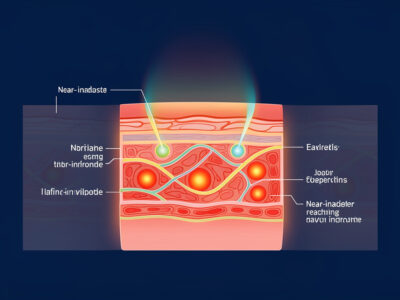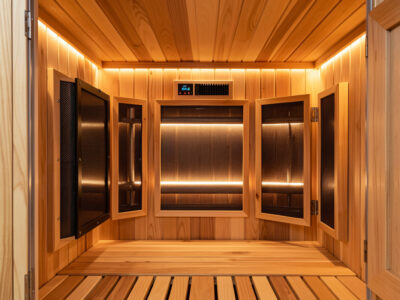
The single most common mistake people make when worrying about sauna EMF is treating it as one thing. It isn’t. The field inside an infrared cabin splits into fundamentally different physics — low-frequency fields from the mains-powered heaters and wiring (ELF) versus high-frequency radio emissions from the controller and any wireless module (RF). They come from different places, behave differently, need different meter settings, and have different fixes. Confuse them and you’ll chase the wrong problem. Here’s how I separate them on my own bench, and why getting this distinction right is the difference between metering a sauna properly and just waving a meter around.
ELF and RF are different physics
ELF — extremely low frequency — is the band associated with mains electricity. In most regions that’s 50 or 60 Hz, the frequency of the power coming out of your wall. Anything driven directly by that mains current — the heater elements, the wiring runs, the transformer — produces ELF fields. Within ELF you’ve got the two sub-quantities that matter in a sauna: the magnetic field (from current flowing) measured in milligauss, and the electric field (from voltage on conductors) measured in volts per metre.
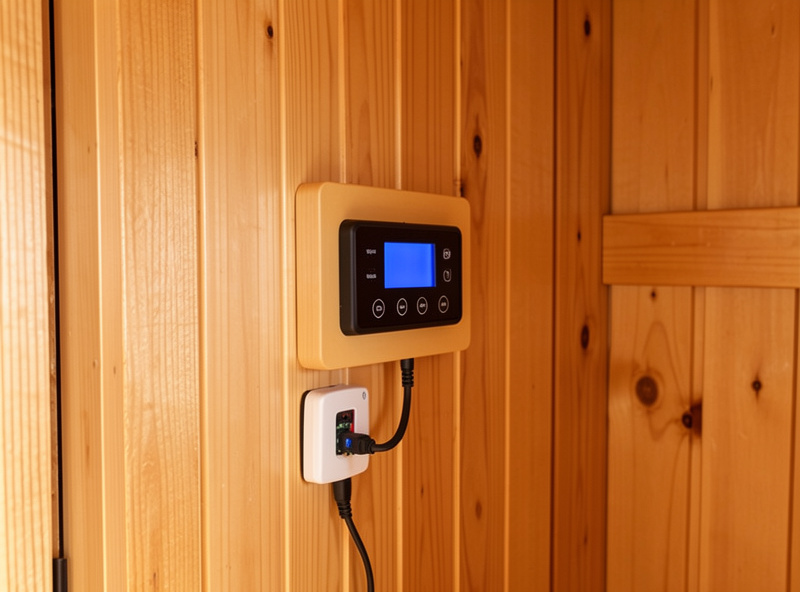
RF — radio frequency — is a vastly higher frequency band, the same broad neighbourhood as Wi-Fi, Bluetooth, and phone signals (megahertz to gigahertz). RF inside a sauna doesn’t come from the heaters at all. It comes from the digital controller, any Bluetooth audio module, a wireless chromotherapy controller, or — very often the loudest source — the phone you carried in with you.
The practical upshot: ELF is the heaters-and-wiring story; RF is the electronics-and-devices story. They share a cabin but almost nothing else. The full picture of where each originates is in the heater and EMF engineering guide; this article is about telling the two apart and reading them right.
Why you can’t read them with one setting
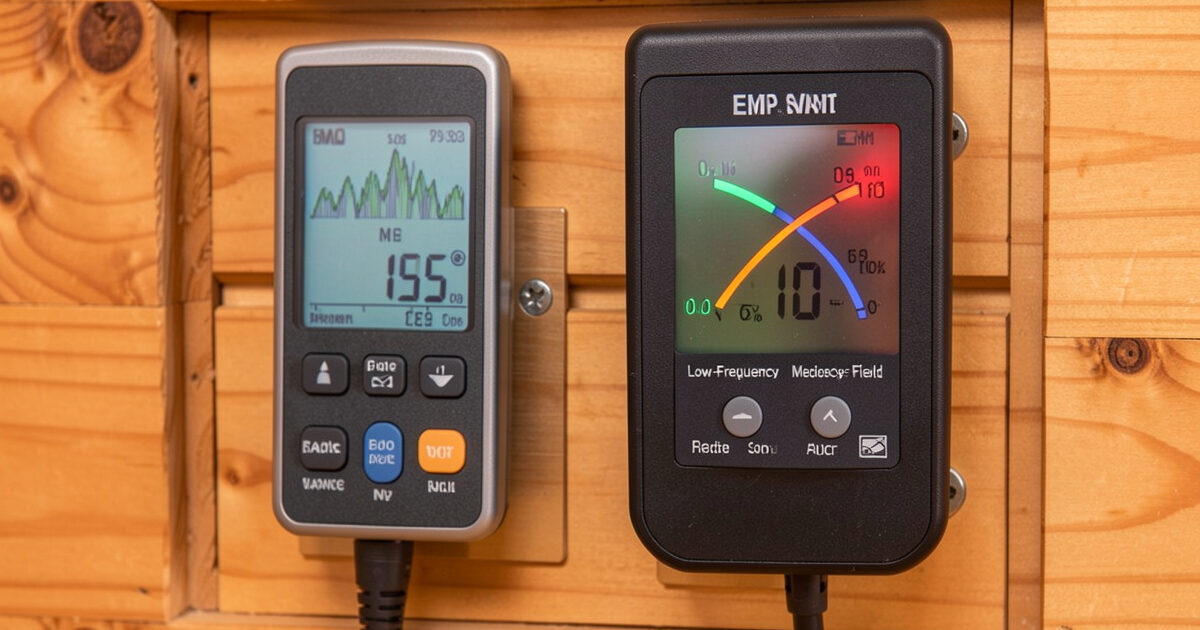
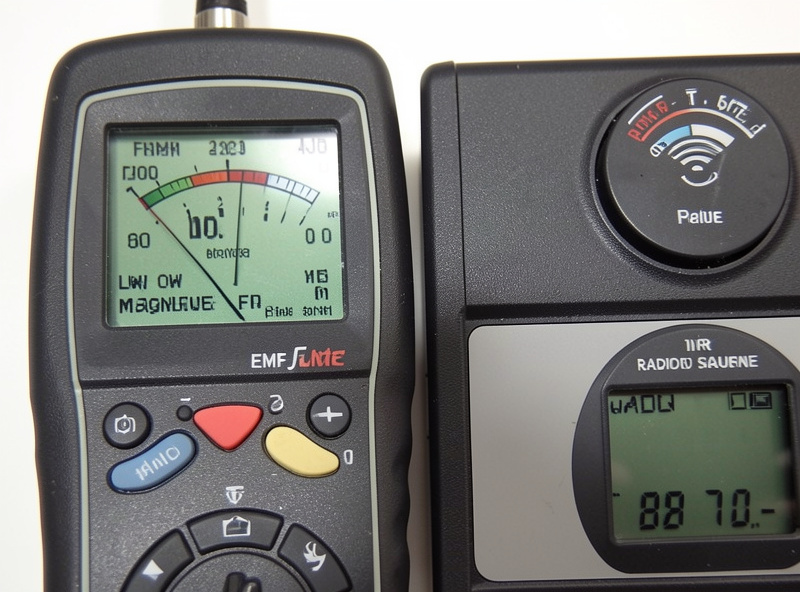
A meter that reads ELF magnetic field is built to detect slow 50/60 Hz oscillations. A meter that reads RF is built to detect signals millions of times faster. They are genuinely different instruments — which is why a good all-in-one meter like a TriField TF2 has separate modes you switch between, rather than one number for “EMF.” If you only ever read one mode, you’re blind to the other half of the cabin.
This trips up a lot of casual measuring. Someone reads the magnetic field, sees a low number, and declares the cabin “low-EMF” — while the controller behind their head is putting out RF they never checked. Or the reverse: someone reads high RF from their own phone and blames the heaters, which contribute zero RF. Separating the bands is the whole point of measuring properly, and it’s covered step by step in the how-to-meter guide.
ELF in the sauna: the heaters and wiring
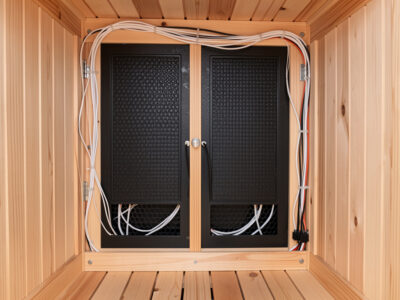
ELF is what “low-EMF heater” marketing is really about. The magnetic component comes from current flowing through the heater elements and their wiring, and it’s the field that paired-conductor routing is designed to cancel. It peaks along the wiring runs and falls off fast as you move toward the seat. The electric component comes from voltage on the conductors and responds strongly to grounding — a poorly grounded cabin reads high on electric field even when the magnetic number is fine.
Both ELF sub-fields are addressable by design and install: paired routing for the magnetic side, solid grounding for the electric side. This is the half of the EMF picture the manufacturer and your electrician control, and it’s why a well-built cabin on a properly grounded dedicated circuit reads low on both. When a brand says “low-EMF,” they’re almost always making an ELF claim — and you should ask which sub-field and at what distance.
RF in the sauna: the controller and your devices
RF is the half almost no “low-EMF” claim addresses, and it’s frequently the loudest source in the cabin. The digital controller, a Bluetooth audio board, a wireless light controller — each emits RF, and they sit in fixed positions regardless of how the heaters are wired. Then there’s your phone: bring it in, and it’s often the single biggest RF source in the whole space.
The good news is that RF is the half you control. In my own logging, switching the heaters on barely moves the RF reading, but turning on the wireless audio and bringing a phone in spikes it immediately. The fixes are entirely behavioural: leave the phone outside (or in airplane mode), switch off the Bluetooth audio if you’re not using it, and choose a cabin whose controller is sited away from your head or whose wireless is switchable. No rewiring required — just awareness of what’s actually emitting.
It’s worth noting that RF also behaves differently in space than ELF. Where the ELF magnetic field is tied tightly to the wiring and drops off within a hand’s width, RF bounces around a reflective enclosure and is harder to pin to one spot — a metal-trimmed cabin can make a controller’s RF read higher in unexpected places. That’s another reason RF deserves its own measurement pass rather than being assumed away by a low ELF number: the two simply don’t distribute the same way inside the box.
ELF vs RF at a glance
| Property | ELF (low frequency) | RF (radio frequency) |
|---|---|---|
| Frequency | 50/60 Hz mains range | MHz to GHz |
| Source in cabin | Heaters, wiring, transformer | Controller, Bluetooth, your phone |
| Sub-quantities | Magnetic (mG) + electric (V/m) | Power density / signal strength |
| Meter mode | Magnetic / electric field mode | RF mode |
| Main fix | Paired routing + grounding (design/install) | Remove devices, switch off wireless (behaviour) |
| Who controls it | Manufacturer + electrician | You |
Which one should you care about?
Honestly, both — but for different reasons, and I’ll stay strictly on the engineering rather than wade into exposure limits, which are contested and jurisdiction-specific and genuinely outside what a sauna owner should be asserting. From a measurement standpoint: ELF is the one tied to the cabin’s build quality, so it’s the right lens when comparing units to buy — a low ELF reading at the seat signals careful wiring and grounding. RF is the one tied to your own habits, so it’s the right lens once you own the cabin — it’s the cheapest, fastest thing to reduce because it’s mostly about what you bring in.
The mistake to avoid is collapsing them. A cabin can be excellent on ELF and still read high on RF because of a chatty controller, or great on RF and mediocre on ELF because of lazy wiring. One “low-EMF” badge can’t capture that, which is exactly why metering both bands separately tells you more than any label. When you’re shopping, the brand comparison notes which makers publish their ELF readings; for the RF half, the meter and your own discipline do the work.
The takeaway
ELF and RF are two different problems wearing one marketing word. ELF is low-frequency, comes from the mains-driven heaters and wiring, splits into magnetic and electric field, and is fixed by design and grounding. RF is high-frequency, comes from the controller and your devices, and is fixed by behaviour. Read them on separate meter modes, never assume a low number on one means anything about the other, and you’ll understand your cabin’s field better than any spec sheet ever will. For the panel-level engineering behind the ELF half, the carbon vs ceramic breakdown explains why wiring, not emitter type, drives the magnetic reading.
What is the difference between ELF and RF in a sauna?
ELF (extremely low frequency) is the mains-range field from the heaters, wiring, and transformer, splitting into magnetic field in milligauss and electric field in volts per metre. RF (radio frequency) is the much higher-frequency emission from the controller, Bluetooth audio, and your phone. They come from different sources, need different meter modes, and have different fixes.
Do infrared sauna heaters produce RF?
No. The heaters and their wiring produce ELF fields — magnetic and electric — in the mains frequency range, not RF. Radio frequency in a sauna comes from the digital controller, any wireless or Bluetooth module, and any phone you bring in. If you measure high RF, look at the electronics and your devices, not the heaters.
Can one meter read both ELF and RF?
Yes, if it has separate modes. A meter such as a TriField TF2 switches between magnetic-field, electric-field, and RF modes because they are different physics that need different detection. A meter showing one number for EMF cannot separate them. Always read each mode in turn, since a low reading on one says nothing about the other.
Which is easier to reduce, ELF or RF?
RF is usually the cheapest and fastest to reduce because it is mostly about your habits: leave your phone outside or in airplane mode and switch off the Bluetooth audio. ELF is a design and install matter — paired-conductor routing and proper grounding — so it is largely fixed when you buy and install the cabin rather than something you adjust day to day.
Does low-EMF labelling cover RF?
Usually not. Most low-EMF claims are ELF claims about the heaters and wiring, and they quietly ignore RF from the controller and Bluetooth — which is often the loudest source in the cabin. Ask whether the claim covers RF, and meter the RF mode yourself with the controller and any wireless running to see the real picture.