The best place to buy a used infrared sauna depends on how much you value price versus recourse: local marketplace listings hold the cheapest cabins — frequently half of new-retail or less — because the seller wants the thing gone and pickup is on you, while manufacturer-refurbished and open-box channels cost more but come bench-tested and sometimes with limited warranty. Every channel below trades the same two things against each other — a lower price almost always means less protection, which loops straight back to inspecting in person.
I run a low-EMF carbon cabin at home and have watched these channels long enough to know where the genuine deals hide and where the traps are. This guide walks each one — what to expect on price, condition, and recourse. It’s the companion to the broader buying a used infrared sauna hub; for buying new, the channels are different and covered in where to buy an infrared sauna.
Local Marketplace Listings: Where the Bargains Live
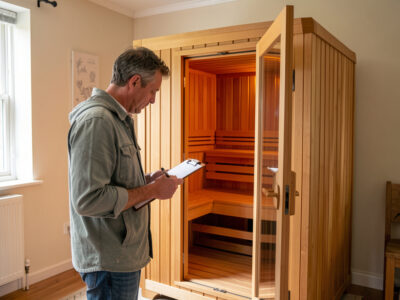
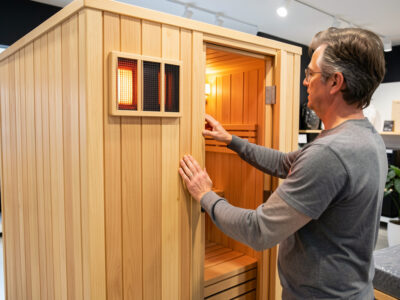
Local classifieds and marketplace apps are where the real bargains are, and the reason is simple: the seller has a heavy box in their basement they want gone, and you’re handling pickup. That motivation is your leverage. The trade-off is zero warranty, no returns, and no recourse — which is precisely why the in-person inspection is non-negotiable here. The whole saving evaporates if you buy a cabin with dead heaters because you couldn’t test it.
I learned that the hard way early on: I drove an hour for a marketplace “steal” that turned out to have a fully dead heater zone, something I could only confirm by powering the cabin up on the spot. Now I never agree a price before the unit is running in front of me.

Timing helps too. Used cabins surface in waves — January resolutions that fizzled by spring, summer moving season, and post-holiday space-clearing all push units onto the market, so patience often beats urgency. If you can wait a few weeks for the right listing rather than buying the first one, you’ll both pay less and have more clean units to choose from. My rule for local listings: I’d rather pay a bit more to a seller who lets me run the cabin than save $200 on a “must sell, already disconnected, can’t test” listing. A disassembled unit you can’t power up is an untested unit, full stop — price it accordingly or walk. Filter listings hard for ones where the cabin is still set up and the seller will let you plug it in. The full on-site procedure is in the inspection checklist and heater test guide.
Estate Sales, Gym Closures, and Spa Renovations
These are the underrated channel. Estate sales, closing gyms, and spas mid-renovation occasionally dump units fast and cheap, sometimes several at once, because they’re clearing space rather than maximizing price. A commercial-grade cabin from a spa can be a lot of hardware for the money — but it may also have logged far more hours than a home unit, so the heater test and parts check matter even more here.
The catch with commercial units is size and power: spa cabins are often larger 3- to 4-person units that need a 240V circuit and a serious moving effort. Run the math on whether you can power and physically move it before you fall for the price. Confirm the circuit requirement against my 240V and breaker guide and the install reality against the installation guide.
Manufacturer Refurbished and Open-Box
At the other end of the spectrum, buying refurbished or open-box direct from a manufacturer costs more but flips the risk equation. These units have usually been bench-tested, the heaters confirmed working, and they often carry a limited warranty — sometimes the same coverage as new, sometimes a shorter refurbished term. For a buyer who can’t or won’t do an in-person inspection, this is the safer path, and the premium over a private sale is essentially the price of that recourse.
Open-box units — returns, showroom models, or display cabins — sit in between: lightly handled, often discounted meaningfully, and usually with at least some warranty because you’re buying through the maker or an authorized dealer. Ask exactly what coverage applies before you buy; “open-box” can mean anything from untouched-return to assembled-and-displayed-for-a-year. The warranty fine print is the whole game here, and it’s covered in used sauna warranty considerations. A refurbished or open-box unit’s coverage falls under the same written-warranty rules the FTC’s warranty guidance describes, so get the exact term in writing before you treat “open-box” as “protected.”
The Channels Compared
| Channel | Typical price | Condition risk | Recourse / warranty | Best for |
|---|---|---|---|---|
| Local marketplace | Lowest | High — inspect in person | None | Hands-on buyers who can test |
| Estate / gym / spa | Low, sometimes bulk | High hours, big units | None | Bargain hunters with 240V and a truck |
| Open-box (dealer/maker) | Mid | Low — lightly handled | Often partial | Buyers wanting some protection |
| Manufacturer refurbished | Higher | Lowest — bench-tested | Limited warranty common | Buyers who can’t inspect in person |
Reading a Listing Before You Drive Out
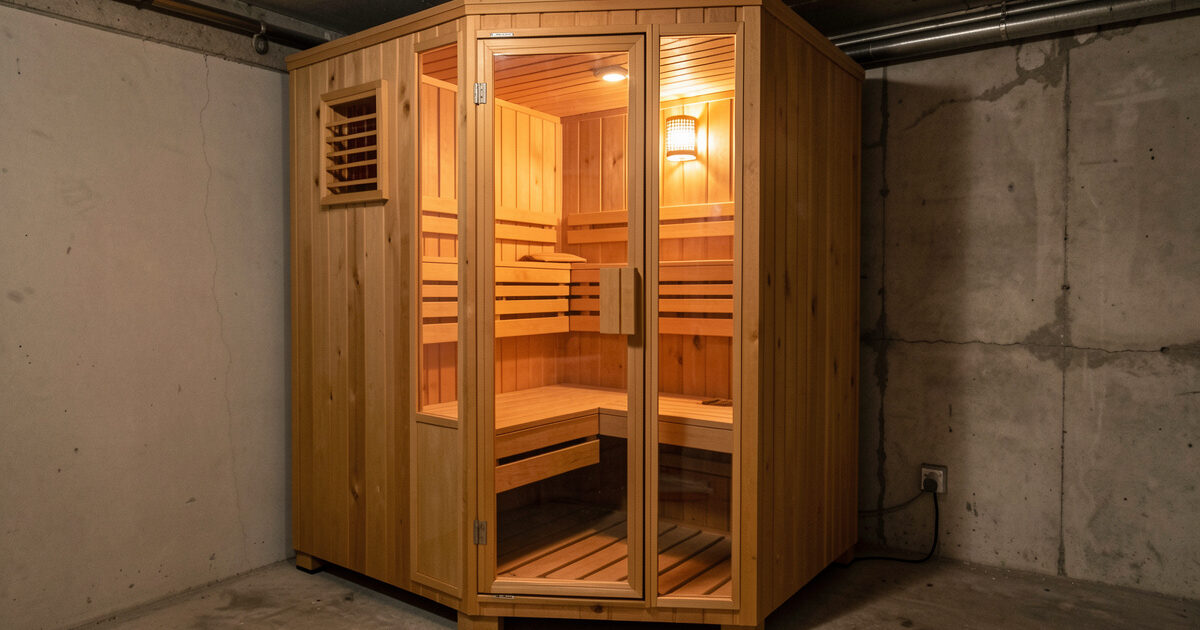
A good listing screen saves wasted trips. The photos tell you most of what you need before you message the seller: is the cabin still assembled and plugged in, or sitting in pieces against a wall? An assembled, clearly-in-use cabin is one you can test; a flat-packed pile is an automatic “untested” and should be priced as such. Look for a visible brand and model in the photos so you can run the parts check before you commit your Saturday to a drive.
The description language matters too. “Barely used,” “moving, must go,” and “upgraded to a bigger one” are the honest, common reasons cabins hit the market lightly used — those are the listings to chase. “Sold as-is,” “needs a little work,” or “was working last time we used it” are telling you, in seller-speak, that something is wrong or untested. None of those are automatic disqualifiers, but they reset your price to “buy for the wood and heaters, assume a repair.” Message the seller the same three questions every time: how many sessions, can I run it when I visit, and is it currently assembled.
Should You Ever Buy a Shipped Used Sauna?
This is where I get cautious. A used cabin sold “will ship” from a private seller is the riskiest buy on the board: you can’t test it, freight on a 200-plus-pound crated cabin can run several hundred dollars, and panels and glass don’t always survive a re-pack by someone who isn’t a manufacturer. Add a non-refundable private sale and you’ve stacked every risk at once. If a deal requires blind shipping from a stranger, the discount has to be enormous to justify it — a private, non-refundable sale also strips the payment protections the FTC’s shopping guidance leans on, since there is no chargeback path when the cabin shows up with a cracked panel — and even then I’d usually pass.
Shipping only makes sense through a channel that stands behind the pack-and-freight — a manufacturer’s refurbished program or an authorized dealer’s open-box, where the unit is professionally crated and a limited warranty covers transit damage. That’s a big part of what the refurbished premium actually pays for. If you’re buying remotely, buy from someone whose name is on the recourse, not from a private listing that ends the moment the cabin leaves their driveway.
Negotiating Across Channels
Your leverage shifts by channel. On a private local sale, every finding from your inspection is a price lever — a weak heater zone, a sagging door, a controller that needed a power-cycle. Bring cash, bring a friend to help carry, and be willing to walk, because the 2-person used market especially is deep enough that another listing is always coming. On refurbished and open-box, the price is firmer but you’re paying for tested condition and warranty, so the “discount” is really the recourse you’re getting. Don’t try to haggle a refurbished unit down to private-sale prices and also keep the warranty — you’re paying for one or the other.
How to Choose Your Channel
It comes down to one honest question: can you inspect and test the unit yourself? If yes, local marketplace and estate-type sales give you the best price, and your inspection is the protection you’re giving up the warranty for. If you can’t reliably test a cabin — or you simply don’t want the risk — pay the premium for refurbished or open-box and let the bench test and limited warranty stand in for your own. There’s no universally “best” channel; there’s the one that matches your appetite for hands-on verification.
Whichever way you go, two checks travel across every channel: confirm the brand still sells parts, and meter the EMF at the seat with a TriField TF2 (or any magnetic-field meter) if low-EMF matters to you, because a refurbished unit’s field is no more guaranteed than a marketplace one’s. Get those right and the channel is just a question of how much you want to pay for someone else to have done the testing for you.
What a Used Cabin Should Come With
Whatever channel you buy through, confirm what’s actually included before money changes hands — missing pieces are a hidden cost and a negotiating point. The essentials are the original controller and its cord, every wall, floor, and bench panel, the glass door with intact hardware, and any heater control remote the unit shipped with. A missing remote or a generic-replacement controller isn’t fatal, but it tells you the unit had a problem once and it’s a fair discount.
Ask specifically about the original manual and any assembly hardware, because a cabin reassembled with mismatched screws or missing panel clips is more annoying than it sounds when you’re trying to seat panels squarely at home. On a full-spectrum unit, confirm the near-infrared emitter is present and ask roughly how many hours it has, since that’s the one true consumable. None of these are deal-breakers on their own, but tally them — a “great price” that’s missing the controller and one bench panel isn’t actually a great price once you’ve sourced the parts, assuming the brand even sells them.
Further Reading
To go deeper, the used buying hub ties the whole decision together, the inspection checklist and heater test cover the in-person work, how old is too old handles the parts question, and checking EMF on a used unit covers the meter step. For warranty specifics by channel, see used sauna warranty considerations.