The infrared sauna buying scams to avoid are mostly marketing tricks, not outright fraud: fake “zero EMF” labels, gamed wattage, “full-spectrum” stickers on one weak bulb, astroturfed reviews, phantom discounts, and health claims no sauna can back. None of them are illegal, but all of them get you to overpay, often by several hundred dollars, for less cabin than you think. Knowing the playbook is the whole defense.
I have metered more than a dozen heaters across the cabins I run and read enough spec sheets and marketplace listings to recognize the patterns, and the good news is they repeat. This is the field guide to the traps, each with the tell that exposes it and the check that defeats it — written from the gear side, where the claims are testable. It is the skeptic’s companion to our infrared sauna buying guide and where to buy guide.
Scam 1: The “Zero EMF” Label
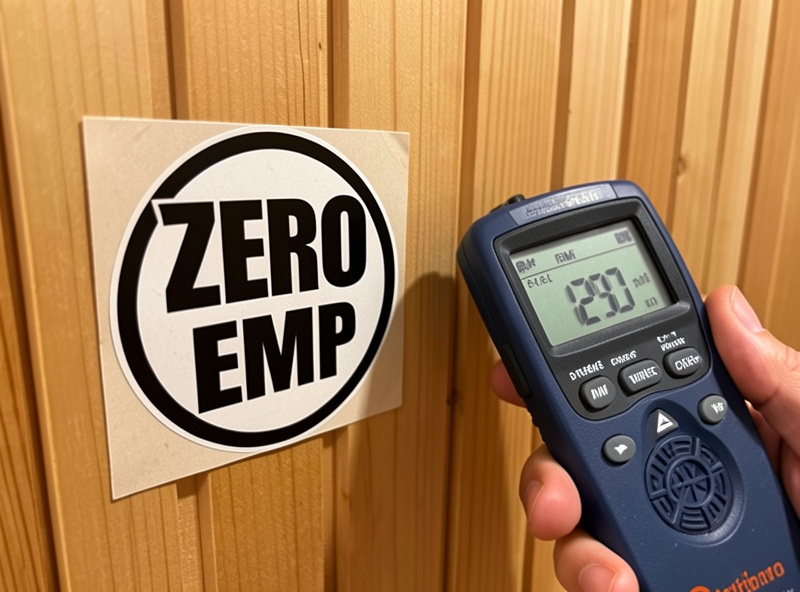
The single most common trap is a “zero EMF” or “no EMF” badge, because no resistive heater produces zero magnetic field — the claim is physically impossible. Every heater, every length of internal wiring, and every controller produces some field; a good low-EMF design keeps it low at seated distance, but it is never zero. A seller who prints “zero EMF” is either ignorant of the physics or counting on you to be, and neither is a good sign.
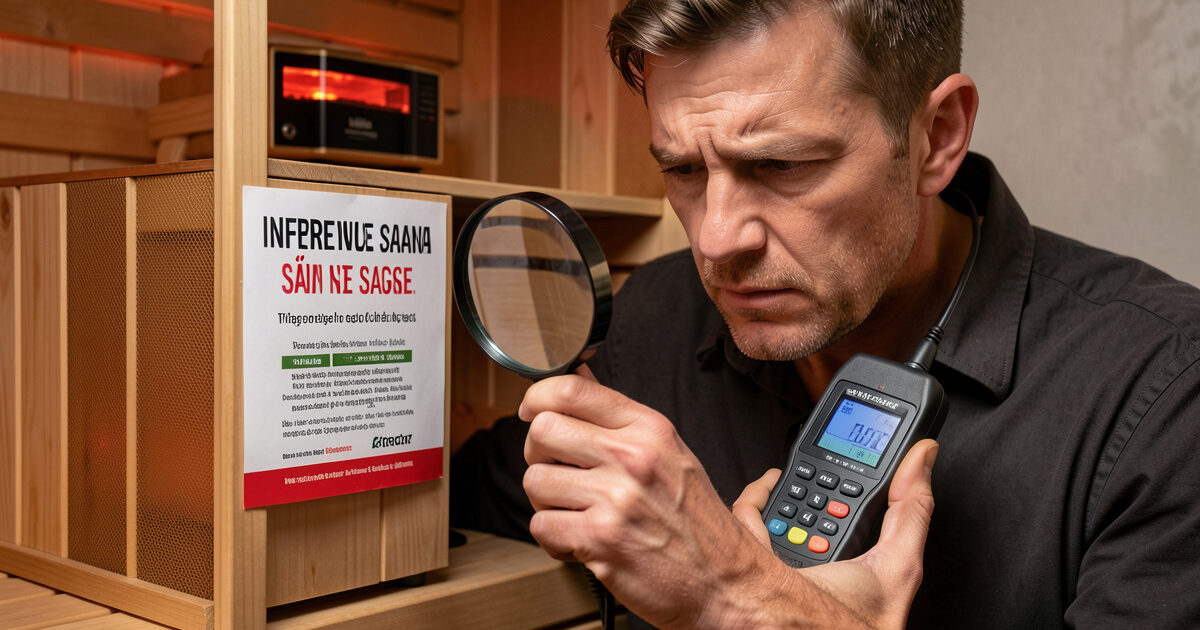
The defeat is documentation and a meter. Ask for measured figures at a stated distance, and plan to verify after delivery. As an Amazon Associate I earn from qualifying purchases. A TriField TF2 EMF meter turns the claim into a milligauss reading you can see for yourself. On my own TriField TF2, the “zero EMF” cabin I bench-tested still read about 1 to 2 mG at the seat — low and perfectly usable, but not zero. The first unit I bought years ago I never metered at all; I trusted the sticker, which is exactly the mistake this guide exists to prevent. Understand the label in low-EMF infrared sauna and the method in measuring EMF with a TriField.
Scam 2: Gamed Wattage Numbers
Wattage inflation is the spec-sheet trick that makes a cabin look more powerful than it heats. A listing may quote a high “peak” wattage the unit never sustains, or imply that more watts means better or healthier heat — it does not. Higher wattage with sparse panel coverage just means a hotter, less even cabin that costs more to run, while a well-designed lower-wattage unit with full-wall panels feels warmer at the same set temperature.
The defeat is to read coverage and steady draw, not the headline number. Ask how many panels there are and where they sit, and confirm the real running wattage so you can match your circuit and estimate cost. The heater detail is in near, mid and far infrared heaters, and the ownership math is in our cost guide.
Scam 3: “Full-Spectrum” on a Single Weak Bulb
“Full-spectrum” is the most stretched word in the category, used to justify a premium that the hardware does not deliver. The honest version means a genuinely powerful near-infrared emitter added to the far-infrared panels; the trap version satisfies the label with one underpowered NIR bulb bolted into an otherwise standard far-infrared cabin. You pay the full-spectrum price for a far-infrared experience plus a token bulb.
The defeat is to demand the near-infrared spec, not the phrase. If a seller cannot tell you the emitter type and power, treat it as far-infrared and price it accordingly. For most buyers a quality far-infrared cabin is the better value anyway — the wavelength reality is laid out in what to look for when buying.
Scam 4: Astroturfed and Fake Reviews
Manufactured reviews are how a thin product borrows the appearance of trust. The tells are a wall of five-star ratings posted in a tight time window, reviews that praise vague benefits rather than specific features, identical phrasing across listings, and a suspicious absence of any middling, detailed critique. Real owner reviews mention specifics — panel behavior over time, controller quirks, warranty experiences — because real owners notice specifics.
The defeat is to read for detail and seek independent comparisons. Cross-check a listing against hands-on reviews like our Dynamic Saunas review, which reads differently from the marketing, and weigh the critical reviews more heavily than the glowing ones. A product with zero substantive criticism anywhere is a flag, not a triumph.

Scam 5: Phantom Discounts and Fake Scarcity
Phantom pricing manufactures urgency around a discount that is not real. A cabin permanently listed at “60% off” a fictional MSRP, a countdown timer that resets when you reload, or “only 2 left in stock” that never changes are all designed to push you past your own checklist. The actual price is whatever it is always sold for; the inflated “original” exists only to make it look like a deal.
The defeat is to ignore the theater and judge the cabin on its specs and the real price against comparable units. Set your budget tier first in the budget-tier guide so a fake discount cannot move you off it. A genuine product competes on warranty, EMF documentation, and build — not on a blinking timer.
Scam 6: Health Claims No Sauna Can Back
The biggest trust red flag is a seller who promises medical outcomes — “detoxes heavy metals,” “cures” a condition, “burns 600 calories a session,” “boosts immunity.” These are claims that responsible manufacturers do not make, because the evidence is studied and reported, not settled, and overstating it is a sign of a low-trust operation willing to say anything to close. A cabin is heat and radiant panels; the health side is something to research independently and discuss with a professional, never something the box delivers on command.
The defeat is to treat outcome promises as a marker of who you are dealing with. A seller leaning on cure-talk is telling you they will stretch every other claim too — the wattage, the EMF, the spectrum. Buy from the ones who describe the gear honestly and leave the medicine to the literature.
Scam 7: Dropshipped Clones With No Support
The marketplace clone is the trap that surfaces after the sale. A white-label cabin can look identical to a reputable brand at a lower price, but behind it is a dropshipper with no spare parts, a one-year “limited” warranty that covers nothing useful, and no one to call when a panel fails in year two. The product photo is borrowed; the support is imaginary.
The defeat is to vet the seller and the warranty before buying, and to favor manufacturer-direct for anything you intend to keep. Confirm replacement panels and controllers are actually sold, read the warranty terms in full, and use the channel guidance in where to buy to avoid the disposable end of the market.
The Defense in One Line
Every scam here dies to the same discipline: read the specifics, demand documentation, verify with a meter, and judge the cabin on warranty and build rather than badges and timers. If a claim cannot be measured or documented — zero EMF, a vague “full-spectrum,” a medical outcome, a fake discount — treat it as marketing until proven otherwise. The honest sellers welcome the questions; the others fold under them.
Run the full inspection in what to look for when buying, size the cabin in 1 vs 2 vs 4 person infrared sauna, and you have the whole defense in place before you spend a krona.
Frequently Asked Questions
Is a zero EMF infrared sauna real?
No. Every resistive heater, length of wiring, and controller produces some magnetic field, so zero EMF is physically impossible. A good low-EMF design keeps the field low at seated distance, but never at zero. A seller advertising zero EMF is misstating the physics; ask for measured figures at a stated distance and verify with a meter.
How can I spot a fake full-spectrum infrared sauna?
Ask for the near-infrared emitter type and power rather than accepting the phrase. A genuine full-spectrum unit has a powerful NIR emitter, while the trap version satisfies the label with one weak bulb in an otherwise far-infrared cabin. If the seller cannot specify the emitter, treat it as far-infrared and price it that way.
Does higher wattage mean a better infrared sauna?
No. Higher wattage can simply mean a less efficient cabin that costs more to run, and some listings quote a peak figure the unit never sustains. Even, full-wall panel coverage feels warmer at the same set temperature than a high-wattage cabin with sparse panels, so read coverage and steady draw rather than the headline number.
How do I know if sauna reviews are fake?
Watch for a wall of five-star ratings posted in a tight window, vague praise instead of specific features, identical phrasing across listings, and no detailed criticism anywhere. Real owners mention specifics like panel behavior over time and warranty experiences. Cross-check against independent hands-on reviews and weigh the critical ones more heavily.
What health claims are a red flag when buying a sauna?
Promises of medical outcomes such as curing a condition, detoxing heavy metals, burning a specific calorie count, or boosting immunity are red flags. Responsible manufacturers do not make them because the evidence is studied and reported, not settled. A seller leaning on cure-talk is signaling they will stretch the wattage, EMF, and spectrum claims too.