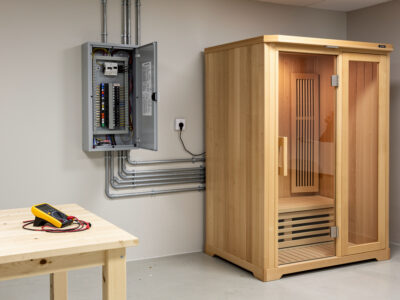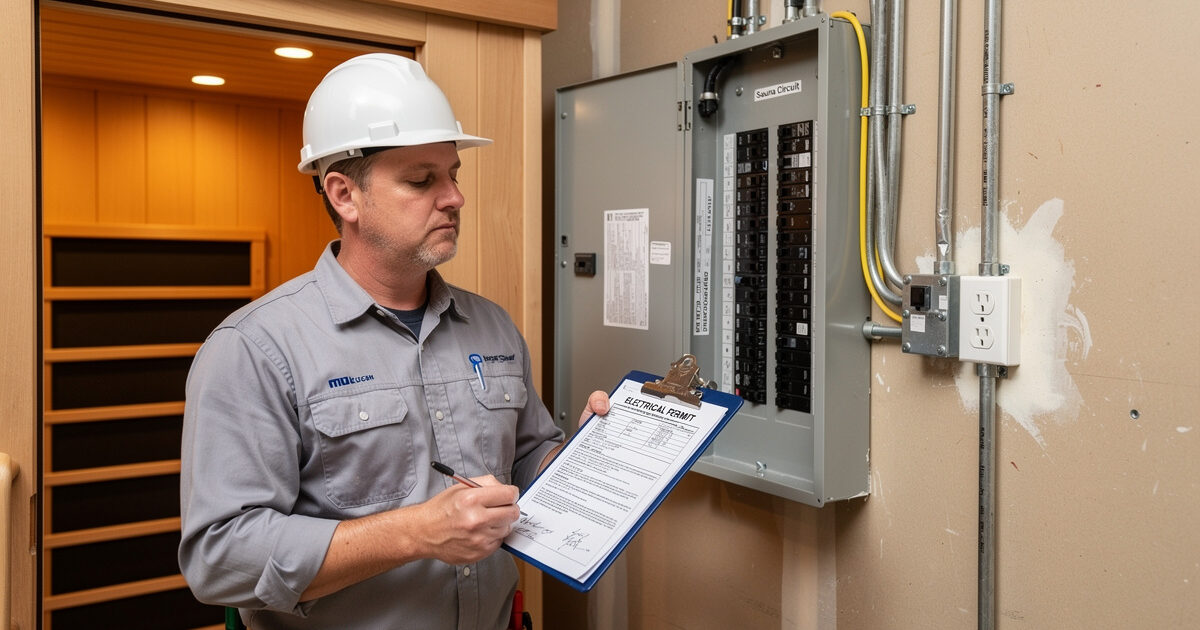
A plug-in 120V infrared sauna usually needs no permit, but any new electrical circuit, 240V wiring, or hardwired connection typically requires an electrical permit and an inspection in most jurisdictions. The cabin itself is treated as furniture; the wiring that feeds it is regulated. Rules vary by region, so the only authoritative answer for your address comes from your local building department, but the general pattern is consistent: if a wire moves inside your wall, a permit is usually involved.
This is the part of an install people most want to skip and most regret skipping, because unpermitted electrical work can surface during a home sale, an insurance claim, or a fault, and a failed inspection costs far more than the permit would have. I pulled a permit for the dedicated circuit that feeds my own cabin, and the process was simpler and cheaper than the anxiety around it suggested. Here is what is typically regulated, what usually is not, and how to handle it cleanly. Treat everything below as general guidance and confirm the specifics with your local authority.
As an Amazon Associate I earn from qualifying purchases. Some links below are affiliate links, at no extra cost to you.
When You Probably Do Not Need a Permit
If your cabin is a cord-and-plug 120V unit and you are plugging it into an existing, properly rated dedicated outlet, you typically do not need a permit, because you have not altered any wiring. Plugging an appliance into an existing compliant circuit is not regulated work in most places, the same way plugging in a large appliance is not. The cabin is, legally speaking, a piece of plug-in equipment.

The catch is the word existing. If the dedicated outlet your cabin needs does not already exist, then creating it is the regulated part, not the cabin. So the real question is rarely about the sauna and almost always about whether new wiring has to be added to feed it, which the outlet wiring guide walks through. Confirm your unit is genuinely plug-and-play into a compliant existing circuit before assuming you are permit-free.
When You Almost Certainly Do
Running a new dedicated circuit, installing a 240V line, or hardwiring the cabin almost always requires an electrical permit and a follow-up inspection, because you are modifying your home’s electrical system. This is true whether you hire an electrician or, where local rules even allow it, do qualifying work yourself. The permit exists so an inspector confirms the new circuit is sized, grounded, GFCI-protected, and installed to code.
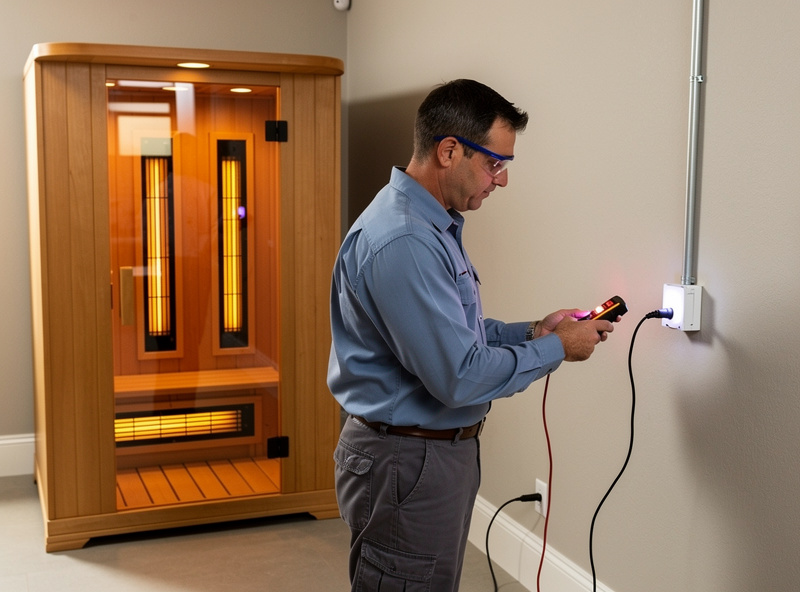
Most larger cabins fall into this category by default, since 240V and hardwired connections are inherently new electrical work. The breaker sizing that the inspector checks is covered in the breaker requirements guide, and a licensed electrician will normally pull the permit as part of the job. If you hire one, ask explicitly whether the permit is included; reputable electricians handle it, and one who suggests skipping it is a red flag.
Why the Permit Is Worth It
Beyond legality, a permitted, inspected circuit protects you in three concrete ways: it confirms the continuous, damp-environment load is wired safely, it keeps your homeowner’s insurance valid if a fault ever occurs, and it avoids the unpermitted-work problem that can derail a future home sale. An inspector verifying the GFCI and grounding is a genuine safety check on a circuit where the failure mode is fire or shock.
The cost of a residential electrical permit is modest, often a small flat fee, and trivial next to the value of those protections. I think of it the way I think of the dedicated circuit itself: an unglamorous part of the install that quietly does its job for as long as you own the cabin. Skipping it to save a small fee is a false economy that can cost many times more later. A simple outlet circuit tester lets you do a basic sanity check on the receptacle yourself, though it does not replace the professional inspection.
Outdoor and Detached Installs Raise the Bar
An outdoor or detached-structure sauna typically involves more permitting, because you are often adding a foundation, weatherproofing, and a buried or conduit-run feed, each of which can trigger its own code requirements. The electrical feed to an outbuilding, the foundation, and sometimes zoning setbacks all come into play in ways an indoor plug-in install never does. This is a meaningfully bigger project from a code standpoint.
The outdoor foundation, power, and permits guide covers that scenario in detail, and the short version is to involve your building department early rather than after the fact. For outdoor builds the permitting is not a formality; it shapes how you run the feed and pour the pad. The siting guide can help you weigh whether an indoor location avoids that complexity entirely.
Electrical Permit vs Building Permit
For most indoor infrared saunas the relevant permit is an electrical permit covering the new circuit, not a building permit, because you are not constructing a structure, you are adding wiring. The distinction matters because the two have different processes and inspectors. An indoor plug-in cabin with a new circuit is almost always purely an electrical-permit matter, which is the simpler of the two to obtain.
Building permits enter the picture mainly for outdoor or detached structures, where a foundation, walls, or significant construction is involved, and occasionally for a custom built-in sauna room rather than a prefab cabin. If you are placing a freestanding prefab unit indoors and adding a circuit, you are typically in electrical-permit territory only. When in doubt, the building department will tell you which permit, if any, your specific project needs, which is exactly why that early phone call is so valuable. A basic voltage tester is handy for confirming an outlet is dead before you or your electrician open anything, though it is a convenience, not a substitute for the inspection.
How to Handle It Cleanly
The cleanest path is to call your local building department before any work, describe the install, and ask whether it needs a permit and what the process is, then let your electrician pull the permit and schedule the inspection. That one phone call removes all the guesswork, and inspectors are generally happy to tell a homeowner exactly what is required. It is a 30-minute task that prevents every downstream problem.
If you are using a licensed electrician for the wiring, this is largely handled for you; your job is to confirm the permit is part of the scope. If you are doing qualifying work yourself where permitted, you pull the permit, do the work to code, and schedule the inspection before closing up walls. Either way, the permit and inspection are the final step that turns a good install into a fully legitimate one, alongside the assembly covered in the assembly guide and the full overview in the hub’s installation requirements guide.
One practical tip for the inspection itself: leave the work accessible until it passes. If your electrician runs a new circuit, do not rush to close up walls, paint, or push the cabin tight against the outlet before the inspector has signed off, because an inspector may need to see the wiring, the GFCI device, and the connections. A failed inspection because something was buttoned up too early means reopening it, which is the avoidable delay that gives permits their undeserved bad reputation. Plan the inspection into the timeline rather than treating it as an afterthought, and the whole process is genuinely smooth.
Frequently Asked Questions
Do you need a permit for an infrared sauna?
A plug-in 120V cabin using an existing dedicated outlet usually needs no permit, since no wiring is altered. But running a new circuit, installing 240V wiring, or hardwiring the cabin typically requires an electrical permit and inspection. Rules vary, so confirm locally.
Does a home sauna have to meet electrical code?
The wiring that feeds it does. A new dedicated circuit must be sized, grounded, and GFCI-protected to code, which an inspector verifies. The cabin itself is treated as plug-in equipment, but the circuit serving it is regulated electrical work.
What happens if I skip the permit?
Unpermitted electrical work can void homeowner’s insurance after a fault, surface as a problem during a home sale, and means no inspector confirmed the circuit is safe. The permit fee is small compared to those risks, so it is a false economy to skip it.
Does my electrician pull the permit?
Normally yes. A licensed electrician typically pulls the permit and schedules the inspection as part of a new-circuit job. Ask explicitly whether the permit is included in the quote, and treat any suggestion to skip it as a warning sign.
Do outdoor saunas need more permits?
Usually. Outdoor and detached installs often add a foundation, weatherproofing, and a buried or conduit feed, each of which can trigger its own code and sometimes zoning requirements. Involve your building department early for an outdoor build.