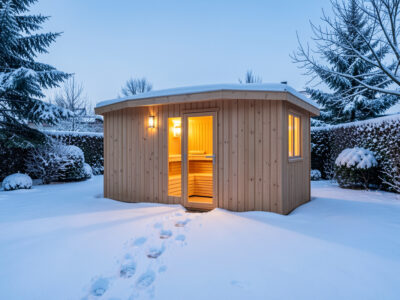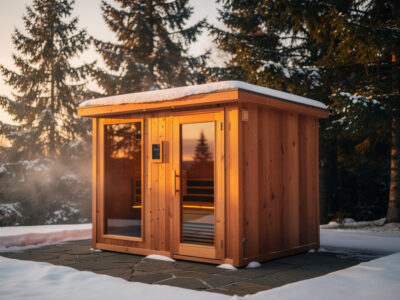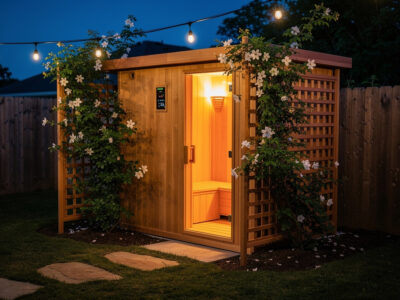
Putting a sauna outside requires three things ahead of cabin delivery: a level foundation rated for 80+ pounds per square foot, a dedicated electrical circuit (20A 110V or 30A 240V), and a permit pull from your local building department for the electrical work. The cabin itself is treated as movable property in most US municipalities, similar to a hot tub.
This guide breaks down each pre-install requirement with cost ranges, code-compliance details, and the specific question to ask your local building department. Once these three pieces are in place, the cabin assembly itself is straightforward — that part lives in the outdoor infrared sauna hub.
Foundation Requirements at a Glance
The foundation must distribute the cabin’s dry weight (225-625 lbs depending on size) plus the live load of occupants (375-1,200 lbs) without settling, cracking, or wicking moisture into the cabin floor frame. The minimum spec is a level surface rated for at least 80 pounds per square foot, with a moisture barrier between the ground and the cabin floor.
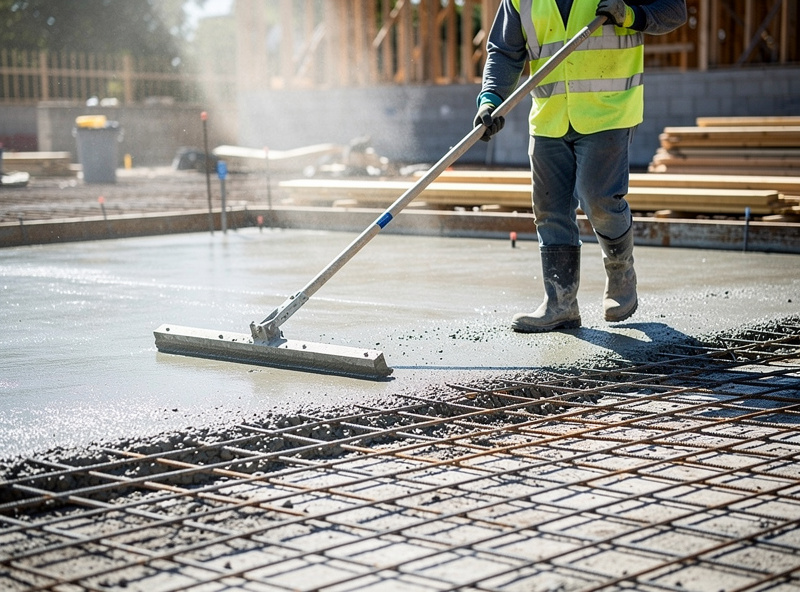
Four foundation types meet the minimum spec at different cost and durability levels:
| Foundation type | Material cost | Labor | Lifespan | Load rating | Best for |
|---|---|---|---|---|---|
| Compacted gravel pad | $150–$400 | 1 weekend DIY | 10–15 years | ~80 PSF | 1–2 person cabins, dry climates |
| Concrete pavers on sand | $300–$700 | 1 weekend DIY | 20+ years | ~120 PSF | 2–3 person cabins, suburban yards |
| Poured concrete slab (4″) | $800–$2,500 | 2 weekends + cure | 40+ years | ~250 PSF | 3–4 person cabins, cold climates |
| Composite deck (existing) | $0–$200 reinforce | 1 day | Match deck rating | Per deck spec | Decks rated 60+ lbs/sq ft |
Foundation type 1: Compacted gravel pad
Excavate 6 inches below grade in a footprint 12 inches larger than the cabin on each side. Lay woven landscape fabric (Mirafi 140N or equivalent), fill with 3/4-inch crushed angular gravel in 2-inch lifts, compacting each lift with a hand tamper or rented plate compactor. Top with 1 inch of stone dust to lock the surface. Total time: 6-8 hours of labor, $150-$400 in materials.
Acceptable for 1-2 person cabins (under 400 lbs cabin weight) in dry climates with under 30 inches of annual rainfall. Not recommended for clay-heavy soil or freeze-thaw climates with more than 20 freeze-thaw cycles per year — the gravel base shifts and the cabin door misaligns.
Foundation type 2: Concrete pavers on sand (most popular)
Same excavation and gravel base as type 1, but topped with 1 inch of leveling sand and 24-inch concrete pavers in a grid. Pavers cost $4-$8 each — a 6×6 ft pad needs 9 pavers ($36-$72). Total cost typically lands at $300-$700 including 1-2 cubic yards of compacted base.
Use a 4-foot bubble level across the surface in three directions before setting the cabin. Out-of-level installs cause the cabin door to misalign within 6 months, which leads to gasket leakage and accelerated heater wear from extended warmup cycles. The paver-on-sand method is the best cost/durability balance for most 2-3 person cabins.
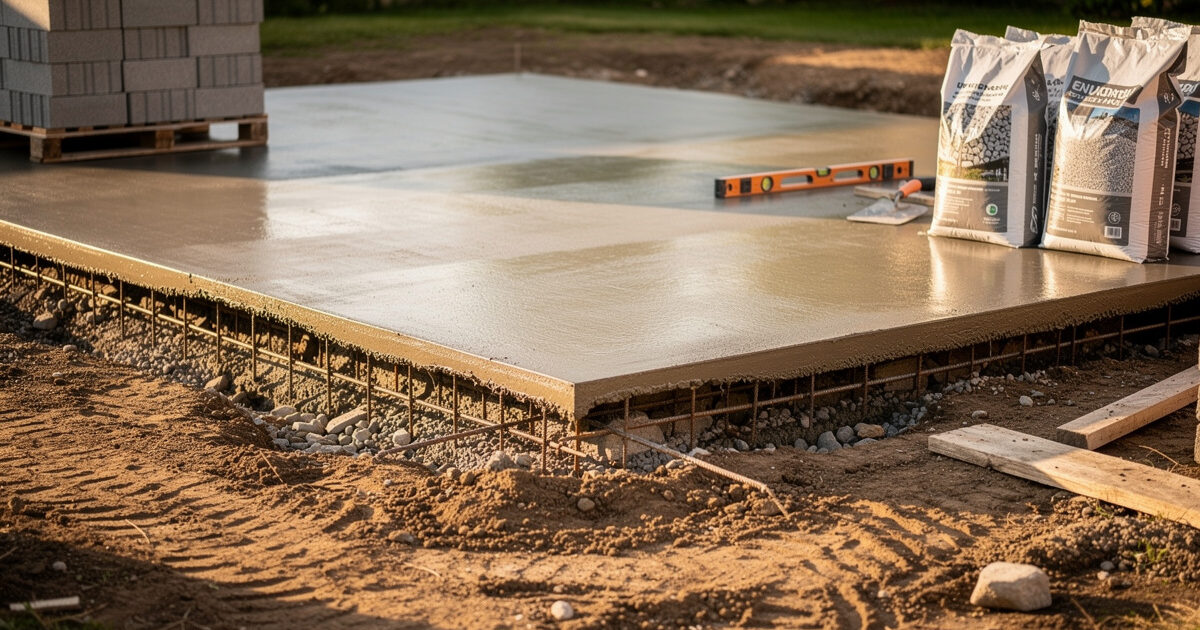
Foundation type 3: Poured concrete slab
The professional choice for 3-4 person cabins or any install in a freeze-thaw climate. Spec: 4-inch slab with #4 rebar at 16-inch centers, 4,000 PSI concrete, sloped 1.5% (about 3/4 inch drop per 4 feet) for drainage, finished smooth. Cure for 7 days minimum before placing the cabin.
DIY material cost: $400-$700 in concrete and rebar for a 7×7 ft slab. Add concrete delivery ($200-$400) if you don’t have a mixer. Most homeowners hire a contractor for this — expect $800-$2,500 fully installed depending on local labor rates and slab access. Permit usually required separately ($50-$150).
Electrical Power Requirements
Outdoor cabins fall into two power categories based on size: small cabins (1-2 person) draw 1,500-2,400 watts on a dedicated 20-amp 110V circuit, while larger cabins (3-4 person) draw 3,400-4,800 watts and require a 240V 30-amp circuit. Always verify the exact spec on the cabin manufacturer’s data sheet before pulling permits or ordering materials.
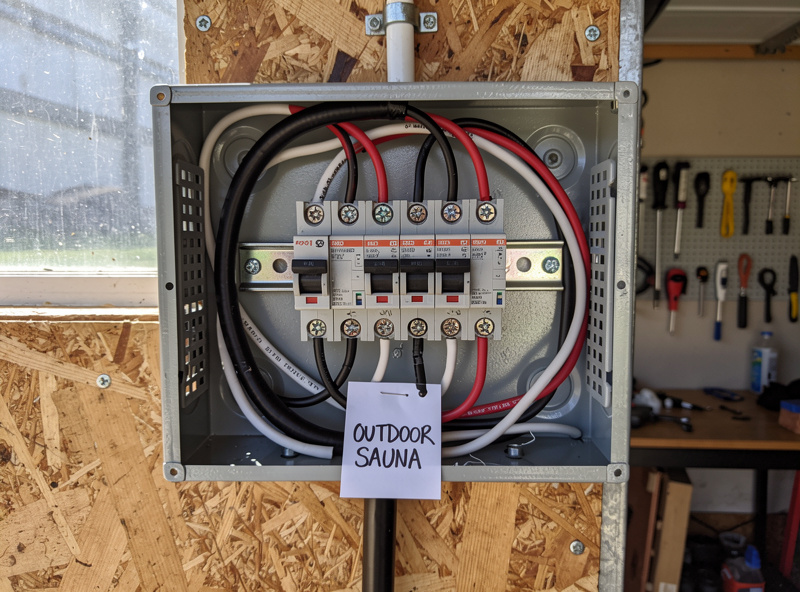
The dedicated circuit rule
The single most-violated electrical rule for outdoor saunas is the “dedicated circuit” requirement. Sauna heaters draw a continuous load — they pull near-rated current for the entire 25-45 minute session. A shared circuit will trip its breaker when any other appliance kicks on (refrigerator, microwave, kitchen lights), and continuous-load tripping shortens the breaker’s rated lifespan by half.
NEC 422.13 specifically requires that fixed electric heating units (which includes sauna heaters) be on a dedicated branch circuit. This is checked at inspection. If the inspector finds the circuit shared, the install fails and you start over. Always pull a permit for the electrical work — typical cost is $75-$200 plus inspection.
Wire gauge and conduit specifications
For underground runs from the main panel to the cabin location:
- 20-amp 110V circuit: 12-gauge THHN wire, 1-inch PVC conduit, buried 18 inches deep per NEC 300.5(D)(1).
- 30-amp 240V circuit: 10-gauge THHN wire, 1-inch PVC conduit, buried 24 inches deep for direct burial without conduit, or 18 inches in conduit per NEC 300.5(D)(2).
- Conduit type: Schedule 40 PVC for the underground run, Schedule 80 PVC for the above-grade portion at the cabin (Schedule 80 has thicker walls and resists impact damage).
- Receptacle: GFCI-protected weatherproof in-use receptacle in a treated 4×4 post within 6 feet of the cabin location, 18-24 inches above grade.
Materials for a 40-foot run typically cost $250-$500. Licensed electrician labor runs $400-$960 (4-8 hours at $75-$120/hour). Total electrical project budget: $725-$1,500 for a permitted, inspected install. The corresponding indoor electrical setup is covered in our infrared sauna home setup guide. For the 4-person/240V case specifically, the 240V breaker requirements page walks through dedicated-circuit sizing in more detail than the summary above. If running a trench and a permit to the panel isn’t an option at your property, the off-grid sauna power guide covers solar and battery alternatives.
Permits: What You Actually Need to Pull
Permit requirements vary by municipality, but the typical pattern across US jurisdictions is: electrical permit always required, structural permit only if the cabin exceeds your accessory-structure threshold (usually 120 sq ft), foundation permit only if you’re pouring a concrete slab over a certain size. Outdoor saunas almost never trigger the structural permit because they sit on the foundation as movable property.
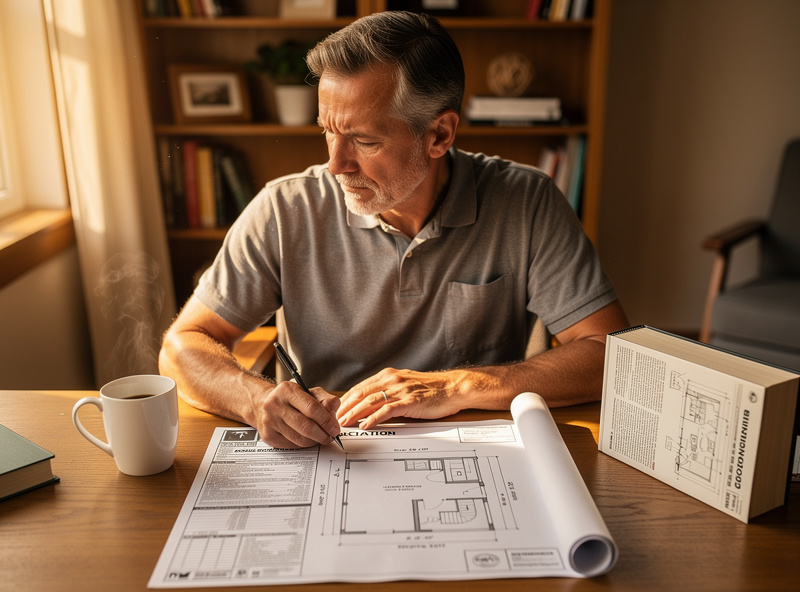
Call your county or city building department before placing the cabin order. Ask three specific questions:
- “What is the threshold for an accessory structure permit?” Most jurisdictions: 120 sq ft. Some: 200 sq ft. A few coastal/historic districts: any structure with continuous power.
- “Does an outdoor sauna with a 30-amp 240V dedicated circuit require an electrical permit?” Almost always yes — get the permit number, fee schedule, and inspector contact info on this call.
- “Is there a setback requirement from property lines or the primary structure?” Typical: 5 feet from any property line, 36 inches from the primary residence. HOA setbacks may be stricter.
Document the call with the staff member’s name and date. If anything goes sideways at inspection, having the pre-call notes prevents the kind of “we never said that” disputes that derail otherwise fine projects. For a deeper look at what each permit type covers — electrical, structural, and zoning — and how to prepare the paperwork for an indoor install, see the infrared sauna permits and code compliance guide.
HOA, Coastal, and Historic District Considerations
Three jurisdiction types add restrictions beyond standard municipal code: HOAs (homeowner associations), coastal/floodplain zones, and historic districts. Roughly 28% of US single-family homes are in an HOA, so this matters for many buyers.
HOAs typically require approval for any visible exterior addition. Submit drawings showing cabin location, dimensions, materials, and finish color. Approval usually takes 2-6 weeks. Common HOA-mandated changes: relocating the cabin to be less visible from the street, choosing a stain color that matches the house, adding privacy screening. Budget for an extra $200-$800 in HOA-driven adjustments.
Coastal and floodplain zones may require the cabin to be elevated above the base flood elevation (BFE) by 1-2 feet. This usually means a raised deck foundation rather than a slab — adds $500-$1,500 in cost. Check FEMA flood maps for your address before ordering.
Historic districts often prohibit any structure visible from the public right-of-way without architectural review. The cabin may need to be located behind a privacy fence or in a side yard. Some districts prohibit accessory structures entirely without a variance. Check with the local historic commission before placing an order.
DIY vs Hiring a Contractor
The foundation work is DIY-friendly for most homeowners with basic landscaping experience. The electrical work is technically DIY-allowed in most US states for the homeowner-occupant, but the permit and inspection requirements are stricter and the failure modes (electrocution, fire) are unforgiving. For most buyers, the DIY-foundation/pro-electrician split is the right balance.
| Task | DIY skill needed | DIY cost | Pro cost | Recommendation |
|---|---|---|---|---|
| Gravel pad foundation | Low — landscaping | $150–$400 | $400–$900 | DIY |
| Paver-on-sand foundation | Low to moderate | $300–$700 | $700–$1,400 | DIY |
| Poured concrete slab | High — concrete work | $400–$700 | $800–$2,500 | Pro for cabins 3+ person |
| Electrical run + circuit | High — code compliance | $250–$500 | $725–$1,500 | Pro (always) |
| Permit application | Low — paperwork | $75–$200 | Included in pro | DIY OK |
For broader cabin selection that pairs with this prep work, see our 2026 best outdoor infrared saunas roundup, and for backyard-specific placement and privacy, the backyard sauna setup guide covers those topics in depth.
Frequently Asked Questions
What kind of foundation do I need for an outdoor sauna?
For 1-2 person cabins, a compacted gravel pad ($150-$400) or concrete pavers on sand ($300-$700) work well. For 3-4 person cabins, a 4-inch poured concrete slab with #4 rebar at 16-inch centers ($800-$2,500) is the professional standard. Always include a moisture barrier between ground and cabin floor.
Do I need a permit to install an outdoor infrared sauna?
The cabin itself rarely needs a permit because it is treated as movable property. The electrical work always needs a permit ($75-$200 typically). Structural permits apply only if your cabin exceeds the local accessory-structure threshold, usually 120 sq ft — outdoor saunas almost never trigger this.
Can I install the electrical work myself?
Most US states allow homeowner-occupants to do their own electrical work with a permit and inspection. However, the code requirements (NEC 210.8(B), 422.13, 300.5(D)) and failure modes are unforgiving. For most buyers, hiring a licensed electrician for the dedicated circuit is the right call.
How deep do electrical conduits need to be buried?
Per NEC 300.5(D)(1), 12-gauge wire in PVC conduit for 20-amp 110V circuits buries 18 inches deep. For 10-gauge wire on 30-amp 240V circuits, 18 inches in conduit or 24 inches direct burial. Use Schedule 40 PVC underground and Schedule 80 PVC at the above-grade exit point.
What if I live in an HOA — can I still install an outdoor sauna?
Yes in most cases, but submit drawings to your HOA architectural review committee for pre-approval. Approval typically takes 2-6 weeks. Common HOA-mandated changes include cabin location adjustments, finish color selection, and added privacy screening. Budget $200-$800 for HOA-driven modifications.
Does my cabin need to be a certain distance from my property line?
Standard zoning typically requires 5 feet of setback from any property line and 36 inches from the primary residence. HOAs and historic districts often have stricter setbacks. Always confirm with your local building department before ordering — setback violations require relocating the cabin at full cost.
What size electrical circuit does an outdoor sauna need?
1-2 person cabins use a dedicated 20-amp 110V circuit (12-gauge wire). 3-4 person cabins use a dedicated 30-amp 240V circuit (10-gauge wire). Both must be on a dedicated branch circuit per NEC 422.13 — never share with other appliances. The receptacle must be GFCI-protected and weatherproof.
Related Articles
- Outdoor Infrared Sauna Setup and Buying Guide — the parent hub
- Backyard Infrared Sauna Setup Guide — site selection and privacy
- Exterior Sauna Weatherproofing Guide — sealing, gaskets, freeze-thaw
- Best Outdoor Infrared Saunas 2026 — top 7 cabins ranked
- How to Set Up an Infrared Sauna at Home — indoor electrical comparison