Exterior infrared sauna weatherproofing means three layers of protection: a penetrating cedar sealant reapplied every 2-3 years, an EPDM door gasket inspection twice yearly, and a sloped-roof drainage path that keeps water off the cabin walls. Get all three right and a quality cedar cabin lasts 18-25 years; skip any one and you’ll see rot or heater corrosion within 5-7 years.
This guide covers placement, cedar sealing, gasket maintenance, roof and corner waterproofing, and freeze-thaw protection. The broader buying context lives in the outdoor infrared sauna hub, and the foundation/electrical side is covered in our backyard sauna setup guide.
Placement: The First Weatherproofing Decision
Where you put the cabin determines how much weatherproofing work you’ll do for the next 20 years. The ideal exterior placement is partially shaded (under a high tree canopy or on the north side of a structure), at least 36 inches from any wall for ventilation, with positive drainage in all four directions. Full-sun installs accelerate cedar greying by 30-40% and require sealant reapplication every 18 months instead of every 30 months.
Avoid four placements that look fine but cause weatherproofing headaches:
- Under deciduous trees: Falling leaves trap moisture against the roof and clog the door track in autumn. The shade is nice in summer but the maintenance burden is high.
- Directly against a fence or wall: No air circulation behind the cabin means moisture sits on the back wall after every rain. Cedar back walls rot 3-4x faster in this configuration.
- Below a roof drip line: Concentrated runoff from your house roof onto the sauna roof overloads the cabin’s drainage and saturates the cedar overhang.
- In a low yard spot: Water pools at the foundation, wicks up into the floor frame, and rots the framing within 5-7 years.
Cedar Exterior Sealant: The 30-Month Cycle
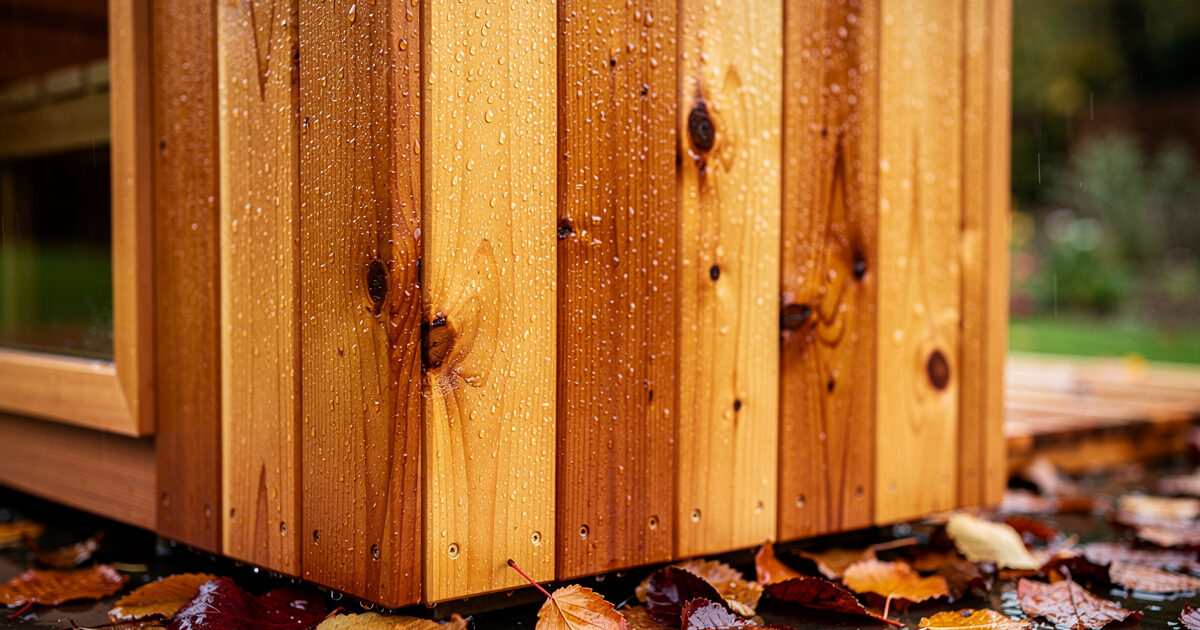
Western Red Cedar contains natural tannins and oils that resist rot for 8-12 years untreated, but the surface weathers from honey-amber to silver-grey within 12 months and starts to develop micro-cracks at 24 months. A clear penetrating cedar oil sealant applied every 30 months keeps the original color and adds 8-10 years of structural life to the cabin.
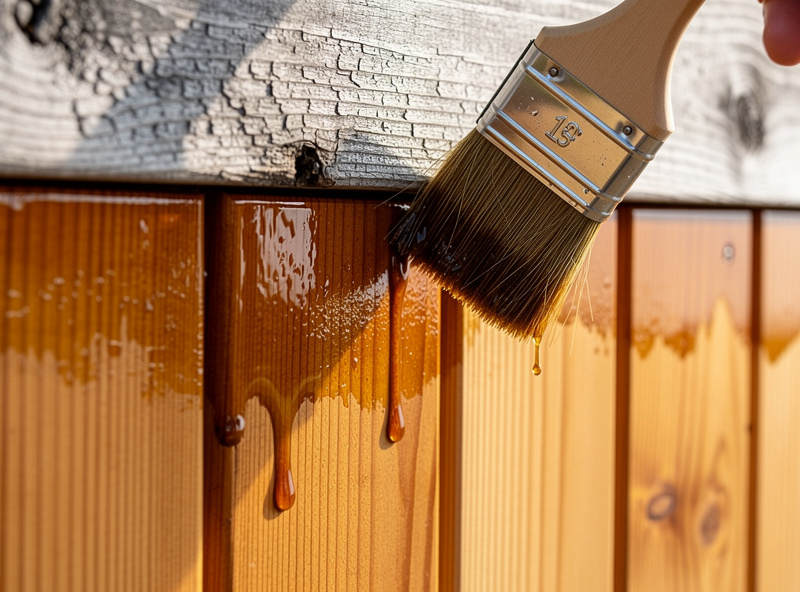
The right sealant is a penetrating oil with UV inhibitors — never a film-forming product like polyurethane or marine varnish, which trap moisture against the cedar and cause peeling within 18 months. Three sealants outperform alternatives in the cedar-cabin field test data:
| Product | Coverage | Cost (1 gal) | Reapplication interval | Notes |
|---|---|---|---|---|
| Cabot Australian Timber Oil | 200 sq ft | $60 | 2.5–3 years | Most common pick, wide hardware store availability |
| CWF-UV by Flood | 250 sq ft | $45 | 2–3 years | Stronger UV protection, slightly darker tint |
| Penofin Red Label | 180 sq ft | $80 | 3–4 years | Professional grade, longest interval |
Application takes 2-3 hours for a typical 2-person cabin. Wipe the surface clean with a damp microfiber cloth, let dry 24 hours, then apply with a 4-inch brush in 4-foot sections, working with the grain. Apply on a dry day when temperatures are 50-85°F and no rain is forecast for 48 hours. A second coat is optional for high-sun installs and adds roughly $30 per cabin.
Door Gasket: The Most-Failed Component
The single most-failed component on outdoor saunas is the door gasket. UV exposure, ozone, and freeze-thaw cycling break down the EPDM or silicone seal where the door meets the cabin frame within 5-7 years. A failed gasket lets cold air leak in (doubling warmup time), allows rain into the cabin floor, and corrodes interior heater wiring connections.
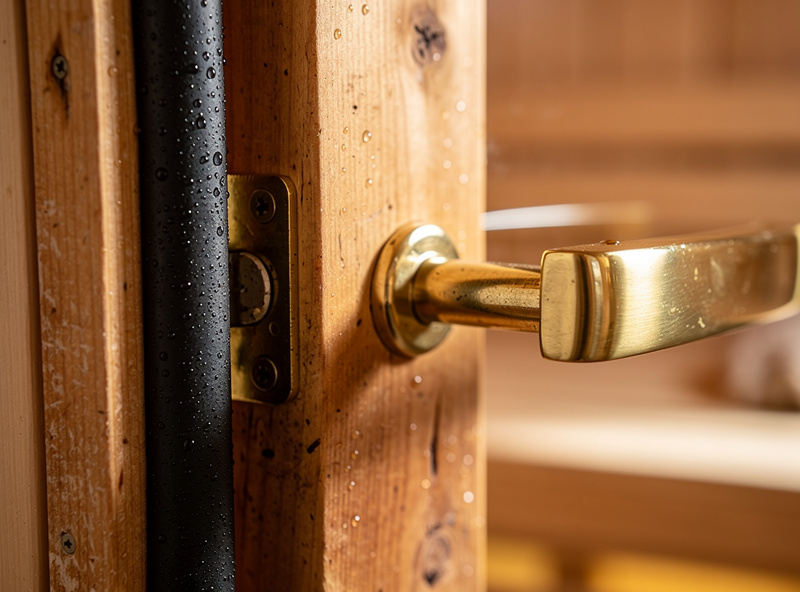
Inspect the gasket twice yearly — typically at the same time as cedar sealant inspection. Run your finger along the entire door perimeter looking for three failure signs: hardness (the gasket should compress under thumb pressure with about 30% give), cracking (any visible split is replacement-ready), and gaps where the gasket pulls away from the door frame. Any of these means immediate replacement, before the next rain.
Replacement gaskets cost $40-$120 from the cabin manufacturer (Sun Home, Clearlight, Almost Heaven all sell direct). Generic EPDM gaskets from a hardware store work in a pinch but rarely match the original profile and may not seal completely. Allow 30-45 minutes for the swap: peel old gasket, clean the frame channel with isopropyl alcohol, press new gasket into the channel starting at one corner.
Roof Slope, Overhangs, and Corner Sealing
Outdoor cabin roofs need three engineered features to shed water properly: a slope of at least 10 degrees (12 degrees ideal), a 4-inch overhang on all four sides, and sealed corner joints with marine-grade aluminum flashing. Cabins missing any of these will leak at the wall-roof junction within 3-5 years regardless of cedar grade.
Inspect the roof corners every spring after winter freeze-thaw. The four upper corners are where 90% of leaks originate — flashing pulls away from the cedar as the wood expands and contracts seasonally. A bead of high-temperature silicone sealant ($8 tube, RTV silicone rated to 400°F) along any visible flashing gap is a 5-minute fix that prevents a $400 cedar shell repair.
For the cabin overhang, check that the underside is dry within 4 hours of a heavy rain. If water pools or drips for longer than 4 hours, the overhang isn’t shedding properly — usually because of debris in the corners or sagging flashing. Clear with a soft brush; never pressure-wash an outdoor sauna roof, as the spray drives water under the flashing.
Freeze-Thaw Climate Protection
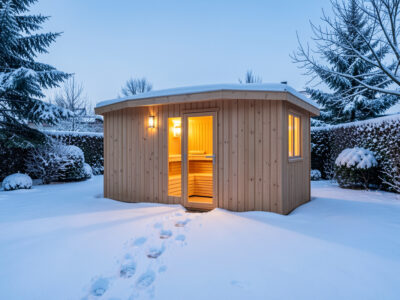
If you live north of the 40th parallel (Denver, Indianapolis, Philadelphia, Newark — anywhere that sees 20+ freeze-thaw cycles per year), the cabin needs additional cold-weather weatherproofing beyond the standard 3-layer protection. Total winterization budget: $180-$340 in materials, one-time install.
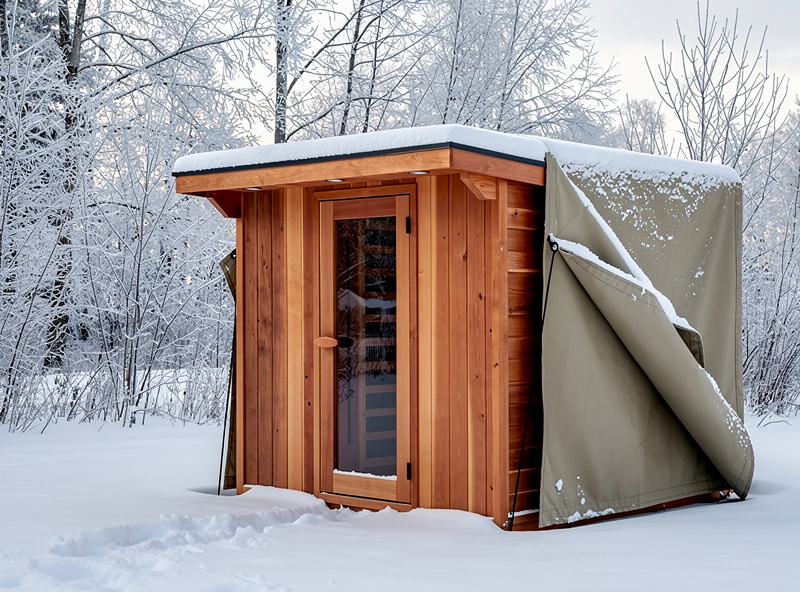
Three components handle most freeze-thaw protection:
- Heat trace cable on the door gasket: A 6-foot 25W self-regulating heat cable ($30) wrapped around the gasket prevents ice from forming in the seal during overnight freezes. Plug into the cabin’s GFCI receptacle on a thermostat that activates below 32°F.
- Breathable canvas cover for unused months: $80-$140 for a manufacturer-supplied cover. Never use plastic — it traps condensation against the cedar and causes mildew.
- Foundation skirt insulation: R-10 rigid foam panels ($60-$120) installed around the foundation perimeter prevent frost heave in the pad and reduce the cabin’s cold-soak warmup time by about 20%.
For the most northern installs (Minnesota, Maine, Manitoba), a freestanding three-sided wind screen on the prevailing-wind side cuts the warmup time in half during -10°F sessions. The screen can be a simple cedar slat panel ($180-$280) set 4 feet upwind. Always pair winter sessions with the safety guidance in our infrared sauna safety guide, especially around dehydration during cold-weather use.
Annual Maintenance Checklist
The full exterior weatherproofing maintenance routine takes about 4 hours of labor per year and $40-$120 in supplies, spread across spring, summer, and fall checks:
- Spring (after final frost): Inspect all roof corners and flashing for winter damage, check door gasket compression, test GFCI outlet, run 60-minute burn-in session, vacuum heater grilles.
- Summer (June or July): Hose down the exterior cedar with a gentle stream, inspect for any insect damage or fungal staining, touch up sealant on south-facing walls if needed.
- Early fall (before leaf drop): Apply full sealant coat if 30 months have passed since last application, replace door gasket if compression is below 30%, install heat trace cable and winter cover prep.
- Every 30 months: Full cedar sealant reapplication with a 4-inch brush, 2-3 hours of work, 24-hour cure before next session.
- Every 5-7 years: Door gasket replacement, $40-$120, 30-45 minutes of work.
Cabins that follow this schedule typically pass through their 20-year mark with minor heater service only. For specific maintenance details by brand including warranty terms, see our reviews of Sun Home Saunas and Clearlight Sanctuary.
Frequently Asked Questions
How often should I seal an outdoor cedar sauna?
Apply a clear penetrating cedar oil sealant every 30 months on average. Full-sun installs need reapplication every 18-24 months, while heavily shaded cabins can stretch to 36 months. Inspect annually — if water no longer beads on the cedar surface, it is time to reseal.
What is the best sealant for outdoor cedar saunas?
Cabot Australian Timber Oil ($60/gal), Flood CWF-UV ($45/gal), and Penofin Red Label ($80/gal) are the three field-proven choices. All are penetrating oils with UV inhibitors. Avoid film-forming products like polyurethane or marine varnish — they trap moisture and peel within 18 months.
Can outdoor saunas withstand winter weather?
Yes. Quality outdoor cabins are rated to -22°F operating temperature. Add a 25W heat trace cable on the door gasket ($30), a breathable canvas cover for unused months, and R-10 foundation skirt insulation for installs north of the 40th parallel. Total winterization: under $250 one-time.
How do I know when the door gasket needs replacement?
Inspect twice yearly for three signs: hardness (gasket should compress 30% under thumb pressure), cracking (any visible split needs immediate replacement), and gaps where the gasket pulls from the frame. Typical replacement interval is 5-7 years; gaskets cost $40-$120 from the manufacturer.
Does an outdoor sauna need a cover when not in use?
Only for seasonal-use cabins (May-October only). Year-round cabins last longer without a cover because regular heater cycles drive out moisture. If you must cover, use a breathable canvas cover ($80-$140) — never plastic, which traps condensation against the cedar and causes mildew.
Can I put my outdoor sauna under a tree?
Partial high-canopy shade is ideal. Avoid placement directly under deciduous trees because falling leaves trap moisture on the roof and clog the door track. Position so morning sun reaches the cabin to dry overnight dew, with afternoon shade to slow cedar greying.
How long does an outdoor cedar sauna last with proper weatherproofing?
Premium cedar cabins (Sun Home, Clearlight, Health Mate) last 18-25 years with sealant reapplication every 30 months and gasket replacement every 5-7 years. Mid-range cabins last 12-18 years. Skipping sealant entirely drops cabin life to roughly 8 years before structural rot appears.
Related Articles
- Outdoor Infrared Sauna Setup and Buying Guide — the parent hub
- Backyard Infrared Sauna Setup Guide — sibling spoke on placement and electrical
- Best Outdoor Infrared Saunas 2026 — top 7 cabin recommendations
- Sun Home Saunas Review — detailed look at cedar build quality
- Infrared Sauna Safety Guide — session safety including cold-weather use