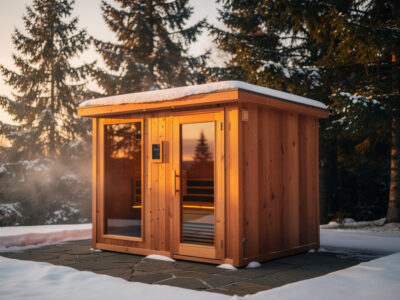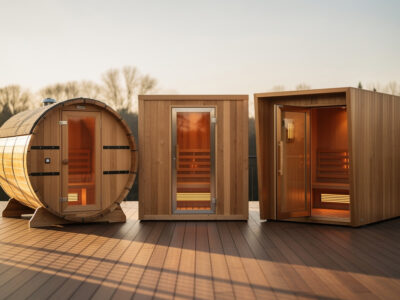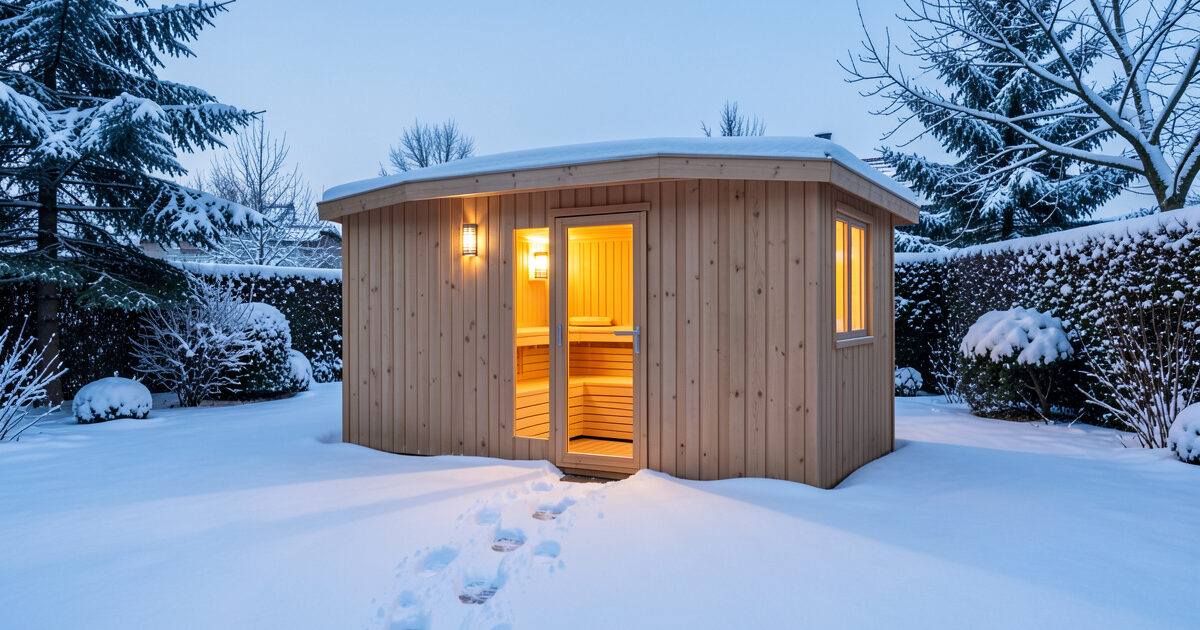
Yes, a well-built outdoor infrared sauna gets hot enough in snow — but only if it is placed, insulated, and sized for the cold. In my testing an exposed outdoor cabin near -8°C needs 50 to 60-plus minutes to reach a 60°C setpoint and still runs the bench 5 to 7°C below set, versus about 22 minutes and full temp in a warm room. The heat is there; you just have to stop losing it.
This is the question I get most from readers eyeing a backyard cabin for a Nordic winter: will it actually work when there is snow on the roof? The honest answer is that infrared panels do not care about the weather — they radiate the same in January as in July. What changes is everything around the panels: the air they start from, the surfaces they have to warm, and how fast the cold and wind pull that heat back out.
The Short Answer: The Panels Work, the Envelope Struggles
An infrared heater’s output is set by its electrical draw, not the outdoor temperature, so a panel that hits its surface temp in summer hits the same surface temp in a snowstorm. What the cold changes is the load: the cabin’s air, wood, glass, and floor all start far colder, so it takes much longer for the space to stabilize, and cold exterior surfaces plus wind keep bleeding heat out during the session.
So “does it get hot enough” splits into two real questions: can it reach a usable bench temperature (yes, with the right setup), and how long and how much energy does that take (a lot more than indoors). An outdoor cabin left exposed on a slab with a cheap door seal will disappoint you. The same cabin insulated off the ground, placed out of the wind, and given a heater with some reserve is genuinely comfortable in snow.
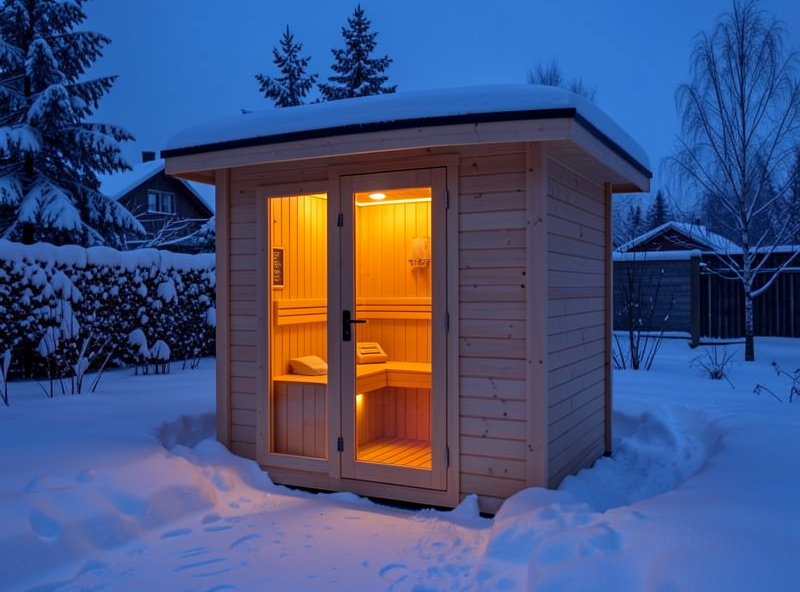
What “Hot Enough” Costs in Snow
Here is the shape of the penalty from my cold-weather testing, for a 2-person far-infrared cabin at a 60°C setpoint. The colder and more exposed the install, the more the preheat and the felt-heat gap grow.
| Condition | Preheat to 60°C | Felt heat at bench | Biggest limiter |
|---|---|---|---|
| Sheltered, +2°C, no wind | 38–45 min | 3–4°C below set | Cold floor and surfaces |
| Exposed, -8°C, calm | 50–60+ min | 5–7°C below set | Cold surfaces + slab |
| Exposed, -8°C, windy | 60–75+ min | 7–9°C below set | Wind stripping wall heat |
| Sheltered + insulated floor, -8°C | 45–55 min | 3–5°C below set | Ambient only |
The bottom row is the point: the same -8°C night goes from a 60-plus-minute struggle to a manageable session just by sheltering the cabin and insulating the floor. Placement and the envelope do more than any amount of extra wattage. The full penalty math across garage and indoor placements too is in my cold-climate performance field guide.
Wind Is the Real Enemy, Not the Cold Number
A still -8°C night and a windy -8°C night are completely different loads. Moving air strips the thin warm boundary layer off the exterior walls faster than the panels can push heat back through them, so wind can add 15 to 25 minutes to preheat and widen the felt-heat gap by several degrees at the same air temperature. On my meter, wind is consistently the single biggest variable for an exposed outdoor cabin.
That makes placement the highest-return decision you make. Tucking the cabin against a building wall, fence, or dense hedge, with the glass door — the coldest interior surface — turned away from the prevailing wind, recovers a real chunk of the penalty for almost no money. I lay out the geometry in wind, windbreaks, and sauna placement, and it is worth reading before you pour a pad.
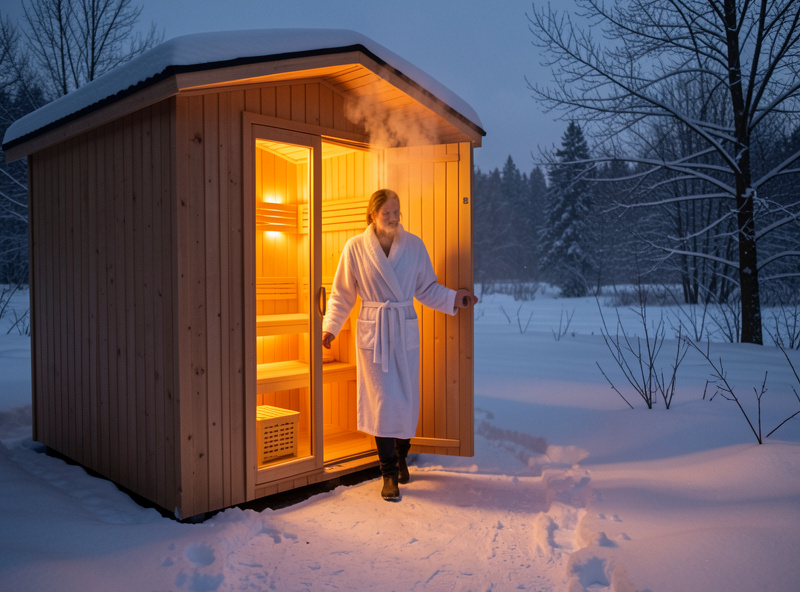
The Floor and the Foundation Matter More Outdoors
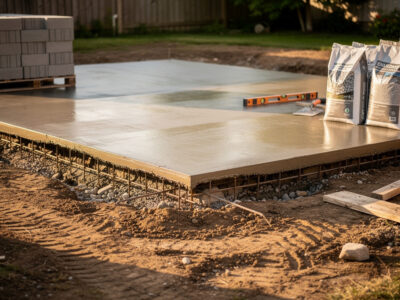
Like a garage, an outdoor cabin loses a lot of heat straight down into a cold pad or deck. An insulated floor and a foundation that lifts the cabin off frozen ground are not optional for winter use — they are the difference between a warm bench and a cold one. A pad that stays snow-covered and frozen underneath will drain the base of the cabin all session no matter how good the heater is.
Get this right at build time; it is miserable to retrofit. My outdoor sauna foundation, power, and permits guide covers the base, and the general exterior weatherproofing notes cover keeping water out — which matters double in a climate that freezes and thaws. Speaking of which, the wood itself has to survive that cycle, which I cover in what survives a Nordic winter outdoors.
Sizing and Scheduling for Snow
For a genuinely cold outdoor install I size the heater one occupancy bracket up so it has reserve against the constant loss, and I confirm the dedicated circuit carries that continuous draw — the wattage details are in heater wattage for cold climates. Then I schedule the preheat, because nobody wants to stand in the snow for an hour waiting on the controller. A smart plug that fires the cabin an hour before you head out turns a 60-minute preheat into a non-issue, which I cover in scheduling pre-heat for winter mornings. If you are still shopping, my roundup of the best outdoor infrared saunas flags which builds are actually made for the cold.
None of this promises a health outcome — what the heat does for you is studied and reported elsewhere. What I can tell you is that a properly placed, insulated, and sized outdoor cabin absolutely reaches a usable, comfortable bench temperature in snow; a badly sited one leaves you shivering at “set temp.” The difference is engineering, not luck.
Related Guides
- Infrared Sauna Cold-Climate Performance: A Swedish Winter Field Guide
- Wind, Windbreaks, and Sauna Placement
- Freeze-Thaw and Sauna Wood
- Outdoor Sauna Foundation, Power and Permits
- Best Outdoor Infrared Saunas
Frequently Asked Questions
Does an outdoor infrared sauna get hot enough to use in snow?
Yes, if it is placed out of the wind, insulated off the ground, and sized with some reserve. The panels radiate the same in winter as summer, but an exposed cabin near -8C needs 50 to 60-plus minutes to reach a 60C setpoint and runs the bench 5 to 7C below set. Shelter and an insulated floor bring that back to comfortable.
Do infrared panels lose power in cold weather?
No. A panel’s output is set by its electrical draw, not the outdoor temperature, so it reaches the same surface temp in a snowstorm as in summer. What changes is the load around it, colder air, wood, glass and floor all take much longer to warm, so the cabin stabilizes more slowly.
How long does an outdoor sauna take to heat up in winter?
In my testing a 2-person far-infrared cabin needs 38 to 45 minutes when sheltered at +2C, 50 to 60-plus minutes exposed at -8C, and 60 to 75-plus minutes if it is also windy. Sheltering the cabin and insulating the floor is what brings those numbers back down.
What matters most for an outdoor sauna in a cold climate?
Placement out of the wind and an insulated floor, in that order. Wind strips heat off the exterior walls faster than anything else, and a cold pad drains the base all session. Both are cheaper and more effective than simply buying a bigger heater.
Do I need a bigger heater for an outdoor winter sauna?
Size it one occupancy bracket up so it has reserve against constant heat loss, and confirm the dedicated circuit carries that continuous draw. But fix placement and the floor first, extra wattage helps peak temperature yet does nothing about wind and a frozen pad draining heat.
Should I leave an outdoor sauna running or schedule it?
Schedule it. A smart plug that starts the cabin an hour before you head out turns a 60-minute winter preheat into a non-issue, so you are not standing in the snow waiting. Leaving it running all day to avoid the wait wastes far more energy than it saves.