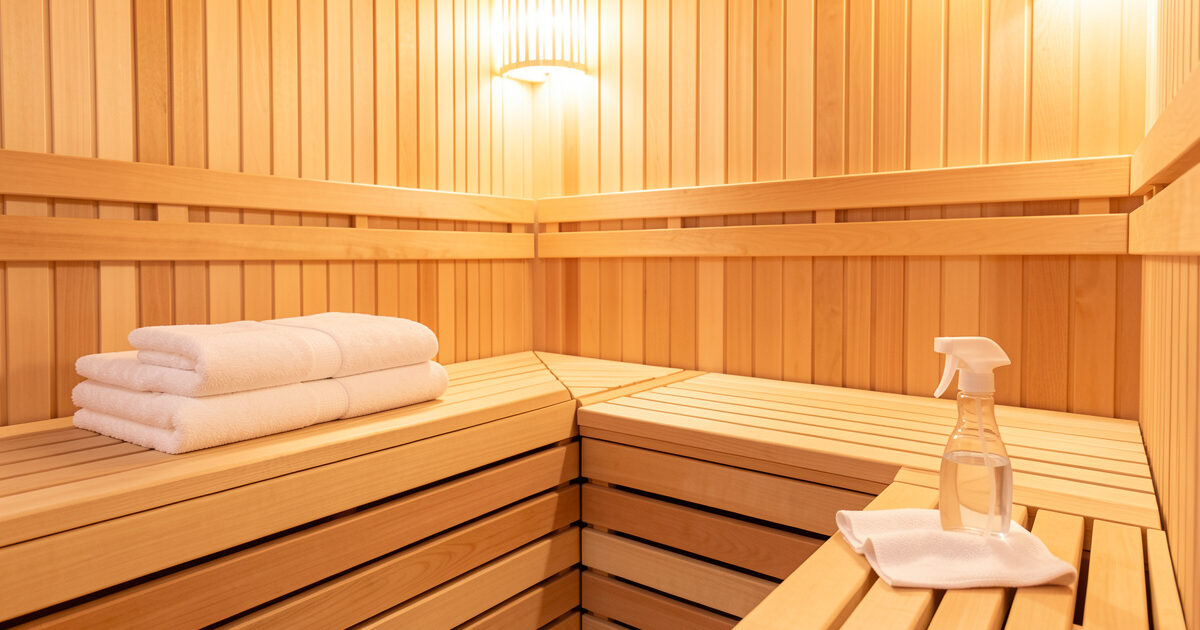
A shared infrared sauna needs three habits: a towel under every person, a wipe-down of the benches and backrest after each session, and a full dry-out with the door open. Two bodies mean roughly twice the sweat soaking into untreated hemlock, and softwood that stays damp is where odor and staining start. This is wood care first, tidiness second — the cabin interior is the expensive part you’re protecting.
Nobody buys a sauna thinking about cleaning it, and then two people share it through a busy week and the backrest develops a shadow. I know because I let exactly that happen to my own cabin once. The good news is that shared-sauna hygiene is simple and cheap — it’s habits and a couple of towels, not chemicals and scrubbing. Get the routine right and the wood stays clean, dry, and smelling of resin instead of last week’s session.
Do You Need to Clean an Infrared Sauna Between Users?
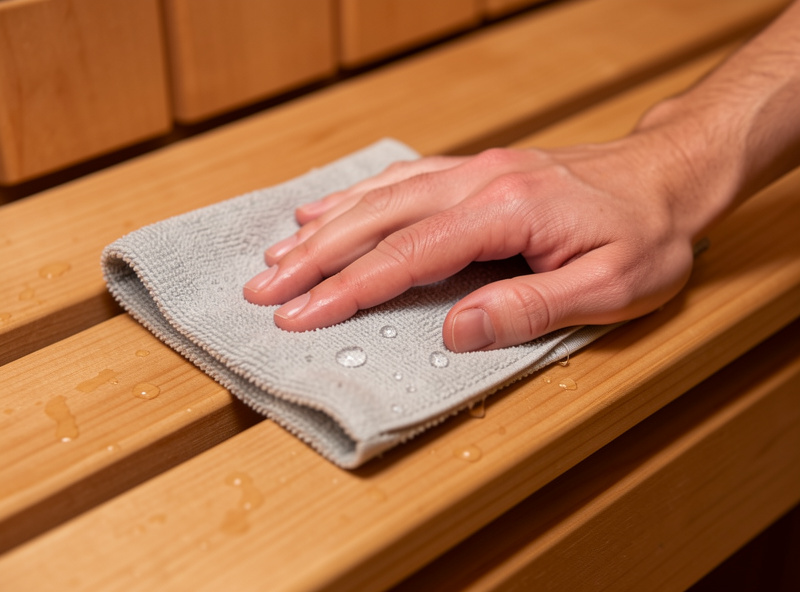
Yes — a quick wipe-down between users and after every shared session. You don’t need to deep-clean each time, but sweat left on raw wood soaks in, and with two people that load doubles. A damp microfiber cloth over the benches and backrest, plus a few minutes of open-door drying, is enough to keep the cabin clean between sessions and prevent the sour-wood smell.
The reason it matters more for two is simple arithmetic: twice the bodies, twice the sweat, and the same wood to absorb it. Untreated hemlock and cedar are porous, so perspiration wicks into the surface rather than sitting on top. Left alone, that’s what turns into staining and odor over weeks of sharing. A between-users wipe is also just courtesy if you and a partner alternate solo sessions back to back — nobody wants to sit on a wet bench. This ties into planning a little cool-down and wipe-down space around the cabin, which I cover in how much room two people need.
Why Do Towels Matter More With Two People?
Towels are the first line of defense because they catch sweat before it reaches the wood. Each person should sit on their own towel, with a second towel or a footmat for their feet, so perspiration lands on cloth you can wash rather than on hemlock you can’t. With two bodies, a full towel barrier under each person is the single most effective hygiene habit.
I run a large towel on the seat and a smaller one underfoot, per person, every session. It sounds fussy until you compare a cabin run that way for a year against one run without — the toweled cabin’s wood still looks new, the untoweled one has darkened where bodies sit. Sweat is mostly water but it carries salts and oils, and those are what stain and hold odor. Catching it on washable cloth is far easier than trying to clean it out of grain later. For shared use I keep a dedicated set so there’s always a fresh towel per person; a decent stack of absorbent sauna towels is the cheapest hygiene upgrade you can make.
As an Amazon Associate I earn from qualifying purchases.
What Should You Wipe Down After a Shared Session?
Wipe the seating surface, the backrest, any armrest or headrest, and the floor where feet and drips land. Those are the high-contact, high-sweat zones two bodies load most. A damp microfiber cloth is all you need — go over the benches and backrest, then the floor, then leave everything to dry. Skip the walls and panels unless something splashed them.
The backrest is the spot people forget and the spot that stains first, because it’s in constant contact with a sweating back for the whole session. With two people, two backs, two sessions — it earns a wipe every time. The floor matters too: two sets of feet track moisture, and standing water on a cabin floor is both a slip risk and a slow route to wood damage. None of this needs to be elaborate. The habit I keep is: session ends, both towels come out, cloth over the benches and backrest and floor, door open. Ninety seconds. The other reason to wipe promptly is that fresh sweat lifts easily, while sweat that’s dried and soaked in does not — the same lesson that runs through beating cold spots and every other shared-cabin habit: small, consistent, right after the session.
What Can You Safely Use on Sauna Wood?
Use water and a microfiber cloth for routine cleaning, and a very dilute mild solution — a little white vinegar in water, or a wood-safe cleaner — only for occasional deeper cleaning. Avoid bleach, ammonia, and strong solvents entirely. Harsh chemicals soak into porous raw wood and then off-gas when the panels heat the cabin, which is exactly what you don’t want to breathe in an enclosed space.
This is the mistake I steer people away from most often: reaching for a strong household cleaner because “it’s for two people now, it should be disinfected.” Raw sauna wood is not a kitchen counter. It’s unsealed and porous, so whatever you put on it stays in it. The EPA’s guidance on indoor air quality is a useful reminder that volatile compounds off-gas more in warm, enclosed spaces — and a heated sauna cabin is the definition of warm and enclosed. Plain water handles routine cleaning; for the rare deeper clean, a heavily diluted vinegar solution or a cleaner explicitly labeled safe for saunas, wiped and then fully dried, is as far as I’d go. Light sanding, not chemicals, is the correct fix for a stain that’s set into hemlock.
Are Seat Covers Worth It for Sharing?
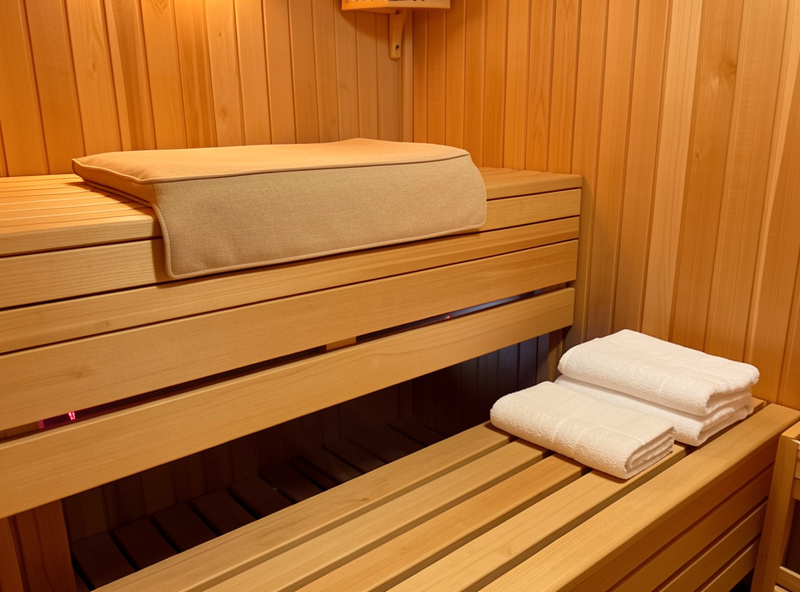
For regular two-person use, yes. A washable seat cover or backrest cover gives each person a dedicated, launderable barrier and takes the wear off the wood entirely. They’re cheap, they wash with the towels, and they solve the “whose sweat is this” question that comes with sharing. For couples who use the cabin several times a week, covers are the low-effort upgrade I’d make first.
The appeal of a cover over a loose towel is that it stays put — a towel slides around as you shift; a fitted cover doesn’t, so the wood underneath stays genuinely protected for the whole session. I use towels day to day and keep covers for the heaviest-use stretches, like the dark winter months when the cabin runs most. If you’re kitting out a shared cabin, a pair of washable sauna seat covers alongside your towel set covers every hygiene base without any chemicals at all. The point of both is the same: catch sweat on something you can throw in the wash, not on the hemlock.
How Do You Dry the Cabin to Prevent Odor and Mold?
Leave the door open after every session so the cabin dries fully, and crack a vent or window in the room to move the humid air out. Two people raise the cabin’s humidity through combined sweat, and wood that stays damp in a closed cabin is where odor and, in bad cases, mold begin. Dry air is the whole defense — a well-aired cabin simply can’t grow anything.
My hygrometer climbs faster with two of us inside, and that moisture has to go somewhere. If you shut the door on a warm, humid cabin, it lingers in the wood. Open the door and the residual panel warmth plus room airflow dries the interior within an hour. Controlling moisture is the recognized way to prevent mold in any space, as the EPA’s mold guidance lays out: keep surfaces dry and you remove the conditions it needs. In practice, for a shared cabin, that means door open after the session, room ventilated, and — in a damp climate or a basement install — occasionally running the cabin empty for a short warm cycle to drive out residual moisture. Where you site the cabin affects this too; a garage or basement holds damp differently than a heated room, which I get into in my indoor vs garage install comparison.
How Often Should a Shared Cabin Get a Deeper Clean?
A shared cabin used a few times a week benefits from a deeper clean roughly monthly — a thorough wipe of all surfaces, a check of the floor and corners, and a light sanding of any set-in stain on the backrest or seat. Routine towels-and-wipe handles the day-to-day; the monthly pass catches what builds up slowly across two users.
The monthly clean is also when I look, not just wipe. I check the backrest for darkening, run a hand over the bench for any tacky residue, and glance at the low corners where moisture pools. Catching a faint stain early means a two-minute light sand; catching it after six months means a real refinishing job. For two-person use I also inspect the towel and cover set and retire anything that’s gone thin. It’s the same preventive mindset the whole couples guide runs on — a little attention regularly beats a big intervention rarely. General hygiene aside, any question about skin sensitivity or shared-use health concerns is one for a professional, not a sauna blog; my lane is keeping the wood clean and the cabin dry.
If I were setting the routine for a couple starting out, I’d make it a rule from session one: towels down under both people, ninety-second wipe when you’re done, door open to dry. Do that and the cabin stays clean by default — you’ll never need the deep clean to rescue neglected wood, only to maintain wood that was never allowed to get bad.
Related Reading
- Infrared Sauna for Couples: Sharing a Cabin Without Compromise
- Bench Layout for Sharing: Facing Benches vs Side-by-Side
- Set Temp When Two People Disagree on Heat
- Cabin Cold Spots With Two Bodies Blocking the Panels
- Does Two People Cost More to Run? kWh Per Shared Session
Do you need to clean an infrared sauna between users?
Yes, a quick wipe-down between users and after every shared session. You do not need a deep clean each time, but sweat left on raw wood soaks in, and with two people that load doubles. A damp microfiber cloth over the benches and backrest plus open-door drying keeps the cabin clean and prevents a sour-wood smell.
What can you safely clean sauna wood with?
Use water and a microfiber cloth for routine cleaning, and only a very dilute mild solution like white vinegar in water or a wood-safe cleaner for occasional deeper cleaning. Avoid bleach, ammonia, and strong solvents, because they soak into porous raw wood and off-gas when the panels heat the enclosed cabin.
Are seat covers worth it for a shared sauna?
For regular two-person use, yes. A washable seat or backrest cover gives each person a dedicated launderable barrier, takes the wear off the wood, and washes with the towels. For couples using the cabin several times a week, covers are the easiest hygiene upgrade because they catch sweat on cloth instead of hemlock.
How do you stop a shared sauna from smelling or growing mold?
Leave the door open after every session so the cabin dries fully, and ventilate the room to move humid air out. Two people raise the cabin humidity through combined sweat, and damp wood in a closed cabin is where odor and mold begin. Keeping the wood dry removes the conditions mold needs.
How often should you deep clean a two-person sauna?
A shared cabin used a few times a week benefits from a deeper clean about monthly, with a thorough wipe of all surfaces, a check of the floor and corners, and light sanding of any set-in stain. Daily towels and a quick wipe handle routine use, while the monthly pass catches slow buildup from two users.