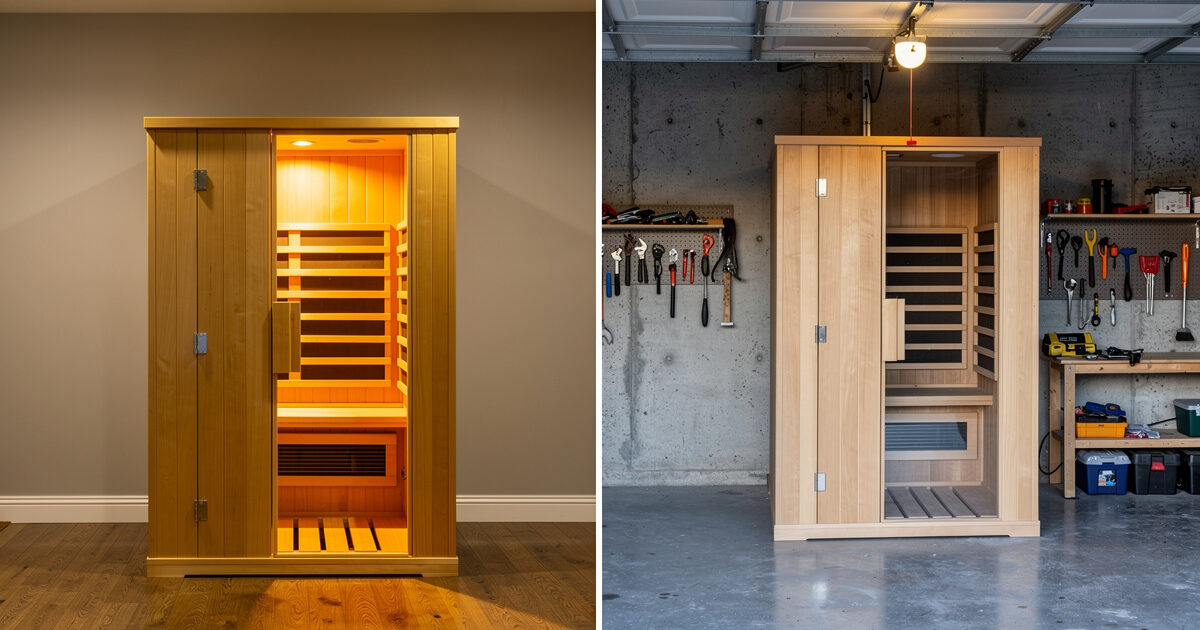
A conditioned indoor room is the better place to install an infrared sauna for most people, because it heats faster, costs less to run, and needs no moisture barrier, while a garage wins only when it is the sole space with the floor room and panel access the cabin needs. The deciding factors are temperature, floor, and electrical proximity, and on the first two an insulated indoor room beats a typical garage handily. A garage works, but it works with caveats.
I have run my own cabin indoors and helped set one up in a garage, and the difference shows up every single session in the preheat. A cold garage in a Swedish winter turns a quick warm-up into a long, expensive one, while the same unit in a heated room is ready in a fraction of the time. Here is the honest head-to-head on the factors that actually decide which is right for your situation.
As an Amazon Associate I earn from qualifying purchases. Some links below are affiliate links, at no extra cost to you.
Temperature: The Biggest Difference
The single largest practical difference is starting temperature, because an infrared cabin in a warm conditioned room reaches its set temperature far faster and cheaper than the same unit starting from a cold garage. Every degree the room is below comfortable is energy the heaters spend warming the air around the cabin instead of warming you, which lengthens the preheat and raises the electricity per session.
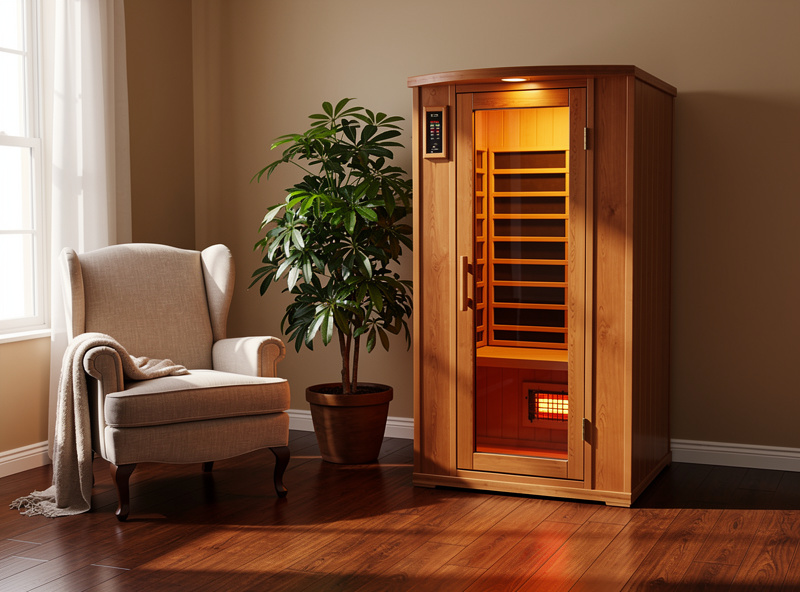
In a heated indoor room the cabin starts from room temperature and ramps quickly. In an unheated garage at near-freezing, the preheat can take much longer and the cabin may struggle to hold its set temperature against the cold surrounding air. This is why the running-cost picture, covered in the cost and power guide, favors conditioned space so strongly. If a garage is your only option, insulating it and adding a small amount of heat transforms the experience.
Floor and Moisture
Indoor rooms usually have finished, level floors that handle the cabin well, while a garage’s bare concrete slab needs a moisture barrier and can wick cold up into the cabin base. Concrete itself is level and durable, which is good, but an uninsulated slab is a heat sink and can hold ground moisture that you do not want against the cabin. A barrier solves both.
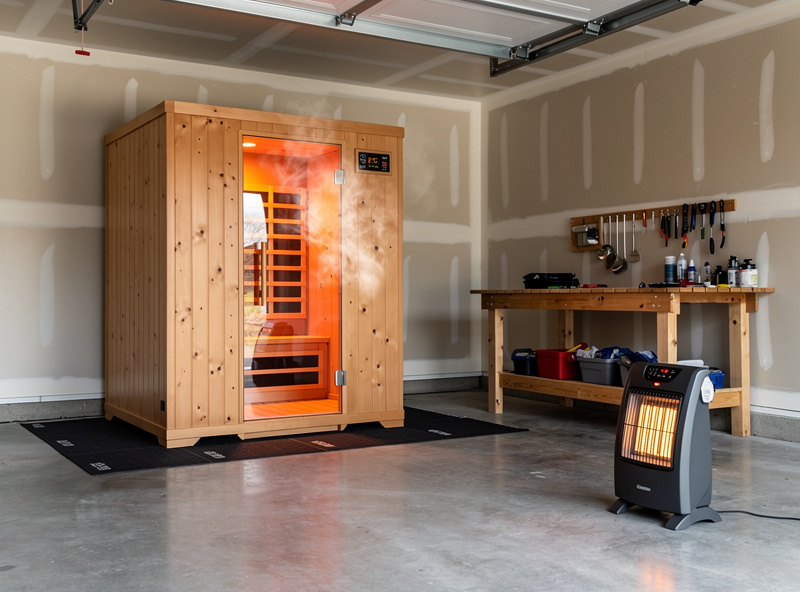
For a garage install I put a moisture-tolerant barrier or mat under the full footprint of the cabin, both to block slab moisture and to add a thin insulating layer against the cold concrete. A moisture barrier mat is an inexpensive fix that the indoor install simply does not need. The general flooring rules, indoors or out, are in the flooring and clearance guide.
Electrical Access
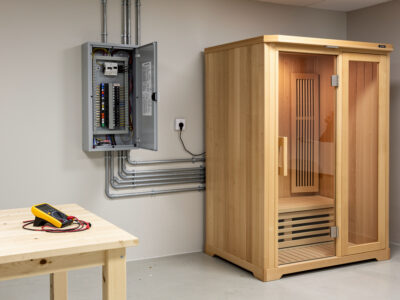
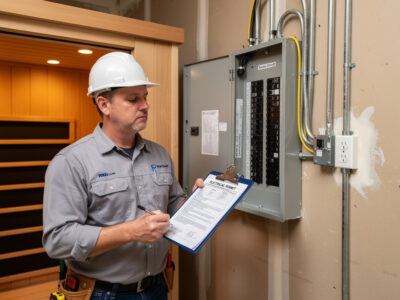
Garages often win on electrical access because the main panel is frequently located there, making the dedicated circuit a short, cheap run, whereas an upstairs indoor room can be the farthest point from the panel. This is the garage’s strongest argument: the wiring the cabin needs, covered in the outlet wiring guide, is simplest when the panel is right there on the wall.
So the electrical scorecard can flip the decision. A perfect indoor room that sits far from the panel may cost more to wire than a garage install where the circuit is a two-meter run. I weigh the comfort of the room against the length of the cable, and for some homes the garage’s panel proximity outweighs its temperature penalty, especially if the garage is already insulated. The breaker requirements guide covers sizing that circuit wherever it lands.
Indoor vs Garage at a Glance
Here is the head-to-head on the factors that decide the install, so you can see where each location wins.
| Factor | Conditioned indoor room | Garage |
|---|---|---|
| Preheat time | Fast | Slow if unheated |
| Running cost | Lower | Higher if cold |
| Floor | Usually ready | Needs moisture barrier |
| Electrical run | Often longer | Often near panel |
| Comfort/ambiance | High | Functional |
| Best when | You have the room | Only space that fits |
The pattern is clear: indoor wins on temperature, cost, and comfort, while the garage wins on space and often electrical proximity. If you have a suitable conditioned room, use it; if the garage is the only place the cabin fits, make it work with insulation, a barrier, and a little heat.
Air Quality and Dust
One quiet advantage of an indoor room is cleaner air, while a working garage carries dust, fumes, and temperature swings that a sauna would rather avoid. A garage that doubles as a workshop has sawdust, exhaust if you run a car in it, and chemical smells from stored paint or fuel, none of which you want drawn through the cabin’s ventilation while you sit. A finished indoor room simply does not have those concerns.
If the garage is your space, keeping the sauna area clean and separated from the dusty, fume-prone work zone matters more than people expect, because the cabin pulls room air through its vents during a session. Park the car outside before a session, keep solvents sealed and away, and give the cabin clean air to work with. This is part of why the ventilation routine, detailed in the ventilation guide, is worth getting right wherever the cabin lives.
How Both Compare to a Basement
It is worth saying that for many homes neither a main living room nor the garage is the actual best answer, a finished basement often beats both by combining the garage’s panel proximity with the indoor room’s temperature stability. Basements tend to hold a steadier temperature than a garage, have sealed concrete or tile floors that need little prep, and frequently sit near the panel, which is the trifecta a sauna install wants.
So if your decision is truly indoor-versus-garage, consider whether a basement is also on the table before committing, since it frequently wins on the same scorecard. Where a basement is not an option, the indoor-versus-garage call comes down to whether you value the lower running cost and comfort of a conditioned room or the space and electrical simplicity of the garage. The full room-by-room view is in the siting guide.
Making a Garage Install Work
If the garage is your choice, three upgrades close most of the gap with an indoor room: insulate the space, add a moisture barrier under the cabin, and provide a modest heat source so the preheat is not starting from freezing. Insulation is the highest-impact of the three because it lets the cabin hold its temperature and keeps the surrounding air from stealing heat all session.
A small space heater or the garage’s own heating, run briefly before a session, takes the edge off the cold start and dramatically shortens the preheat. A garage space heater on a smart plug, staged to run before your session, is the same scheduled-preheat trick I use indoors applied to a colder space. With those upgrades a garage sauna is genuinely pleasant; without them it is a long cold wait followed by a high electricity bill.
My bottom line, after running a cabin both ways, is to choose the warmest, cleanest space that the cabin physically fits and the panel can reach, and only fall to the garage when nothing indoors works. If the garage is that fallback, commit to the insulation, barrier, and heat rather than treating them as optional, because a half-measure garage install is the one people end up resenting. Done properly, either location gives you the same sessions; the difference is entirely in how fast, cheap, and comfortable the path to those sessions is.
Frequently Asked Questions
Is it better to put an infrared sauna indoors or in a garage?
A conditioned indoor room is better for most people because it heats faster, costs less to run, and needs no moisture barrier. A garage works when it is the only space with the floor room and panel access, especially if it is insulated.
Can you put an infrared sauna in a garage?
Yes, a garage can host an infrared sauna, but an unheated one adds a long cold-start preheat and a bare concrete slab needs a moisture barrier under the cabin. Insulating the garage and adding a little heat makes the install work well.
Why does a cold garage cost more to run a sauna?
In a cold garage the heaters spend energy warming the surrounding air instead of you, which lengthens the preheat and raises the electricity per session. The same cabin in a warm room reaches its set temperature faster and cheaper.
Do I need a moisture barrier for a garage sauna?
Yes. A bare concrete slab can wick ground moisture and cold up into the cabin base, so place a moisture-tolerant barrier or mat under the full footprint. This blocks slab moisture and adds a thin insulating layer against the cold floor.
Does a garage make the sauna wiring easier?
Often, because the main electrical panel is frequently located in the garage, making the dedicated circuit a short, inexpensive run. An upstairs indoor room can be the farthest point from the panel, raising the wiring cost.