You can buy a sauna with excellent heaters and still end up cold in the wrong places. Heater placement — where the panels sit relative to where your body actually is — decides whether the radiant heat reaches all of you or leaves your shins and lower back in a draft. After mapping every cabin I’ve owned with a thermal camera, I can tell you the cold spots land in the same predictable places every time, and they always correspond to a missing panel. This is the engineering buyers learn about only after they’ve bought wrong: it’s not the wattage number, it’s the geometry. Here’s how panel placement and wattage actually work together, and what to count before you buy.
Radiant heat travels in straight lines and falls off with distance
The core physics is simple and unforgiving. Infrared panels radiate in straight lines, and the intensity drops as you move away from the panel. That means a panel only effectively heats the part of you it can “see” at a usable distance. Anything in shadow — or too far from the nearest panel — sits in a cooler zone. Your body finds those zones immediately.
This is why placement matters more than most buyers realise. A cabin can have plenty of total wattage, but if all the panels are behind you and none are at shin level, your lower legs stay cool while your back roasts. The heat isn’t missing — it’s just pointed at the wrong parts. Good placement means panels positioned so their straight-line radiant output covers your whole seated body at the distance you actually sit.
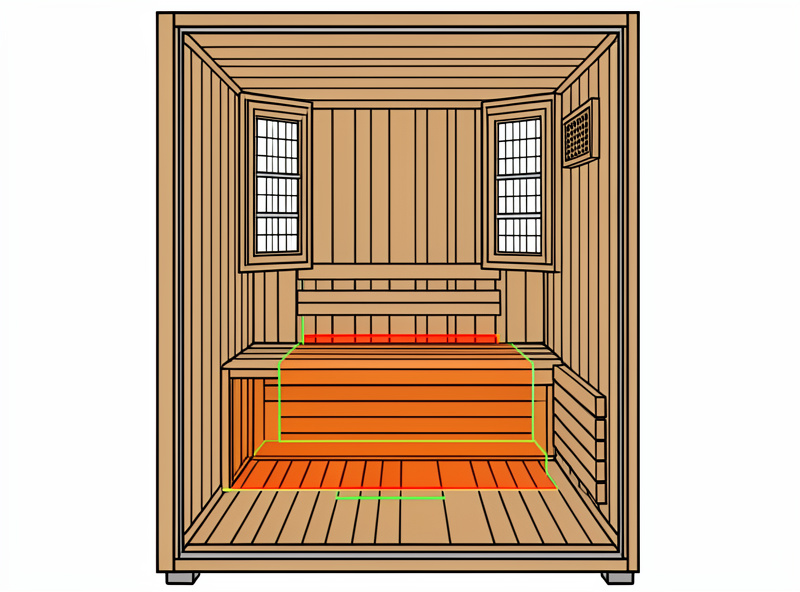
Where the cold spots reliably land
Across every cabin I’ve mapped, the cold spots cluster in the same three places, and they’re all placement failures:
- The shins and lower legs. The most common gap. If there’s no front or shin-level panel, your lower legs sit in open air with no panel pointed at them. This is the number-one complaint in budget cabins.
- The lower back. If the back panels are mounted high or there’s a gap behind the bench, your lumbar region misses out. Back panels need to reach down to where you actually lean.
- The feet. Without a floor heater or low panel, feet stay cold even in an otherwise warm cabin — heat rises, and your feet are at the coldest point.
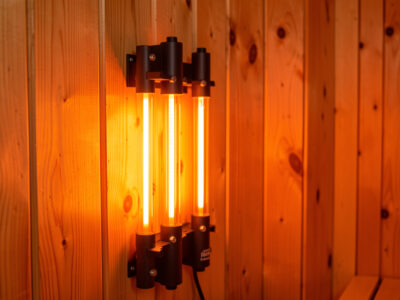
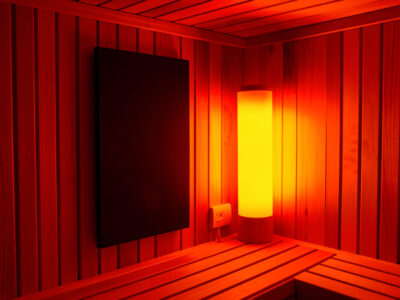
A well-laid-out cabin closes all three: back panels that reach the lumbar, side panels, a front or shin-level panel, and ideally a floor heater. When you’re evaluating a unit, mentally sit in it and ask whether a panel is pointed at each of those three trouble zones. If not, you’ve found your future cold spots. This connects directly to where you physically site the cabin in the room — covered in the where-to-install guide and the indoor placement walkthrough — but those are about the cabin in the room; this is about the panels in the cabin.
Why wattage doesn’t tell you about coverage
Here’s the trap. Wattage measures total electrical draw, not how that heat is distributed. A 1,800-watt cabin with all its panels clustered behind the bench can leave more cold spots than a 1,500-watt cabin that spreads the same panels around the back, sides, shins, and floor. The lower-wattage cabin feels warmer everywhere because its geometry is better, even though its number is smaller.
This is the single most useful reframe I can offer a buyer: stop comparing wattage and start counting panels and noting where they sit. Two panels of coverage at shin level do more for felt warmth than an extra few hundred watts dumped into the back wall. Wattage tells you what the cabin costs to run — covered in the running-cost breakdown — but it tells you almost nothing about whether you’ll be evenly warm. The deeper version of this argument is in the heater and EMF guide.
Panel placement and the EMF angle
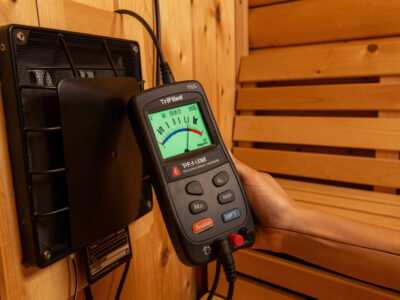
Placement also intersects with EMF, because the panels’ wiring is part of what you sit near. A panel right behind your head puts both its radiant output and its wiring close to you — so where panels sit affects not just warmth but the field at the seat. This is one more reason the seat position is the reference point for everything: it’s where you judge warmth, and it’s where you meter the field. A thoughtfully placed cabin keeps the wiring runs routed away from the closest body positions, which is the kind of detail you can check with a meter (the method is in the how-to-meter guide). I keep a TriField-style EMF meter on the bench for exactly this — checking how panel placement and wiring routing read at the seat.
As an Amazon Associate I earn from qualifying purchases.
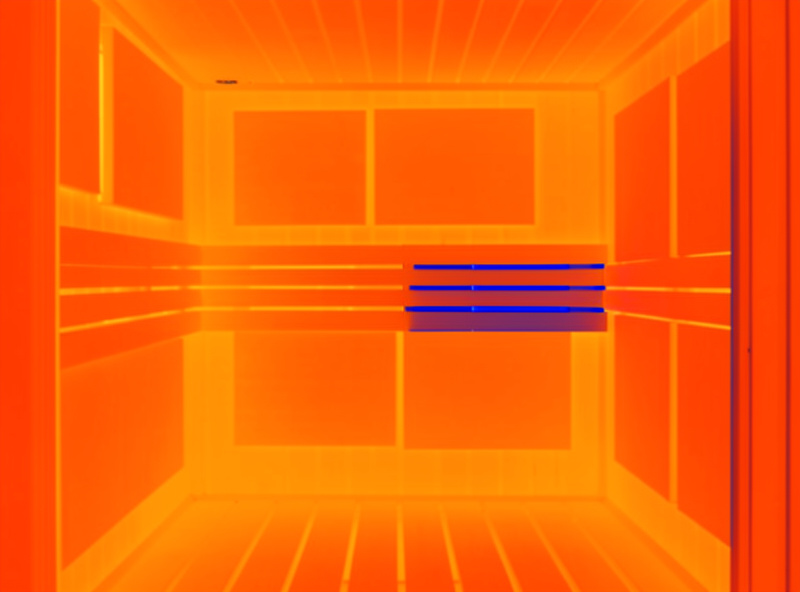
Bigger cabin, same panels: the dilution trap
One placement mistake hides inside cabin size. A 4-person cabin with the same number of panels as a 2-person one spreads the same heat over more empty air — so per-person coverage drops and cold spots open up. Bigger isn’t automatically warmer or better; it depends on whether the panel count scaled up with the footprint. When comparing a larger cabin, check that it actually added panels to cover the extra space, not just stretched the same array across a bigger box.
This is why I tell people to size the cabin to the people who’ll use it and then verify the panel coverage for that size. My own 2-person cabin is well covered because the panels were laid out for two seated bodies; a 2-person array dropped into a 4-person shell would leave half the bench cold. The sizing guide covers picking the footprint; the placement check is the layer on top that makes sure the heat actually fills it.
| Body zone | Panel needed | Cold-spot risk if missing |
|---|---|---|
| Upper back / shoulders | Back panel (upper) | Low — usually covered |
| Lower back / lumbar | Back panel reaching the bench | High in budget cabins |
| Torso / sides | Side panels | Medium |
| Shins / lower legs | Front or shin-level panel | Very high — most common gap |
| Feet | Floor heater / low panel | High — heat rises |
What to do with all this when buying
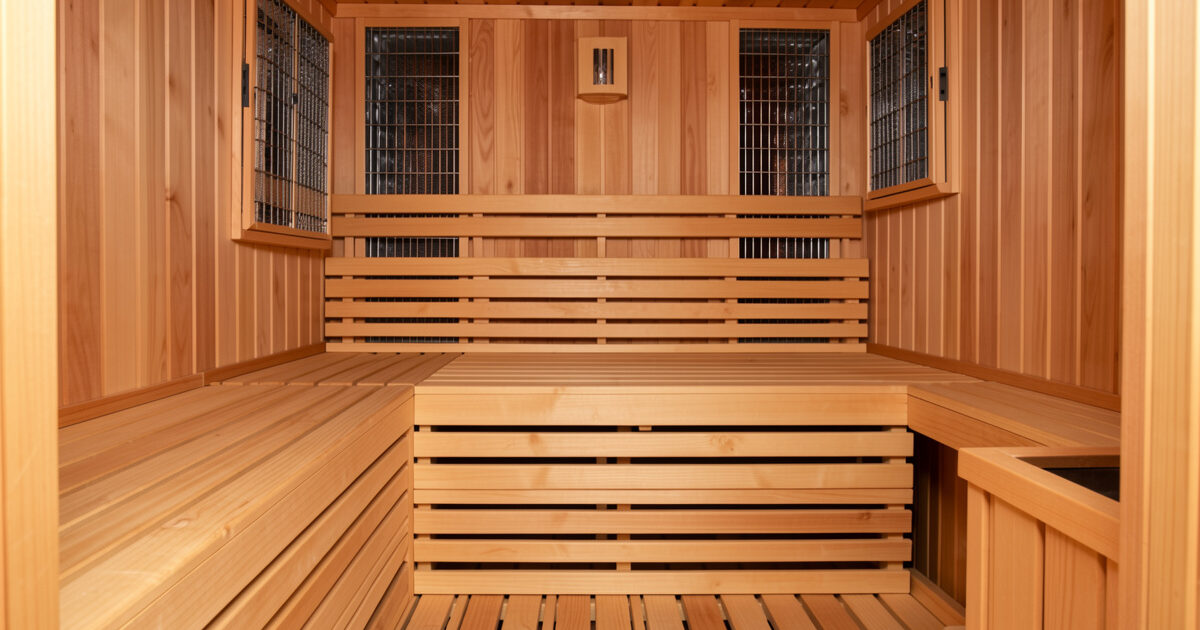
The buying check is short and it beats any spec sheet. Count the panels. Note where each one sits relative to a seated body — back (to the lumbar), sides, shins, floor. Ask whether the panel count matches the cabin size. Ignore the headline wattage as a measure of warmth, and treat it only as a running-cost figure. If you can, sit in the cabin powered up and feel for the three classic cold zones; if you can’t, study the panel layout photo with those zones in mind. Get the placement right and a modest-wattage cabin will warm you evenly head to toe — which is the entire point. For the wider buying picture, the home cabin roundup and the brand comparison show which makers lay their panels out properly.
Where should infrared sauna heaters be placed?
Panels should cover a seated body at the distance you actually sit: back panels reaching down to the lumbar, side panels, a front or shin-level panel, and ideally a floor heater for the feet. Because radiant heat travels in straight lines and falls off with distance, any zone without a panel pointed at it becomes a cold spot. Full coverage of back, sides, shins, and floor is the goal.
Why does my infrared sauna have cold spots on my legs?
Because there is no front or shin-level panel pointed at your lower legs. The shins are the most common cold spot in budget cabins — all the panels are behind and beside you, leaving the lower legs in open air. Radiant heat only warms what a panel can reach in a straight line, so a missing shin panel means cool legs no matter how high the wattage.
Does higher wattage fix cold spots?
No. Wattage is total electrical draw, not heat distribution. A higher-wattage cabin with panels clustered in one place still leaves cold spots, while a lower-wattage cabin with panels spread around the back, sides, shins, and floor feels warm everywhere. Cold spots are a placement problem, fixed by adding coverage where it is missing, not by adding watts.
Is a bigger infrared sauna warmer?
Not automatically. A larger cabin with the same number of panels as a smaller one spreads the same heat over more space, so per-person coverage drops and cold spots open up. A bigger cabin is only as warm as its panel count allows. Check that a larger unit actually added panels for the extra footprint rather than stretching the same array across a bigger box.
How many heater panels should an infrared sauna have?
Enough to cover every seated body across back, sides, shins, and floor — the exact count depends on cabin size and seating. Rather than chasing a number, count the panels and check each trouble zone has one pointed at it: lumbar-reaching back panels, side panels, a shin-level panel, and a floor heater. Match the panel count to the number of seats the cabin claims.